宏观政策组合

Search documents
国债期货11月报:债市情绪修复,但利空因素尚存-20260130
Yin He Qi Huo· 2026-01-30 07:47
1. Report Industry Investment Rating - No information provided in the report 2. Core Viewpoints of the Report - In January, the bond market sentiment recovered, but there were still negative factors. The monthly macro - data announced in January was mixed. External demand drove strong resilience in the production end, but the improvement of domestic demand was limited. The "re - inflation" progress was confirmed, but price structure differentiation remained obvious. The corporate sector's financing demand continued to rise, while the household sector continued the "de - leveraging" trend. The central bank maintained its care for inter - bank market liquidity and indicated that there was still room for overall easing this year, but the probability of short - term overall easing was low. The risks of the short - and medium - term bond market were controllable, but the odds of going long in the short - term were limited. The stage of the smoothest decline in ultra - long - term yields had passed. In February, there might be seasonal fluctuations in the capital market, and market sentiment might turn cautious as the "Two Sessions" approached after the Spring Festival [2][3][76] 3. Summary by Relevant Catalog 3.1 Market Review - In January, the bond futures market first declined and then rose, and the bond market sentiment improved since the middle of the month. As of January 30, the main contracts of TS, TF, T, and TL changed by - 0.05%, + 0.15%, + 0.45%, and + 0.48% respectively. The valuation of bond futures was mostly at a relatively low - to - neutral level. As of January 29, the IRRs of the main contracts of TS, TF, T, and TL were 1.3258%, 1.4564%, 1.3652%, and 2.4065% respectively [2] 3.2 Market Logic 3.2.1 Economic Data: Mixed and Differentiated - In Q4 2025, GDP increased by 4.5% year - on - year, meeting expectations, and the annual economic growth target of 5% was achieved. In December, supported by external demand, industrial production was resilient, with the added value of industrial enterprises above designated size increasing by 5.2% year - on - year, 0.4 percentage points higher than the previous month. The industrial capacity utilization rate in Q4 also increased by 0.3 percentage points to 74.9%. However, the domestic demand recovery was weak. In December, the growth rate of fixed - asset investment continued to decline, with single - month year - on - year growth at - 15.1%. Real estate development investment decreased by 35.8% year - on - year. The total retail sales of consumer goods increased by 0.9% year - on - year, 0.4 percentage points lower than the previous month [7][16] 3.2.2 "Re - inflation" Progress with Structural Differentiation - The domestic "re - inflation" progress was confirmed, with the Q4 GDP deflator at - 0.65%, up 0.44 percentage points from Q3. In December, CPI was in line with expectations, with year - on - year and month - on - month growth of + 0.8% and + 0.2% respectively. The core CPI was + 1.2% year - on - year, flat with the previous month. PPI slightly exceeded market expectations, with year - on - year and month - on - month growth of - 1.9% and + 0.2% respectively. The price structure was still differentiated, and the upstream raw material prices might squeeze the downstream manufacturing profits. It is expected that domestic PPI may turn positive in Q2 [22][26][34] 3.2.3 Corporate Financing Demand Rising, Household Sector "De - leveraging" - In December, new RMB loans were 910 billion yuan, 80 billion yuan less than the same period last year. The household sector continued to "de - leverage", with loans decreasing by 91.6 billion yuan. The corporate sector's new loans were 1.07 trillion yuan, 580 billion yuan more than the same period last year. Social financing scale was 2.2075 trillion yuan, 646.2 billion yuan less than the same period last year. The main reason was the significant decrease in government bond financing. M2 increased by 8.5% year - on - year, up 0.5 percentage points, while M1 increased by 3.8% year - on - year, down 1.1 percentage points from the previous month [40][44] 3.2.4 Balanced Capital Market, Central Bank Confirming Easing Space - In January, the capital market was balanced, and the disturbances from factors such as tax payments, government bond issuance, and end - of - month seasonality were controllable. Short - term capital prices gradually returned to the policy interest rate center. The central bank continued to care for market liquidity, with a net injection of 1 trillion yuan in medium - and long - term liquidity through repurchase and MLF operations. The central bank maintained a loose monetary policy, indicating that there was still room for RRR and interest rate cuts this year. However, the implementation of structural "broad credit" in January reduced the probability of short - term overall easing [49][60][62] 3.2.5 High - spirited Risk Asset Market, Attention to Regulatory Changes - Since the beginning of the year, the sentiment in the equity and some commodity markets has been high, but regulatory attitudes have changed. In the commodity market, anti - monopoly news in the photovoltaic industry emerged. In the equity market, the minimum margin ratio for margin trading was increased. The regulatory measures to cool down the risk asset market were favorable for the bond market, but the current risk asset market was still hot, and the marginal changes in liquidity might affect the short - end of the bond market [66][67] 3.3 Outlook and Investment Strategy - The macro - data in January was mixed, not clearly negative for the bond market. The central bank maintained its care for liquidity and there was room for overall easing, but the short - term probability of overall easing was low. The risks of the short - and medium - term bond market were controllable, but the odds of going long in the short - term were limited. The stage of the smoothest decline in ultra - long - term yields had passed. In February, there might be seasonal fluctuations in the capital market, and market sentiment might turn cautious. In terms of operations, it is recommended to wait and see in the short - term for single - side trading, but consider going long on the TF contract if the short - and medium - term adjusts significantly. In terms of arbitrage, pay attention to narrowing the spread between new and old ultra - long bonds and potential inter - delivery arbitrage opportunities during the contract roll - over period [76][77]
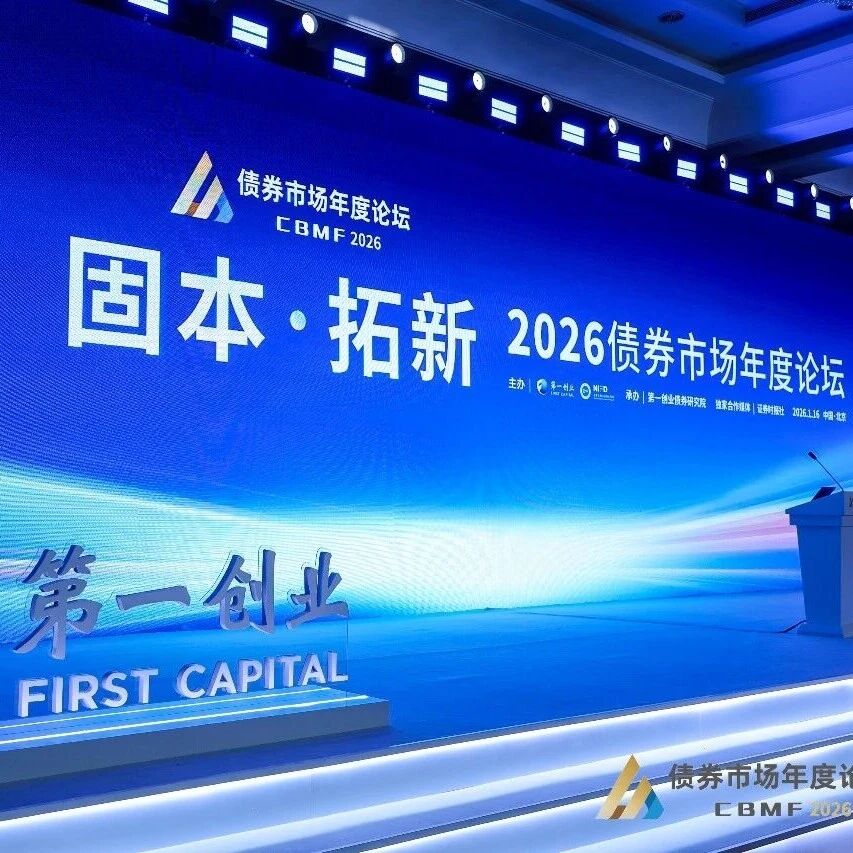
当债券规模站上196万亿元新高,一线大咖热议如何在不确定中寻找机会
券商中国· 2026-01-19 12:36
Core Viewpoint - The forum highlighted the evolving landscape of China's bond market, emphasizing the need for resilience and innovation amidst internal and external challenges, including an "asset shortage" and global economic uncertainties [1][2]. Group 1: Market Environment and Trends - China's bond market has surpassed 196 trillion yuan in scale, facing new norms such as "asset shortage" and wide fluctuations [1]. - The bond market is expected to continue expanding, focusing on serving the real economy and major national strategies, with a notable increase in foreign investment [4]. - The central economic work conference has proposed a more proactive fiscal policy and moderately loose monetary policy, prioritizing domestic demand as a key strategy for 2026 [4]. Group 2: Economic Growth and Financial Development - In 2025, China's economy is projected to grow by approximately 5%, with significant developments in the financial market, including a record daily trading volume in the stock market [5]. - The financial system is undergoing structural changes, with a shift from indirect financing to a more balanced mix of financial tools and institutions [6]. Group 3: Debt Risks and Policy Recommendations - Experts discussed the rising external vulnerabilities and the need to address internal debt issues, emphasizing the importance of understanding the macroeconomic context [7]. - Recommendations for managing debt risks include creating a favorable macro environment, aligning credit with efficiency, and exploring national macro asset-liability management [8]. Group 4: Institutional Strategy Adjustments - Financial institutions are adapting their strategies in response to market changes, focusing on asset allocation and investment logic [10]. - The shift towards "solid income+" products is evident, with a significant year-on-year growth of 39.5% in such funds by the end of Q3 [12]. - Institutions are encouraged to adopt a dynamic approach to asset management, balancing short-term liquidity with long-term investments [13].


定调2026年经济工作 中央政治局会议传递有力信号
Sou Hu Cai Jing· 2025-12-08 15:59
Group 1 - The core message of the Central Political Bureau meeting on December 8 is to analyze and plan for the economic work in 2026, signaling a strong start for the "15th Five-Year Plan" [1] - The meeting emphasizes that the main economic and social development goals for 2025 will be successfully achieved, with a projected economic growth of 5.2% in the first three quarters of 2023, which is 0.4 percentage points higher than the same period last year [2][3] - The meeting highlights the importance of achieving a good start for the "15th Five-Year Plan," which is seen as a critical period for solidifying the foundation for socialist modernization [4] Group 2 - The meeting outlines a "high requirement" approach for 2026, focusing on better coordination of domestic economic work and international trade, as well as enhancing policy foresight and collaboration [4] - It is expected that a more proactive macroeconomic policy mix and forward-looking structural reforms will support a stable economic start in 2026, laying a solid foundation for the 2035 modernization goals [5] - The work tone for 2026 is set to prioritize stability while seeking progress, emphasizing quality and efficiency in economic governance [6] Group 3 - The meeting specifies the continuation of a more proactive fiscal policy and moderately loose monetary policy, aiming to enhance the effectiveness of macroeconomic governance [6] - Key areas of focus include maintaining domestic demand as the main driver, promoting innovation, and ensuring coordinated development while adhering to the "dual carbon" goals [6] - The upcoming Central Economic Work Conference is anticipated to clarify how to effectively implement policy measures for a successful start to the "15th Five-Year Plan" [7]
全国政协委员蔡建春:今年宏观政策组合将为经济回升向好提供强有力支撑 | 聚焦两会
清华金融评论· 2025-03-08 10:26
Group 1 - The core viewpoint emphasizes that achieving a 5% growth target for 2024 is challenging due to complex domestic and international circumstances, highlighting the advantages of the socialist system with Chinese characteristics [1][2] - Innovation has made significant progress, with China's share of the global electric vehicle market exceeding 70%, and half of the domestic integrated circuit companies listed on the Sci-Tech Innovation Board maintaining a research and development investment intensity of 20% [2][3] - The government work report sets a growth target of around 5%, reflecting the stable and resilient economic fundamentals of the country, supported by extraordinary macroeconomic policies [3]