船舶智能化

Search documents
百亿美金蓝海,国产“动力+智控”如何切入价值高地?|OpenTalk回顾
3 6 Ke· 2026-02-04 05:38
Core Insights - The event focused on the theme of "Reshaping Maritime Mobility: When Vessels are Equipped with 'Electric Hearts' and 'AI Brains'" and featured discussions on high-performance electric outboard motors, new energy maritime solutions, and intelligent navigation systems [2] Group 1: Electric Outboard Motors and Market Potential - The global small and medium-sized boat market exceeds $50 billion, with 90% of boats under 15 meters and 60% using outboard motors, showing a market growth rate of approximately 5% annually [4] - The global outboard motor power system market is over $10 billion, with an annual installation of about 820,000 units and a retrofit demand of approximately 760,000 units, expecting a 20% penetration rate for electrification by 2027 [4] - Electric boats have significantly lower operational costs, with usage costs about one-fifth of fuel-powered boats and maintenance costs about one-tenth, potentially saving users nearly $1 million in energy costs over ten years [4] Group 2: Market Dynamics and Competitive Landscape - The outboard motor market's value is highly concentrated, with products over 50 horsepower contributing 80% of sales, indicating a "high-value blue ocean market" due to low electrification penetration [5] - The company has launched three electric outboard motor products: WAVE 70+, WAVE 150+, and WAVE 300, with peak powers of 70, 150, and 300 horsepower, respectively, along with energy solutions [5] Group 3: Intelligent Navigation Systems - The global active merchant fleet is approximately 378,000 vessels, with China accounting for about 185,000, creating a market for intelligent navigation systems valued at over 560 billion RMB [8] - The development of intelligent navigation systems can be categorized into three phases, with the current phase entering a full-scenario intelligent navigation era, moving towards remote control and fully autonomous operations [8] Group 4: Strategic Insights and Future Directions - The company aims to provide a comprehensive domestic intelligent navigation equipment product system rather than a single device, targeting solutions for unmanned vessels, retrofitting manned vessels, and upgrading large vessels [9] - The future competitive landscape in the intelligent shipping sector is expected to resemble the mobile phone industry, dominated by a few platform companies due to the need for high reliability and global service systems [21]


青锋行动|中船集团七〇四所:仰望星空 向海图强
Xin Lang Cai Jing· 2025-12-31 00:19
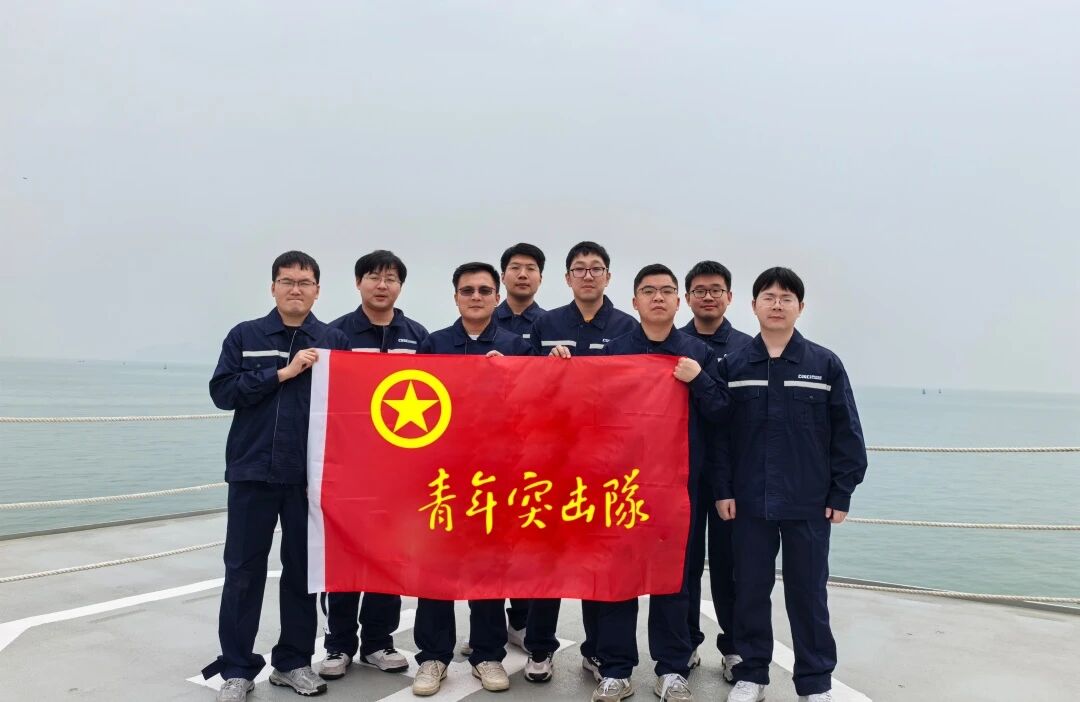
Core Viewpoint - The China Shipbuilding Group's "Qingfeng Action" competition showcases the achievements of youth teams in tackling technical challenges and project goals, emphasizing the importance of youth in driving high-quality development within the company [1]. Group 1: Team Composition and Goals - The youth team at the 704 Institute focuses on autonomous navigation systems, aligning with the national strategy for maritime power, with an average age of 28 and 80% of members being young, while 97% hold master's degrees or higher [3]. - The team was established in March 2017 to address the lack of autonomous navigation technology for large vessels, aiming to become a leader in intelligent unmanned equipment [4]. Group 2: Operational Principles - The team adheres to three principles: "must gaze at the stars," "must charge into the front line," and "must unite to gain recognition," which have established their leading position in the field [6]. - The principle of "gazing at the stars" involves focusing on cutting-edge technology and fostering a culture of innovation and practical work [6]. - The principle of "charging into the front line" emphasizes the team's proactive approach to tackling urgent tasks, conducting hundreds of sea trials to advance technology from laboratory feasibility to practical reliability [6]. Group 3: Achievements and Recognition - The team has successfully completed autonomous navigation collision avoidance tests and long-distance demonstrations, achieving compatibility across all tonnages and vessel types, marking a significant step towards commercial application of ship intelligence [8]. - The team has received numerous accolades, including first place in the National Science and Technology Innovation Youth Commando Competition, and has produced several recognized individuals in the industry [8]. Group 4: Lessons Learned - The team's experience serves as a model for youth teams, highlighting the importance of aligning team missions with national strategies, providing practical platforms for talent development, and fostering a culture of collaboration to achieve substantial results [10]. Group 5: Future Aspirations - The team aims to continue innovating in key technologies for unmanned equipment, contributing to the construction of a maritime power and the high-quality development of the China Shipbuilding Group [11].

宁波远洋“新明州106”获全球首张数字化检验标志
Zheng Quan Ri Bao Wang· 2025-12-06 04:17
Core Insights - Ningbo Ocean Transportation Co., Ltd. has become the first company globally to have a vessel, "Xinmingzhou 106," awarded the Data Driven Verification (DDV) mark by China Classification Society, indicating its capability for digital inspection [1][2] Group 1: Digital Inspection Technology - The digital inspection technology is based on data-driven equipment status assessment, utilizing real-time data collection from the vessel's electromechanical systems to enhance inspection efficiency and reduce costs [1] - The DDV mark signifies that the vessel can conduct inspections digitally, potentially replacing or assisting traditional manual inspection methods, thus improving flexibility and efficiency in vessel inspections [1] Group 2: Technological Innovation and Development - Ningbo Ocean has been actively promoting the intelligent construction of its fleet, collaborating with Zhendui Industrial Intelligent Technology Co., Ltd. and Shanghai Ship Research and Design Institute to establish innovation centers focused on smart and green vessels [2] - The company is constructing the world's largest and first batch of pure electric container ships, equipped with intelligent systems and high-voltage shore power devices, showcasing significant advancements in smart technology [2] - The first of these vessels is expected to be delivered in early 2026, indicating the company's commitment to technological upgrades and innovation in the maritime industry [2]

中船集团举办“向海图强·智领深蓝”科技创新大会暨科技周活动
Zhong Zheng Wang· 2025-12-01 07:32
Core Viewpoint - China Shipbuilding Group is focusing on technological innovation to strengthen its position as a world-class shipbuilding company during the "14th Five-Year Plan" and is planning for the "15th Five-Year Plan" to enhance its technological capabilities and support high-quality development [1][2] Group 1: Achievements and Goals - The chairman of China Shipbuilding Group, Xu Peng, reviewed the achievements in strategic technological strength, major equipment development, investment in technology, and talent cultivation during the "14th Five-Year Plan" [1] - The company has set ambitious goals for the next decade, emphasizing the importance of innovation and collaboration in overcoming challenges and enhancing the industrial ecosystem [1] Group 2: Innovation Initiatives - The company released a list of key technological challenges and promoted an open research and innovation approach, encouraging collaboration with domestic and international partners to drive advancements in shipbuilding and marine equipment [2] - Partnerships were established with universities, central enterprises, and innovative companies to deepen cooperation in areas such as intelligent, green, and integrated development, aiming to accelerate breakthroughs in core technologies [2] Group 3: Events and Forums - During the Technology Week, China Shipbuilding Group will host forums and lectures focusing on innovation management, advanced materials, intelligent ships, high-end design, digital transformation, fundamental research, energy, and technology transfer [2]
《环球时报》记者走进国内造船行业一线,寻找中国船厂创造“世界之最”的密码
Huan Qiu Wang· 2025-11-24 22:51
Core Insights - The article highlights the significant advancements and achievements of China's shipbuilding industry, particularly in the construction of LNG carriers, showcasing its global leadership and technological prowess [1][2][4]. Group 1: Industry Achievements - The Hudong-Zhonghua Shipbuilding Company has set a new record by delivering its 9th LNG carrier in 2023, marking the highest annual delivery of this ship type in China [2][3]. - China is projected to import 132 million tons of LNG in 2024, becoming the world's largest LNG importer, emphasizing the importance of the maritime LNG supply chain for economic development and energy security [2][4]. - The company has secured a record-breaking order for 24 LNG carriers from QatarEnergy, solidifying its position as a leader in the global shipbuilding market [4][10]. Group 2: Technological Advancements - The construction of LNG carriers involves complex processes, including the use of specialized materials and welding techniques to ensure safety and efficiency [3][4]. - The domestic supply chain for LNG shipbuilding has improved significantly, with the localization rate of components rising from 30% in 2008 to over 80% currently [4][10]. - The Shanghai Shipbuilding Research Institute is advancing the concept of smart ships, with developments in autonomous navigation and digital operational support systems [6]. Group 3: Competitive Landscape - The article discusses the competitive dynamics in the global shipbuilding industry, with countries like the US, South Korea, and Japan ramping up their shipbuilding capabilities and investments [8][9]. - South Korea's HD Hyundai has recently achieved a milestone of 5,000 ship orders, indicating its strong position in the market [8]. - Japan is implementing a revitalization plan to double its shipbuilding capacity by 2035, reflecting its efforts to regain competitiveness in the global market [9]. Group 4: Future Directions - The Chinese shipbuilding industry is encouraged to focus on high-tech vessels, including LNG-powered ships and hydrogen fuel vessels, to meet future demand [11]. - Emphasis is placed on reducing costs and increasing efficiency through technological innovation and improved management practices [11]. - The industry faces potential labor challenges similar to those in Japan and South Korea, necessitating strategies to attract and retain talent [11].
全球航运巨头共商绿色航运破局之道@The GSC 2025
Sou Hu Cai Jing· 2025-10-10 09:10
Conference Background - The International Maritime Organization (IMO) approved amendments to MARPOL Annex VI, establishing a framework for mandatory emissions limits and greenhouse gas pricing in the shipping industry, aiming for net-zero carbon emissions by 2050 [3] - The "Green Shipping 2025" conference will take place on October 23, 2025, in Shanghai, focusing on the maritime industry's green decarbonization transition and strategies for adapting to market changes [3] Organizational Structure - The conference is organized by Jiangxin Maritime and co-hosted by the International Shipbuilding and Offshore Network [3] Key Topics Analysis - Global green shipping trends overview, providing insights into future shipping development and investment directions [9] - Interpretation of international shipping carbon emission policies and regulations, offering authoritative analysis of compliance requirements and potential impacts [10] - Latest advancements in shipping emission reduction technologies, including dual-fuel engines and hydrogen fuel applications [11] - Evaluation of wind-assisted propulsion technology's potential and economic benefits [12] - Discussion on the role of digital intelligence in optimizing green shipping routes and reducing emissions through data-driven strategies [15][16] Practical Pathways and Challenges - Sharing experiences on cross-industry collaboration to promote low-carbon transformation in the shipping sector [19] - Exploration of zero-carbon vessel development roadmaps, including design concepts and commercialization timelines [21] - Insights from shipowners on challenges and strategies in green shipping, focusing on investment decisions and compliance pressures [23]