航运脱碳

Search documents
东方海外国际(00316)公布2025 年业绩 股东应占溢利约15.13亿美元 同比减少41.28%
智通财经网· 2026-03-12 13:39
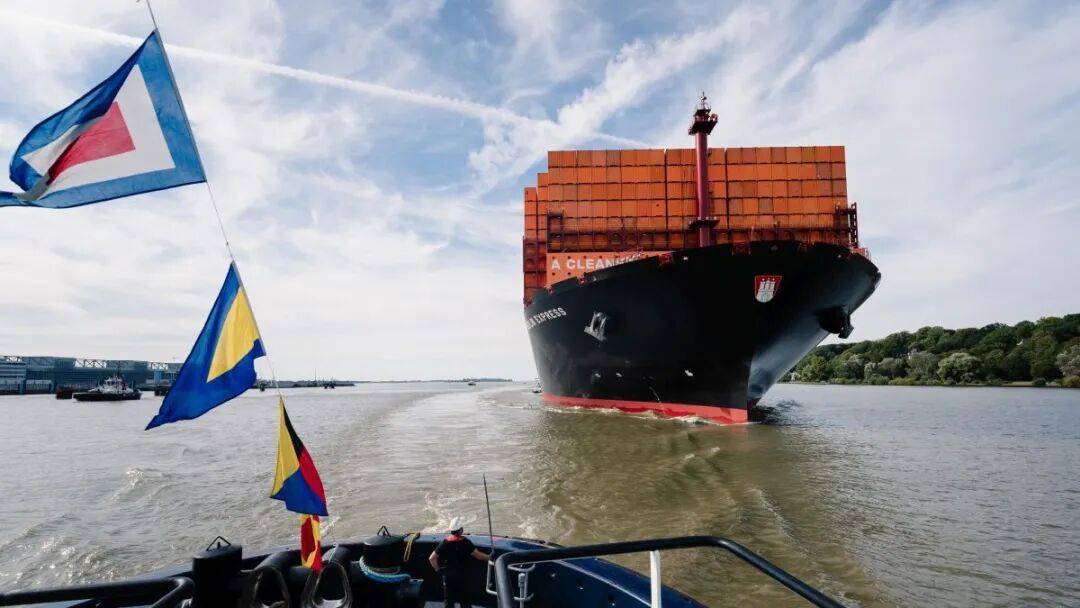
Core Viewpoint - Orient Overseas International (00316) reported a revenue of approximately $9.7225 billion for 2025, reflecting a year-on-year decrease of 9.15%, and a net profit attributable to shareholders of about $1.513 billion, down 41.28% compared to the previous year [1] Financial Performance - The company’s earnings per share (EPS) stood at $2.29, with a proposed final dividend of $0.42 per ordinary share [1] Fleet Expansion and Operational Capacity - In 2025, the company received a total of 9 new container ships, each with a capacity of 16,828 TEU, completing the delivery of the 16,828 TEU series [1] - The addition of new capacity has enhanced the company's service capabilities on the Pacific route and allowed for the resumption of the LL3 service on the Asia-Europe route, which had been suspended due to capacity shortages [1] Future Developments - In 2026, new vessels will be delivered, including the long-awaited 24,000 TEU methanol dual-fuel container ships and 13,580 TEU conventional fuel container ships leased from a subsidiary of Seaspan Corporation [1] - The introduction of these vessels is expected to upgrade the fleet's scale and performance, contributing to a more efficient, environmentally friendly, and intelligent shipping network, marking a new milestone in the company's decarbonization journey [1]

绿色燃料-2026年度策略-碧海涌新辉-氢启万里程
2026-03-09 05:18
Summary of Key Points from the Conference Call Industry Overview - The focus is on the green methanol shipping industry, which is expected to have a high certainty of demand with a potential for 10x growth over the next five years. Currently, there are over 400 methanol vessels globally, corresponding to an annual demand of over 10 million tons, while the operational capacity by the end of 2025 is only about 1 million tons [1][3]. Core Insights and Arguments - The International Maritime Organization (IMO) Net Zero Framework (NCF) is a key catalyst for the industry, with critical decision points in April and November 2026. If approved, a carbon tax mechanism will compel ships to use low-carbon fuels, with a 12% methanol blending ratio becoming the cost-optimal solution [1][4]. - The fuel competition landscape is heavily influenced by geopolitical factors. Under baseline scenarios, LNG costs are 46% lower than methanol, but if natural gas prices rise significantly, green methanol could become a more economical alternative [1][7]. - The European Union has already implemented policies that drive decarbonization, with the EU carbon tax expected to make 100% green methanol usage the only path to minimize shipping costs by 2030 [1][8]. - There is a significant discrepancy between registered capacity and actual production, with over 47 million tons of registered capacity globally (60% in China) but actual production lagging due to demand uncertainties [1][13]. Additional Important Content - Domestic policies in China, such as the Yunnan green hydrogen subsidy (13 RMB/kg), can reduce methanol costs by 1,000-2,000 RMB/ton. The first batch of nine industrial pilot projects has been launched, focusing on hydrogen production from wind/solar and biomass gasification [2][11]. - The shipping industry's decarbonization transition is seen as the most certain and scalable demand source for green fuels, with methanol moving from a nascent stage to a more mature industrial phase [3][12]. - The IMO's NCF aims to establish a carbon tax system based on greenhouse gas emissions intensity, with penalties and incentives designed to encourage compliance [5][6]. - The EU's Emissions Trading System (ETS) will fully include shipping by 2026, with significant penalties for exceeding carbon emission limits [8][9]. - The current order structure shows that alternative fuel vessels account for about 37% of the total tonnage in construction, with LNG still dominating due to its cost advantages prior to recent price fluctuations [10][12]. - The demand for methanol-powered vessels is expected to exceed 10 million tons annually over the next five years, driven by the existing order backlog and the long operational life of ships [12][13]. - The gap between registered and actual production capacity for green methanol is significant, with concerns about future demand growth affecting investment decisions [13]. - Key variables to track in 2026 include the direction and intensity of industrial policies, changes in commercial costs of green methanol versus other fuels, and the progress of provincial demonstration projects [14]. - Investment opportunities are suggested in areas related to green methanol production, green hydrogen equipment, biomass supply, and carbon capture technologies [15].
华理团队研发新技术,让厨余垃圾变船舶燃料
Xin Lang Cai Jing· 2026-02-01 12:02
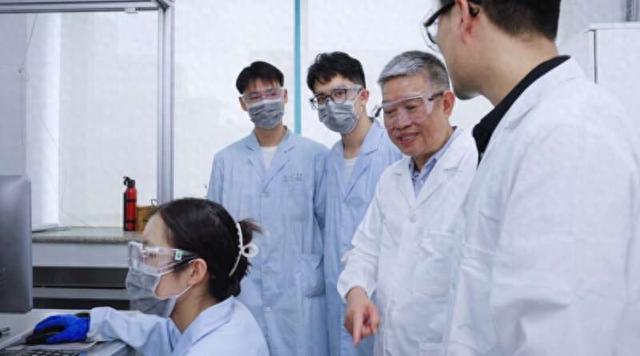
Core Viewpoint - The project led by Professor Chen Deyuan focuses on the key technology and pilot verification for the conversion of biogas into green methanol, which is essential for the green transformation of the global shipping industry [1][4]. Group 1: Technology and Innovation - The "Biogas Energy Science and Technology to Methanol" (BESTm) technology effectively converts biogas, which contains methane and carbon dioxide, into green methanol, achieving nearly 100% carbon utilization [4]. - The process involves a comprehensive system that includes biogas purification and green methanol synthesis, addressing the limitations of traditional biogas utilization methods [4][5]. - The technology can convert 8 tons of wet waste into approximately 1 ton of green methanol, with Shanghai generating around 350 million tons of wet waste annually, potentially producing over 400,000 tons of green methanol [4]. Group 2: Economic Viability - Currently, the price of green methanol is over 9,000 yuan per ton, while heavy oil is only about 3,000 yuan per ton, creating a significant cost barrier for green methanol adoption [5]. - The BESTm technology has reduced the production cost of green methanol by over 30% compared to traditional methods, making it competitive with coal-based methanol when electricity costs are between 0.1 to 0.2 yuan per kilowatt-hour [5]. - The technology has received dual certification from ISCC, allowing it to enter the international green fuel market, with plans for large-scale industrial demonstration projects in Shanghai and surrounding areas [5]. Group 3: Market Potential and Strategic Positioning - Shanghai, as the world's largest container port, has a concentrated demand for green marine fuel, positioning it as a potential hub for future green fuel in the Asia-Pacific region [6]. - The project aims to leverage Shanghai's resource, location, and industrial advantages to support China's leadership in global green shipping development [6].

全国首艘双燃料甲醇加注船完成加注
Zhong Guo Zi Ran Zi Yuan Bao· 2026-01-29 05:55
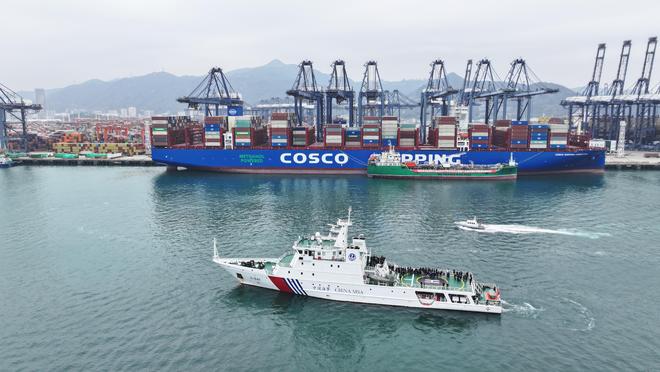
Core Viewpoint - Shenzhen Port has officially established green methanol refueling capabilities, marking a significant step towards sustainable shipping practices in the region [1] Group 1: Green Methanol Refueling - The vessel "Daqing 268" successfully refueled the international container ship "COSCO Shipping Carnation" with 200 tons of green methanol, showcasing Shenzhen's commitment to green fuel initiatives [1] - "Daqing 268" is the first dual-fuel refueling ship in China, capable of significantly reducing carbon emissions through its dual-fuel power system [1] - The "COSCO Shipping Carnation" is one of the first methanol dual-fuel container ships operated by COSCO Shipping Group, designed to switch between fuel oil and methanol as needed [1] Group 2: Environmental Benefits - Green methanol is recognized for its ability to significantly reduce sulfur oxides, particulate matter, and carbon dioxide emissions, making it a key recommended fuel for decarbonizing shipping by the International Maritime Organization [1] - Shenzhen has prioritized green methanol refueling as a key emerging industry, establishing funding projects to accelerate the development of a local green fuel supply chain and market [1] Group 3: Collaboration and Standardization - COSCO Shipping Group and Shenzhen Port Group collaborated closely on refueling processes, safety standards, and operational protocols, optimizing the entire refueling scheme [1] - This initiative serves as a replicable "Bay Area solution" for the Greater Bay Area and potentially for the entire country, exemplifying the synergy between Chinese shipping and green fuel [1]
三美企共推低碳氨船用燃料
Zhong Guo Hua Gong Bao· 2026-01-27 01:35
Core Viewpoint - CF Industries, Trafigura, and TFG Marine have signed a memorandum of understanding to promote the use of low-carbon ammonia as a marine fuel to support emissions reduction in the global shipping industry [1] Group 1: Collaboration Details - The collaboration builds on existing partnerships between CF Industries and Trafigura in low-carbon ammonia transportation, focusing on market development, stakeholder engagement, and logistics planning, initially targeting the U.S. Gulf Coast and Northwest Europe [1] - CF Industries will leverage its low-ammonia production capacity and export facilities located in Donaldsonville, Louisiana, while Trafigura will provide expertise in commodity logistics and market expansion [1] - TFG Marine, a joint venture formed by Trafigura, Frontline Shipping, and Jin Marine Group, will coordinate ammonia fuel bunkering demands and establish "last mile" transportation solutions for global bunkering centers [1] Group 2: Industry Impact - The collaboration aims to integrate key capabilities across the entire supply chain of low-carbon ammonia, with the goal of creating a stable supply chain to assist shipping operators in the commercial application of ammonia fuel [1] - Low-carbon ammonia is considered a significant potential fuel for achieving decarbonization in the shipping sector [1]

全国首单!首艘国产船顺利加注绿色甲醇
Huan Qiu Wang Zi Xun· 2026-01-21 10:34
Core Viewpoint - The successful refueling of the "Zhongyuan Shipping Carnation" vessel with 200 tons of green methanol at Yantian Port marks a significant milestone for Shenzhen's green shipping fuel supply capabilities, establishing it as a key player in the Guangdong-Hong Kong-Macao Greater Bay Area's ambition to become a world-class green shipping hub [2] Group 1: Green Methanol Fuel Significance - Green methanol is promoted by the International Maritime Organization (IMO) as a core fuel for decarbonizing shipping, significantly reducing sulfur oxides, particulate matter, and carbon dioxide emissions, showcasing its environmental advantages [2] - The "Daqing 268" vessel is the first domestic dual-fuel refueling ship capable of using methanol and traditional fuels, with a length of 109.9 meters, a deadweight of 7,500 tons, and a total capacity of 10,362 cubic meters, highlighting its innovative design [2] Group 2: Industry Impact - The successful completion of the first methanol refueling operation in Shenzhen represents a major breakthrough in the green fuel supply sector for shipping in South China, laying a solid foundation for future developments [2] - The dual-fuel power system of the "Daqing 268" vessel can significantly reduce carbon emissions, marking an important step in the transition to sustainable shipping practices in the region [2]
首单落地!深圳港正式具备绿色甲醇加注服务能力
2 1 Shi Ji Jing Ji Bao Dao· 2026-01-21 09:50
Core Insights - Shenzhen has successfully completed its first green methanol bunkering for international shipping, marking a significant milestone in its green energy initiatives [1][2] - The introduction of the dual-fuel methanol bunkering vessel "Daqing 268" represents a breakthrough in the Guangdong-Hong Kong-Macao Greater Bay Area's green fuel supply capabilities [2][4] - The demand for green methanol in the global shipping industry is expected to grow significantly, with projections indicating annual demand could reach several million tons by 2030 [3] Group 1: Green Methanol Bunkering - The first bunkering of 200 tons of green methanol was completed at Yantian Port, establishing Shenzhen's capability for methanol bunkering services [1] - The "Daqing 268" vessel is the first domestically built dual-fuel methanol bunkering ship, capable of significantly reducing carbon emissions [2] - The "Zhongyuan Shipping Carnation" is one of the first methanol dual-fuel container ships, equipped with a methanol fuel storage capacity of 11,000 cubic meters [2] Group 2: Regulatory and Support Framework - Shenzhen has designated green methanol bunkering as a key emerging industry and has established funding support for qualifying vessels and bunkering volumes [5] - The Shenzhen Maritime Bureau and the Hong Kong Marine Department have released safety guidelines for methanol bunkering operations, ensuring standardized procedures [6] - Collaborative efforts among maritime, customs, and border inspection departments have facilitated efficient and safe bunkering operations [6] Group 3: Future Outlook - Shenzhen aims to enhance its entire green fuel supply chain, including production, storage, transportation, and bunkering services, to strengthen its competitive position in the global market [6] - The green methanol production project by CIMC Green Energy in Zhanjiang is set to commence operations by December 2025, with an initial annual output of 50,000 tons [3]
国内首艘双燃料甲醇加注船在深圳完成绿色甲醇首单加注
Nan Fang Du Shi Bao· 2026-01-21 09:21
Group 1 - The core point of the news is the successful refueling of the "COSCO Shipping Carnation," a 16,000 TEU international vessel, with 200 tons of green methanol fuel at Shenzhen Yantian Port, marking a significant step in the adoption of low-carbon fuels in the shipping industry [1] - The refueling was conducted by the "Daqing 268," the first domestically built methanol dual-fuel bunkering vessel, which has a length of 109.9 meters and a deadweight of 7,500 tons, capable of significantly reducing carbon emissions [1][2] - This event signifies the establishment of green methanol bunkering capabilities at Shenzhen Port, representing a breakthrough in the Guangdong-Hong Kong-Macao Greater Bay Area's green fuel supply infrastructure [1] Group 2 - Green methanol is a low-carbon fuel produced through biomass gasification or by synthesizing hydrogen from renewable energy sources with carbon dioxide, recommended by the International Maritime Organization (IMO) for decarbonizing shipping [2] - The green methanol used for refueling was supplied by CIMC Green Energy Low Carbon Technology (Guangdong) Co., which is set to launch China's first mass production bio-methanol project with an annual output of 50,000 tons by December 16, 2025 [2] - The "COSCO Shipping Carnation" is equipped with a methanol dual-fuel main engine and a 11,000 cubic meter methanol fuel storage tank, allowing it to switch between fuel oil and methanol modes as needed for long voyages [2] Group 3 - The Shenzhen Maritime Bureau played a proactive role in guiding the construction and inspection of the "Daqing 268," ensuring crew training for bunkering operations and optimizing vessel registration services [3] - A dynamic information synchronization mechanism was established among all parties involved to ensure efficient coordination during the refueling process, including pre-refueling drills to identify and rectify potential risks [3] - Safety measures included designating a temporary safety operation area, deploying patrol boats, and utilizing drones for aerial surveillance to enhance monitoring and emergency preparedness during the bunkering operation [3]
IKEA、亚马逊等大货主组团买绿色运力!
Sou Hu Cai Jing· 2026-01-04 01:05
Core Insights - The ZEMBA alliance, comprising major brands like Amazon and IKEA, is pushing for a market-driven approach to establish a commercial framework for hydrogen-based e-fuels in the shipping industry [1][4][10] Group 1: ZEMBA Alliance and Its Objectives - ZEMBA aims to create a replicable commercial loop for e-fuels by aggregating orders from cargo owners and facilitating the deployment of ships and fuel supply [1][4] - The second round of e-fuels bidding has resulted in Hapag-Lloyd and North Sea Container Line being awarded contracts to deploy e-methanol and e-ammonia fuels starting in 2027 [3][5] Group 2: Bidding Results and Environmental Impact - The second round of bidding will support the deployment of e-fuels in approximately 200 billion tons of shipping over three years, with a potential reduction of 120,000 tons of greenhouse gas emissions starting in 2027 [5][6] - Hapag-Lloyd will utilize about 70,000 tons of e-methanol for five large container ships, while NCL will use 25,000 tons of e-ammonia for one small container ship [5][6] Group 3: Fuel Pathways and Market Development - The strategy involves deploying two types of scalable hydrogen-based e-fuels to maintain flexibility in technology and supply chain evolution [6][10] - Hapag-Lloyd will deploy e-methanol on a transoceanic route, while NCL will operate the world's first e-ammonia-powered container ship on a Nordic trade route [6][7] Group 4: Emission Reduction Standards - ZEMBA requires that both fuels achieve at least a 90% reduction in lifecycle carbon intensity compared to traditional high-emission fuels, ensuring rigorous assessment and compliance [8][10] Group 5: Market Dynamics and Future Outlook - The second round of bidding is seen as a market development initiative rather than just a reduction project, aiming to establish a sustainable pricing and demand discovery mechanism for the next generation of fuels [10] - ZEMBA's approach allows for immediate procurement to stimulate supply-side investment and infrastructure development, bypassing regulatory delays [10][11]


国内首个!正式投产
Xin Lang Cai Jing· 2025-12-17 14:19
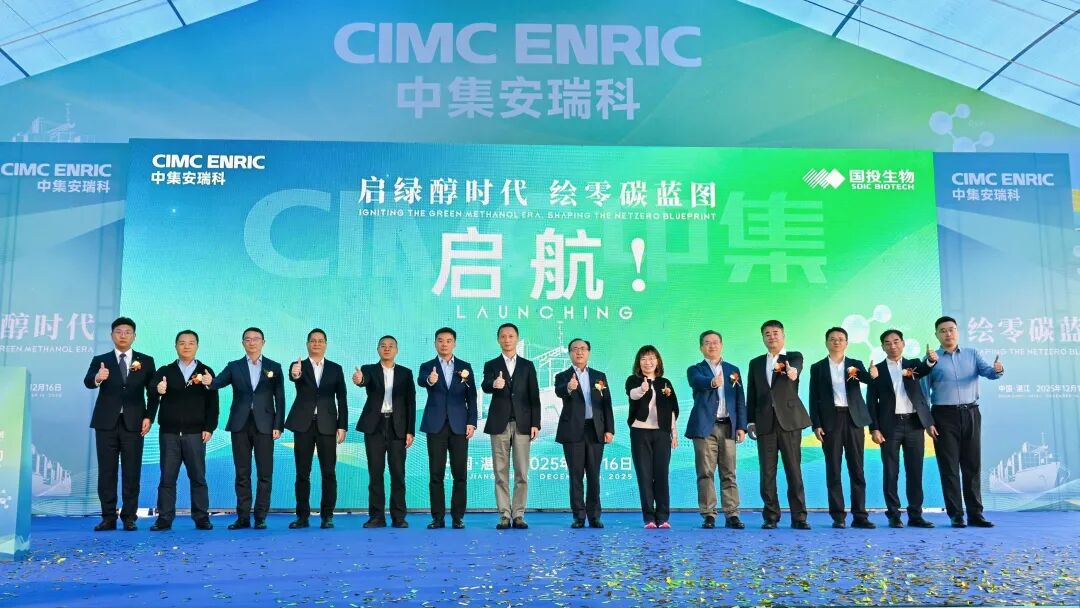
Core Viewpoint - The launch of CIMC Enric's first large-scale bio-methanol project in Zhanjiang, Guangdong, marks a significant step in the clean fuel sector, providing a viable decarbonization solution for the global shipping industry [1][8]. Group 1: Project Overview - The project has an initial annual production capacity of 50,000 tons of green methanol, making it the first large-scale bio-methanol project in China [3][10]. - It features strong raw material adaptability, high operational flexibility, and significant carbon reduction effects throughout the process, achieving over 85% greenhouse gas (GHG) reduction across its lifecycle [3][10]. - The project has received EU ISCC EU certification for its entire supply chain, ensuring carbon traceability from raw materials to products [3][10]. Group 2: Technological and Environmental Impact - The project utilizes local agricultural and forestry waste, achieving breakthroughs in biomass gasification technology, thus creating a closed-loop industrial chain for high-value utilization of waste [3][10]. - It aligns with the International Maritime Organization's (IMO) goal of net-zero emissions for the shipping industry by 2050 and addresses EU carbon tariffs and renewable energy directives [3][10]. Group 3: Strategic Advantages - The project benefits from its proximity to Zhanjiang Port and the availability of abundant biomass resources, enabling it to serve major markets such as the Greater Bay Area and Singapore [4][11]. - CIMC Enric has established a comprehensive supply chain ecosystem for green methanol in South China, achieving a one-hour closed-loop for production, storage, and transportation [4][11]. Group 4: Future Outlook - CIMC Enric's president highlighted the project as a milestone for the company and the region, positioning South China as a new hub in the global green shipping industry [5][12]. - The company aims to provide green methanol fuel that meets the highest international shipping standards, contributing to the transformation of the clean fuel industry [5][12].