虚拟消费

Search documents
BILIBILI2026年轻人消费趋势报告
BILIBILI· 2026-01-20 02:50
Investment Rating - The report does not explicitly provide an investment rating for the industry or company. Core Insights - The report highlights a generation of young consumers characterized by "intellectual fervor," who make purchasing decisions based on personal values and emotional resonance rather than societal labels [2][6][19]. - Bilibili (B站) has emerged as a central platform for young people, serving not only as a video-sharing site but also as a space for community interaction and emotional connection, shaping their consumption logic [3][6][22]. - The consumption behavior of young people is shifting towards valuing personal experience, emotional connection, and self-care, with a focus on products that enhance efficiency and align with their interests [21][28][30]. Summary by Sections 1. Young Consumers' Characteristics - Young consumers are actively seeking content that helps them solve problems, find like-minded individuals, and manage their emotions [25][21]. - Their consumption is driven by three main goals: enhancing real-life efficiency, strengthening community belonging, and optimizing personal well-being [6][21]. 2. Bilibili's Role - Bilibili is positioned as a key arena for defining consumption values and achieving consensus among young consumers, with its dynamic content and community interactions forming a unique value assessment system [6][22]. - The platform facilitates a "content as an asset" approach, where high-quality content can build long-term brand trust and recognition [7][19]. 3. Consumption Trends - Young consumers are willing to pay for "hardcore experiences," emotional connections, and precise self-care products, reflecting a shift towards valuing personal fulfillment over mere social status [28][30][32]. - The Z100 list on Bilibili showcases high-value products and trends, indicating a preference for items that resonate with community consensus and personal experiences [35][36]. 4. Marketing Strategies - Brands are encouraged to engage in genuine dialogue and co-creation with young consumers, moving away from traditional marketing tactics that focus solely on product promotion [42][44]. - Successful marketing requires understanding and integrating into the lifestyle of young consumers, fostering emotional resonance and long-term brand loyalty [44][46]. 5. Technology Integration - Young consumers view technology as an integral part of their lives, with a strong preference for AI and smart products that enhance their daily efficiency [61][62]. - The report emphasizes the importance of translating technical language into relatable narratives that resonate with young audiences [74].

Z 世代消费新逻辑:从功能满足到情感共鸣
Sou Hu Cai Jing· 2026-01-04 04:21
Core Insights - The Z generation is transforming the commercial market by prioritizing aesthetic and value over traditional "cost-performance" standards, viewing consumption as a form of self-expression [1] - The rise of domestic brands reflects a shift towards cultural identity in consumer behavior, while niche designer brands are gaining popularity due to the pursuit of uniqueness [1] - Consumption decisions are increasingly characterized by "social currency," where the shareability of products and the ability to foster community recognition are more important than practical functionality [1] - The virtual consumption market is experiencing explosive growth, with emerging fields like digital collectibles and metaverse social spaces reshaping value exchange among younger demographics [1] - Companies need to adopt a "connection-first" marketing paradigm, enhancing engagement through co-creation of content and leveraging community operations to build user assets, while aligning with sustainable principles to resonate with social responsibility [1] - Understanding the Z generation's philosophy of "buying as belief" is crucial for gaining a competitive edge in the new market landscape [1]

过去的一年,消费彻底变了
首席商业评论· 2026-01-01 04:42
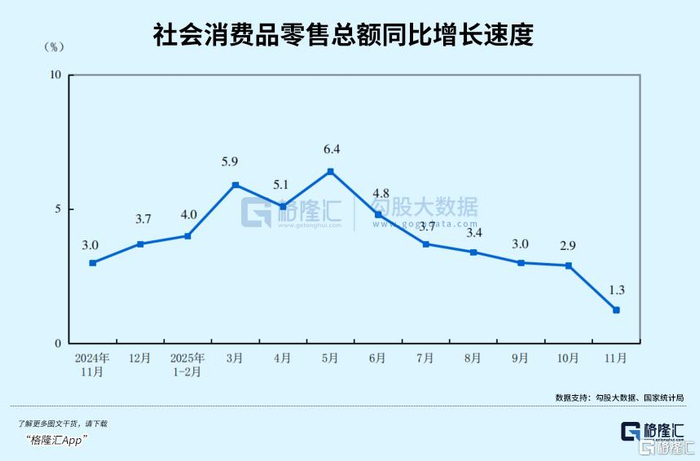
Core Viewpoint - The article discusses the evolving landscape of consumer behavior in China, highlighting the coexistence of emotional and rational consumption trends, and the implications for investment opportunities in the market [5][22]. Group 1: Consumer Trends - Despite perceptions of a cooling consumer market, data shows that final consumption expenditure contributed 53.5% to economic growth in the first three quarters of 2025, an increase of 9 percentage points from 2024 [6]. - Social retail sales grew by 4.0% year-on-year in the first 11 months of this year, surpassing the 3.5% growth expected for the entire year of 2024 [6]. - A McKinsey survey indicates that the expected share of domestic consumption in disposable income for 2025 is stable at 0.0%, a significant improvement from the previous year's expectation of -0.5% [9]. Group 2: Emotional and Rational Consumption - The article identifies two main trends in consumer behavior: emotional consumption, which focuses on personal satisfaction and identity, and rational consumption, which emphasizes quality and cost-effectiveness [13]. - A Nielsen IQ report reveals that 47% of respondents in China purchased only essential items to avoid waste, while 68% were willing to spend more on products that help relieve stress [13]. - The rise of the second-hand economy is noted, with platforms like Xianyu seeing a daily average of 7 million items listed, reflecting a growing acceptance of "recycling consumption" among young consumers [14]. Group 3: Future Consumption Landscape - The emotional economy in China is projected to reach a market size of 2.3 trillion yuan in 2024, with expectations to exceed 4.5 trillion yuan by 2029 [15]. - The article suggests that the health and wellness industry, as well as the pet economy, will benefit from shifting consumer spending towards self-investment and emotional fulfillment [20]. - The emergence of AI-driven emotional technology and virtual consumption is anticipated to create new market opportunities, as consumers increasingly seek personalized emotional experiences [21].

今年,消费彻底变了
Ge Long Hui A P P· 2025-12-28 08:57
Core Insights - The consumption industry has undergone significant changes over the past year, with a shift in focus from traditional products like liquor to new consumption trends driven by emotional and social factors [1][10]. Group 1: Consumption Trends - Despite perceptions of a cooling consumption market, consumer demand has shown stability, with retail sales growing by 4.0% year-on-year in the first 11 months of this year, surpassing the 3.5% growth expected for the entire year of 2024 [4][5]. - The contribution of final consumption expenditure to economic growth reached 53.5% in the first three quarters of 2025, an increase of 9 percentage points compared to the entire year of 2024 [4]. - The concept of "new consumption" has emerged, characterized by emotional and social attributes, as seen in the popularity of brands like Bubble Mart and the rise of "self-reward" consumption [8][9]. Group 2: Consumer Behavior - Young consumers, particularly those from the Z generation, are becoming the main drivers of consumption, with 56.3% of them willing to spend on emotional value and interests, a 16.2 percentage point increase from 2024 [10][9]. - The trend of "rational consumption" is also evident, where consumers are increasingly focused on quality and value, with 47% of respondents indicating they only purchase essentials to avoid waste, while 68% are willing to spend more on products that help relieve stress [11][10]. Group 3: Market Opportunities - The second-hand economy is thriving, with platforms like Xianyu seeing a 30% year-on-year increase in transaction volume, reflecting young consumers' acceptance of "recycled consumption" [12]. - The health and wellness industry is benefiting from consumers' desire to invest in personal growth, with products like smart home devices and effective skincare gaining traction [14][13]. - The pet economy is emerging as a significant market, driven by the emotional support pets provide, with a wide range of related products and services [24]. Group 4: Future Outlook - The emotional consumption market in China is projected to reach 2.3 trillion yuan in 2024, with expectations to exceed 4.5 trillion yuan by 2029, indicating substantial growth potential [16]. - The consumption landscape is evolving into a complex ecosystem where rational and emotional consumption coexist, reshaping investment strategies and market dynamics [27].