跨文化融合

Search documents
【全球探店】炒菜吧!面包师!东南亚这家面包店靠“中式料理包”火遍全网
东京烘焙职业人· 2026-03-25 08:33
Core Insights - The article highlights the success of "Salt. Saltbread," a bakery in Indonesia that has innovatively introduced a Chinese cuisine-inspired toast, creating a new peak in customer traffic during weekdays, surpassing even the morning rush [1][16]. Product Strategy - "Salt. Saltbread" has established a clear product strategy centered around a core item, the original salt bread, which serves as the main traffic driver for the brand, leveraging its high cost-performance ratio and reputation to attract new customers [8][10]. - The product lineup consists of three main categories: 1. Core traffic items, primarily the original salt bread, which acts as an entry point for customers [10]. 2. Core profit items, including various flavored salt breads and specialty toasts, which enhance product pricing and contribute to stable profit sources [10][13]. 3. Scene supplement items, such as light meals and beverages, which extend the consumer experience from merely purchasing bread to enjoying a full meal or spending an afternoon in the bakery [13]. New Product Launch - The introduction of the Chinese cuisine-inspired toast series is a significant development for "Salt. Saltbread," featuring classic Chinese cooking techniques and flavors, such as Cantonese char siu and Sichuan-style beef, tailored to local tastes by adjusting spice levels and sweetness [17][19]. - The pricing strategy for these new offerings starts at 35,000 Indonesian Rupiah (approximately 16 RMB) for basic options and 55,000 Indonesian Rupiah (approximately 25 RMB) for larger portions, making them competitively priced compared to local dining options [19]. Market Impact - The bakery's continued popularity is attributed to its focus on a single product category, innovative space utilization, and a clear product matrix that solidifies its profit base. The success of the Chinese cuisine toast offers new insights for global bakery operators, emphasizing the potential for innovation beyond traditional sweet flavors [27].


中国化学二化建:创新“3C模型”助力央企讲好中国故事
Zhong Guo Xin Wen Wang· 2026-01-06 07:58
Core Insights - The research project by China Chemical Second Construction Company (CCSCC) won the third prize in the 2025 Central Enterprises Party Building and Ideological Political Work Research Association for its innovative "3C Fusion Model Framework" aimed at enhancing soft power for overseas development [1][2] Group 1: Research Findings - The "3C Fusion Model Framework" consists of three interconnected components: Recognition, Communication, and Co-creation of Value, forming a dynamic system that enhances international communication and cultural recognition of Chinese narratives [2] - The research involved a comprehensive survey across nine countries, including Indonesia, Brunei, Angola, Kazakhstan, Abu Dhabi, and Russia, engaging 234 Chinese and foreign employees to understand their thoughts and behaviors [1][2] Group 2: Methodology and Approach - CCSCC utilized a combination of literature review, survey research, and case analysis to compare best practices in cross-cultural communication from leading central enterprises like China Railway and China State Construction [2] - The project was supported by a six-member research team, which conducted both online and offline discussions over six months, ensuring a thorough understanding of cross-cultural dynamics [1][2] Group 3: Future Directions - CCSCC aims to deepen the implementation of the 3C model to empower overseas development and contribute to building new competitive advantages for central enterprises in the global market [2]

海南为海外青年导演打造梦想孵化地
Hai Nan Ri Bao· 2025-12-06 01:18
Core Insights - The article discusses the "Qingye Plan" special event at the 7th Hainan Island International Film Festival, focusing on the market pathways for overseas young directors returning to China [8][9] - It emphasizes the importance of integrating overseas experiences with local culture to create impactful films [8][9] Group 1: Event Overview - The "Qingye Plan" event featured a roundtable discussion titled "Market Pathways for Overseas Young Directors," aimed at exploring the return and integration of young filmmakers [8] - The discussion avoided focusing on box office success and industry anxieties, instead addressing the aspirations of young filmmakers returning to Hainan [8] Group 2: Insights from Industry Experts - Veteran filmmaker Jiao Xiongpeng shared experiences of director Ang Lee, highlighting the successful integration of Confucian ethics into Western narrative frameworks [8] - Screenwriter Li Yuan advised young directors to start with stories rooted in local life rather than purely personal narratives to connect with broader audiences [8] Group 3: Cultural Integration and Opportunities - Young director Fu Shangbin's experience illustrates the potential of cross-cultural integration, emphasizing that cultural differences can be strengths in filmmaking [9] - Hainan's Lingshui Haigui Town is presented as a nurturing environment for overseas young directors, offering a creative space with digital infrastructure and an emerging international creator community [9] Group 4: Collaborative Initiatives - A cooperation agreement was signed between Hujing Entertainment Group and Hainan Shuzhi Lingfa Industrial Development Co., aiming to establish the Haina Chunmiao Creation Base in Lingshui Haigui Town [9] - The initiative will support the development of international young directors and provide a platform for their creative endeavors [9]

歌剧《猴王悟空》在美国旧金山首演
Xin Hua She· 2025-11-16 07:41
Core Viewpoint - The opera "Monkey King Wukong," adapted from the Chinese classic "Journey to the West," premiered in San Francisco, showcasing a blend of various art forms and cultural exchange between China and the U.S. [1] Group 1: Performance Details - The opera is based on the early chapters of "Journey to the West," depicting the legendary story of Sun Wukong, including his birth, quest for a master, treasure hunting in the Dragon Palace, rebellion in Heaven, and eventual rescue after being trapped under the Five Finger Mountain for 500 years [1] - The performance primarily features English singing, with music composed by Chinese composer Huang Ruo and a script written by American Chinese playwright Huang Zhe Lun [1] - The production incorporates both Western orchestral instruments and traditional Chinese instruments such as pipa, gongs, and cymbals, enhancing its cross-cultural fusion [1] Group 2: Cultural Significance - Matthew Shilvock, the General Director of the San Francisco Opera, emphasized the opera's role in promoting cross-Pacific cultural exchange and expressed hope that "Monkey King Wukong" will become a representative work in the global opera repertoire [1] - Zhang Jianmin, the Chinese Consul General in San Francisco, highlighted the popularity of Sun Wukong in China and appreciated the opera's innovative international presentation of traditional Chinese culture [1] - The premiere included an interactive experience area and an art exhibition featuring local artists' works themed around Sun Wukong, indicating a strong community engagement [1]
Meta 华人太多了,外国员工崩溃。网友:风水轮流转,该学中文了
程序员的那些事· 2025-11-13 11:24
Core Viewpoint - The article discusses the increasing presence of Chinese employees in Silicon Valley tech companies like Meta, OpenAI, and Google, highlighting the cultural challenges that arise from this demographic shift, particularly regarding language barriers and team dynamics [3][41]. Group 1: Cultural Dynamics in Tech Companies - A Meta employee expressed feelings of isolation due to the predominance of Chinese speakers in his team, which created a language barrier for non-Chinese speakers [5][7]. - The rise of Chinese talent in Meta is evident, especially after the establishment of the Meta Superintelligence Labs (MSL), which attracted several prominent Chinese AI experts [9][10]. - The article notes that the cultural integration challenges are not unique to Meta, as similar dynamics are observed in other tech giants like OpenAI and Google, where Chinese professionals are also prominent [40][41]. Group 2: Key Chinese Figures in Meta - Alexandr Wang, the first Chief AI Officer at Meta, joined in June 2023 and previously founded Scale AI [16][17]. - Zhao Shengjia, who joined MSL as Chief Scientist, has a background in developing models like ChatGPT and GPT-4 at OpenAI [21][22]. - Other notable Chinese employees include Changhan Wang, Xian Li, and Xin Luna Dong, who contribute to various AI research and development efforts within Meta [25][28][31]. Group 3: Broader Implications of Cultural Integration - The article highlights a broader trend where non-Chinese employees feel marginalized in teams dominated by Chinese speakers, leading to concerns about hiring practices favoring cultural homogeneity [54][56]. - The experience of the Meta employee resonates with others from different cultural backgrounds, indicating a common challenge in multicultural workplaces [60][62]. - The need for cross-cultural understanding and collaboration is emphasized as essential for the success of diverse teams in Silicon Valley [62][63].


Meta华人太多了,外国员工崩溃:不懂中文就像局外人
3 6 Ke· 2025-11-06 07:17
Core Insights - The article discusses the increasing presence of Chinese employees in Silicon Valley tech companies like Meta, OpenAI, and Google, leading to cultural integration challenges, particularly language barriers [1][19][22] Group 1: Cultural Dynamics in Tech Companies - A Meta employee expressed feelings of isolation due to the predominance of Chinese speakers in his team, highlighting a cultural divide [2][19] - The establishment of Meta Superintelligence Labs (MSL) has attracted numerous Chinese AI talents, including key figures like Alexandr Wang and Zhao Shengjia [2][3] - The article notes that the trend of hiring Chinese employees is not limited to Meta but is also observed in other tech giants like OpenAI and Google [19][22] Group 2: Key Chinese Figures in Meta - Alexandr Wang, the first Chief AI Officer at Meta, joined in June 2023 and previously founded Scale AI [6][8] - Zhao Shengjia, who joined MSL as Chief Scientist, has a background in developing models like ChatGPT and GPT-4 at OpenAI [8][15] - Other notable Chinese employees at Meta include Clara Shih, who oversees Business AI, and Susan Li, the Chief Financial Officer [15][17] Group 3: Broader Implications and Reactions - The article reflects on the broader implications of cultural homogeneity in tech teams, where non-Chinese employees may feel marginalized [19][24] - It mentions that similar dynamics occur in teams dominated by other cultural backgrounds, such as Indian teams hiring primarily Indian engineers [24][26] - The need for cross-cultural integration and open-mindedness in diverse work environments is emphasized as essential for company success [26]

南网国际首个“跨文化融合月”精彩纷呈
中国能源报· 2025-10-29 06:31
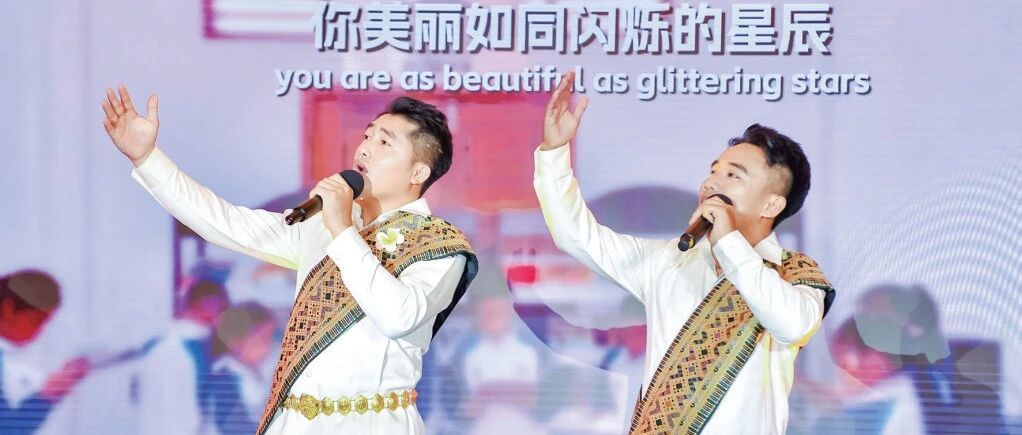
Core Viewpoint - The "Cross-Cultural Integration Month" organized by the company aims to enhance international collaboration and cultural understanding among employees from various countries, thereby driving high-quality development in international business [1][3][15]. Group 1: Event Overview - The "Cross-Cultural Integration Month" includes activities such as cultural performances, Chinese tea culture learning, international etiquette training, and technical management exchanges, showcasing the charm of Chinese traditional culture and the core values of the company [3][15]. - The event aims to foster deep cultural integration to enhance management efficiency and build a broader consensus for the high-quality development of the "Belt and Road" initiative [3][15]. Group 2: Cultural Experiences - Employees from different countries participated in hands-on activities like tea tasting and mooncake making, which helped them connect with Chinese cultural concepts such as "reunion" [5][7]. - Sports events like football and table tennis matches between employees from Peru and Shenzhen Power Supply Bureau promoted teamwork and mutual respect [7][14]. Group 3: Cultural Performances - The cross-cultural performance featured a variety of songs and dances that highlighted the beauty of different cultures, fostering a sense of unity among employees [9][11]. - Employees expressed pride in sharing their cultural heritage through performances, which helped bridge cultural gaps and enhance camaraderie [11][15]. Group 4: Technological Insights - The event included visits to advanced technical facilities, where foreign employees were impressed by the company's use of AI and big data in managing energy systems [14][15]. - The exchange of knowledge in technology and management practices is seen as a way to enhance operational efficiency and address challenges in information management [14][15]. Group 5: Future Outlook - The company plans to continue deepening cross-cultural management practices, viewing cultural integration as a catalyst for overcoming barriers and fostering global collaboration [15]. - The initiative is expected to contribute to the construction of a community with a shared future for mankind, aligning with the goals of the "Belt and Road" initiative [15].
2025,毕业生 “卷” 向出海
Hu Xiu· 2025-09-11 07:49
Group 1 - The article discusses the trend of Chinese companies expanding globally, with a focus on young professionals who are increasingly opting for overseas assignments as a response to domestic competition and the "Belt and Road" initiative [2][4][5] - The experiences of individuals like Cheevin, Herman, and Qi Chengwen illustrate the challenges and opportunities faced by expatriates in regions like Africa and the Middle East, highlighting the cultural and operational adjustments required [10][18][42] - The article emphasizes the importance of understanding local cultures and practices for successful integration and operation in foreign markets, as well as the need for patience and adaptability in cross-cultural environments [43][50][52] Group 2 - The shift in employment opportunities from traditional sectors like internet and real estate to advanced manufacturing fields such as renewable energy and semiconductors is noted, with these sectors being more globally oriented [5][6] - The article highlights the significant salary differences between domestic and overseas positions, with expatriates often earning substantially more than their counterparts in China, which serves as a strong incentive for young professionals [22][23][24] - The narrative also touches on the evolving nature of Chinese companies' global strategies, moving from merely exporting products to providing comprehensive solutions, leveraging China's robust supply chain capabilities [53][54][55] Group 3 - The article outlines the harsh realities faced by expatriates, including extreme weather conditions, cultural misunderstandings, and the need for personal resilience in challenging environments [24][30][38] - It discusses the dual nature of expatriate life, where individuals experience both professional growth and personal challenges, emphasizing the need for a strong sense of purpose and adaptability [60][62][63] - The narrative concludes with reflections on the broader implications of globalization, suggesting that the experiences of these expatriates contribute to a more interconnected world, where understanding and collaboration across cultures are essential [68][69]