
避险功能

Search documents
中国为何持续扩大黄金储备?
Sou Hu Cai Jing· 2026-02-12 07:45
Core Viewpoint - The People's Bank of China (PBOC) has become one of the most active participants in the global gold market due to its significant gold purchases and accumulation of reserves [2][3]. Group 1: Gold Market Trends - As of February 9, 2026, spot gold prices surpassed $5,000 per ounce, reflecting a volatile market with a peak of $5,598.75 per ounce in January, followed by a significant drop of 9% [2]. - The PBOC's gold reserves reached 74.19 million ounces by the end of January 2026, marking a continuous increase for 15 months since November 2024 [2]. Group 2: Global Central Bank Behavior - China has become the sixth largest gold reserve holder globally as of the second quarter of 2025, with central banks worldwide also increasing their gold purchases significantly [3]. - From 2022 to 2024, global central banks have consistently purchased over 1,000 tons of gold annually, with 2022 at 1,081.9 tons, 2023 at 1,050.8 tons, and 2024 at 1,044.6 tons [3]. Group 3: Motivations Behind Gold Accumulation - The strong desire among central banks to hold and increase gold reserves is primarily driven by ongoing geopolitical tensions, such as the Russia-Ukraine conflict and the Israel-Palestine situation, which have heightened market uncertainty [3][6]. - The PBOC's cautious strategy of incremental gold purchases aims to stabilize the domestic precious metals market and support the national currency and fiscal policies [6]. Group 4: Economic and Policy Considerations - Recent central meetings in China have indicated a shift towards maintaining stability in capital and fiscal markets, providing a supportive environment for gold accumulation [8]. - The accumulation of gold serves as a hedge against potential risks associated with the fluctuating US dollar and other uncertainties in the international market [8].

FPG财盛国际:白银需求爆发
Xin Lang Cai Jing· 2026-01-14 10:53
Group 1 - The recent surge in the silver market is driven by unprecedented investment demand and industrial needs, with spot silver prices stabilizing above $86 per ounce, indicating high allocation enthusiasm for silver as the "poor man's gold" [1][2] - The Chicago Mercantile Exchange (CME) has launched a 100-ounce silver futures contract to cater to this trend, providing a low entry barrier for retail investors and an effective hedging tool against risks amid energy transitions and geopolitical turmoil [1][2] - There is a significant imbalance in supply and demand, with industrial demand over the past five years severely depleting silver ground stocks, leading to a fragile supply chain [3] Group 2 - The current spot price of silver is approximately $3 higher than the March futures price, reflecting the market's urgency for immediate possession of physical silver [3] - Historical data suggests that the explosion of small micro-derivatives often indicates that a bull market is entering a deep phase, with projected average daily trading volumes for micro gold and silver futures reaching 301,000 and 48,000 contracts respectively by 2025 [4] - The valuation logic of silver is undergoing a transformation due to dual pressures from industrial buyers and institutional investors, with a potential breakthrough of $100 per ounce appearing to lose substantial resistance [4]

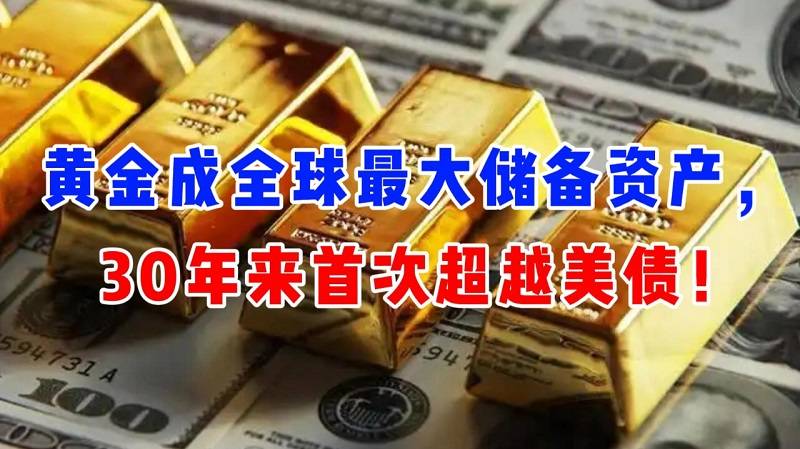
黄金:跃升为全球最大储备资产
Sou Hu Cai Jing· 2026-01-11 03:21
Group 1 - The core viewpoint of the article highlights the unprecedented rise of gold as a global reserve asset amidst evolving financial landscapes [1] Group 2 - Gold has historically held a special value, serving as a basis for currency issuance and a symbol of wealth, maintaining its importance as a reserve asset for central banks despite the shift to fiat currencies [3] - The current economic uncertainties, including trade tensions and public health crises, have underscored the importance of gold reserves as a reliable asset for stabilizing economies [4] - Gold's safe-haven function becomes prominent during market volatility, as it tends to retain value when other financial assets decline, exemplified during the 2008 financial crisis [4] - Gold serves as a universal measure of value, unaffected by any single country's monetary policy, thus maintaining its appeal as a reserve asset [4] Group 3 - Many countries, particularly emerging economies, are actively increasing their gold reserves to enhance financial stability and international influence, with China and Russia being notable examples [5] Group 4 - The gold market is evolving with expanding trading volumes and diverse trading methods, including physical gold, futures, and ETFs, indicating a growing interest from investors [7] - As long as global economic instability persists, gold is expected to maintain its status as the largest reserve asset, supported by technological advancements in various sectors [7] - The increasing significance of gold in global reserves is seen as an inevitable trend, contributing to financial stability and national economies [7]
关注现金流ETF(159399)投资机会,防御属性受关注
Mei Ri Jing Ji Xin Wen· 2025-12-22 06:31
Core Viewpoint - The FTSE China A-Share Free Cash Flow Index constituents are concentrated in materials, industrials, and consumer discretionary sectors, exhibiting strong defensive characteristics. The free cash flow index has outperformed the overall market during turbulent periods, demonstrating its risk-averse function [1] Group 1: Industry Analysis - The free cash flow rate shows a significant positive correlation with dividend yield, indicating that companies with ample cash flow are more likely to provide stable dividends, thus avoiding "value traps" associated with insufficient cash flow support [1] - The FTSE Cash Flow Index has outperformed the CSI Dividend Index and the CSI 300 Index for nine consecutive years from 2016 to 2024, highlighting its consistent performance in the market [1] Group 2: Investment Opportunities - Investors are encouraged to pay attention to the cash flow ETF (159399), which focuses on large and mid-cap stocks, with a higher proportion of central state-owned enterprises compared to similar cash flow indices. Monthly dividend assessments are available for interested investors [1]
