
金融投机

Search documents
视频|黄金白银“瀑布流直线跳水” !有人后悔“卖飞了”,有人懊恼“买少了”,后市他们这么看
Sou Hu Cai Jing· 2026-01-31 02:18
Core Viewpoint - The recent sharp decline in gold and silver prices, with gold dropping from approximately $5600 to below $5000 per ounce in a single day, is attributed to a combination of profit-taking and market sentiment, rather than a fundamental shift in the long-term bullish trend for precious metals [1][12][14]. Price Movements - On January 29, gold prices surged to around $5600 per ounce before plummeting to $5105.83, marking a maximum intraday drop of 5.7%, and closing at $5377.4, down 0.69% [2][6]. - Silver prices fell from a historical high of $121.67 per ounce to $106.80, with a maximum intraday decline of 8.5% [2]. - By January 30, gold further declined to $4950, with a daily drop exceeding 7%, while silver fell to approximately $96, reflecting a 16% decrease [6]. Market Reactions - The drastic price movements have led to significant losses for gold stocks, with companies like Shandong Gold and Chifeng Gold experiencing declines of over 14% on January 30 [6]. - Retail investors expressed regret over missed opportunities, with discussions on social media highlighting sentiments of both regret for selling too early and frustration over not buying more [7]. Consumer Behavior - Gold jewelry prices have adjusted, with retail prices dropping from around 1700 yuan per gram to approximately 1685 yuan, with promotional discounts bringing effective prices down to about 1605 yuan [9]. - The end of the year remains a peak consumption period for gold jewelry, with consumers advised to purchase based on personal needs rather than short-term price fluctuations [12]. Expert Insights - Experts suggest that the recent price drop is a temporary adjustment within a longer-term bullish trend for precious metals, likening it to a "deep squat" rather than a fundamental reversal [12]. - Investment strategies should focus on maintaining a diversified portfolio and avoiding high-risk speculative behavior, especially during periods of extreme market volatility [13][14]. - The long-term outlook for gold remains positive, supported by ongoing financial and geopolitical uncertainties, although short-term volatility is expected to continue [14][15].

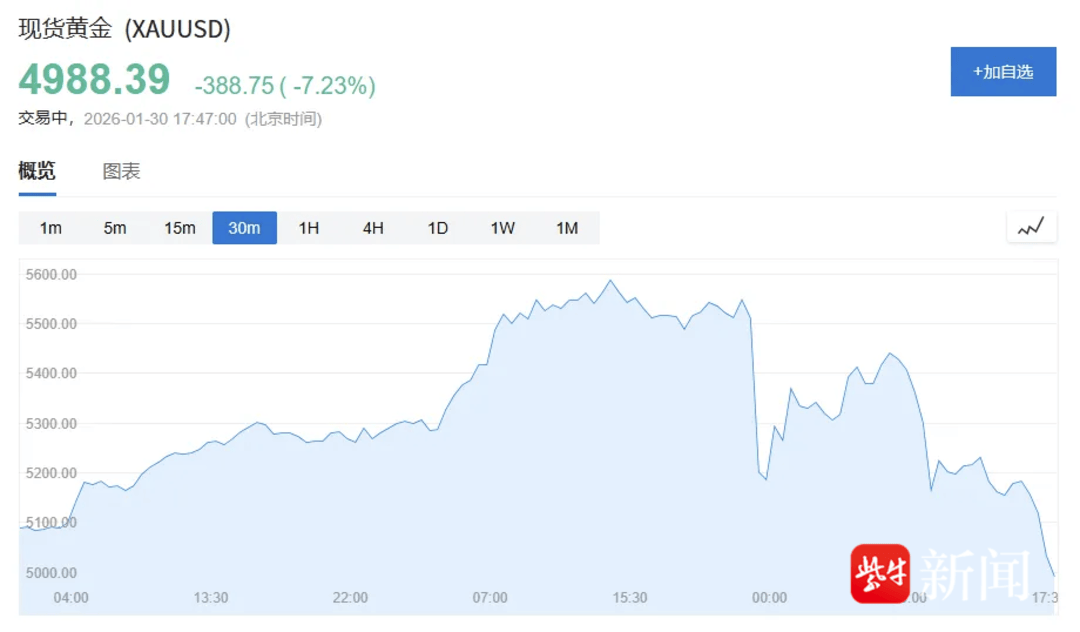
金价跌至每盎司 4346 美元,白银跌幅一度逼近 9%,为何国际金、银价格会大幅下跌?
Sou Hu Cai Jing· 2025-12-30 01:32
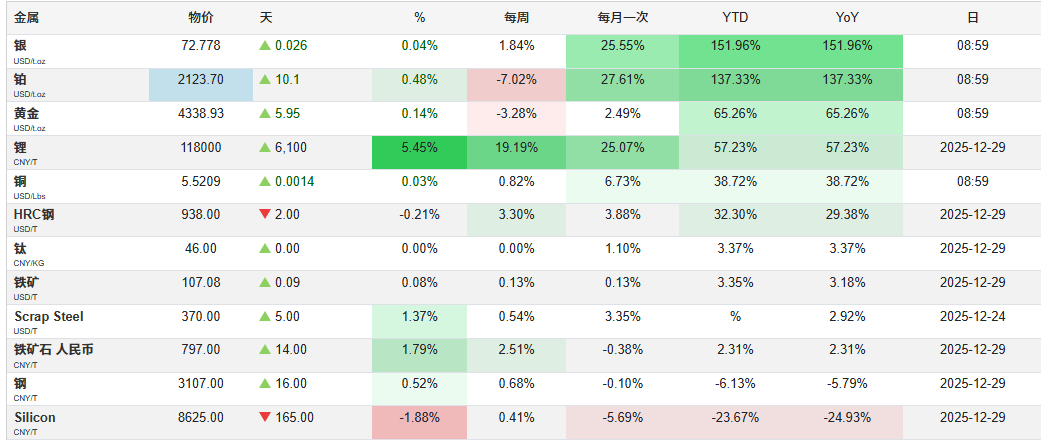
Core Insights - The article discusses the recent surge in precious metal prices and its impact on the real economy, particularly the consumer and manufacturing sectors, highlighting a disconnect between market sentiment and actual demand [1] - It emphasizes that the current trading environment is driven by emotions rather than logic, leading to extreme price volatility and potential market corrections [1] Group 1: Market Dynamics - The precious metals market is experiencing a speculative bubble, with significant price increases that are not supported by fundamental supply and demand metrics [7] - Regulatory measures, such as increased margin requirements by major exchanges, have triggered a forced deleveraging in the market, contributing to recent price declines [6] - Market rumors, particularly regarding the financial stability of major banks, have exacerbated volatility and led to panic selling among investors [11] Group 2: Economic Indicators - The article notes that while precious metals like silver and gold have seen substantial price increases (silver up 173% and gold up over 71% in 2025), the actual industrial demand growth for silver is only 15% [7] - There is a persistent supply shortage in the silver market, with a cumulative supply gap approaching 25,500 tons from 2021 to 2025, indicating that the fundamental demand remains strong despite price corrections [12] - The macroeconomic environment is shifting, with changing expectations around Federal Reserve interest rate policies impacting the attractiveness of precious metals as safe-haven assets [12]
太疯狂!今年涨幅是黄金的2倍 再创历史新高!
Mei Ri Jing Ji Xin Wen· 2025-12-23 13:36
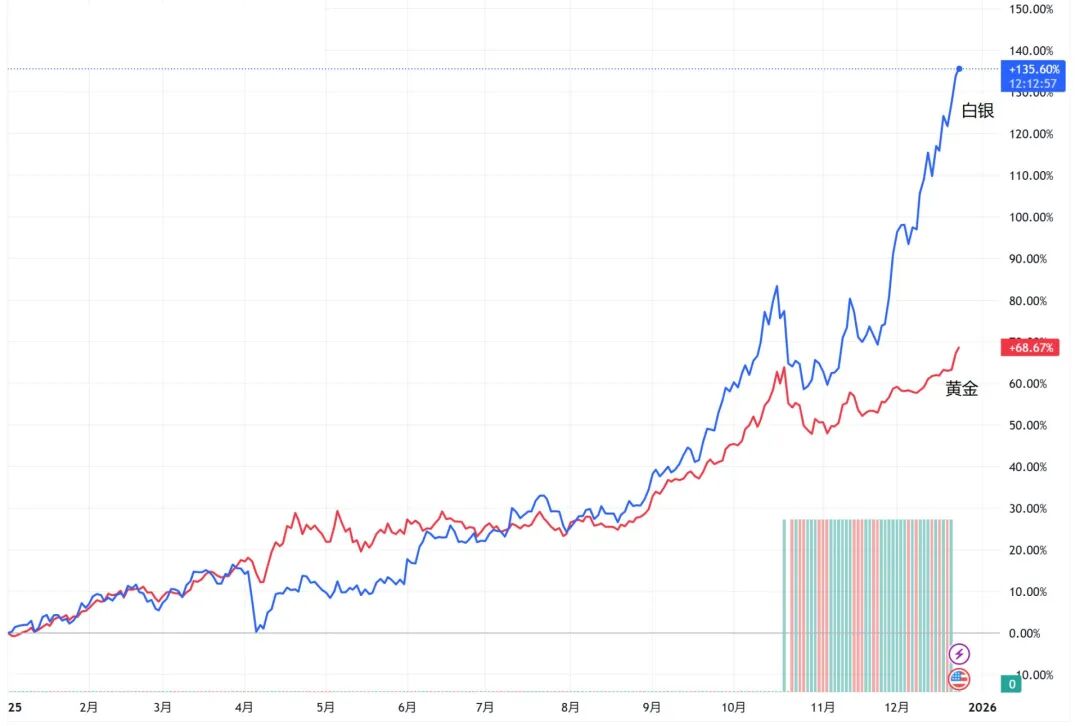
Core Insights - The price of silver has reached a historic high of over $70 per ounce, while gold has also surpassed $4,497 per ounce, marking significant annual increases of over 140% for silver and over 70% for gold [1][2][3] Price Movements - As of December 23, 2023, silver's price has increased by 140.77% year-to-date, significantly outperforming gold's 70.89% increase [3] - The historical price ratio between gold and silver typically fluctuates between 50 to 80 times, but this year it exceeded 100 times after a surge in gold prices [5] Market Dynamics - The recent surge in precious metal prices is attributed to multiple macroeconomic factors, including the Federal Reserve's monetary policy, which has reduced the attractiveness of cash and short-term bonds, driving investment towards gold and silver [5] - Geopolitical tensions have also heightened market uncertainty, contributing to increased demand for precious metals as a safe haven [6] Industrial Demand for Silver - Silver's industrial demand is projected to grow by approximately 5,000 tons from 2016 to 2024, with its applications in solar energy, electric vehicles, and AI data centers becoming increasingly critical [9] - The World Silver Association reports that industrial demand for silver is expected to rise from 153,000 tons in 2016 to 204,000 tons in 2024 [9] Comparison with Oil Market - In contrast to the booming silver market, the oil market is experiencing a downturn, reflecting a slowdown in global economic activity and a long-term trend towards energy transition [10] - The rise of electric vehicles is expected to peak global oil demand around 2030, while non-OPEC countries are increasing production, leading to an oversupply in the oil market [10]
财政部明晰标准仓单频繁交易会计处理原则
Qi Huo Ri Bao Wang· 2025-07-17 16:12
Core Viewpoint - The Ministry of Finance's Accounting Department has provided clear accounting treatment guidelines for standard warehouse receipt transactions, which helps to standardize financial operations and information disclosure for enterprises engaged in financial activities [1][2][4]. Group 1: Accounting Treatment Guidelines - The new guidelines classify contracts for buying and selling standard warehouse receipts as financial instruments under the Accounting Standards for Enterprises No. 22, which applies to contracts that can be settled in cash or other financial instruments [2][3]. - Enterprises that frequently buy and sell standard warehouse receipts for short-term profit without physical delivery should recognize the difference between the received consideration and the book value of the sold receipts as investment income, rather than sales revenue [3][4]. - The distinction between hedging against price fluctuations and speculative trading is crucial for accurate accounting treatment and compliance, as it affects how transactions are reported in financial statements [3][4]. Group 2: Impact on Enterprises - The clarification of accounting treatment is expected to curb speculative trading and false trading behaviors, guiding enterprises to focus on activities related to the real economy [6][7]. - Companies are advised to clearly differentiate between speculative transactions and those involving physical delivery, ensuring that accounting practices reflect the true nature of their business activities [6][7]. - The new requirements are seen as a supportive measure for the stable development of the futures market, enhancing the management of enterprises' futures-related activities and improving the market's service to the real economy [7][8].