金融领域制度型开放

Search documents
权威访谈·开局“十五五”丨潘功胜:将引导金融机构加力支持扩大内需、科技创新、中小微企业等重点领域
Yang Guang Wang· 2026-01-26 01:56
Core Viewpoint - The People's Bank of China (PBOC) is committed to implementing a moderately accommodative monetary policy to support economic growth and maintain financial stability, with specific measures outlined for 2026 [1][2]. Group 1: Monetary Policy and Financial Stability - The PBOC aims for social financing scale and broad money supply to significantly exceed nominal GDP growth by 2025, ensuring reasonable growth in financial totals [1] - As of December, the average weighted interest rates for new corporate loans and personal housing loans are approximately 3.1%, indicating low financing costs [1] - The PBOC plans to maintain ample liquidity and match the growth of social financing and money supply with economic growth and price level expectations [1] Group 2: Support for Key Sectors - Financial institutions will be guided to enhance support for expanding domestic demand, technological innovation, and small and micro enterprises [2] - A total of 500 billion yuan will be allocated for service consumption and elderly care re-loans, addressing diverse financial needs in the consumption sector [2] - The re-loan quota for technological innovation and technological transformation will be increased to 1.2 trillion yuan, promoting the development of the bond market's "technology board" [2] Group 3: Financial System Opening and Internationalization - The PBOC will deepen institutional opening in the financial sector and advance the internationalization of the renminbi [3] - Efforts will be made to build a multi-channel, comprehensive, secure, and efficient cross-border payment system for the renminbi [3] - The PBOC will enhance international cooperation in cross-border payments and strengthen regulatory capabilities to ensure national financial security [3]
方昕:海南将以更大力度推动金融领域制度型开放
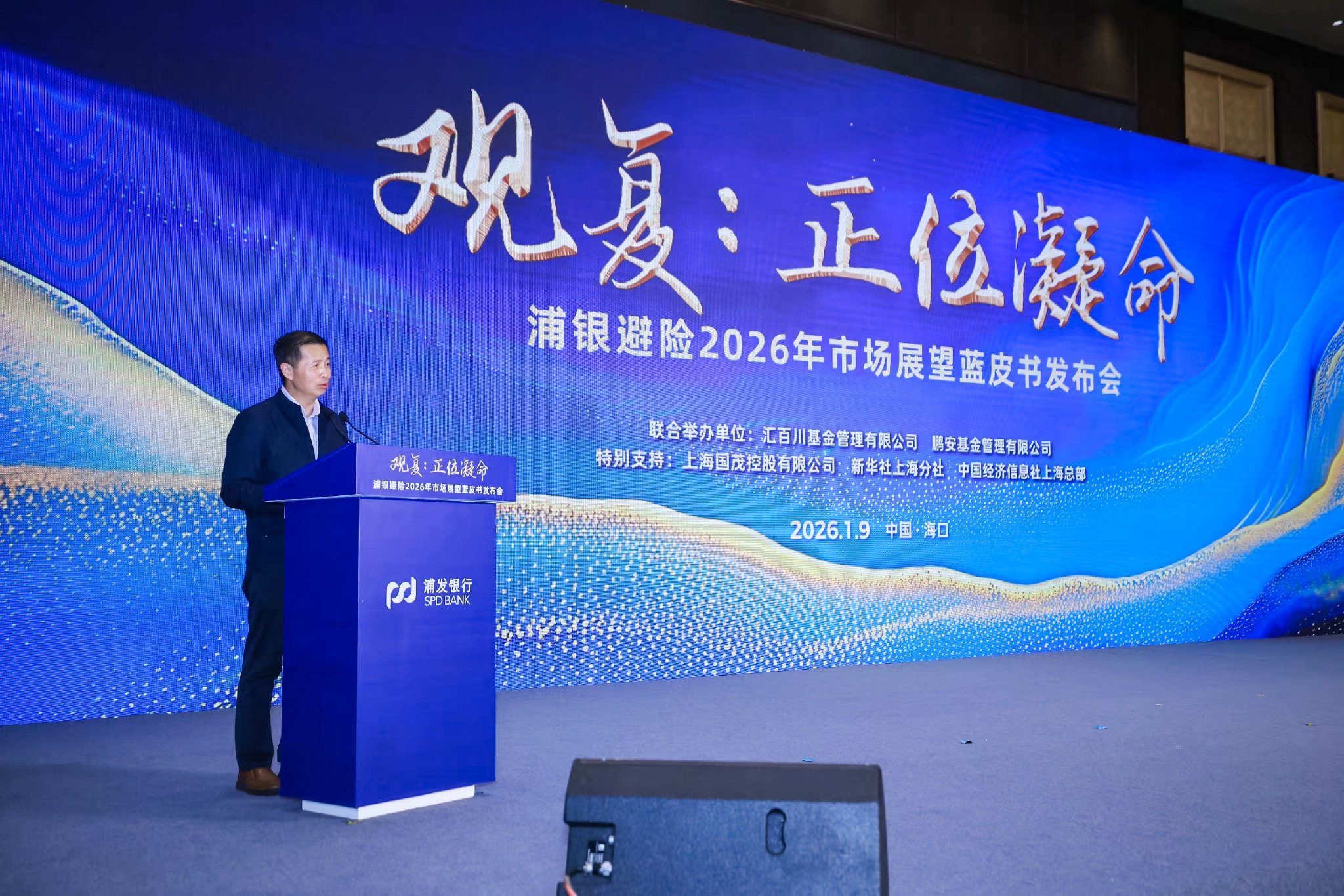
Zhong Guo Jin Rong Xin Xi Wang· 2026-01-11 09:38
Group 1 - The core viewpoint of the article highlights the significant progress and future outlook of Hainan's financial sector, emphasizing the province's commitment to institutional openness in finance [1] - By the end of 2025, the total loan balance in Hainan is expected to grow by approximately 10.5% year-on-year, which is notably higher than the national growth rate [3] - Hainan's international balance of payments is projected to exceed 110 billion USD, placing it at a medium to high level nationally, indicating a rapid increase in the province's outward orientation [3] Group 2 - The financial initiatives in Hainan's free trade port are not only contributing positively to the province's development but also serving as a pilot for the country's high-level financial openness [4] - Shanghai Pudong Development Bank is actively involved in Hainan's free trade port construction, facilitating the implementation of policies for the free and convenient flow of cross-border funds [4] - The establishment of five financial leasing management project companies in Hainan reflects the proactive measures taken by financial institutions to support the region's development [3][4]

两载深耕结硕果 金融强国迈新阶 写在中央金融工作会议召开两周年之际
Jin Rong Shi Bao· 2025-10-31 06:34
Core Viewpoint - The central financial work conference emphasizes the need to accelerate the construction of a financial power, strengthen financial regulation, improve the financial system, optimize financial services, and prevent and resolve risks, guiding the high-quality development of finance in the new era [1] Monetary Policy - The People's Bank of China maintains a supportive monetary policy stance, utilizing various tools to ensure ample liquidity, with social financing scale growing by 8.7% year-on-year and broad money (M2) increasing by 8.4% as of September [2] - The central bank is enhancing its modern monetary policy framework, focusing less on quantity targets and more on price-based tools, thereby enriching its monetary policy toolbox [2][3] Financial Risk Prevention - The central financial work conference outlines comprehensive measures to strengthen financial regulation and effectively prevent and resolve financial risks, with significant progress in reforming small and medium-sized financial institutions [4] - By mid-2025, the number of financing platforms has decreased by over 60%, and the scale of financial debt has dropped by more than 50%, indicating a substantial reduction in risk levels [4] Financial Sector Opening - The financial sector's opening is crucial for China's reform and development, with efforts to enhance cross-border investment facilitation and attract foreign financial institutions [6] - As of July 2025, foreign entities hold over 10 trillion yuan in domestic stocks, bonds, and deposits, with panda bond issuance exceeding 1 trillion yuan, reflecting the increasing internationalization of China's financial market [6] Achievements and Future Directions - Over the past two years, significant achievements have been made in building a financial power, but continuous efforts are required to deepen financial reform, optimize services, and expand financial openness [7]
便利外国投资者投资相关转移汇入汇出
Xin Hua Wang· 2025-08-12 06:11
Core Viewpoint - The People's Bank of China, along with several regulatory bodies, has issued guidelines to promote international high-standard institutional opening in designated free trade zones, allowing for the free transfer of funds related to foreign investments under compliance conditions [1] Group 1: Policy Measures - The guidelines propose 20 policy measures across six areas, including allowing foreign financial institutions to offer new financial services similar to those provided by domestic institutions, expediting decision-making on service applications within 120 days, and enhancing cross-border financial data flow [1][2] - The measures will be piloted in regions such as Shanghai, Guangdong, Tianjin, Fujian, Beijing, and Hainan, aiming to enhance the quality of the open economy and achieve systemic reform [1] Group 2: New Financial Services - New financial services are defined as those not currently offered in China but available and regulated in other countries. The implementation of these services will follow the principle of consistency between domestic and foreign institutions [2] - Financial management authorities will determine the types and nature of institutions eligible to provide these services, requiring them to obtain necessary licenses within a reasonable timeframe [2] Group 3: Investment Transfer Facilitation - The guidelines facilitate the free transfer of funds related to foreign investments, including capital contributions, profits, dividends, interest, capital gains, royalties, management fees, and other payments, without delays [3] - The aim is to enhance the overall transaction convenience for foreign investments and support the inclusion of more eligible foreign-invested enterprises in trade and investment facilitation pilot policies [3]
中央金融委员会:稳步扩大金融领域制度型开放
news flash· 2025-06-18 09:13
Core Viewpoint - The Central Financial Committee has issued opinions to support the accelerated construction of Shanghai as an international financial center, emphasizing the need for high-level financial openness and alignment with international trade rules [1] Group 1: Financial Openness - The opinions propose to steadily expand institutional financial openness in the financial sector [1] - There is a focus on promoting cross-border trade and investment facilitation [1] - The initiative aims to provide comprehensive financial services for enterprises looking to "go global" [1] Group 2: Investment Cooperation - The opinions emphasize deepening and expanding investment and financing cooperation related to the "Belt and Road" initiative [1] - There is a call for innovation in shipping insurance and reinsurance business [1] Group 3: Offshore Financial System - The plan includes constructing an offshore financial system that aligns with the Shanghai international financial center [1]
上海金融监管局:持续稳步推进金融领域制度型开放
news flash· 2025-05-30 07:09
Group 1 - The Shanghai Financial Regulatory Bureau is aligning with international high standards in trade and economic rules while exploring institutional openness in the financial sector under controllable risks [1] - The bureau is promoting the advantages of foreign institutions in Shanghai to achieve differentiated and specialized development [1] - These efforts are aimed at supporting the construction of Shanghai as an international financial center [1]
上海金融监管局副局长王鑫泽:上海金融监管局将持续稳步推进金融领域制度型开放
Zheng Quan Ri Bao· 2025-05-30 06:52
Core Viewpoint - Shanghai is actively promoting institutional financial opening while ensuring risk control, aiming to enhance its status as an international financial center by attracting foreign investment and fostering innovation in the financial sector [1][4]. Group 1: Financial Regulatory Developments - The Shanghai Financial Regulatory Bureau is implementing a work plan to enhance cross-border investment and financing convenience, with a pilot program for non-resident acquisition loans already yielding its first project [2]. - A mechanism has been established to support small and micro enterprises in foreign trade, providing targeted financing services and special credit quotas, resulting in over 240 billion yuan in loans disbursed to nearly 20,000 foreign trade enterprises by the end of April [2]. - As of now, Shanghai hosts over 50 foreign banks and insurance institutions, with a vibrant mix of domestic and foreign financial entities, reflecting a competitive financial landscape [3]. Group 2: International Reinsurance Center Developments - The Shanghai International Reinsurance Registration and Trading Center has been officially established, with a series of supportive policies rolled out to enhance its operational framework [5][6]. - A complete reinsurance industry chain has been formed in the Lingang area, with 21 reinsurance operation centers and 4 reinsurance intermediary institutions now in place [6]. - The trading center has registered 99 institutions and facilitated nearly 16 billion yuan in international reinsurance premiums, with over 1,200 billion yuan in registered business transactions [7]. Group 3: Future Directions - The Shanghai Financial Regulatory Bureau plans to continue promoting institutional financial opening and enhance cross-border risk monitoring to support the city's financial center development [4][8]. - Efforts will focus on digital transformation, providing various online services to facilitate cross-border transactions and improve operational efficiency for domestic and foreign institutions [7].
上海:将持续稳步推进金融领域制度型开放
news flash· 2025-05-30 03:04
Core Viewpoint - Shanghai is committed to steadily advancing institutional openness in the financial sector, enhancing its international financial center's influence through high-level international cooperation and regulatory meetings [1] Group 1: Financial Regulatory Developments - The Shanghai Financial Regulatory Bureau has successfully hosted a series of high-standard international meetings, including the Core Regulatory Joint Conference for Global Systemically Important Banks and a high-level international seminar on insurance regulation [1] - These efforts aim to deepen cross-border regulatory cooperation between China and international financial organizations, as well as regulatory agencies from major countries and regions [1] Group 2: Future Initiatives - The bureau plans to continue promoting institutional openness in the financial sector, positioning itself as a leader in high-level external openness [1] - There will be a focus on balancing financial openness with security, enhancing cross-border risk monitoring, and continuously improving financial regulatory capabilities [1] - These initiatives are designed to support Shanghai's international financial center in reaching higher levels of development [1]
COMEX黄金期货日内跌超3%;离岸人民币对美元汇率大涨丨金融早参
Mei Ri Jing Ji Xin Wen· 2025-05-12 22:58
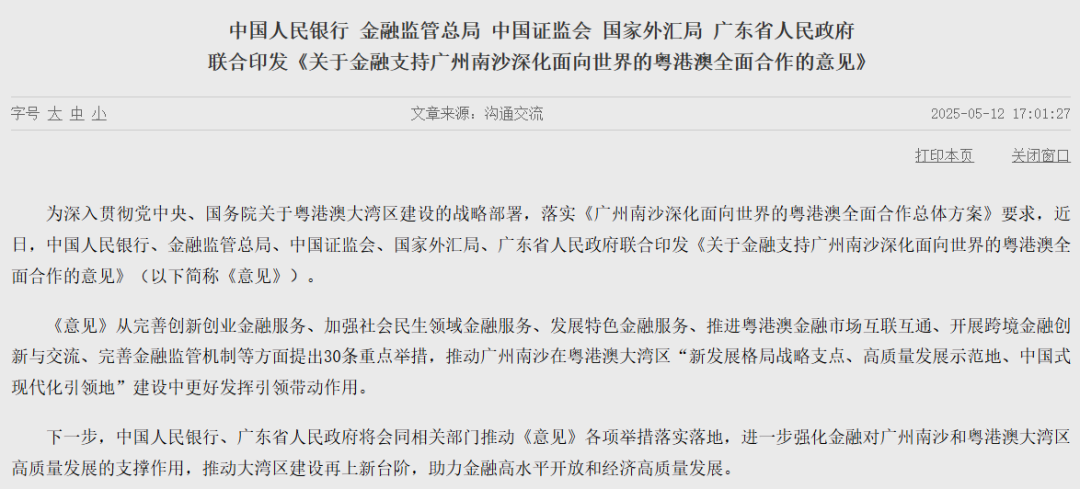
Group 1: Financial Policy and Regulation - The People's Bank of China and other regulatory bodies support Guangzhou Nansha in exploring institutional financial openness, aligning with international standards [1] - The visit of the Financial Regulatory Bureau's deputy director to Macau aims to enhance the industry's dialogue and improve foreign investment recognition in China's insurance market [2] Group 2: Investment and Asset Management - China Life Insurance and other institutions have established a private equity fund with a capital of 13 billion yuan, indicating a strategic shift towards equity asset allocation [3] - The establishment of this fund may catalyze the insurance asset management industry to transition from traditional fixed income to a "fixed income plus" model, benefiting asset management institutions with quality project reserves [3] Group 3: Commodity Market Dynamics - COMEX gold futures experienced a significant drop, with prices falling over 3%, impacting the profitability of gold mining companies and retail jewelers [4] - The decline in gold prices may lead to a dynamic reassessment of valuations in the precious metals sector, while industrial metals may gain attention due to the gold substitution effect [4] Group 4: Currency Exchange and Economic Impact - The offshore RMB appreciated against the USD, reaching a six-month high, which may reshape the cost-benefit structure for export-oriented companies [5] - The strengthening of the RMB could enhance the valuation of consumer blue-chip and financial sectors, while alleviating the repayment pressure on real estate companies' dollar-denominated debts [6]
央行、证监会等联合发布
Zheng Quan Shi Bao· 2025-05-12 11:43
Core Viewpoint - The People's Bank of China, along with other regulatory bodies, has issued a set of opinions aimed at enhancing financial support for the Nansha area, emphasizing its role in the high-quality development of the Guangdong-Hong Kong-Macao Greater Bay Area [1][2]. Group 1: Financial Support Initiatives - The opinions propose 30 key measures to strengthen financial support for Nansha, focusing on innovative financial services and cross-border financial cooperation [2][5]. - New business models such as "loans + external direct investment" will be explored to support technology innovation and high-end manufacturing [5][6]. - The establishment of a cross-border asset management center in Nansha is encouraged to facilitate international leasing and factoring services [7]. Group 2: Cross-Border Financial Services - The opinions aim to enhance cross-border payment services and credit financing, including the expansion of pilot banks for Hong Kong and Macao residents [6][8]. - There is a focus on simplifying processes for cross-border equity investment and exploring new models for international cooperation in futures trading [8][9]. Group 3: International Standards and Open Finance - The opinions support aligning Nansha with international standards such as the Comprehensive and Progressive Agreement for Trans-Pacific Partnership (CPTPP) and the Digital Economy Partnership Agreement (DEPA) [9][10]. - Efforts will be made to attract diverse investment institutions, including sovereign wealth funds and venture capital, to participate in the financial market [9][10].