门罗主义2.0

Search documents
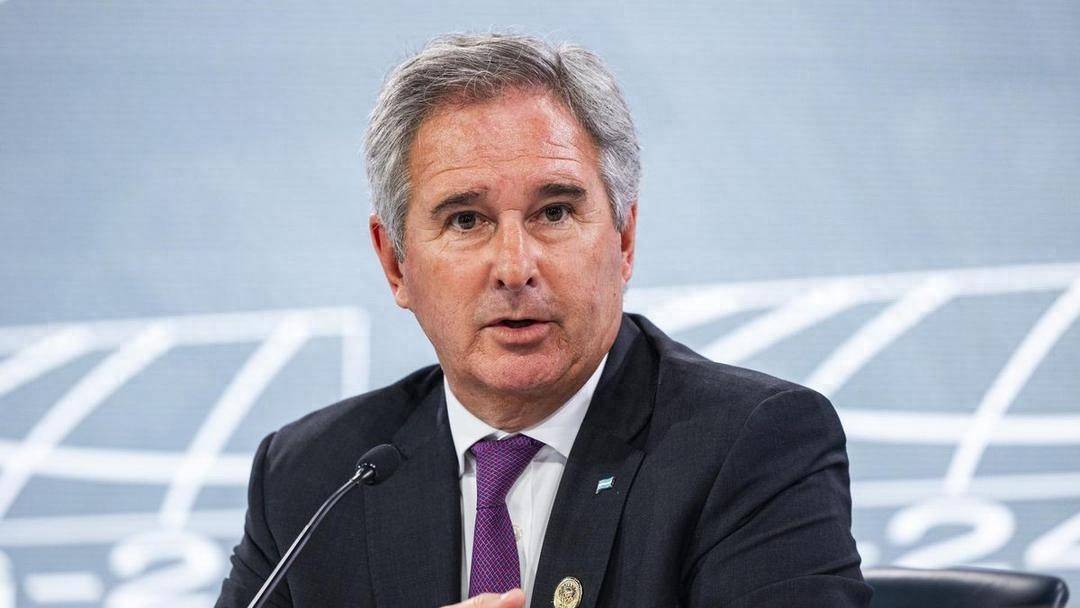
矿产联盟刚搞到一半,阿根廷突然反水:我们已接受中国投资
Sou Hu Cai Jing· 2026-02-10 10:18
Group 1 - The core issue revolves around the challenges of implementing a "decoupling" supply chain plan proposed by Trump regarding rare earths, especially in light of Argentina's recent acceptance of Chinese investments [1][3] - Argentina's Foreign Minister Pablo Kirno stated that a key mineral agreement was signed with the U.S., but it does not exclude Chinese participation in Argentina's investments, highlighting the uncertainty surrounding the situation [3][5] - The new agreement prioritizes the U.S. as a trade partner for minerals like copper and lithium, while China is portrayed as a market-controlling entity, despite being Argentina's second-largest trade partner with investments in various sectors [5][8] Group 2 - Argentina's economic ties with China are deeply rooted, with a significant increase in agricultural exports to China, particularly soybeans, which grew by 29.3% last year [8] - The current Argentine government, led by Milei, is ideologically and financially reliant on the U.S., yet aims to maintain a balanced approach without being forced to choose sides [8][10] - The geopolitical landscape is shifting, with potential implications for Chinese investments in Latin America, as U.S. efforts to diminish China's influence could lead to a contraction in market opportunities and affect Chinese companies' confidence in their strategic planning [10][12]

欧洲军演弄巧成拙,特朗普话越说越绝,还有退路吗?
Jin Shi Shu Ju· 2026-01-20 08:23
Core Viewpoint - The article discusses President Trump's persistent interest in acquiring Greenland, which has escalated into a significant diplomatic crisis between the U.S. and Europe, particularly Denmark [1][5][12]. Group 1: Trump's Greenland Acquisition Plans - Trump initially proposed the idea of acquiring Greenland during his first term, which has since evolved into a strong obsession, leading to heightened tensions with European allies [1][4]. - The White House has indicated readiness to execute any acquisition plan selected by the president, emphasizing the strategic rationale behind the proposal [2][12]. - Trump's administration views control over Greenland as crucial for national security, with discussions around potential military actions and tariffs as negotiation tools [10][12]. Group 2: Diplomatic Reactions and Strategies - European leaders are still hopeful for a negotiated agreement, with some suggesting a joint control arrangement as a strategic compromise [2][3]. - The recent military exercises by NATO countries in Greenland have been perceived as counterproductive, provoking a stronger response from Trump [10][11]. - Trump's threats of tariffs against countries opposing his Greenland plans have escalated tensions, with specific rates proposed for several European nations [10][11]. Group 3: Strategic Importance of Greenland - Greenland's geographical and strategic significance is highlighted, particularly in relation to missile defense systems and U.S. military presence in the Arctic [12][13]. - Trump's insistence on full ownership of Greenland is framed as essential for maximizing its strategic value, despite existing U.S. military capabilities in the region [13][14]. - The article notes that while Denmark is open to U.S. military cooperation, Trump’s vision remains focused on complete territorial control [13][14].
牺牲乌克兰!手握百万大军的俄罗斯,只有俄能帮格陵兰?俄媒突然喊话:只有我们能救,但有个条件
Sou Hu Cai Jing· 2026-01-19 14:37
Core Viewpoint - The article discusses the implications of President Trump's announcement to impose tariffs on several European countries and his intention to purchase Greenland, highlighting a shift in U.S. strategic logic from alliance maintenance to resource acquisition and territorial control [1][3][19]. Group 1: U.S. Tariff and Greenland Acquisition - President Trump announced a 10% tariff on Denmark, Norway, Sweden, and six other European countries, with a potential increase to 25% if a deal to purchase Greenland is not reached by June 1 [1]. - The move has been characterized as "open extortion" by European media, indicating a troubling precedent for international relations and territorial sovereignty [1][3]. Group 2: Strategic Importance of Greenland - Greenland is strategically located between the North Atlantic and Arctic Oceans, with melting ice due to climate change making new shipping routes viable, potentially reducing travel time from Shanghai to New York by over 40% [4][6]. - The island is rich in rare earth minerals and other critical resources essential for modern technology and green energy, making it a valuable asset for any nation [6]. Group 3: Military and Geopolitical Implications - The U.S. military presence in Greenland, particularly at Thule Air Base, plays a crucial role in monitoring potential threats from Russia, enhancing U.S. strategic capabilities in the Arctic [6][10]. - Control over Greenland would allow the U.S. to strengthen its military positioning against Russia, effectively encircling Russian naval activities in the Barents Sea [6]. Group 4: European Response and NATO Dynamics - European nations have shown limited military response to U.S. actions, with symbolic troop deployments and internal disagreements on how to address the situation [11][12]. - The potential for U.S. military action against Greenland raises questions about NATO's collective defense obligations and the alliance's future credibility [11][12]. Group 5: Russia's Position and Strategic Calculations - Russia has positioned itself as a potential counterbalance to U.S. ambitions in Greenland, suggesting that only it could effectively prevent U.S. annexation, albeit under specific conditions related to the Ukraine conflict [3][15]. - The Kremlin's rhetoric aims to exploit divisions within the West, questioning the consistency of Western principles regarding self-determination and territorial integrity [14][19]. Group 6: Greenland's Autonomy and Local Sentiment - Greenland's legal status as a self-governing territory complicates U.S. acquisition efforts, as any transfer of sovereignty must be approved by its people through a referendum [8][10]. - The sentiment among Greenland's population, which has expressed a desire to remain independent, poses a significant barrier to U.S. plans for acquisition [18].
商品:定价门罗主义2.0,美委冲突之后…
Xin Lang Cai Jing· 2026-01-04 23:30
Core Viewpoint - The article discusses the implications of the U.S. military actions against Venezuela and the strategic shift towards a more aggressive "Monroe Doctrine 2.0," aimed at securing U.S. dominance in the Western Hemisphere and controlling valuable resources like oil [3][17]. Group A: Global Heavy Oil Trade Restructuring - Any severe control measures will likely lead to a loss of approximately 600,000 to 800,000 barrels per day of heavy crude oil supply, primarily affecting Asian markets [5][19]. - Venezuela's proven oil reserves are approximately 297.6 billion barrels, accounting for 17.8% of the world's total, with the Orinoco heavy oil belt containing about 220 billion barrels [6][20]. - If the U.S. successfully integrates Venezuelan oil into its supply system, the global heavy oil trade flow will shift from global circulation to regional alignment, with Venezuela's heavy oil accounting for about 5% of global supply [6][20]. Group B: U.S. Strategic Intentions and Resource Expansion in Latin America - The U.S. military pressure on Venezuela is part of a broader strategy to reassert its dominance in the Western Hemisphere and counter the influence of external powers like Russia [8][22]. - Key minerals in the region, such as lithium and rare earth elements, are becoming increasingly important, with South America's "lithium triangle" containing about 60% of the world's lithium resources [8][22]. - Brazil holds approximately 23% of the world's rare earth reserves, making it a significant player in the global market for strategic minerals [9][23]. Group C: Future Considerations - The current state of Venezuelan oil production is not severely threatened, but the destination of exports may change significantly, impacting global asphalt supply [10][24]. - The asphalt market is currently in a "low-price-tight balance" state, with no significant supply-demand conflicts, allowing for potential upward price elasticity in the near future [11][25]. - Future monitoring should focus on Venezuelan oil production and export data, U.S. sanctions policies, and the monthly import volumes of diluted asphalt in China [11][25].

天下要大乱了,美国公布最新战略:为了中国,特朗普决心放弃世界
Sou Hu Cai Jing· 2025-12-17 09:38
Group 1 - The core idea of the article is that the U.S. is shifting its focus from global policing to concentrating on domestic issues and specifically targeting China, as outlined in the new National Security Strategy report [1][3][6] - The U.S. is adopting a "Monroe Doctrine 2.0," which emphasizes controlling its own hemisphere while reducing military commitments abroad, particularly in Europe and the Middle East [4][6][17] - The U.S. aims to consolidate its resources and military presence in the Americas, while reducing its global military footprint, indicating a strategic shift in its foreign policy [3][6][20] Group 2 - The U.S. is facing three main challenges that necessitate this strategic shift: financial constraints, the high cost of maintaining global hegemony, and a pragmatic approach to prioritize domestic security [8][9][15] - The U.S. has seen a decline in its global GDP share from 35% to 25% over the past 17 years, indicating a decrease in its economic power to sustain global military operations [13][14] - The U.S. is expected to increase pressure on China's high-tech industries through stricter export controls and military maneuvers in the Asia-Pacific region, which could lead to heightened tensions [25][27] Group 3 - The article suggests that while the U.S. is reducing its global role, this may create opportunities for China, particularly through initiatives like the Belt and Road Initiative, which can fill the void left by the U.S. in various regions [29][31] - The U.S. withdrawal from global dominance is likely to lead to instability in Europe, Russia, and Latin America, as these regions navigate the new geopolitical landscape without U.S. support [32][36][40] - Latin American countries are increasingly resistant to U.S. influence, which may lead to a rise in anti-American sentiment and potential conflicts as the U.S. attempts to assert control over regional resources [42][43]