频繁交易

Search documents
投资中的两重考验|投资小知识
银行螺丝钉· 2026-01-17 13:37
Core Viewpoint - The article discusses the challenges and psychological hurdles investors face during market fluctuations, particularly during the transition from bear to bull markets, emphasizing the importance of patience and experience in investment strategies [2][3][6]. Group 1: Market Performance and Investor Behavior - The market experienced significant growth from a low of 5.9 stars to around 3.x stars by early January 2026, indicating a recovery phase where pessimistic sentiments decreased [3]. - Many investors began to realize profits during the market upturn in 2025, but the initial recovery phase was challenging as investors often felt compelled to sell once they broke even [4][5]. - By the end of Q2 2025, a dense recovery phase was noted, with many investors seeing average returns increase as the market continued to rise in Q3 [5]. Group 2: Investor Challenges and Learning - Investors faced two main tests: the initial recovery from losses and the temptation to sell upon breaking even, which many failed to navigate successfully [4][6]. - Research indicated that approximately 36.6% of fund investors were still at a loss by the end of Q3 2025, highlighting the prevalence of losses despite overall market gains [6]. - Investors who endured the bear market from 2022 to 2026 gained valuable experience, understanding the risks of market volatility and the benefits of holding undervalued investments for the long term [7].


A股现在还是牛市吗?|投资小知识
银行螺丝钉· 2025-12-06 14:03
Group 1 - The A-share market typically experiences a small bull-bear cycle every 3-5 years, potentially reaching a 3-star level, as seen in early 2018 and early 2021; larger bull markets occur every 7-10 years, possibly reaching 1-2 star levels, exemplified by 2007 and 2015 [2] - The long-term annualized return for the A-share market, starting from 1000 points at the end of 2004 to approximately 5700 points by the end of November 2025, is around 8%-9%, with dividends pushing it to about 7600 points, resulting in an annualized return of around 10% [2] - The A-share market's bull markets are rarely characterized as slow; they are typically rapid, followed by periods of consolidation or decline [4] Group 2 - Recent significant price increases in the A-share market occurred mainly in late September 2024 and during a few trading days in August-September 2025, with major up days accounting for only 7% of total trading days [4] - In the third quarter of 2025, the ChiNext index saw a remarkable 50% increase, marking the largest single-quarter gain in the past decade [5] - Investors are advised to avoid two main pitfalls during bull markets: chasing prices and frequent trading, as market styles are expected to rotate quickly in 2025 [6]

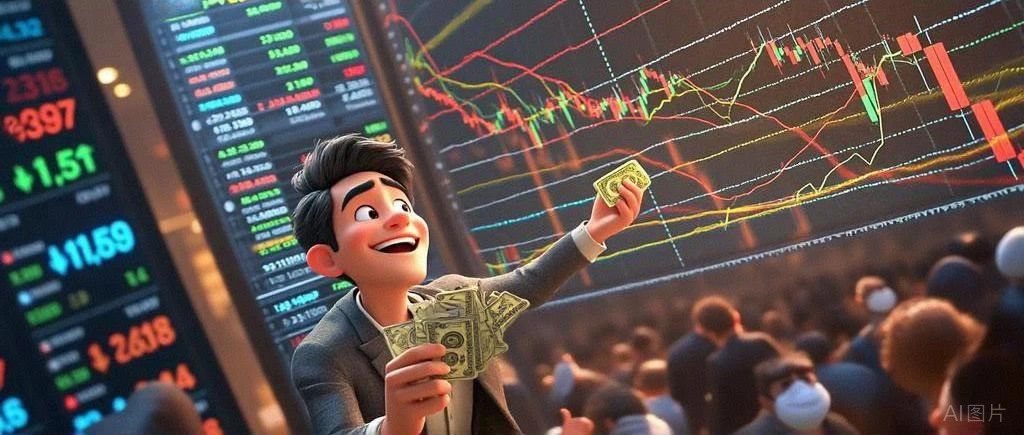
股票基金投资,为什么要避免频繁交易呢?|投资小知识
银行螺丝钉· 2025-11-22 13:24
Group 1 - The article discusses the duration of stock market cycles, indicating that a complete bull and bear market typically spans 3 to 5 years [2] - It highlights specific years when significant market uptrends occurred, such as 2021, early 2018, 2015, 2010, and 2007, with varying degrees of market strength [2] - The article notes that only a minority of investors manage to earn profits from stock funds over a complete market cycle due to the long intervals between significant market movements [2] Group 2 - Frequent trading is mentioned as a factor that increases transaction costs for investors, which in turn reduces overall returns [2]

[11月3日]指数估值数据(大盘上涨了,为啥还有人亏钱?)
银行螺丝钉· 2025-11-03 14:04
Market Overview - The overall market showed a slight increase, with the A-share index rising approximately 18% and the Hong Kong Hang Seng Index increasing by 30% this year [9][10]. - Both large-cap and small-cap stocks experienced minor gains, with a strong performance in value style stocks [2][3][4]. Investment Performance - Most stock funds have also seen gains, with the actively managed selection rising by 27% from the beginning of the year to the end of October [12]. - Over 94% of investors in actively managed selections are profitable, indicating effective investment strategies [16]. Retail Investor Challenges - Despite the overall market uptrend, a significant portion of retail investors are still facing losses, with over 40% reporting negative returns in 2025 [18]. - Historical data shows that even during bull markets, many investors have experienced substantial losses due to poor timing and market entry points [20][26]. Market Behavior Insights - The tendency for retail investors to enter the market during high points leads to increased losses, as many accounts were opened during previous bull markets in 2007 and 2015 [27]. - The average holding period for small retail investors is only 5-10 days, compared to 3-5 years for institutional investors, highlighting a lack of patience in investment strategies [36]. Investment Philosophy - A shift from a trading mindset to a business ownership mindset is recommended, emphasizing the importance of viewing stock investments as ownership in companies rather than mere trading opportunities [5][6]. - The concept of value investing is reinforced, suggesting that investors should focus on acquiring shares of fundamentally sound companies and holding them for the long term [5][6].

[9月21日]美股指数估值数据(为啥牛市是散户亏钱的主要原因?)
银行螺丝钉· 2025-09-21 13:43
Core Viewpoint - The article discusses the recent performance of global stock markets, the implications of the Federal Reserve's interest rate cuts, and the behavioral patterns of retail investors that often lead to losses during bull markets. Group 1: Market Performance - Global stock market indices experienced an overall increase this week [2] - The US stock market rose by 1.2% this week [3] - Non-US markets saw a slight increase [4] Group 2: Federal Reserve and Interest Rates - The recent interest rate cut by the Federal Reserve has positively impacted the market [5] - However, the benefits of rate cuts are often anticipated before the actual announcement [6] - Markets had already priced in the expectation of rate cuts in July and August, leading to significant gains in A-shares and Hong Kong stocks [8] Group 3: Retail Investor Behavior - The statement that bull markets are a primary reason for retail investor losses may seem counterintuitive but reflects reality [13] - Investors tend to open accounts and invest during bull markets, often at high prices, leading to losses when the market corrects [20][21] - The tendency to chase rising stocks and sell during downturns contributes to retail investor losses [25] Group 4: Trading Frequency and Investment Strategy - Frequent trading can lead to missed opportunities, especially in a structurally bullish market where different sectors lead at different times [26] - Investors who trade based on short-term movements may find themselves losing money despite overall market gains [32] - A shift from a trading mindset to a business ownership mindset is recommended for better long-term investment outcomes [36] Group 5: Global Stock Market Valuation - The article includes a star rating system for global stock markets, indicating periods of undervaluation [37] - Following a significant drop in April 2025, the global stock market rebounded but remains at a lower valuation [38] Group 6: Investment Products - There are currently no global stock index funds available in mainland China, but a simulated global index investment strategy is offered through a diversified portfolio [40] - The company has launched a "Global Index Advisory Portfolio" that includes various stock market index funds [41] Group 7: Book Release - A new edition of the book "The Intelligent Investor" has been released, which has gained significant popularity [46][48] - The book emphasizes the long-term benefits of stock investments and provides insights into various asset classes [50][51]

【金融教育宣传周】同学!非理性炒作了解一下(二)
天天基金网· 2025-09-20 01:29
Group 1 - The article emphasizes the importance of financial education and awareness during the Financial Education Promotion Week from September 15 to September 21, 2025 [2] - It highlights the risks associated with frequent trading, labeling it as a "profit devourer" due to overconfidence among investors [3] - The content suggests that investors should avoid impulsive trading behaviors that can lead to significant losses [3] Group 2 - The article is sourced from the "Oriental Fortune Securities" Investor Education Base, indicating a focus on educating investors about market behaviors [6] - It mentions the role of regulatory bodies such as the National Financial Supervision Administration, the People's Bank of China, and the China Securities Regulatory Commission in promoting financial literacy [2]

金融破段子 | 牛市中的回撤,会这样把人震下车
中泰证券资管· 2025-08-04 11:32
Core Insights - The article highlights the frequency and magnitude of drawdowns in a bull market, emphasizing that significant pullbacks occur regularly even during upward trends [2][3] - It stresses the importance of understanding and accepting the inevitability of drawdowns in investing, which can help investors maintain confidence and avoid panic selling [5][7] Summary by Sections Drawdown Statistics - A user analyzed the Wande All A Index, revealing 11 instances of drawdowns of 5% or more from April 2019 to December 2021, indicating that such occurrences are common, roughly every three months [2][3] Investor Psychology - The article discusses the psychological challenges investors face during bull markets, particularly the need for strong conviction to withstand significant drawdowns, with three instances in the early bull market showing declines around 15% [3][5] Investment Strategy - It argues that frequent trading in an attempt to "do something" can lead to losses, as it often detracts from decision quality and increases psychological strain [7] - The article advocates for thorough research and pre-planning as a more effective approach to investing, especially during periods of strong market performance [7]
散户炒股的七大铁律!照着做少亏70%!
天天基金网· 2025-03-22 23:44
Core Viewpoint - Retail investors often enter the market with high hopes but frequently end up facing significant losses due to emotional trading and lack of strategy [1][4]. Group 1: Reasons for Retail Investor Losses - Frequent trading can lead to high transaction fees, which can consume up to 20% of the initial capital [6]. - Human psychology plays a major role in losses; investors may feel like experts during market upswings but hold onto losing positions too long during downturns [6]. - Retail investors are often not truly investing but rather gambling, as their strategies resemble betting rather than informed decision-making [9]. Group 2: Investment Guidelines - Avoid greed; aiming for unrealistic returns can lead to significant losses, while a 10% annual return is already considered exceptional [8]. - Understand that the information available to retail investors is often outdated, as institutional investors have access to advanced tools and data, allowing them to act before retail investors [9].