餐饮+融合发展

Search documents
餐饮+”正热 创新融合点燃城市“烟火气
Zheng Quan Ri Bao· 2026-01-04 16:41
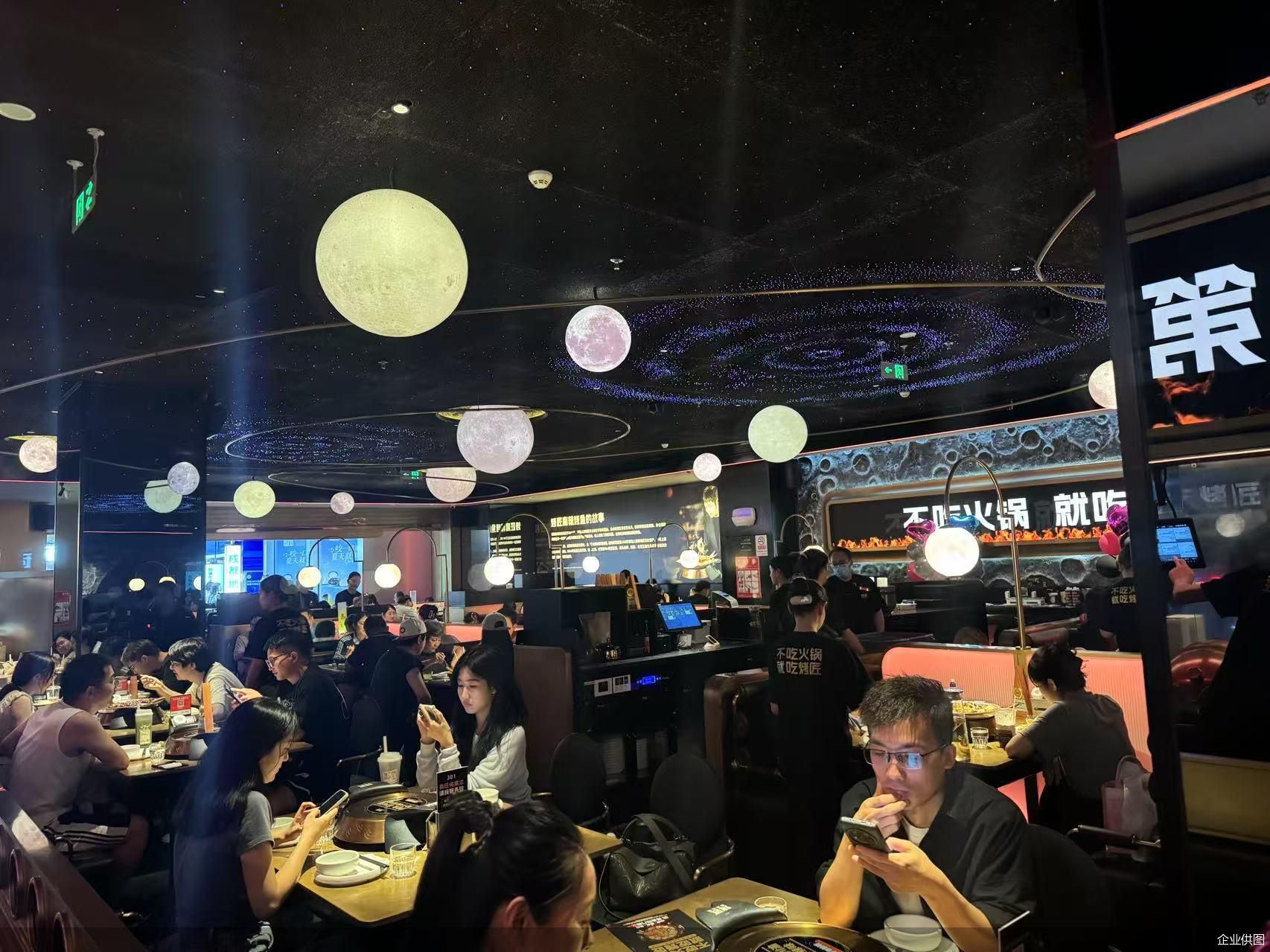
Group 1 - The national catering market experienced a consumption boom during the New Year's holiday, with major cities seeing high foot traffic in restaurants and strong reservation rates for popular dining spots [1] - In Beijing, from January 1 to January 3, the average daily sales of monitored catering businesses increased by 4.6% year-on-year, with dine-in sales rising by 25.4% [1] - Nearly 30 specialty restaurants reported a cumulative online sales of 2.405 million yuan in the first two days of the New Year, indicating robust holiday dining consumption [1] Group 2 - The hot pot segment performed exceptionally well due to cold weather and holiday gatherings, with Haidilao serving over 4.5 million customers nationwide from December 31 to January 1 [2] - The dining experience during the New Year saw a peak in customer flow, with some Haidilao locations reporting table turnover rates exceeding 10 times on New Year's Eve [2] - Xibei reported approximately 500,000 customer visits across its national locations during the New Year period, showing resilience despite the cessation of subsidies [2] Group 3 - The catering industry is a crucial pillar for promoting consumption, benefiting livelihoods, and stabilizing employment, serving as a barometer for economic recovery [3] - From January to November 2025, the total retail sales of consumer goods reached 45.6067 trillion yuan, with catering revenue at 522.45 billion yuan, reflecting a year-on-year growth of 3.3% [3] Group 4 - Industry experts anticipate that traditional year-end consumption demand will further increase as the peak season approaches [4]

2025年全国餐饮收入6057亿元,同比增长3.2%,餐饮业仍面临“供强需弱”的挑战
Sou Hu Cai Jing· 2026-01-01 21:13
Core Viewpoint - The Chinese catering industry is experiencing a mixed growth scenario, with a notable increase in revenue but facing challenges related to supply and demand dynamics, competition, and market saturation [3][11]. Group 1: Industry Performance - In November 2025, the national catering revenue reached 605.7 billion yuan, marking a year-on-year growth of 3.2%, while the cumulative revenue from January to November was 522.45 billion yuan, up 3.3% year-on-year [1]. - The catering industry is characterized by a "strong supply but weak demand" situation, indicating a shift in competition from product and service advantages to a comprehensive battle involving supply chains, digitalization, and capital strength [3][11]. Group 2: Capitalization Trends - A wave of capital market activity is observed in the Chinese catering industry, with leading brands like Mixue Ice City and others going public in 2025, aiming to leverage capital for rapid expansion and brand building [4]. - The IPO frenzy in the Hong Kong market is particularly appealing for Chinese consumer brands looking to establish a global presence, reflecting both policy alignment and the inherent strengths of these companies [5]. Group 3: Online Growth Channels - Online channels have emerged as a significant growth driver, with a 9.1% increase in national online retail sales from January to November 2025, and a remarkable 14.9% surge in sales of food-related products [6]. - The competition in the online food delivery market has intensified, leading to substantial financial losses for major platforms like Alibaba and Meituan due to aggressive subsidy wars [6][8]. Group 4: Market Dynamics - The catering industry is witnessing a dual trend of rapid chain expansion alongside a wave of closures, with 161,000 closures reported in the first half of 2025, surpassing the 159,900 new openings [10]. - The chain restaurant sector is accelerating, with several brands achieving over 10,000 stores, while the overall chain rate is projected to rise from 19% in 2019 to 23% in 2024 [10]. Group 5: Regional Insights - Shenzhen's catering sector has shown resilience, with a 14.3% increase in catering revenue, reflecting a broader trend of consumer spending recovery [12]. - Companies in Shenzhen are adapting to market pressures by innovating their business models, such as shifting to community-based stores to enhance operational efficiency and reduce costs [14].

中国烹饪协会:11月份餐饮市场稳中有进 “双11”线上线下联动拉动消费
智通财经网· 2025-12-15 13:36
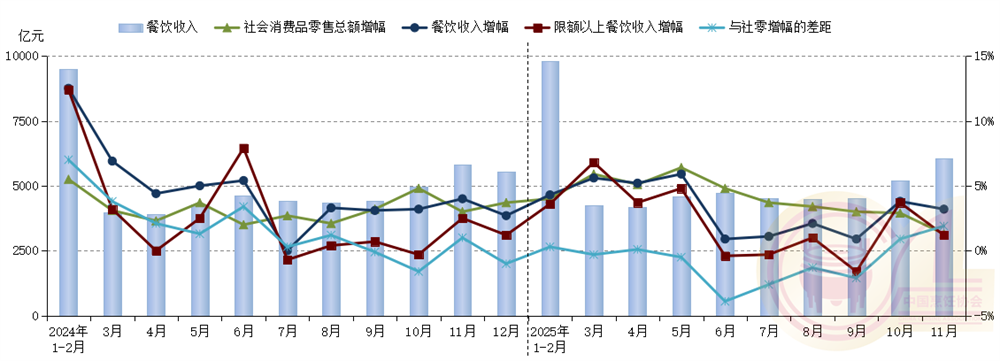
Group 1 - The overall operation of the restaurant market in November remained stable, continuing a trend of steady progress, but there are significant challenges due to a strong supply and weak demand [1] - The National Bureau of Statistics reported that in November 2025, national restaurant revenue reached 605.7 billion yuan, a year-on-year increase of 3.2%, while revenue from above-designated size units was 138 billion yuan, up 1.2% [1] - For the period from January to November 2025, national restaurant revenue totaled 522.45 billion yuan, with a year-on-year growth of 3.3%, and revenue from above-designated size units was 149.33 billion yuan, increasing by 2.3% [1] Group 2 - The China Cuisine Association noted a decline in the growth rate of national restaurant revenue and revenue from above-designated size units by 0.8 and 1.3 percentage points year-on-year, respectively [1] - The proportion of national restaurant revenue to total retail sales of consumer goods was 13.8%, an increase of 2.6 percentage points from the previous month, indicating that restaurant revenue growth outpaced the overall retail sales growth by 1.9 percentage points [1] - During the "Double 11" shopping festival, restaurant companies actively expanded their market through online pre-sales and live streaming, with significant increases in pre-sale orders for brands like Changsha Ju Wei Qu Ji and Shanghai Ha Ling Noodle House [2]

日均销售1000余碗炸酱面、夜间订单暴涨 暑期经济带动京城烟火气
Bei Jing Shang Bao· 2025-07-20 11:57
Core Insights - The summer season has led to a significant increase in restaurant traffic in Beijing, with many establishments reporting daily customer numbers in the thousands and turnover rates of up to 12 times a day [1][3][4] - The night economy is thriving, with a 120% month-on-month increase in night orders since July, driven by extended operating hours and the introduction of night-themed dining options [7][9][10] - The Beijing government has initiated a plan to enhance consumer spending, focusing on high-quality development in the restaurant industry and promoting the integration of dining with cultural and recreational activities [12][14] Group 1: Restaurant Performance - Many restaurants near tourist attractions have seen a surge in customer numbers, with some reporting increases in sales of 15%-20% and customer traffic up by over 30% [3][4] - Specific restaurants, such as 烤匠麻辣烤鱼 and 巴奴毛肚火锅, have reported exceptionally high turnover rates, with some locations achieving over 10 turnovers on weekends [3][4] - The demand for local delicacies, such as Beijing snacks and roasted duck, has surged, with some outlets experiencing sales growth of over 40% [3][6] Group 2: Night Economy Growth - Night orders in Beijing have increased by 120% since July, with traditional late-night foods like barbecued seafood seeing an 80% rise in orders [9][10] - The popularity of late-night dining has led to significant increases in sales of beverages and snacks, with beer and ice products seeing over 150% growth [9] - Restaurants are adapting by extending their hours and creating night-themed dining experiences, with establishments like 海底捞 launching night market concepts [10][11] Group 3: Government Initiatives and Industry Trends - The Beijing government has released a plan to boost consumer spending, which includes creating 30 "late-night dining" streets and enhancing the quality of dining areas [12][14] - The integration of dining with cultural experiences is becoming essential, as restaurants seek to attract diverse consumer groups by offering unique experiences [13][14] - The summer season and the growth of the night economy are seen as opportunities for restaurants to innovate and enhance their offerings, preparing for future peak seasons [12][14]