
AI+具身智能

Search documents
金元证券每日晨报-20260213
Jinyuan Securities· 2026-02-13 02:51
Market Overview - The Shanghai Composite Index closed at 4,134.02, up 0.05%, with a trading volume of 897.96 billion yuan [5] - The Shenzhen Component Index rose by 0.86% to 14,283.00, with a trading volume of 1,243.78 billion yuan [5] - The ChiNext Index increased by 1.32% to 3,328.06, with a trading volume of 618.13 billion yuan [5] - Overall, more than 3,200 stocks declined across the market, with total trading volume reaching 2.14 trillion yuan, an increase of 157.5 billion yuan from the previous trading day [10] International News - U.S. President Trump emphasized the necessity for a deal with Iran, warning of severe consequences if negotiations fail [9] - A proposal for a broad economic partnership between Russia and the U.S. has been introduced, focusing on natural gas and key raw materials [9] - The U.S. and Japan are finalizing a $550 billion investment fund, with initial projects covering data center energy and semiconductors [9] Domestic News - The People's Bank of China will conduct a 1 trillion yuan reverse repurchase operation, marking the sixth consecutive month of increased liquidity [12] - The Ministry of Education is reforming vocational education, focusing on new fields such as low-altitude economy and artificial intelligence [14] - The State-owned Assets Supervision and Administration Commission has established an "AI+" industry community to enhance data space construction across 11 key sectors [14] Important Announcements - Companies such as Qichuang Data and Penghui Energy are planning significant investments, with Qichuang Data expected to procure servers worth up to 11 billion yuan and Penghui Energy planning a 3.3 billion yuan battery project [14]
2月12日晚间央视新闻联播要闻集锦
Yang Shi Xin Wen Ke Hu Duan· 2026-02-12 13:24
Group 1 - Xi Jinping emphasized the importance of strengthening the strategic, forward-looking, and systematic layout of basic research, encouraging researchers to achieve more original results [4][5] - The National Natural Science Foundation of China has played a positive role in promoting basic research and cultivating innovative talent over the past 40 years [4] - The upcoming Chinese New Year celebrations have sparked enthusiasm among the public, with calls for a vigorous spirit to contribute to national development [5][10] Group 2 - The transportation department is implementing multiple measures to address the peak passenger flow before the holiday, with an expected cross-regional movement of over 270 million people, a 3.4% increase compared to the same period in 2025 [11] - Various regions are actively preparing for the New Year celebrations, showcasing local customs and festive activities [10][14]

资讯丨央企“AI+”具身智能产业共同体成立
Sou Hu Cai Jing· 2026-02-12 12:27
Group 1 - The establishment of the "AI+" embodied intelligence industry community by central enterprises has been announced, aiming to enhance the development of artificial intelligence in various sectors [1] - The State-owned Assets Supervision and Administration Commission (SASAC) reports that central enterprises have led the construction of 11 industry-specific trusted data spaces, focusing on transportation, energy, green technology, and finance [1] - Central enterprises have registered 17 industry models that serve multiple fields including energy, mining, industrial manufacturing, and logistics, creating over 100,000 industry-specific intelligent applications [1] Group 2 - The total scale of the Jiangsu Province strategic emerging industry fund cluster has reached 275.6 billion yuan, following the signing of five specialized funds totaling 69.1 billion yuan [2] - The Yangtze River Delta venture capital guidance fund, with a scale of 55.1 billion yuan, is one of the first three regional funds established to support the integration of the Yangtze River Delta region [2] - The Jiangsu Province's fund cluster has formed 46 specialized funds with a total scale of 176 billion yuan, and has invested in over 200 projects, leading to direct equity investments exceeding 20 billion yuan [3]
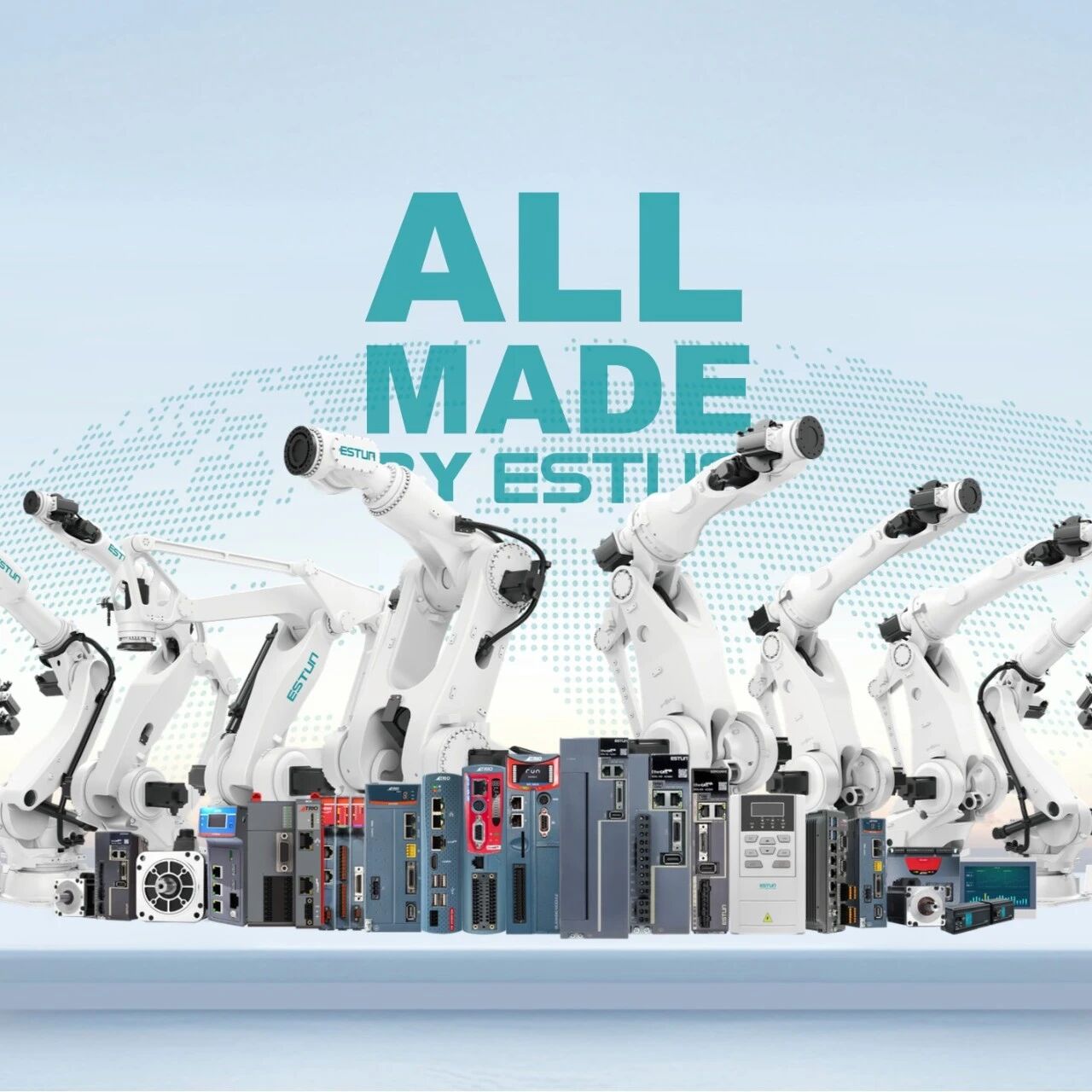
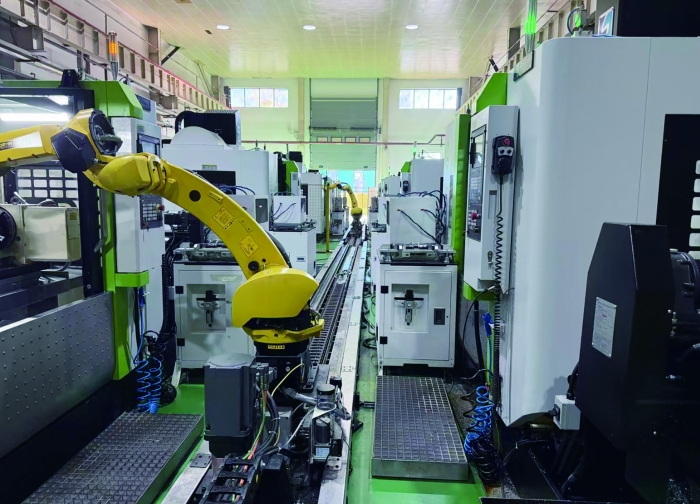
埃斯顿连续八年保持中国机器人市场第一
机器人大讲堂· 2026-01-26 10:17
Core Insights - Estun Robotics continues to lead the Chinese market in 2025 with a market share of 10.6%, achieving a year-on-year shipment growth of 25%, contributing to a domestic market share of over 56% in industrial robots [1] - Chinese autonomous robot brands, represented by Estun, are officially leading the market into a new development phase [2] Group 1: High-Quality Growth - In 2025, AI and robotics technology are increasingly integrated, with Estun achieving both quantity and quality growth, moving out of industry competition and back to a high-quality growth path [3] - The Chinese robot market is stabilizing and recovering in price, with several manufacturers, including Estun, announcing price adjustments starting in the second half of 2025, indicating a return to healthy competition [3] - Estun's focus on vertical industry solutions has led to significant breakthroughs in the automotive sector, with applications in automotive parts and assembly, gaining traction with leading companies like BYD and Seres [3] Group 2: Product Upgrades and AI Integration - Estun has maintained its position as the top domestic robot brand for eight consecutive years, with its collaborative robot brand, Cozmo, experiencing over 270% shipment growth, making it the fastest-growing collaborative robot brand [6] - The company has developed a comprehensive technology stack, including automation components, industrial robots, collaborative robots, and AI-driven intelligent robots [6] - The launch of the new iER.OS operating system and the RoboBase platform marks a significant advancement in industrial intelligent applications, enhancing cross-platform development capabilities and real-time control [9] Group 3: International Expansion - Estun is entering an accelerated phase of international expansion in 2026, becoming the first Chinese robot brand with a full range of functional safety certification [10] - The company is focusing on building core benchmark application scenarios and partner ecosystems in various industries across Europe, ASEAN, and South America [10] - Estun is establishing a global production and supply system, with the completion of a factory in Poland and a network of 12 production and application experience centers, alongside 75 service points [15]

奥普特(688686):中标2026年度2D视觉项目,奠定业绩基础
Changjiang Securities· 2026-01-14 15:14
Investment Rating - The investment rating for the company is "Buy" and is maintained [6]. Core Insights - The company has recently won a bid for the 2026 2D vision project with a contract amount of RMB 120 million, which is expected to positively impact its operational performance [2][4]. - The company is positioned as a leader in the 3C vision sector and has shown strong competitive advantages, with continuous high growth in its performance throughout 2025 [9]. - The recovery of downstream industries, particularly in the 3C and lithium battery sectors, is anticipated to support the company's revenue growth [9]. - The integration of AI and vision technologies is expected to enhance the company's market competitiveness and customer loyalty [9]. - Future prospects indicate that AI and embodied intelligence will gradually materialize, with the company expanding its product offerings in robotics and related technologies [9]. Summary by Relevant Sections Project Announcement - The company announced its successful bid for the 2026 2D vision project, with a bid amount of RMB 120 million [4]. Financial Performance - For the first three quarters of 2025, the company achieved revenue of RMB 1.012 billion, a year-on-year increase of 38.06%, and a net profit of RMB 183 million, also up by 38.43% [9]. Market Position and Future Outlook - The company is expected to benefit from the recovery in the 3C and lithium battery industries, with a projected increase in market share and new business expansions [9]. - The company has established a product matrix that integrates vision, sensing, motion, and AI, enhancing its competitive edge [9]. - The establishment of a robotics division aims to leverage advanced vision technologies for various robotic applications, indicating a strategic shift towards higher-value sectors [9].
赛力斯:公司布局“AI+具身智能”等前沿战略科技领域
Zheng Quan Ri Bao Wang· 2025-12-19 11:44
Core Viewpoint - The company emphasizes that research and development is the lifeline of technology enterprises, asserting that long-term value stems from deep technological innovation [1] Group 1: R&D and Innovation - The company believes that maintaining product and technology leadership is essential for delivering value to users and creating a competitive moat [1] - The company is committed to technology-driven innovation, continuously building an independent technology system for smart new energy vehicles [1] - Key technologies such as the Magic Cube technology platform, super range extension, and intelligent safety are all results of the company's independent research and development [1] Group 2: Strategic Focus - The company is also focusing on cutting-edge strategic technology fields like "AI + embodied intelligence," reinforcing its identity as a technology-driven enterprise [1] - The company aims to continuously strengthen its technological competitiveness [1]

埃斯顿:工业机器人全国出货量第一
Shang Hai Zheng Quan Bao· 2025-11-27 00:40
Core Insights - Estun has a diverse range of nearly 100 robot products with payloads from 3 kg to 1200 kg, serving both industrial manufacturing and service sectors [2][3] - In 2024, China's industrial robot shipment is projected to reach 294,000 units, with Estun contributing 30,000 units, capturing a market share of 10.5% in the first half of the year, maintaining its position as the leading domestic brand for seven consecutive years [3] - Estun has launched the ER1200-3300, the first domestic six-axis robot with a payload of 1200 kg, showcasing significant advancements in heavy-duty robotics and 100% localization of core components [3] - The company has also introduced the humanoid robot Codroid 02, which features 31 degrees of freedom and is designed for both heavy lifting and precision tasks, addressing the flexible manufacturing needs [4] - Estun's E-care platform enables remote operation and monitoring of robots, enhancing operational efficiency and reducing downtime through cloud connectivity and real-time diagnostics [4] Market Position and Innovations - Estun's robots are widely utilized across over 30 sectors, including automotive, photovoltaic, and lithium battery industries, highlighting the company's extensive market reach [3] - The company is actively integrating AI technologies into its products, launching advanced solutions such as semantic AI models and collaborative robots, which are crucial for the transformation of the manufacturing industry [3] - The introduction of the "full-stack intelligent operation and maintenance robot solution" has earned Estun a first-place award at the "Direct to Wuzhen" global internet competition, emphasizing its commitment to innovation [3]
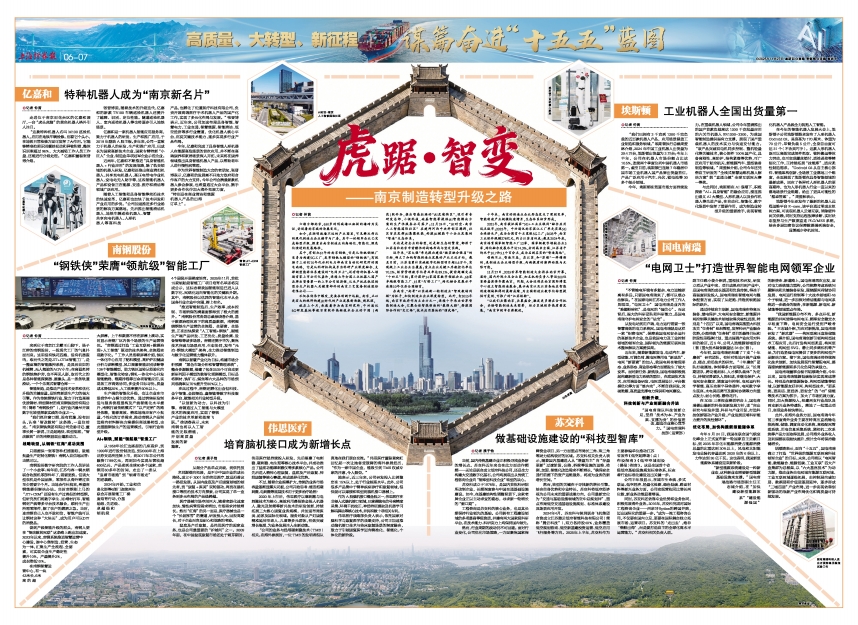
抢抓机遇 向“质”攀升 南京机器人“军团”期待在WIMC上发出南京声音
Shang Hai Zheng Quan Bao· 2025-11-17 19:14
Industry Overview - The robotics industry is a rising star in the smart manufacturing supply chain, with 2025 being hailed as the year of development for humanoid robots in China [1] - The World Intelligent Manufacturing Conference (WIMC) will be held in Nanjing from November 27 to 29, showcasing the latest achievements in the robotics manufacturing industry [1] Company Highlights Estun Automation - Estun has nearly 100 robot products with payloads ranging from 3 kg to 1200 kg, covering industrial manufacturing and service sectors [2] - In 2024, China's industrial robot shipments are projected to reach 294,000 units, with Estun's share being 30,000 units, capturing 10.5% of the market [2] - Estun has maintained the top position in China's industrial robot market for seven consecutive years, with applications in over 30 sectors including automotive and photovoltaic [3] - The company launched the ER1200-3300, a six-axis robot with a payload of 1200 kg, showcasing its technological strength in heavy-duty robotics [3] - Estun is actively exploring the integration of AI and embodied intelligence, launching advanced products such as semantic AI models and collaborative robots [3] Yijiahe Technology - Yijiahe is a robotics application service provider that focuses on the research, production, and promotion of robots, having gone public in 2018 [4] - The M100 inspection robot, used in subway vehicle maintenance, boasts an overall recognition rate exceeding 96% for identifying loose screws and foreign objects [4] - The company has diversified its offerings to include commercial cleaning robots, shared charging robots, and high-voltage operation robots, expanding into various sectors such as energy and transportation [4] Tianchuang Robotics - Tianchuang has developed the Tian Kui series of explosion-proof humanoid robots, the first globally to receive IIC T6-level explosion-proof certification [5] - The Tian Kui robot can lift up to 25 kg and has a maximum arm reach of 3.3 meters, making it the strongest in its category [5] - The company has delivered over 5,000 special intelligent operation robots, leading the global market in this segment [5] Nanjing Craft Equipment Manufacturing - Established in 1965, Nanjing Craft has evolved from traditional machine tool manufacturing to producing key components for the robotics industry [6][7] - The company has integrated smart production technologies, utilizing 5G and automated systems in its manufacturing processes [6] - Nanjing Craft has become a specialized manufacturer of critical components for the robotics industry and has been recognized as a national champion in manufacturing [7]


奥普特(688686):奥普特三季报点评:3C强竞争力奠定业绩高增基础,AI+具身智能有望逐步落地
Changjiang Securities· 2025-11-12 09:19
Investment Rating - The investment rating for the company is "Buy" and is maintained [6]. Core Views - The company reported a revenue of 1.012 billion yuan for the first three quarters of 2025, representing a year-on-year increase of 38.06%. The net profit attributable to the parent company was 183 million yuan, also up 38.43% year-on-year. In Q3 2025, the company achieved a revenue of 330 million yuan, a year-on-year increase of 56.33%, and a net profit of 37 million yuan, up 97.21% year-on-year [2][4]. Summary by Sections Financial Performance - For the first three quarters of 2025, the company achieved a revenue of 1.012 billion yuan, with a year-on-year growth of 38.06%. The net profit attributable to the parent company was 183 million yuan, reflecting a year-on-year increase of 38.43%. The net profit after deducting non-recurring items was 164 million yuan, up 34.99% year-on-year. In Q3 2025, the revenue reached 330 million yuan, marking a 56.33% increase year-on-year, while the net profit was 37 million yuan, up 97.21% year-on-year [2][4]. Business Segments - The company is benefiting from strong demand in the 3C and lithium battery industries, with the 3C sector particularly supported by the large-scale application of industrial AI technology in consumer electronics manufacturing. The demand for visual inspection from downstream customers has significantly increased, and the company is extending its market share by moving into the assembly segment. The lithium battery sector is expected to benefit from a stable recovery in downstream demand and proactive expansion into overseas markets [9]. Profitability - The gross profit margin for Q3 was 57.57%, with fluctuations expected due to the consolidation of Tai Lai and changes in industry structure. The company has maintained a high level of profitability despite these fluctuations. The company has effectively controlled expenses, with stable absolute values for various costs, and the expense ratio is influenced by revenue scale. The divergence between net profit growth and net profit after deducting non-recurring items is attributed to stock-based compensation adjustments [9]. AI Business Development - The AI business is entering a phase of significant revenue growth, with industrial AI product-related project revenue reaching 87.33 million yuan in the first half of 2025, a 363% increase year-on-year. The company has established a product matrix that integrates vision, sensing, motion, and AI, creating a comprehensive technology loop from visual perception to intelligent decision-making. This complete product matrix enhances market competitiveness and customer loyalty [9]. Strategic Direction - The company has identified intelligent robotics as a strategic emerging business direction, aiming to become a core supplier of perception solutions for robots. In the first half of 2025, the company established a robotics division, gathering top talent in R&D, sales, and technical support. The company is applying advanced visual technologies accumulated in industrial settings to robotics, covering key visual components needed for robot perception [9]. Future Profit Projections - The company is expected to achieve net profits attributable to the parent company of 203 million yuan, 262 million yuan, and 324 million yuan for the years 2025, 2026, and 2027, respectively, with corresponding price-to-earnings ratios of 74, 57, and 46 times [9].
15.5亿元产业基金成立,深创投加码AI与具身智能
Nan Fang Du Shi Bao· 2025-10-09 03:42
Core Insights - Shenzhen is accelerating the development of strategic emerging industries through capital, exemplified by the establishment of a private equity investment fund focused on artificial intelligence (AI) and embodied robotics with a total investment of 1.55 billion RMB [1][2] - The fund's creation reflects Shenzhen's commitment to integrating capital with the industrial chain to promote large-scale application of AI technologies, thereby solidifying its leading position in the national "AI + Robotics" landscape [1][4] Investment Strategy - Shenzhen Capital Group (深创投) has been active in the innovation investment sector since its establishment in 1999, managing over 510 billion RMB in assets and investing in more than 1,700 companies [2] - The new fund signifies a strategic focus on AI and embodied robotics, with a clear investment logic that supports key component breakthroughs, midstream platform development, and downstream application scenarios [2][3] - Shenzhen Capital Group has invested in approximately 40 projects in the humanoid robotics sector, covering the entire industrial chain from core components to complete machines [2] Industry Growth - The AI industry in Shenzhen is projected to reach a scale of 368.5 billion RMB by 2024, with 2,887 typical enterprises, while the robotics industry is expected to exceed 200 billion RMB in total output value [4] - Shenzhen's strategic plans aim to cultivate over 10 enterprises with a valuation of 10 billion RMB or more by 2027, and to exceed 3,000 AI companies by 2026 [4] Application and Innovation - Companies in Shenzhen are demonstrating strong vitality in the application of AI and robotics, with notable innovations such as the "Tian Gong Xing Zhe" robot and the world's first 5G-A humanoid robot "Kua Fu" [5] - The capital market is also heating up, with 72 financing events in the robotics sector in 2024, indicating a robust early-stage investment trend [6] Policy and Capital Synergy - The establishment of the AI and embodied robotics fund is a result of the synergy between industry capital and policy direction, facilitating a closed-loop of "technological breakthroughs—industry landing—capital circulation" [6]