AI冲击

Search documents
中金:美国私募信贷,风险不可低估
中金点睛· 2026-03-10 00:05
Core Viewpoint - Recent events in the U.S. private credit market have raised concerns, leading to a decline in the stock prices of related asset management institutions. The vulnerabilities in private credit stem from three main factors: persistent information asymmetry, structural shocks from AI affecting business models and valuations, and a shift in macro liquidity from "abundant" to "neutral-tight," amplifying redemption pressures in private credit [3][4]. Group 1: Private Credit Overview - Private credit refers to lending activities conducted by non-bank financial institutions, primarily funded by institutional and individual investors, as well as bank leverage. Asset management companies act as intermediaries, providing floating-rate loans to borrowing companies [6]. - The private credit market has expanded rapidly over the past decade, driven by low interest rates, excess return advantages, and regulatory arbitrage. The global private credit assets under management have grown from $380 billion in 2010 to an expected $2.3 trillion by 2025, and potentially $4.5 trillion by 2030 [9]. Group 2: Recent Risk Events - Since the second half of 2025, there has been a noticeable increase in risk events related to private credit, including the bankruptcies of Tricolor and First Brands, which had received significant loans from private credit institutions [15]. - The stock prices of asset management companies have been adversely affected, with declines of 48% for Blue Owl, 31% for KKR, and 25% for Apollo over the past year [16]. Group 3: Sources of Vulnerability - The vulnerabilities in private credit arise from three main areas: 1. Long-standing information asymmetry, where the lack of transparency allows risks to accumulate unnoticed. Investors often lack insight into the true financial conditions of borrowers, leading to potential trust crises [21]. 2. Structural shocks from AI, which threaten the business foundations of borrowing companies, particularly in the tech sector. The emergence of AI tools has led to concerns about cash flow erosion and repayment capabilities [22]. 3. A tightening macro liquidity environment, which increases redemption pressures. Recent data indicates that the liquidity in the market has shifted from abundant to marginally tightening, leading to increased redemption requests from investors [24]. Group 4: Market Implications - The risks in private credit may not lead to a systemic financial crisis, but they could suppress overall market risk appetite. The intertwining of private credit risks with other macro and policy risks could lead to a significant shift in asset allocation strategies, moving from high-yield, high-risk assets to safer and defensive sectors [31][34].


上海新春舞台有新招有坚守 戏里戏外功夫做足 市场火热迎开门红
Jie Fang Ri Bao· 2026-02-25 01:24
Group 1 - The "Hundred Years of Tianchan" series activities will run throughout 2026, focusing on enhancing artistic presentation, service, space optimization, and internal management [2] - The Shanghai Acrobatic Troupe introduced animal performers to commercial areas for the first time, with three major performances during the Spring Festival attracting over 20,000 attendees and generating nearly 3 million yuan in ticket sales [2] - The popularity of various performances, including different versions of "Dream of the Red Chamber," indicates a strong demand for traditional Chinese theater during the Spring Festival [2][3] Group 2 - The Shanghai Dramatic Arts Center is actively preparing for various performances, emphasizing the importance of human interaction and emotional connection in the face of AI competition [4] - The center is hosting a range of productions, including revivals and premieres, to cater to diverse audience interests during the festive season [4] - The focus on immersive experiences and cultural engagement is evident in the various activities and merchandise related to the "Hundred Years of Tianchan" celebration [1][2]
纽约时报财报超预期,股价短期波动引关注
Jing Ji Guan Cha Wang· 2026-02-12 23:07
Core Viewpoint - The New York Times reported its Q4 2025 earnings with an EPS of $0.89 and revenue of $802.3 million, exceeding expectations, but the stock price experienced short-term volatility due to concerns over growth prospects [1] Financial Performance - The company expects continued growth in subscription users, revenue, and adjusted operating profit for 2026, targeting an EPS of $2.65 and revenue of $3 billion [1] - Digital revenue surpassed $2 billion for the first time, with a net addition of 1.4 million subscription users, bringing the total to 12.8 million in 2025 [1] Industry Policy and Environment - The industry is facing challenges, as evidenced by The Washington Post's announcement of approximately 30% layoffs to address AI impacts and increasing losses, highlighting the pressure on traditional media to transform [2] - The management of The New York Times emphasized the need to respond to competition through differentiated products [2]

华尔街最讨厌的九月来了!
美股IPO· 2025-08-31 12:33
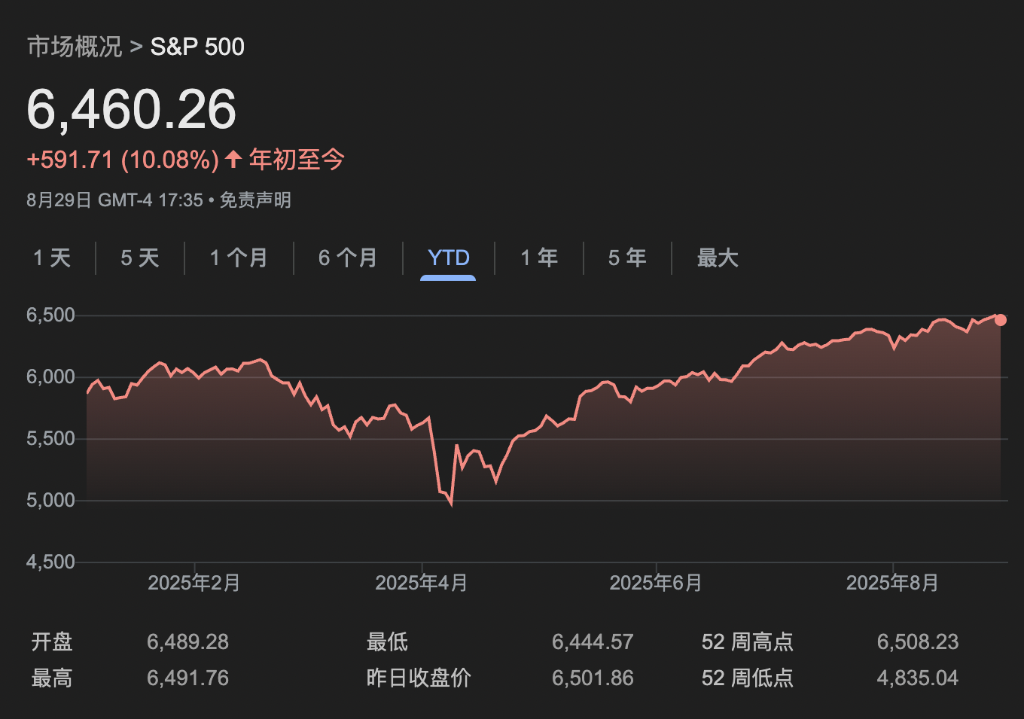
Group 1 - Historical data indicates that September is the worst-performing month for European and American stock markets, with the Dow, S&P, and Nasdaq traditionally recording their largest declines of the year during this month [1][4][5] - Despite a strong performance in August, investors are bracing for a historically "infamous" month [5] Group 2 - The European market shows significant divergence, with banking stocks leading gains while media stocks lag behind [6] - The banking sector in Europe has been the biggest winner, reaching its highest level since the 2008 financial crisis due to positive earnings reports and ongoing merger rumors [7] - Deutsche Bank has performed exceptionally well, with a year-to-date increase exceeding 100% [8] - Conversely, media stocks have suffered over an 8% decline in the past two months, primarily due to concerns over the impact of AI [9] Group 3 - Institutional views on the market outlook are divided between optimistic and cautious perspectives [10] - Optimists believe the bull market will continue, supported by economic soft landing, robust corporate earnings, and lower interest rates [11] - Cautious analysts express concerns about the economic outlook, noting increasing pressures despite signs of resilience in the U.S. economy [11]

华尔街最讨厌的九月来了!
Hua Er Jie Jian Wen· 2025-08-31 11:58
Group 1 - August saw significant gains in the US and European stock markets, with the S&P 500 reaching a historic high above 6500 points and the Dow Jones also hitting new highs, while the European Stoxx 600 recorded its first consecutive monthly gains since February [1] - Historical data indicates that September is typically the worst-performing month for US and European stock markets, with the Dow, S&P, and Nasdaq traditionally experiencing their largest declines during this month [3] - In Europe, there is a clear divergence in market performance, with banking stocks leading gains and media stocks lagging behind, particularly due to concerns over the impact of AI on the sector [4][5] Group 2 - European banking stocks reached their highest levels since the 2008 financial crisis, driven by positive earnings reports and ongoing merger rumors, with Deutsche Bank showing a year-to-date increase of over 100% [4] - Media stocks have suffered a decline of over 8% in the past two months, with WPP, an advertising group, experiencing a 71% drop in pre-tax profits and lowering its full-year guidance [5] - Institutional views on market trends for September and beyond are divided, with some analysts remaining optimistic about a continued bull market, while others express caution regarding economic pressures [6][7]