经济软着陆

Search documents
美国今日迎来PCE、GDP、关税违法三大超预期时刻,对此你怎么看?
Sou Hu Cai Jing· 2026-02-20 17:03
Group 1: Impact of Supreme Court Ruling on Tariffs - The U.S. Supreme Court ruled that the previous administration's imposition of global tariffs exceeded presidential authority, leading to a series of consequences including the potential return of collected tariffs, which could affect U.S. trade policy and global trade dynamics by 2026 [1][2] - The total amount of tariffs collected is estimated to exceed $140 billion, with pending refunds potentially reaching the billion-dollar level, impacting U.S. importers rather than foreign exporters [2] - The ruling may increase pressure on the U.S. federal budget deficit and complicate the debt ceiling negotiations, as the refunds will likely be funded through customs revenue or general treasury accounts [2][3] Group 2: Core PCE and Economic Indicators - The core PCE index showed a year-over-year increase of 3.0% and a month-over-month increase of 0.4%, both exceeding market expectations, indicating persistent inflationary pressures [4] - The disappointing GDP growth rate of 1.4% for Q4 2025, significantly below the expected 3.0%, reflects a slowdown in consumer spending and government expenditure, suggesting a potential economic soft landing but raising concerns about stagflation [5] - The mixed economic signals, with inflation remaining high while growth slows, create a challenging environment for monetary policy, limiting the Federal Reserve's ability to lower interest rates [5][6] Group 3: Market Reactions and Future Outlook - Financial markets are experiencing volatility, with growth stocks under pressure and defensive sectors gaining favor due to the mixed economic data [5][6] - The overall market sentiment indicates a shift towards cautious asset pricing, with expectations of prolonged high interest rates and a focus on stability [7] - The likelihood of a soft landing for the U.S. economy appears higher than a recession, but market considerations regarding earnings and valuations may continue to lean towards the former [7]
分析师:关税通胀或将在未来几个月继续传导至经济 美联储年内料将降息两次
Sou Hu Cai Jing· 2026-02-13 17:14
Core Viewpoint - The inflation pressure related to tariffs is expected to gradually transmit to the economy over the coming months, allowing for a stable economic performance and the Federal Reserve to maintain its current stance for a while [1] Group 1 - Approximately one-third of the inflation pressure from tariffs may still impact the economy in the near future [1] - The labor market is expected to stabilize, and the final effects of tariff-related inflation will be transmitted by the first half of this year [1] - Commodity inflation is projected to drop below zero in the second half of the year, creating room for the Federal Reserve to resume interest rate cuts later than the market anticipates [1] Group 2 - The company forecasts one interest rate cut each in September and December of this year [1]
美国非农“开门红”意外强劲!美联储将推迟至7月降息?
Xin Lang Cai Jing· 2026-02-11 23:07
Core Viewpoint - The U.S. labor market shows remarkable resilience at the beginning of the new year, with the latest non-farm payroll report exceeding expectations, alleviating concerns about a rapid economic downturn, and prompting traders to reassess the Federal Reserve's policy path [2][10]. Employment Data Summary - In January, the seasonally adjusted non-farm employment increased by 130,000, significantly above the market expectation of 70,000, marking the largest increase since April 2025 [2][10]. - The unemployment rate in January recorded at 4.3%, slightly lower than the expected 4.4%, reaching the lowest level since August 2025 [2][10]. - The non-farm employment figures for November and December were revised downwards, with November's figures adjusted from 56,000 to 41,000 and December's from 50,000 to 48,000, resulting in a total downward revision of 17,000 jobs for these two months [2][10]. Structural Improvements in the Labor Market - Average hourly earnings increased by 0.4% month-on-month, outperforming expectations, while average weekly hours rose to 34.3 hours [4][12]. - The labor force participation rate slightly increased from 62.4% to 62.5%, and the manufacturing sector added 5,000 jobs in January, marking its first positive growth since September 2024 [4][12][13]. - Analysts noted that the dual growth in wages and hours is more critical than just the increase in employment numbers, indicating sustained consumer purchasing power and a higher likelihood of an economic soft landing [4][12]. Historical Data Revisions - The Labor Department made significant adjustments to the annual benchmark, revising the total employment figures for the previous year down by 862,000, exceeding prior estimates of 825,000 [4][15]. - The revised data indicates that the average monthly job growth for 2025 was only 15,000, which is considered dismal compared to previous years [4][15]. Sector-Specific Employment Trends - The healthcare sector led job creation with an addition of 82,000 jobs, while the construction industry added 33,000 jobs [5][13]. - The manufacturing sector's growth is particularly noteworthy, as it defied pessimistic forecasts of job losses, suggesting a potential turnaround after a prolonged period of decline [5][13]. - However, the federal government sector saw a significant reduction of 34,000 jobs, reflecting the direct impact of fiscal tightening policies on public sector employment [6][14]. Broader Economic Context - Despite the strong January data, the underlying foundation of the U.S. labor market remains fragile, with the total employment growth for 2025 being only 181,000, the worst annual performance since 2003 when the economy was recovering from the dot-com bubble [7][15]. - The substantial downward revision of historical data reveals that there were not as many new consumers to drive economic spending as previously thought, contributing to ongoing consumer confidence concerns despite seemingly robust employment figures [7][15].

澳洲联储“二把手”放鹰:通胀依然“过高” 不能任其持续
智通财经网· 2026-02-11 08:45
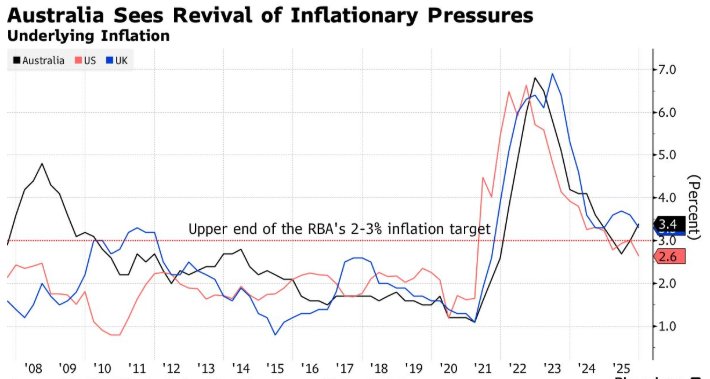
Group 1 - The core viewpoint is that inflation in Australia remains "too high," posing a significant challenge for the Reserve Bank of Australia (RBA), which cannot allow this situation to persist for too long [1] - The RBA has become the first major central bank globally to raise interest rates this year, with indications that at least one more rate hike is expected in the coming months [1] - Current forecasts suggest that both overall and core inflation rates in Australia will exceed the RBA's target range of 2-3% this year [1] Group 2 - Part of the inflation increase in Australia is attributed to the RBA's measures aimed at achieving an economic soft landing, avoiding excessive rate hikes in the post-pandemic era [2] - The RBA has lowered the potential growth rate of the economy to approximately 2% due to long-term weak productivity growth [2] - Recent data shows a decline in consumer confidence following the RBA's rate hike, and a survey indicates a deterioration in the business environment, with consumer confidence remaining below long-term averages [2] Group 3 - The next RBA meeting is scheduled for mid-March, where decision-makers will review January's employment and inflation reports, as well as fourth-quarter GDP data [2] - Most economists expect the RBA to raise the cash rate from the current 3.85% to 4.1% in May after analyzing the first-quarter inflation data [2] - The RBA's Deputy Governor, Andrew Hauser, refrained from directly criticizing government spending, which is seen as a contributor to rising inflation [6]
中加基金配置周报|特朗普提名美联储新任主席,商品价格大幅波动
Xin Lang Cai Jing· 2026-02-03 07:41
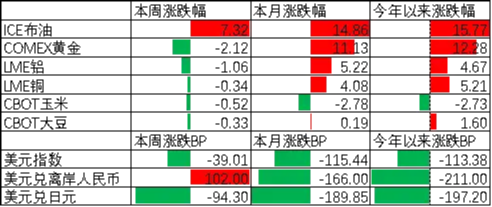
Key Points - The Federal Reserve maintained the benchmark interest rate at 3.50%-3.75%, pausing after three consecutive 25 basis point cuts, aligning with market expectations. Fed Chair Powell indicated that rate hikes are not a basic assumption for future actions, emphasizing the Fed's independence [1][19] - President Trump nominated former Fed Governor Kevin Walsh to succeed Powell as Fed Chair, pending Senate approval. However, Senate leaders from both parties have expressed intentions to block Walsh's nomination unless investigations into Powell are dropped. Analysts suggest that Walsh's leadership could lead to significant changes in Fed policy, potentially combining rate cuts with balance sheet reduction [2][20] - Walsh's nomination triggered hawkish expectations, causing a historic drop in global precious metals markets. Silver fell over 35%, gold dropped nearly 13%, and platinum and palladium also saw significant declines [3][20] - China's January manufacturing PMI was reported at 49.3, a decrease of 0.8 percentage points, indicating a decline in manufacturing activity. The non-manufacturing PMI also fell to 49.4, reflecting reduced business activity in the construction sector [4][21] - In the U.S., durable goods orders for November 2025 increased by 5.3%, the largest growth in six months, surpassing the expected 3.7% increase. Core durable goods orders rose by 0.5%, marking the eighth consecutive month of growth [5][21] - Trump stated that he is not concerned about the dollar's performance, suggesting it is returning to its appropriate level. Following his comments, the dollar index fell over 1%, reaching a nearly four-year low [6][21] Market Review Futures Market - ICE Brent crude oil rose by 7.32% to $69.83, while COMEX gold fell by 2.12% to $4907.5. The dollar index decreased by 39.01 basis points, leading to a depreciation of the yuan by 102 basis points [22][24] Stock Market - The A-share market saw a decline, with the small-cap index dropping 3.78%, while the Shanghai 50 index increased by 1.13%. The overall market sentiment has softened as the spring rally comes to an end [26][30] Bond Market - In the bond market, credit bonds generally declined, with 3Y and AA- bonds down by 7 basis points. Government bonds also saw slight declines, with 3Y, 5Y, and 10Y bonds down by 2 basis points [13][32]
长江有色:国际油价大跌且市场厌恶情绪弥漫 3日锌价或下跌
Xin Lang Cai Jing· 2026-02-03 03:17
Group 1 - International oil prices have sharply declined, leading to a pervasive negative sentiment in the market, which has caused a continued drop in zinc prices, with LME zinc falling by 1.53% to close at $3319 per ton [1][4] - The domestic zinc market is experiencing weak supply and demand, with refined zinc production decreasing by approximately 50,000 tons month-on-month due to factory shutdowns and seasonal maintenance [3] - The recent increase in U.S. manufacturing activity is overshadowed by trade policy uncertainties and potential government shutdowns, which may delay key employment data and create market information asymmetry [2][4] Group 2 - The domestic zinc market is facing tight supply conditions, with significant reductions in zinc mine output due to winter maintenance and repairs, while downstream consumption is low as companies prepare for the upcoming Spring Festival [3][4] - The market is concerned about the policy direction of the newly appointed Federal Reserve Chairman, which could lead to tighter financial conditions and further pressure on zinc prices [2][4] - Speculative investors and funds are withdrawing from the market, and the lack of solid supply-demand fundamentals to support previous zinc price increases has led to increased price volatility [4]

原油周报:原油站在地缘与基本面的十字路口
Xin Lang Cai Jing· 2026-02-01 23:26
Market Overview - The recent oil market has experienced significant volatility, with prices showing both sharp increases and declines throughout the week, indicating a certain level of fragility in the current pricing environment [5][42] - Reports at the beginning of the year suggested that 2026 would be a year of oversupply, with fundamental price estimates around WTI $60 per barrel, but geopolitical tensions, particularly between the US and Iran, have introduced uncertainty [5][42] - The market reacted to news of potential Iranian actions in the Strait of Hormuz, which temporarily drove prices up before a pullback due to broader market conditions [5][42] Price Data - As of January 30, 2026, Brent crude futures settled at $70.69 per barrel, up $4.81 (+7.3%) from the previous week; WTI crude futures settled at $65.21 per barrel, up $4.14 (+6.78%); Dubai crude futures settled at $67.86 per barrel, up $4.05 (+6.35%) [6][43] - The price movements were influenced by increased liquidity in the market due to rising gold prices and heightened geopolitical risk premiums related to US-Iran tensions [9][43] EIA Data Analysis - The EIA reported a significant decrease in crude oil inventories, with a reduction of 2.295 million barrels; production slightly declined to 13.696 million barrels per day, while imports fell by 805,000 barrels per day and exports increased by 901,000 barrels per day, leading to a net import decrease [6][24][57] - Despite the decrease in supply, downstream refined product demand remains weak, particularly outside of gasoline, indicating a mixed outlook for the oil market [6][24][57] Terminal Demand - US highway transportation activity has shown typical seasonal adjustments, with a decrease in freight volume and capacity following the peak season, indicating limited potential demand decline [30][62] - The overall transportation situation has stabilized, although winter weather poses short-term challenges [30][62] Domestic Refinery Operations - Refinery utilization rates decreased by 2.4% to 90.90%, remaining above historical averages, indicating stable operations despite the slight decline [25][59] - The processing margins for major refineries were reported at 659.83 CNY per ton, while independent refineries saw a significant drop in profitability, down 34.75% from the previous week [35][59]
大有期货:市场焦点将转向美联储会议 贵金属价格出现史诗级行情
Jin Tou Wang· 2026-01-28 11:35
Macro News - US President Trump announced plans to increase tariffs on imports of cars, timber, and pharmaceuticals from South Korea to 25%, citing the failure of the South Korean legislature to fulfill trade agreements [1] - The South Korean Ministry of Trade is preparing for a visit to the US to discuss countermeasures regarding the potential tariff increase [1] - US officials expressed willingness to engage in dialogue with Iran if they seek to communicate, indicating that Iran is aware of the conditions for negotiations [1] - The White House confirmed that President Trump remains committed to the peace process in Ukraine, with ongoing negotiations expected to resume between Ukrainian and Russian representatives [1] - Core capital goods orders in the US increased more than expected in November, indicating sustained growth in corporate spending on equipment for the fourth quarter, marking the fifth consecutive month of increases [1] Institutional View - Geopolitical uncertainties have driven safe-haven demand, leading to significant price movements in precious metals, particularly gold and silver [2] - Silver prices are more volatile than gold due to its industrial properties, making it more sensitive to global economic growth expectations [2] - The market is closely watching the upcoming Federal Reserve meeting, as any evidence of maintaining higher interest rates for a longer period or a reinforced outlook for an economic "soft landing" could further suppress short-term performance of precious metals [2]
中加基金配置周报|国内经济数据出炉,美欧关系反复
Xin Lang Cai Jing· 2026-01-28 07:38
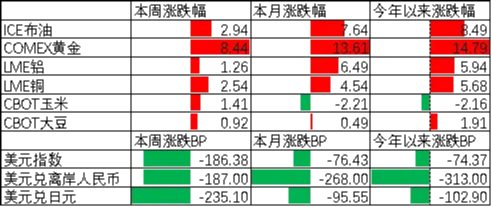
Economic Overview - In 2025, China's GDP is projected to grow by 5% year-on-year, reaching 140.19 trillion yuan, with a fourth-quarter growth of 4.5% [1][19] - The industrial added value for large-scale industries is expected to increase by 5.9%, maintaining China's position as the world's largest manufacturing sector [1][19] - The service sector's added value is anticipated to grow by 5.4%, raising its share of GDP to 57.7% [1][19] - Retail sales of consumer goods are projected to grow by 3.7%, with final consumption contributing 52% to economic growth [1][19] - Fixed asset investment is expected to decline by 3.8%, with real estate development investment decreasing by 17.2% [1][19] - By the end of 2025, the national population is estimated to be 1.40489 billion, with a net decrease of 3.39 million people [1][19] Monetary Policy - The one-year Loan Prime Rate (LPR) is set at 3.00%, and the five-year LPR is at 3.50%, both unchanged from the previous month [1][19] - This marks the eighth consecutive month of stability in LPR rates following a reduction of 10 basis points in May 2025 [1][19] Market Performance Futures Market - ICE Brent crude oil rose by 2.94% to $65.44, while COMEX gold increased by 8.44% to $4,983.1 [21][22] - The U.S. dollar index fell by 186.38 basis points, leading to a significant appreciation of the Chinese yuan by 187 basis points [22] Stock Market - The Shanghai Composite Index decreased by 1.54%, while the ChiNext Index fell by 0.34% [23][24] - The CSI 500 Index saw an increase of 4.34%, indicating a strong sentiment in the domestic market [24] Bond Market - Short-term credit bonds saw an increase, while long-term bonds experienced a decline, with the 10-year national development bond dropping by 4 basis points [29] - The overall bond rates are expected to fluctuate downwards due to significant net injections from MLF operations amid weakening economic data [29] International Relations - The Greenland crisis has seen a turnaround, with U.S. President Trump announcing a framework agreement with NATO Secretary General Jens Stoltenberg, which could benefit the U.S. and NATO members [2][20] - The announcement led to a rise in U.S. stock indices, with all three major indices increasing by over 1% [20] Investment Outlook - The recent economic data indicates a potential rebound in China's economy, supported by relaxed real estate policies and increased birth subsidies [32] - The ongoing geopolitical tensions, particularly regarding Greenland, may impact asset prices and macroeconomic conditions [32]
STARTRADER外汇:美Q3 GDP上修至4.4% 通胀稳守2.9%
Sou Hu Cai Jing· 2026-01-23 02:54
Economic Growth and Performance - The U.S. Bureau of Economic Analysis revised the annualized quarterly real GDP growth for Q3 2025 upward by 0.1 percentage points to 4.4%, marking the fastest growth since Q3 2023 and an acceleration from 3.8% in Q2 [1] - The upward revision was primarily driven by better-than-expected performance in exports and business investment, with both contributing an additional 0.2 percentage points to economic growth [3] - Business fixed investment grew by 3.2%, with investments in AI infrastructure reaching historical highs, alongside a recovery in manufacturing, which boosted non-residential investment growth [3] Inflation and Consumer Spending - The core PCE price index remained at 2.9%, consistent with initial estimates, indicating persistent inflationary pressures that complicate policy decisions [4] - Personal consumption expenditures, which account for over two-thirds of the economy, grew by 3.5%, serving as a stabilizing force for economic growth [3] Structural Disparities in Economic Recovery - The economic recovery is characterized by a "K-shaped" pattern, where high-income households benefit from stock market gains and high property values, while lower-income groups face greater cost-of-living pressures [3] - Large corporations are managing to improve profit levels despite rising costs from tariffs, while small businesses are experiencing ongoing operational pressures due to profit squeezes and reduced low-cost labor supply [3] Market Outlook and Diverging Perspectives - Optimists believe that the synergy of consumption, external demand, and investment indicates strong internal economic momentum, leading to revised upward forecasts for annual economic growth [4] - Cautious analysts highlight structural issues and policy uncertainties, suggesting that the "K-shaped" recovery may exacerbate income inequality and limit sustainable consumption [4] Key Variables Influencing Future Trends - The Federal Reserve must balance economic resilience with inflation targets, as core PCE trends will directly influence interest rate decisions [5] - Economic factors such as consumer spending resilience, business investment expansion, and the alleviation of the "K-shaped" recovery will reshape growth trajectories [5]