AI取代人类工作

Search documents
加剧AI恐慌!微软高管:大多数白领工作将在“未来12-18个月内”完全自动化
硬AI· 2026-02-13 13:25
Core Viewpoint - Microsoft AI's chief executive warns that a majority of white-collar jobs may be automated within the next 12 to 18 months, a timeline that is significantly earlier than the expectations of the business community and policymakers [1][4]. Group 1: AI Impact on Employment - The report from Challenger indicates that in January 2023, 7,624 job losses were attributed to AI, accounting for 7% of total layoffs that month. By 2025, the total number of layoffs linked to AI is projected to reach 54,836 [1][4]. - Since the beginning of 2023, a total of 79,449 planned layoffs have been attributed to AI [1]. Group 2: Training AI with Human Labor - The startup Mercor has employed thousands of white-collar contractors, including professionals from fields such as medicine, law, finance, and engineering, to train AI systems that may eventually replace them. These contractors earn between $45 to $250 per hour [5]. - This model highlights the short-term demand for "data labeling and feedback labor" in the AI industry, while also raising concerns about long-term job stability and salary structures [5]. Group 3: Diverging Opinions on AI's Timeline - Not all analysts agree with the rapid timeline for job replacement. Morgan Stanley suggests that the impact of AI may take longer to manifest in economic data, with significant disruptions potentially occurring in the late 2020s or beyond [7]. Group 4: AI Risks Identified by Industry Leaders - Anthropic's CEO, Dario Amodei, outlines six major risks associated with AI, including large-scale unemployment, the potential for AI to possess state-level power, and the rise of terrorism threats due to advancements in biology [9]. - He expresses concern that AI could empower authoritarian regimes and highlights the risks posed by AI companies themselves, which control significant data and influence over users [9][10].


微软高管:大多数白领工作将在“未来12-18个月内”被AI完全自动化
华尔街见闻· 2026-02-13 11:09
Core Viewpoint - Microsoft AI Chief Mustafa Suleyman warns that most white-collar professional jobs may be automated within 12 to 18 months, a timeline much earlier than expected by the business community and policymakers [1][2][3]. Group 1: AI Impact on Employment - AI is predicted to achieve human-level performance in most professional tasks within 12 to 18 months, particularly in white-collar jobs that require computer use [3]. - The Challenger report indicates that 7,624 job cuts in January 2023 were attributed to AI, accounting for 7% of total layoffs that month. For the entire year of 2025, AI-related layoffs are projected to reach 54,836 [4]. - Since tracking began in 2023, a total of 79,449 planned layoffs have been linked to AI [1]. Group 2: Labor Market Dynamics - A notable case of labor replacement is emerging, where the startup Mercor has quietly hired thousands of white-collar contractors, including professionals from fields like medicine, law, finance, and engineering, to train AI systems that may eventually replace them [5]. - These contractors are typically paid between $45 and $250 per hour to review and revise model outputs, providing training support for companies like OpenAI and Anthropic [6]. Group 3: Diverging Opinions on AI's Timeline - Not all analysts agree with the rapid timeline for job replacement. Morgan Stanley suggests that the impact of AI may take longer to manifest in economic data, with significant effects possibly not appearing until the late 2020s or beyond [9]. - The speed of AI adoption may be faster than past technologies, but current economic data may not yet reflect this [9]. Group 4: AI Risks and Concerns - Anthropic CEO Dario Amodei outlines several risks associated with AI, including large-scale unemployment, the potential for AI to possess state-level power, and the rise of terrorism threats due to advancements in biology [10][11]. - Amodei expresses concern that AI could empower authoritarian regimes and highlights the risks posed by AI companies themselves, which control vast data centers and have significant influence over user behavior [11][12].

别再整顿职场了,AI 正在整顿你的饭碗
3 6 Ke· 2026-02-09 12:44
Group 1 - The core issue is not technology but the outdated education system that fails to prepare students for the job market, leading to a disconnect between graduates' skills and employers' needs [3][4][14] - The higher education enrollment rate reached 60% in 2023, indicating that over half of high school graduates are pushed into universities regardless of their academic readiness or desire to learn [4] - The quality of education has declined as graduation rates become a hard metric, resulting in graduates lacking practical skills, with some universities reporting graduation rates as high as 98.7% while employers express concerns about the actual capabilities of these graduates [5][7] Group 2 - There is a phenomenon of degree inflation where bachelor's degrees have become standard, leading employers to require master's degrees for entry-level positions, creating a cycle of continuous education without real skill enhancement [7][16] - Many graduates are misled by social media portrayals of workplace dynamics, leading them to adopt unrealistic expectations about job responsibilities and workplace culture [8][10] - The perception that AI is taking jobs is misleading; rather, AI highlights the inadequacy of many graduates' skills, as AI can perform many tasks more efficiently than humans [13][16] Group 3 - Companies are increasingly seeking problem-solvers rather than individuals who can merely pass exams, indicating a gap between academic training and market needs [14][15] - The job market is evolving, with salaries for basic clerical positions projected to decrease by 12% by 2025, while emerging roles related to AI are expected to see salary increases of over 40% [16] - The emphasis is shifting towards practical skills that cannot be easily automated, suggesting that individuals who can provide unique value will be more successful in the job market [17][18]

Anthropic CEO:最快明年,一半初级白领下岗,失业率将达10%-20%
3 6 Ke· 2025-11-18 11:39
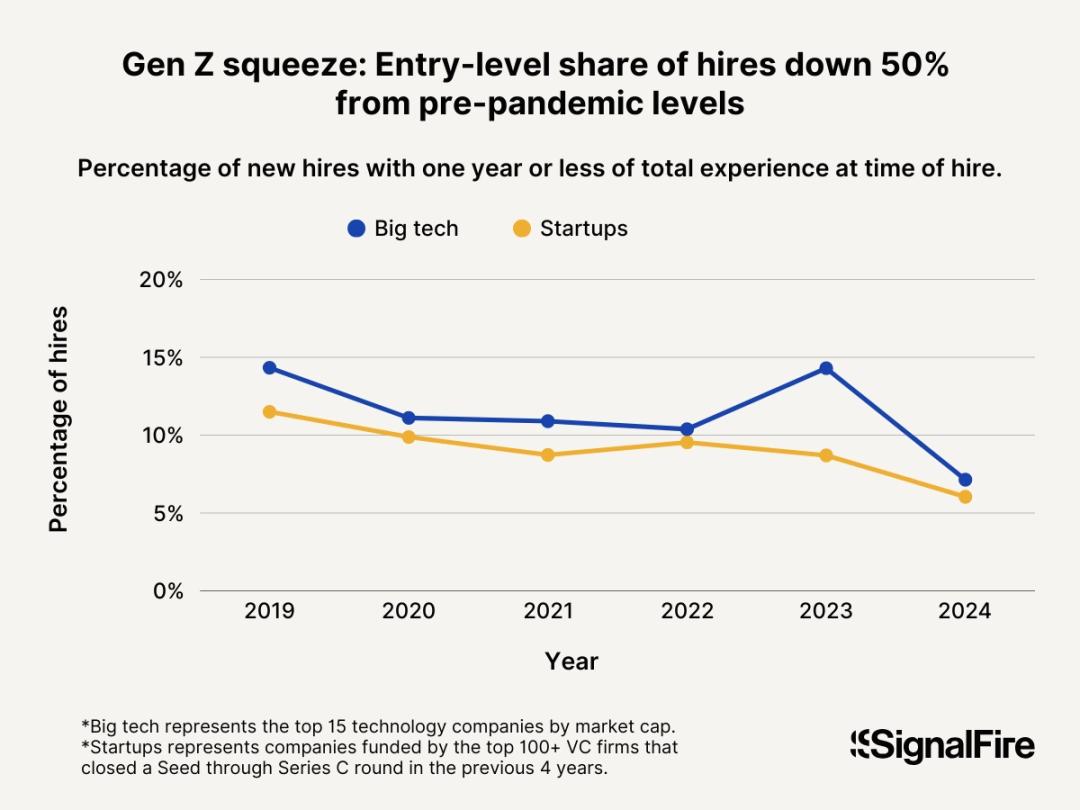
Core Insights - The article discusses the impact of AI on entry-level job opportunities, highlighting a significant decline in hiring for fresh graduates, with a reported 25% drop in recruitment by major companies in 2024 compared to the previous year [1][17]. - AI is increasingly taking over basic tasks traditionally performed by entry-level employees, leading to a vicious cycle where lack of experience prevents new graduates from securing jobs, which in turn hinders their ability to gain experience [1][21]. - Dario Amodei, CEO of Anthropic, warns that AI could eliminate half of entry-level positions within the next five years, potentially raising unemployment rates to between 10% and 20% [11][14]. AI's Role in Job Market Changes - AI tools are now capable of performing tasks that were once the responsibility of interns and junior staff, prompting companies to favor experienced hires who can leverage AI for productivity [20][21]. - The trend indicates a shift in hiring practices, with companies opting for seasoned professionals equipped with AI tools to achieve outputs previously requiring multiple entry-level employees [20][21]. Industry Reactions and Predictions - Some industry leaders, like NVIDIA's CEO Jensen Huang, disagree with the pessimistic outlook on job losses, arguing that technological advancements typically create more jobs than they eliminate [23][24]. - However, there is a consensus among experts that the transition to an AI-driven workforce may lead to a sudden shock in the labor market, with significant job losses occurring before new opportunities arise [27][28]. Call for Preparedness - The article emphasizes the need for proactive measures to address the potential employment crisis caused by AI, including discussions on education reform and organizational adjustments within companies [35][36]. - Amodei's approach of balancing technological advancement with safety measures serves as a model for how the industry can navigate the challenges posed by AI [36][38].
对话凯文·凯利:AI时代人类的价值是什么?
3 6 Ke· 2025-07-17 12:53
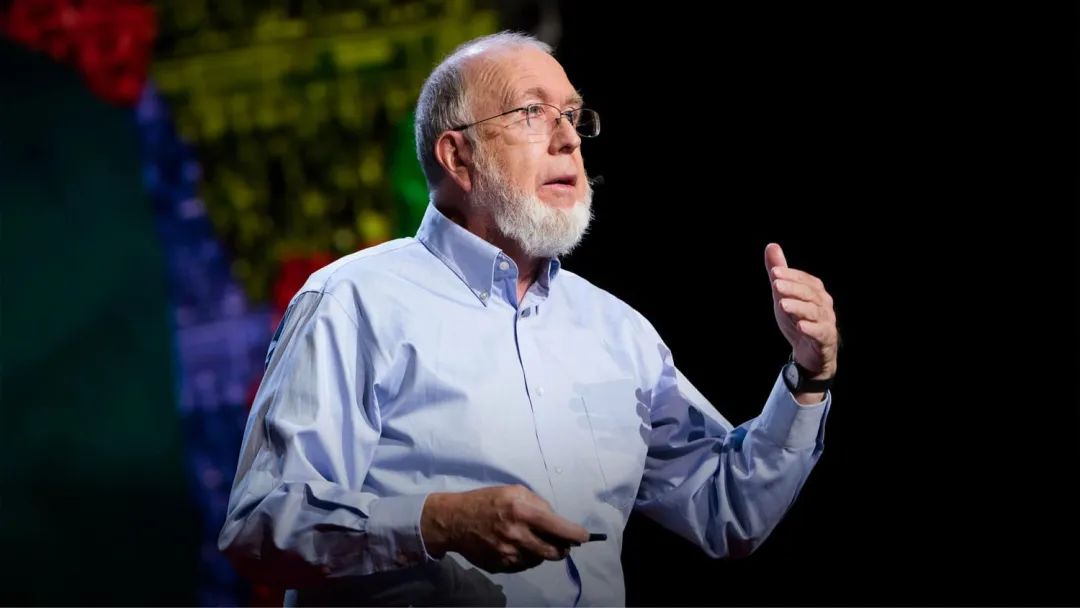
Group 1 - The core argument presented by Kevin Kelly is that even the elite in Silicon Valley, who are at the forefront of AI technology, are still novices in their daily use of AI, exploring its boundaries and potential risks [1][4][6] - Kelly predicts that very few jobs will be completely eliminated by AI; instead, the nature of work will change significantly, with many tasks becoming automated while humans will focus on managing AI and providing unique value that AI cannot replicate [1][6][7] - New job roles are expected to emerge in the AI era, such as "AI therapists" who diagnose and repair AI's "mental health" issues and "AI curriculum advisors" who educate AI models to reach specific knowledge levels [2][14] Group 2 - Kelly emphasizes that the future will see a shift towards engaging in "inefficient" yet meaningful activities like art, philosophy, and innovation, as machines take over productivity and efficiency [2][12] - The concept of "one-person companies" is anticipated to rise, where individuals can manage large-scale projects, such as creating a feature-length film or collaborating with thousands on complex tasks [18] - The relationship between the U.S. and China in the AI era is expected to be complex, with potential for both competition and cooperation, as both nations navigate their roles in a rapidly evolving technological landscape [28][29]
Meta计划用AI取代人类审核员
财富FORTUNE· 2025-06-05 13:02
Core Viewpoint - The article discusses the increasing trend of companies, including Meta, using AI to replace human workers in various roles, particularly in auditing and customer service, raising concerns about job displacement and the quality of work performed by AI [1][2][5]. Group 1: Meta's AI Implementation - Meta plans to utilize AI to handle 90% of its previous human auditing tasks related to privacy and social risks, indicating a significant shift in its operational strategy [1]. - A Meta spokesperson stated that while AI will manage low-risk decisions, human expertise will still be relied upon for new or complex issues, although internal documents suggest a broader role for AI in sensitive content review [2][3]. Group 2: Other Companies' AI Adoption - Klarna has ceased hiring new employees and is implementing a natural attrition policy, reducing its workforce from 4,500 to 3,500 by 2024, citing significant cost savings from AI in marketing and legal functions [5]. - Salesforce announced a layoff of 1,000 employees while planning to hire more AI sales agents, reflecting a broader trend of workforce reduction in favor of AI solutions [5]. - Duolingo's CEO indicated a shift towards an "AI-first" approach, suggesting a gradual elimination of roles that can be automated, although he later retracted this statement [5][6].