
AIoT技术

Search documents
商米科技二次闯关港股IPO:与大客户纠纷未止被索赔3.54亿美元 高度依赖代工自有产能仅3.3%
Xin Lang Cai Jing· 2026-01-16 10:05
Core Viewpoint - Shanghai Sunmi Technology Group Co., Ltd. has submitted a main board IPO application to the Hong Kong Stock Exchange, despite concerns over its heavy reliance on hardware sales, customer attrition, and weak profit margins from its OEM model [1][7]. Group 1: Financial Performance - The company's revenue from 2022 to 2024 shows a "V-shaped" growth trend, with figures of 3.404 billion yuan, 3.071 billion yuan, and 3.456 billion yuan respectively, while net profits were 160 million yuan, 101 million yuan, and 181 million yuan [2][8]. - Hardware sales account for over 99.5% of total revenue for three consecutive years, while software service revenue peaked at only 2% in 2023 and is projected to drop to 0.5% in 2024, indicating a lack of diversification in revenue streams [2][8]. - The gross margin for 2024 is expected to recover to 28.9%, but it remains below the industry leaders' range of 35%-40%, with a net profit margin of only 5.2% in 2024, further declining to 2.5% in the first three quarters of 2025 [2][8]. Group 2: Customer Base and Risks - The total number of customers has decreased from 2,506 in 2022 to 2,262 in 2024, reflecting a nearly 10% attrition rate over three years, with the top five customers contributing 41.1% of revenue in 2024 [3][9]. - A significant challenge arises from a legal dispute with the largest customer in Brazil, which has filed for arbitration claiming 354 million USD (approximately 2.55 billion yuan), equivalent to 73.8% of the company's total revenue for 2024 [3][9]. Group 3: Supply Chain and Production Model - The company relies heavily on OEM production, with 96.7% of its manufacturing outsourced, leaving only 3.3% produced in-house, which constrains profit margins [4][10]. - The top five suppliers account for 66.3% of procurement, and reliance on single-source components poses a risk of supply chain disruptions [4][10]. - The company plans to build a factory in Mexico to mitigate geopolitical risks, but it remains exposed to policy uncertainties until the factory is operational in 2026 [4][10]. Group 4: IPO and Future Outlook - The IPO is seen as a critical move for the company, which previously withdrew its application for the Sci-Tech Innovation Board due to concerns over its gross margin and other issues [4][10]. - The company aims to address its hardware dependency and customer concentration risks through a strategy of "hardware export + software enhancement," with approximately 35% of the IPO proceeds allocated for BIOT research and development [4][10]. - The competitive landscape is intensifying, with rivals achieving gross margins of 35.2%, and the company must increase its software revenue share to over 5% within 12 months post-IPO to maintain its growth narrative [4][10].
消费电子出海国别机会洞察
特易资讯· 2026-01-13 06:10
1. Report Industry Investment Rating No relevant content provided. 2. Core Viewpoints of the Report - The consumer electronics industry will undergo a comprehensive upgrade from products to ecosystems. Technological advancements will make devices smarter and more flexible, and environmental protection will become a key requirement. The global consumer electronics market is rapidly differentiating, with emerging markets presenting new opportunities [64]. - Chinese consumer electronics exports face new development opportunities in 2024, with emerging markets playing an increasingly important role. Green compliance and local production are crucial for companies to break through [4]. 3. Summary by Directory 3.1 China's Overall Consumer Electronics Export Situation - In 2024, China's consumer electronics exports had new opportunities. For example, the total export value of laptops was about $78.8 billion, a year - on - year increase of 4.1%. Chinese consumer electronics led globally with full - industrial - chain advantages and technological iteration capabilities [4]. - Emerging markets such as Southeast Asia, Latin America, and the Middle East had increasing contributions. Smartphones dominated in some emerging markets, while wireless headphones and power banks grew explosively in Africa and Southeast Asia through cross - border e - commerce. Green compliance and local production became key factors for companies [4]. 3.2 Export Statistics of Major Chinese Consumer Electronics from 2022 to June 2025 3.2.1 Smartphones - From 2022 to 2024, the total export value of smartphones decreased slightly from $137.31 billion to $133.08 billion. In the first half of 2025, the main export destinations were Hong Kong, China, the US, and Japan, accounting for 47.7% of the total export volume. Japan and the Netherlands had relatively large export increments [6]. 3.2.2 Tablets - From 2022 to 2024, the total export value of tablets decreased from $30.55 billion to $23.34 billion. In the first half of 2025, the main export destinations were Hong Kong, China, the US, and Japan, accounting for 58.5% of the total export volume. Singapore and Japan had relatively large export increments [9]. 3.2.3 Laptops - From 2022 to 2024, the total export value of laptops decreased and then remained stable, from $95.94 billion to $78.85 billion. In the first half of 2025, the main export destinations were the US, the Netherlands, and Japan, accounting for 43.2% of the total export volume. Japan and India had relatively large export increments [12][15]. 3.2.4 Wireless Headphones - From 2022 to 2024, the total export value of wireless headphones first decreased and then increased, from $10.1 billion to $9.85 billion. In the first half of the 2025, the main export destinations were the US, the Netherlands, and Hong Kong, China, accounting for 42.5% of the total export volume. Australia and Germany had relatively large export increments [18]. 3.2.5 Power Banks - From 2022 to 2024, the total export value of power banks decreased from $2.13 billion to $1.86 billion. In the first half of 2025, the main export destinations were the US, Germany, and the Netherlands, accounting for 22% of the total export volume. Mexico and Thailand had relatively large export increments [21][24]. 3.2.6 Multi - Speaker Speakers - From 2022 to 2024, the total export value of multi - speaker speakers remained stable, slowly decreasing from $4.36 billion to $4.04 billion. In the first half of 2025, the main export destinations were the US, the Netherlands, and Germany, accounting for 35.8% of the total export volume. The Netherlands and Poland had relatively large export increments [27]. 3.3 Analysis of Consumer Electronics Procurement and Supply in Emerging Markets from January to June 2025 3.3.1 Russia - From January to June 2025, there were 156 purchasers, 202 suppliers, 5,900 transactions, and the transaction amount was about $400 million. The average transaction amount per purchaser was $2,589,234, with an average of 37 transactions and an average transaction cycle of 142 days. The average transaction amount per of the top 800 suppliers was $1,971,085, with an average of 27 transactions and an average transaction cycle of 145 days [34]. 3.3.2 Mexico - From January to June 2025, there were 164 purchasers, 316 suppliers, 4,500 transactions, and the transaction amount was about $200 million. The average transaction amount per purchaser was $1,217,639, with an average of 28 transactions and an average transaction cycle of 121 days. The average transaction amount per supplier was $581,756, with an average of 12 transactions and an average transaction cycle of 142 days [37]. 3.3.3 Vietnam - From January to June 2025, there were 1,000 purchasers, 2,000 suppliers, 70,000 transactions, and the transaction amount was about $2.25 billion. The average transaction amount per purchaser was $2,244,470, with an average of 69 transactions and an average transaction cycle of 65 days. The average transaction amount per of the top 1000 suppliers was $2,244,746, with an average of 67 transactions and an average transaction cycle of 64 days [44]. 3.4 Briefing on Relevant Policies for Consumer Electronics Imports in Emerging Markets 3.4.1 Russia - It is the 11th largest economy globally, with a growing consumer electronics market but relying on imports. China is the main source of its consumer electronics imports. It has differential tariff policies, requires EAC certification, and restricts parallel imports. Importers are required to use rubles for settlement [52][58]. 3.4.2 Mexico - It is the second - largest consumer electronics market in Latin America. There is a significant "near - shore manufacturing" trend. It has zero - tariff policies for locally assembled products, and all products need NOM certification. There are also tax incentives for new - energy logistics and solar energy transformation in warehousing [55][56]. 3.4.3 Vietnam - It is the fastest - growing consumer electronics market in Southeast Asia. It has differential tariff policies, requires import model registration, and offers tax incentives for foreign technology companies [60]. 3.5 Future Development of the Global Consumer Electronics Industry - The industry will experience a comprehensive upgrade from products to ecosystems. Technology will make devices smarter, and environmental protection will be a hard requirement. The global market pattern is differentiating, and companies need to adopt different strategies in different markets [64]. 3.6 Appendices - Include the top 50 lists of consumer electronics purchasers in Russia, Mexico, and Vietnam [66][68][70].
数码家电行业周度市场观察-20251217
Ai Rui Zi Xun· 2025-12-17 08:38
Investment Rating - The report does not explicitly provide an investment rating for the industry Core Insights - The digital home appliance industry is experiencing a transformation driven by AI technology, with significant developments in various sectors including education, retail, and robotics [1][2][3][4][6][9][10] Industry Trends - The education sector is leveraging generative AI to enhance personalized services, with companies like Fenbi exploring AI-driven products despite facing competition and the need for continuous investment [1] - New retail is shifting from supply-driven to demand-driven management through AI, addressing issues like inventory backlog and customer loyalty [2] - The "human-vehicle-home" ecosystem is evolving with 5G, AI, and IoT technologies, enhancing user experience and creating new business models [3] - AI video content is becoming longer and more sophisticated, democratizing the creative process in the film industry [4] - The AI terminal ecosystem is developing rapidly, with significant growth in AI smartphones and smart wearables, driven by advancements in domestic computing chips [4] - The humanoid robot market is projected to grow significantly, driven by labor shortages and technological advancements, although challenges remain [4][6] - AI entrepreneurship is transitioning from model competition to scenario-based applications, as showcased at the World Internet Conference [6] - The home appliance market is shifting towards quality and innovation, with air conditioners performing well despite price wars, while the black appliance sector faces challenges [9] - The coffee machine market is experiencing growth due to consumer demand for high-quality coffee experiences, reflecting a shift towards premium products [9] - The "Double 11" shopping festival highlighted the significant role of AI in driving sales and transforming consumer decision-making in the home appliance sector [10] Top Brand News - Soul App is preparing for an IPO, focusing on AI-driven emotional value services, with a strong user base among Generation Z [13] - Alibaba is launching new AI products aimed at the consumer market, seeking to enhance its ecosystem and address internal strategic challenges [14] - Yushun Technology is on the verge of going public, having established itself as a leader in the humanoid robot sector [14] - Rokid is gaining traction in the smart glasses market, collaborating with various partners to enhance product functionality and user experience [16] - Kuaishou reported strong revenue growth, attributing part of its success to AI technology that enhances online marketing [17] - Black Sesame Intelligence is addressing challenges in robot mass production with a new intelligent computing platform [18]
2025年第49周:数码家电行业周度市场观察
艾瑞咨询· 2025-12-16 00:05
Group 1 - The education industry is undergoing transformation driven by generative AI technology, with companies like Fenbi exploring AI products to enhance personalized services in public examination training, although facing competition and the need for continuous investment [2] - New retail is not merely about digital transformation but involves a shift from supply-driven to demand-driven management through AI, addressing issues like inventory backlog and customer loyalty [3] - The "human-vehicle-home" ecosystem is being reshaped by 5G, AI, and IoT technologies, enhancing user experience and creating new business models, while traditional companies face challenges in standardization and data security [4] Group 2 - AI video technology has made significant advancements, allowing for longer and more complex narratives, thus democratizing content creation in the film industry [5] - The domestic AI terminal market is rapidly evolving, with significant growth in AI smartphones and smart wearables, driven by breakthroughs in domestic computing chips [6] - Humanoid robots are seeing increased commercial viability, with market projections indicating substantial growth, although challenges such as high costs and reliance on imported components remain [7] Group 3 - The AI entrepreneurship landscape is shifting towards scenario-based applications, as showcased by the "Six Little Dragons" at the World Internet Conference, indicating a transition in AI from data to cognitive construction [8] - In the AI era, traditional five-year strategic planning is becoming obsolete, necessitating a shift towards strategic agility to adapt to rapid market changes [9][10] - The Chinese home appliance market is transitioning from quantity to quality, with significant sales fluctuations in white and black goods, indicating a competitive shift towards high-end products [11] Group 4 - The smart glasses industry is facing challenges in user experience and technology, with high return rates and a lack of killer applications hindering widespread adoption [12] - The home coffee machine market is experiencing significant growth driven by consumer demand for higher quality coffee experiences, reflecting a trend towards premiumization [13][14] - The recent "Double 11" shopping festival saw a surge in smart home appliance sales, with AI technology playing a crucial role in reshaping consumer decision-making and product functionality [15] Group 5 - The AI sector is witnessing a surge in IPOs, with a focus on practical applications in healthcare, logistics, and autonomous driving, as capital flows towards areas with clear commercialization potential [16] - AI in healthcare is advancing towards a stage of efficiency revolution and commercialization, with significant applications in medical imaging and drug development [17][18] - Soul App is preparing for an IPO, leveraging its unique position as a virtual identity AI social platform, with strong user engagement metrics and revenue growth [19] Group 6 - Alibaba is actively developing AI products for the consumer market, aiming to create a cohesive ecosystem despite internal challenges related to resource allocation and talent retention [20] - Yushutech is on the verge of going public, having established itself as a leader in the humanoid robot sector with a focus on low-cost, high-performance technology [21][22] - Haier Robotics is collaborating with INDEMIND to advance the development of home robots, integrating AI technology with household applications [23] Group 7 - Rokid is gaining traction in the smart glasses market, successfully integrating fashion and technology while expanding its user base across various professional fields [24] - Zoom's upcoming financial report is expected to highlight the impact of AI on its growth, with a focus on enhancing user experience through AI tools [25][26] - Kuaishou's third-quarter results show significant revenue growth driven by AI technology, indicating a successful commercialization strategy [27] Group 8 - Black Sesame Intelligence is addressing the challenges of robot mass production with its new intelligent computing platform, aiming to enhance reliability and performance in the robotics sector [28] - Investment in AI glasses is characterized by high uncertainty, with a focus on long-term technological breakthroughs rather than short-term speculation [29] - Xiaopeng Motors is aggressively pursuing the humanoid robot market, projecting significant sales growth despite industry skepticism regarding market potential [31] Group 9 - Apple is preparing for a leadership transition, with a focus on hardware-driven AI strategies, amidst challenges in the saturated smartphone market and increasing regulatory pressures [32] - Baidu is developing its own AI chips to address the unsustainable value distribution in the AI industry, aiming to enhance computational efficiency and scalability [33][34]


HOME CONTROL(01747.HK)拟配售最多2842.4万股 总筹1.08亿港元
Ge Long Hui· 2025-11-17 22:47
Core Viewpoint - HOME CONTROL (01747.HK) has entered into a placement agreement with Macquarie to issue up to 28.424 million shares at a price of HKD 3.80 per share, representing a discount of approximately 18.98% from the last closing price of HKD 4.69 on November 17 [1][2] Group 1 - The total number of shares to be placed is equivalent to about 5.61% of the company's existing issued share capital as of the announcement date [1] - The estimated total proceeds from the placement are approximately HKD 108 million, with a net amount expected to be around HKD 106.3 million [2] Group 2 - Approximately 70% of the net proceeds will be allocated to research and development activities related to the group's healthcare business, including AIoT technology and core personal healthcare management products [2] - About 20% of the net proceeds will support the implementation and operation of the healthcare-related business, such as industry research, business analysis, compliance management, and seeking strategic partnerships [2] - The remaining 10% of the net proceeds will be used to supplement working capital and for general corporate purposes [2]
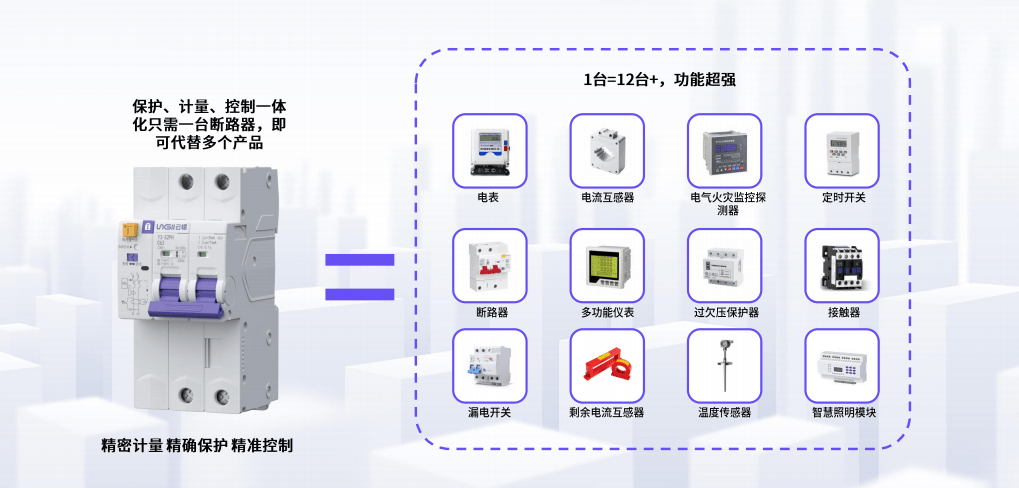
终结“幽灵电费”!智慧微断:让电器在“下班”后自动“休息”
Sou Hu Cai Jing· 2025-10-27 10:47
Core Insights - The article highlights the emergence of smart micro-breakers integrated with AIoT technology to address the issue of "invisible electricity costs" in both enterprises and households, enabling automated power management and enhancing safety [1][2]. Group 1: Smart Micro-Breaker Features - Smart micro-breakers allow remote scheduling and control via mobile apps or web platforms, enabling users to set operational schedules for devices, effectively eliminating standby power consumption [3]. - The system offers flexible threshold settings for current and power, automatically cutting off power to devices that remain in standby mode for a specified duration, enhancing energy efficiency [3]. - It includes offline automation capabilities, allowing users to create conditional scenarios for power management without relying on cloud connectivity, ensuring consistent execution of energy-saving strategies [3]. Group 2: Safety and Monitoring - The core mission of smart micro-breakers is to enhance electrical safety through comprehensive monitoring and multi-channel alerts, shifting from reactive to proactive safety measures [2]. - Built-in sensors can detect parameters such as short circuits, leakage, and overloads, enabling early identification of potential hazards like connector oxidation and insulation damage [2]. Group 3: Management Transparency and Flexibility - Smart micro-breakers support integration with third-party cameras for real-time monitoring, transforming energy management from opaque to transparent through visual interfaces [4]. - A refined permission control system allows for differentiated access based on roles, enhancing management efficiency in various settings, such as corporate offices and residential apartments [5]. - The platform facilitates real-time synchronization of energy consumption data to the cloud, enabling users to manage billing and energy usage effectively, particularly in commercial complexes [5].
2025年中国光伏预制舱行业市场政策、产业链图谱、市场规模、竞争格局及发展趋势分析:下游市场需求旺盛[图]
Chan Ye Xin Xi Wang· 2025-10-27 01:24
Core Viewpoint - The photovoltaic prefabricated cabin industry in China is expected to reach a market size of 224 million yuan in 2024, with a year-on-year growth of 13.71%, driven by the transition towards standardized, modular, and rapid construction of photovoltaic power plants, and the ongoing growth in installed capacity under the "dual carbon" goals [1][7]. Overview - Photovoltaic prefabricated cabins are integrated photovoltaic power generation devices that combine key electrical equipment and auxiliary systems in a factory setting, allowing for quick deployment on-site [2][3]. Market Policy - The Chinese government has issued several policies to support the development of the power equipment industry, including the photovoltaic prefabricated cabin sector, creating a favorable policy environment for growth [4][5]. Industry Chain - The upstream of the photovoltaic prefabricated cabin industry includes suppliers of raw materials and core components, while the midstream involves design and manufacturing, and the downstream focuses on the photovoltaic market, including centralized and distributed photovoltaic power plants [6]. Development Status - The photovoltaic prefabricated cabin industry is experiencing rapid growth, with significant applications in large ground-mounted photovoltaic power plants and distributed photovoltaic projects, supported by a robust downstream market [7][8]. Competitive Landscape - The market is becoming increasingly competitive, with key players including Qingdao Teruid Electric Co., Ltd., XJ Electric Co., Ltd., and others, each focusing on different aspects of the photovoltaic prefabricated cabin business [9][11]. Company Analysis - Qingdao Teruid Electric Co., Ltd. reported a total revenue of 15.37 billion yuan in 2024, with significant contributions from various segments including electric vehicle charging networks and box-type equipment [9][10]. - XJ Electric Co., Ltd. achieved a revenue of 17.09 billion yuan in 2024, with a diverse product range including smart power distribution systems and renewable energy solutions [11][12]. Development Trends - Future advancements in photovoltaic prefabricated cabins are expected to focus on integrating various components to enhance space utilization, reduce costs, and improve performance, alongside the incorporation of AIoT technologies for better monitoring and efficiency [12].


破局医疗服务痛点,革新与系统解法后,更安全、更高效、更人性化
Sou Hu Cai Jing· 2025-10-20 11:08
Core Insights - The article highlights the challenges faced by China's healthcare system, including uneven distribution of medical resources, high medication safety risks, low management efficiency, and a crisis of trust between doctors and patients. The introduction of Ruifeng Intelligent Medicine Cabinets in 2025 aims to address these issues through AIoT technology and comprehensive digital management solutions [1] Group 1: Challenges in Healthcare - Grassroots medical institutions are experiencing a dual dilemma of "drug shortages" and "expiration waves," with nearly 30% of drugs expiring due to lack of dynamic management, leading to significant financial losses [2] - Traditional management models exhibit three major vulnerabilities: uncontrolled access, human error in drug preparation, and inadequate waste recovery processes [3][7] Group 2: Ruifeng's Solutions - Ruifeng's intelligent medicine cabinet utilizes a three-tier storage network and dynamic replenishment model to optimize drug resource allocation, significantly reducing drug expiration loss rates from 28% to 1.2% in a community hospital [3][4] - The safety matrix of Ruifeng includes a comprehensive security system with biometric authentication, intelligent error prevention, and blockchain traceability, enhancing compliance and operational efficiency [6] Group 3: Data Management and Decision Support - The intelligent medicine cabinet features a dual-core management system that improves inventory accuracy and efficiency, achieving a 500% increase in inventory management speed and reducing error rates to 0.05% [11] - A data visualization platform generates dynamic reports that help management adjust procurement strategies in real-time, reducing drug inventory turnover days from 45 to 18 [11] Group 4: Transparency and Compliance - The Ruifeng solution addresses the "information black box" in doctor-patient relationships by providing traceable and verifiable medication records, which can significantly improve legal outcomes in medical disputes [12] - Integration with HIS systems and insurance regulatory platforms enhances prescription accuracy and reduces fraud detection rates, demonstrating the potential for improved healthcare efficiency [14] Group 5: Future of Healthcare - The implementation of Ruifeng Intelligent Medicine Cabinets signifies a shift towards a new paradigm in healthcare, emphasizing the need for both technological advancements and improved management practices to enhance patient-centered care [15]

白酒企业“跨界”纳斯达克,王茅酒业参保员工数为零引关注
Sou Hu Cai Jing· 2025-08-30 23:25
Core Viewpoint - The collaboration between Junyu Engineering Group and Wangmao Liquor Group marks a significant move for the Chinese liquor industry, aiming to become the first Chinese liquor company listed on the US stock market through a reverse merger, despite controversies surrounding this claim [1][2]. Group 1: Company Overview - Junyu Engineering Group, primarily engaged in earthworks transportation services in Hong Kong, is diversifying its business by partnering with Wangmao Liquor Group, which will maintain its independent brand operation while leveraging Junyu's resources for upgrades [2]. - Wangmao Liquor Group, established in 2018 with a registered capital of 100 million RMB, has no reported employees, raising concerns about its operational capacity [1][4]. Group 2: Market Strategy - The reverse merger strategy allows non-listed companies to acquire control of a shell company, facilitating a quicker and more cost-effective path to public listing compared to traditional methods [1]. - Wangmao Liquor Group is incorporating advanced technology concepts such as AIoT in traditional liquor production and integrating NFT digital collectibles with AR customization systems, aiming to attract attention and enhance its market presence [4]. Group 3: Financial Implications - Junyu Engineering's stock has experienced extreme volatility since its listing in July 2024, with a nearly tenfold increase followed by a subsequent drop of nearly 90%, putting it at risk of delisting from NASDAQ [4]. - The partnership with Wangmao Liquor Group is seen as a potential lifeline for Junyu Engineering to avoid delisting while simultaneously boosting Wangmao's visibility and brand image in the market [4].

深天马A: 2025年半年度报告摘要
Zheng Quan Zhi Xing· 2025-08-22 12:10
Core Viewpoint - Tianma Microelectronics Co., Ltd. reported a significant recovery in its financial performance for the first half of 2025, with a net profit attributable to shareholders increasing by 142% year-on-year, marking a turnaround from losses in the previous period [4]. Financial Performance - The company's operating revenue reached approximately 17.48 billion yuan, representing a 9.93% increase compared to the same period last year [1]. - The net profit attributable to shareholders was approximately 205.90 million yuan, a substantial recovery from a loss of about 489.39 million yuan in the previous year [1]. - The net profit after deducting non-recurring gains and losses was approximately 787.26 million yuan, compared to a loss of about 1.04 billion yuan in the same period last year [1]. - The net cash flow from operating activities increased by 48.44% to approximately 3.97 billion yuan [1]. Asset and Equity Status - Total assets at the end of the reporting period were approximately 77.62 billion yuan, down 4.45% from the previous year [2]. - The net assets attributable to shareholders were approximately 27.51 billion yuan, a slight increase of 0.95% from the previous year [2]. Market and Industry Trends - The global small and medium-sized display market showed signs of recovery, driven by demand in key application markets such as smartphones, automotive displays, and IT products [4]. - The penetration rate of OLED in smartphones continued to rise, and the demand for high-end automotive displays increased due to trends like multi-screen and large-screen setups [4]. - The company maintained a leading position in the automotive display sector, with a significant increase in shipments of LTPS automotive display products, which grew over 76% year-on-year [8]. Technological Innovations - The company launched several innovative products, including the world's first integrated fingerprint recognition and color temperature sensing AMOLED display, which won the "Best OLED-Based Technology" award at SID 2025 [5]. - In the automotive display sector, the company introduced a 12.3-inch hidden display and a light field 3D AR-HUD, both of which received accolades for their advanced technology [5]. Operational Efficiency - The company implemented cost management strategies that resulted in a reduction of the cost-to-income ratio by approximately 5.4 percentage points, contributing to improved profitability [10]. - The company is actively pursuing digital transformation and smart manufacturing initiatives to enhance operational efficiency and management capabilities [10]. Social Responsibility - The company has committed to sustainable development and carbon neutrality, launching a carbon management action plan and receiving multiple awards for its ESG practices [10].
