CIPS

Search documents
人民币升值不是利好,也不是利空,而是一次全球规则切换!
Xin Lang Cai Jing· 2026-01-05 05:39
Core Viewpoint - The appreciation of the Renminbi (RMB) is not a positive or negative signal but represents a shift in global rules, as it breaks through the 7.0 mark and enters the "6" range [1][2]. Group 1: Market Reactions - There is a consistent narrative that regardless of whether the RMB rises or falls, the conclusion drawn is that "the Chinese economy is about to collapse," raising questions about the validity of this logic [1][2]. - The analysis highlights the absurdity of the "double standard" narrative that claims economic collapse can occur regardless of currency fluctuations [1][2]. Group 2: Currency Dynamics - The short-term fluctuations of the RMB are influenced by external factors, particularly the "tide of the US dollar," which plays a significant role in the currency's movement [1][2]. - The purchasing power disparity is emphasized, illustrating that $100 may be insufficient in the West but is considered a substantial amount in China, indicating a potential revaluation of the RMB [1][2]. Group 3: Trust and Financial Systems - The article discusses the erosion of trust in traditional financial systems, with SWIFT being weaponized and US Treasury bonds viewed as a "terrorist lover," leading to global capital concerns [1][2]. - New payment systems like CIPS and BRICS payment mechanisms are emerging as alternatives in response to these fears [1][2]. Group 4: Underlying Economic Shifts - The fundamental strength behind the RMB's appreciation is its transition from a mere financial contract to a priority claim on the "world's strongest real economy," signifying a deeper economic revolution [1][2]. - This transformation is not just numerical but represents a silent revolution regarding the sources of "security" in the future world [1][2].
上海钢联:目前未与银行合作接入CIPS或开展跨境人民币代理清算
Sou Hu Cai Jing· 2025-12-27 15:27
Core Viewpoint - The company, Shanghai Steel Union, is focusing on enhancing its role in the financial support for the Western Land-Sea New Corridor, particularly in areas of RMB pricing, cross-border payments, and digital financial cooperation [1]. Group 1: RMB Pricing - The company has already implemented RMB pricing and settlement for iron ore and plans to expand this to additional products and scenarios [1]. - It aims to increase the proportion of RMB settlements in platform transactions to a target ratio and incremental scale over the next 6-12 months [1]. - Currently, over 30% of China's imported iron ore transactions are settled using the Mysteel iron ore price index published by the company [1]. Group 2: Cross-Border Payments and CIPS - The company has not yet partnered with banks to access CIPS or to conduct cross-border RMB agency clearing [1]. - The Mysteel coal index is used as the settlement benchmark for all coking coal imported from Russia to China [1].

长亮科技(300348.SZ):有包括CIPS在内的二代支付系统相关解决方案与产品
Ge Long Hui· 2025-12-03 07:29
Core Viewpoint - The company has established a product layout in the cross-border payment sector, including solutions related to the second-generation payment system CIPS [1] Group 1 - The company has provided relevant scenario solutions for several large domestic commercial banks [1] - The solutions are designed to meet the cross-border payment scenario needs based on CIPS [1]

宇信科技(300674) - 宇信科技:2025年4月29日投资者关系活动记录表
2025-04-30 00:20
Financial Performance - The company achieved a net profit attributable to shareholders of 58.15 million yuan in Q1 2025, representing a year-on-year increase of 81.1% [3] - The non-recurring net profit attributable to shareholders was 55.32 million yuan, up 77.0% year-on-year [3] - The gross profit margin reached 27.8%, an increase of 1.4 percentage points compared to the previous year [3] - The net profit margin was 11.0%, reflecting a year-on-year increase of 5.7 percentage points [3] Client Composition - Large banks contribute approximately 50% of the main business revenue, with state-owned commercial banks, joint-stock banks, and policy banks being the primary contributors [3] - Small and medium-sized banks and rural credit cooperatives account for about 30% of revenue [3] - Revenue from overseas banks grew by 241% year-on-year, reaching 27.53 million yuan [3] Product and Solution Revenue - Revenue from banking IT products and solutions accounted for over 80% of total revenue, with a gross margin exceeding 26%, up 3.5 percentage points year-on-year [3] - Non-banking IT products and solutions contributed approximately 15% of revenue, with a year-on-year growth of 135% [3] - The innovative operations business began generating revenue from overseas digital banking clients, with a gross margin close to 80% [3] Cross-Border Payment Capabilities - The company is involved in three main areas of cross-border payment: infrastructure, institutional level, and e-commerce [4] - It has experience and technical capabilities in serving key financial infrastructures supervised by the People's Bank of China [4] - The company is actively following developments in CIPS and mBridge [4] AI Business Developments - The company focuses on applying AI to enhance client business capabilities, particularly in the banking sector [7] - AI products have been successfully implemented in several city commercial banks, utilizing a SaaS subscription model [8] - The company is responding to the needs of various banks and non-bank clients, facilitating POC testing and case implementations [7] Overseas Business Expansion - The company successfully expanded its overseas business into Southeast Asia and secured a client in Europe [9] - There is a significant demand for upgrading traditional IT architectures among overseas banks, providing opportunities for the company [9] - The company employs a dual strategy of upgrading existing systems and connecting with emerging financial needs in mobile internet ecosystems [10]

中国反击!金融脱钩和贸易孤立
Datayes· 2025-04-21 10:47
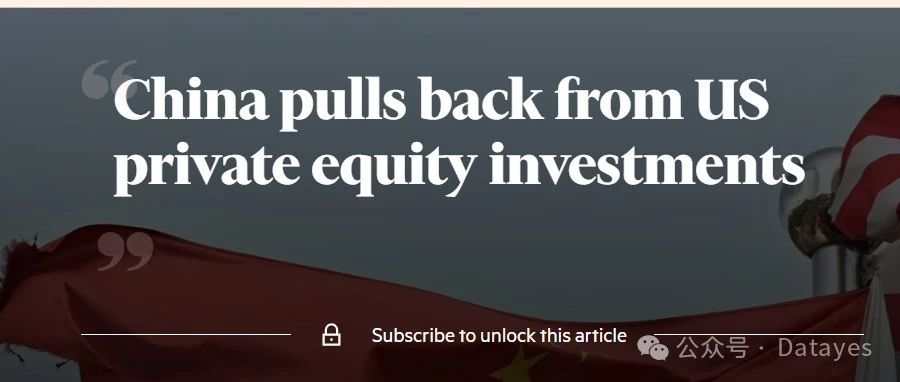
Group 1 - Chinese state-owned funds are halting new investments in US private equity as a response to the trade war initiated by President Trump [1] - The LPR (Loan Prime Rate) has remained unchanged for six consecutive months, indicating stability in monetary policy [1] - A-shares experienced a median increase of 1.38% with a trading volume of 1.07 trillion yuan, despite the Hong Kong market being closed [2] Group 2 - The US dollar index fell below the 99 mark, reaching a low of 97.96, driven by hedge funds selling the dollar against almost all currencies [3][4] - Gold prices surged, with spot gold nearing $3,400 per ounce, benefiting from the dollar's decline and increased demand for safe-haven assets [4] - Bitcoin saw a significant rise, increasing nearly $2,000 to surpass $87,000, marking its largest single-day gain since the "liberation day" [4] Group 3 - The G2 geopolitical dynamics are characterized as non-stable and non-normal, with a prediction that negotiations will occur soon due to political pressures [4] - Investment opportunities are suggested in core sectors benefiting from global supply chain restructuring, such as semiconductor materials and energy independence [4] - The A-share market saw collective gains across major indices, with the Shanghai Composite Index rising by 0.45% and over 4,300 stocks increasing in value [4] Group 4 - The paper industry experienced a surge due to a significant increase in the price of imported fluff pulp, which has risen nearly 50% since the onset of the tariff war [7] - The consumer sector is showing signs of rotation, but the overall fundamental support for consumption remains weak, limiting the potential for sustained rallies [10][11] - The recent approval of a new AI application for pet language translation indicates growing interest in AI technologies [6] Group 5 - The sodium-ion battery developed by CATL is set to be the world's first mass-produced sodium battery for vehicles, with impressive specifications including a 175 Wh/kg energy density and over 10,000 charge cycles [16] - Major contracts in the computing power sector have been signed, including a 4.41 billion yuan contract for computing services [17]






A股五张图:万亿成交,百个题材
Xuan Gu Bao· 2025-04-21 10:35
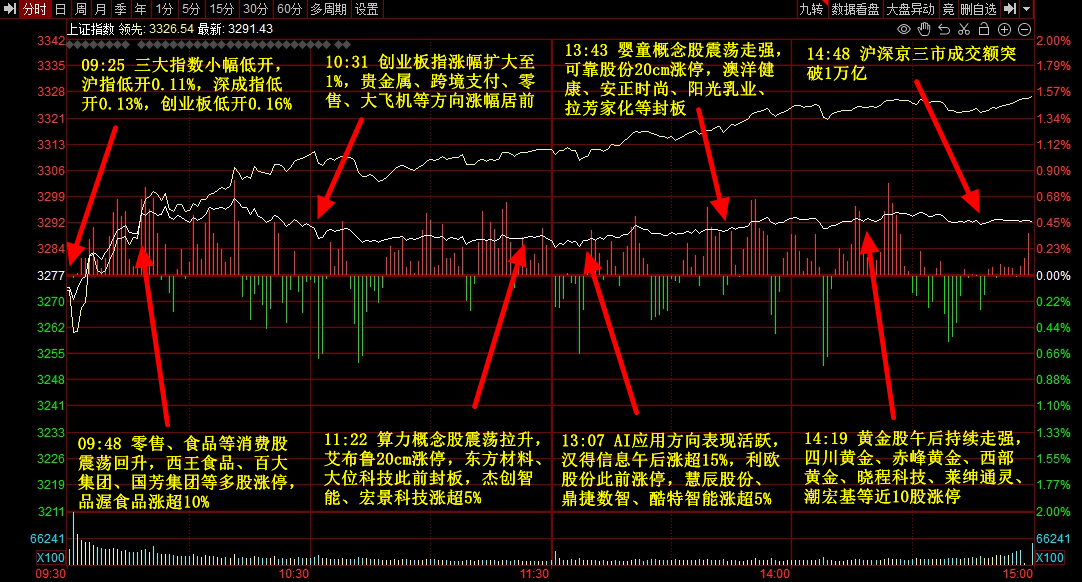
Market Overview - The market showed strength with a decrease in trading volume, with various concept stocks experiencing significant movements, particularly in the large aircraft and cross-border payment sectors [3] - The Shanghai Composite Index, Shenzhen Component Index, and ChiNext Index closed up by 0.45%, 1.27%, and 1.59% respectively, with over 4,300 stocks rising and around 800 declining [3] Robotics Sector - The first humanoid robot marathon took place, featuring 20 teams competing over a half marathon distance, with the winning robot developed by Beijing Humanoid Robot Innovation Center and UBTECH Technology [6][7] - The performance of Yushutech's G1 humanoid robot, which fell during the race, sparked discussions about its capabilities, despite the company clarifying that it did not participate directly [8][9] - The humanoid robot sector saw a 3.5% increase overall, with stocks like Tian工 and Songyan Power experiencing significant gains [9] MCP Concept - The MCP (Multi-Context Protocol) concept, set to launch in November 2024, aims to standardize applications for large language models, simplifying AI integration and reducing development barriers [11] - The announcement of ByteDance's new AI collaborative platform, "Coze Space," which supports MCP integration, acted as a catalyst for the surge in related stocks [12] - Stocks such as Dongfang Materials and Hengfeng Information saw significant increases, with some reaching their daily limit [12] Cross-Border Payment (CIPS) - The CIPS concept saw a resurgence, with stocks like Hailian Jinhui and Xinyada hitting their daily limits after the People's Bank of China announced plans to enhance the CIPS system and expand its global network [14] - The CIPS sector closed up by 3.41%, reversing an earlier decline [14] Paper Industry - The paper sector experienced a surge following news related to "intellectual property construction," with stocks like Annie Co. and Huatai Co. hitting their daily limits [16][17] - The increase in paper stocks was linked to rising raw material costs, particularly for specialty paper pulp, which has seen price fluctuations of nearly 50% due to supply chain issues [20]