
PD - 1抑制剂

Search documents
打破美日垄断!中国PD-1抗癌药强势崛起,叫板BMS、默沙东等跨国龙头药企
Ge Long Hui· 2026-02-27 01:35
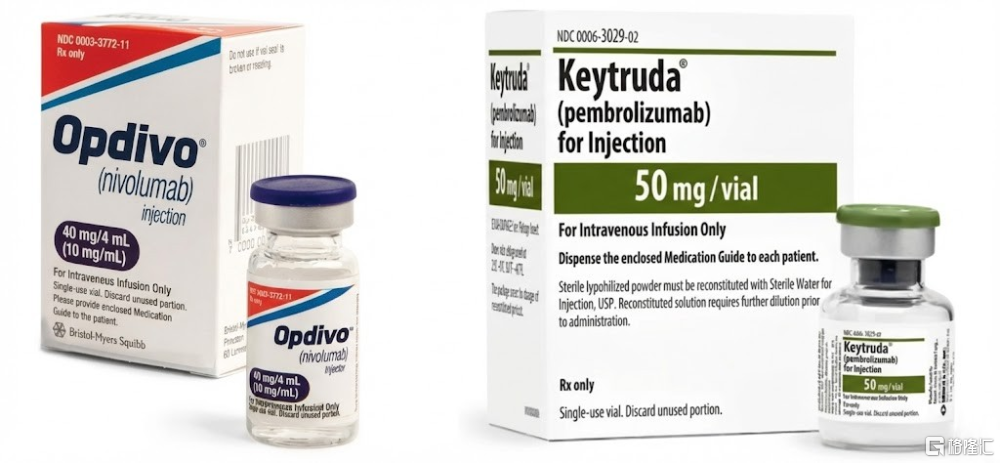
Core Insights - The introduction of PD-1 inhibitors in 2014 marked a significant turning point in the fight against cancer, with Bristol-Myers Squibb's Opdivo and Merck's Keytruda leading the charge in immunotherapy [1][3] - The competition between Opdivo and Keytruda has evolved over the years, with Keytruda ultimately becoming the top-selling drug globally by 2024 [21][22] Historical Context - The history of cancer immunotherapy began with William Coley's discovery in the late 19th century, which was followed by a long period of stagnation until the late 20th century when key immune cells were identified [4] - The discoveries of James Allison and Tasuku Honjo regarding CTLA-4 and PD-1, respectively, laid the groundwork for the development of PD-1 inhibitors [5][10] Drug Development - Opdivo was developed with strong backing from Bristol-Myers Squibb after acquiring Medarex in 2009, leading to its approval in Japan in 2014 [12] - Keytruda's development faced initial setbacks but was revitalized by Merck's strategic decision to conduct an unprecedented "super I phase" trial, leading to its approval shortly after Opdivo [14][15][16] Market Dynamics - In 2016, a critical competition occurred between Opdivo and Keytruda in the non-small cell lung cancer (NSCLC) market, which is the largest segment in oncology [17] - BMS's failure in the CheckMate-026 trial led to a significant drop in Opdivo's market position, while Merck's more selective approach in the KEYNOTE-024 trial resulted in Keytruda's success [18][19][20] Sales Performance - By 2024, Keytruda's sales reached $29.5 billion, marking an 18% increase and solidifying its position as the top-selling drug globally [21] - Opdivo, while still a major player, saw its sales decline but remained above the $10 billion mark, maintaining its status as a heavyweight in the market [22][23] Competitive Landscape - The global PD-1 inhibitor market is highly competitive, with 527 candidates in development as of early 2025, including 20 approved drugs [26][29] - In China, the market is characterized by intense competition among local manufacturers, with significant price reductions due to national healthcare negotiations [30][31] Future Outlook - Keytruda's core patent is expected to expire in 2028, potentially leading to a significant drop in sales as biosimilars enter the market [32] - A new challenger, Ivonescimab, has shown superior efficacy compared to Keytruda in clinical trials, indicating a shift towards dual-target therapies in cancer treatment [33][35]




华兰生物(002007.SZ):参股公司收到药物临床试验批准通知书
Ge Long Hui A P P· 2026-02-25 10:28
Core Viewpoint - Hualan Biological Engineering Co., Ltd. announced that its subsidiary, Hualan Ankang Biopharmaceutical Co., Ltd., received approval for clinical trials of its biosimilar drug, Pembrolizumab injection, marking a significant step in expanding its product pipeline and optimizing product structure [1][2]. Group 1 - Hualan Ankang has received the "Drug Clinical Trial Approval Notice" from the National Medical Products Administration, allowing it to officially conduct clinical research on Pembrolizumab injection [1]. - Pembrolizumab is a humanized monoclonal antibody targeting the PD-1 immune checkpoint, which plays a crucial role in tumor immune evasion by inhibiting T cell activity [1]. - The original product, Keytruda, developed by Merck, is one of the first PD-1 inhibitors approved globally for various significant cancer indications, including non-small cell lung cancer and melanoma [1]. Group 2 - The approval of clinical trials for Pembrolizumab injection signifies the drug's potential to further validate its safety and efficacy, laying the groundwork for future registration and market launch [2]. - Currently, there are no similar drugs approved for marketing in China, highlighting the competitive advantage for Hualan Ankang in the biosimilar market [2].

华兰生物:参股公司收到帕博利珠单抗注射液临床试验批准通知书
Ge Long Hui A P P· 2026-02-25 10:09
Core Viewpoint - Hualan Biological (002007.SZ) announced that its subsidiary Hualan Ankang received the Clinical Trial Approval Notice from the National Medical Products Administration, allowing the clinical trial of the biosimilar drug Pembrolizumab injection to proceed [1] Group 1: Clinical Trial Approval - The approval signifies that the drug can officially commence corresponding clinical research to further validate its safety and efficacy, laying the groundwork for subsequent registration and market launch [1] - Pembrolizumab injection is a biosimilar developed by Merck and is one of the first PD-1 inhibitors approved globally [1] - Currently, there are no similar drugs approved for market in China, aside from the original product [1] Group 2: Product Pipeline and Structure - The approval enriches the company's product pipeline and optimizes its product structure [1] - The drug development process is characterized by long cycles, multiple stages, and high risks, necessitating the completion of all clinical trials, production applications, and approvals from the National Medical Products Administration [1] Group 3: Risks and Challenges - There are uncertainties associated with the outcomes of each stage, including clinical data and progress not meeting expectations, intense market competition, and changes in industry policies and technology [1]
“药王”更迭 替尔泊肽年销售额超365亿美元登顶
Xin Jing Bao· 2026-02-12 04:54
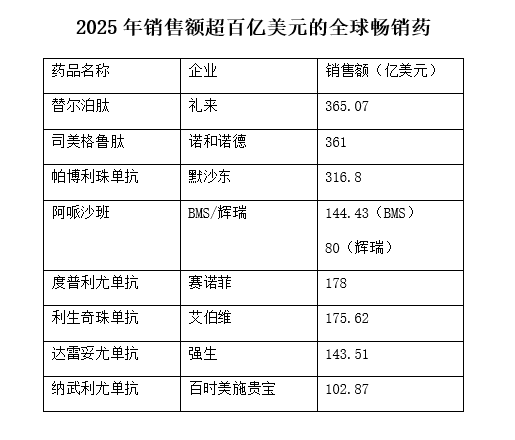
Core Insights - The global pharmaceutical industry is witnessing a significant shift in the rankings of best-selling drugs, with several products surpassing $10 billion in sales for 2025 [1][2]. Group 1: Sales Performance - Novo Nordisk's semaglutide briefly topped the sales chart in Q1 2025 but was ultimately surpassed by Eli Lilly's tirzepatide, with both drugs exceeding $30 billion in sales [1][3]. - Tirzepatide achieved a remarkable year-on-year sales growth of 121%, while semaglutide's growth was only 13% [3]. - The sales figures for semaglutide in the first half of 2025 reached $16.683 billion, maintaining its position as a top-selling drug [3]. Group 2: Competitive Landscape - The GLP-1 drug class is experiencing intense competition, with both tirzepatide and semaglutide being key players [4][5]. - The market is dominated by Novo Nordisk and Eli Lilly, but Chinese pharmaceutical companies are also making significant strides in this area [5][6]. - New GLP-1 drugs are under development, including Novo Nordisk's CagriSema and Eli Lilly's retatrutide, which shows potential for greater weight loss than tirzepatide [5]. Group 3: Oncology and Autoimmune Drugs - The PD-1 inhibitor pembrolizumab (Keytruda) remains a top seller in oncology, with sales reaching $31.68 billion in 2025, despite falling to third place [7]. - Nivolumab (Opdivo) also crossed the $10 billion mark, achieving sales of $10.29 billion [8]. - In the autoimmune disease sector, drugs like dupilumab and risankizumab achieved sales of $17.8 billion and $17.562 billion, respectively [8]. Group 4: Anticoagulants - The anticoagulant apixaban continues to show strong sales growth, with BMS reporting $14.443 billion in sales, a year-on-year increase of 8% [9]. - Pfizer's reported revenue from apixaban reached $8 billion, making it their second-largest selling product [9].
华兰生物(002007.SZ):参股公司收到药品注册临床试验受理通知书
Ge Long Hui A P P· 2025-12-16 04:00
Group 1 - The core point of the article is that Hualan Biological (002007.SZ) announced that its subsidiary, Hualan Gene Engineering Co., Ltd., received a clinical trial application acceptance notice from the National Medical Products Administration for the domestic production of Pembrolizumab injection [1] - Pembrolizumab is a biosimilar drug developed by the company, targeting multiple cancers including melanoma, non-small cell lung cancer, esophageal cancer, and head and neck squamous cell carcinoma [1] - The original product of Pembrolizumab, marketed as Keytruda, was developed by Merck and is one of the first PD-1 inhibitors approved globally, recognized for its clinical value across various significant tumor indications [1] Group 2 - Pembrolizumab is a humanized monoclonal antibody targeting the programmed cell death protein 1 (PD-1), which plays a crucial role in immune checkpoint regulation [2] - The drug works by blocking the interaction between PD-1 and its ligands PD-L1/PD-L2, thereby restoring T cell anti-tumor activity and enhancing the immune system's ability to combat tumors [2] - As an immune checkpoint inhibitor, Pembrolizumab has become a standard treatment for various advanced malignancies, revolutionizing the landscape of cancer treatment [2] - Currently, there are no similar drugs approved for marketing in China, aside from the original product [2]
美国FDA批准备思复联合帕博利珠单抗用于特定膀胱癌患者
Cai Fu Zai Xian· 2025-11-28 02:48
Core Insights - The approval of the combination therapy of Bemarituzumab and Pembrolizumab marks the first and currently only perioperative treatment option for muscle-invasive bladder cancer (MIBC) patients who are not suitable for cisplatin-based chemotherapy, significantly improving survival outcomes compared to standard surgery [1][2] Group 1: Treatment Approval and Efficacy - The FDA has approved the combination of Bemarituzumab (an antibody-drug conjugate targeting Nectin-4) and Pembrolizumab (a PD-1 inhibitor) for neoadjuvant treatment in adult patients with muscle-invasive bladder cancer [1] - The approval is based on the pivotal Phase III EV-303 study, which demonstrated a 60% reduction in the risk of recurrence, progression, or death compared to surgery alone, and a 50% reduction in mortality risk [1][2] - The combination therapy is expected to redefine treatment standards for cisplatin-ineligible MIBC patients, addressing a long-standing unmet medical need [2][3] Group 2: Clinical Study Results - In the EV-303 study, the event-free survival (EFS) rate for the combination therapy group was 74.7%, compared to 39.4% for the surgery-only group, with a median EFS not yet reached for the combination group versus 15.7 months for the surgery group [2] - The overall survival (OS) data indicated a two-year survival probability of 79.7% for the combination group, compared to 63.1% for the surgery group, with a median OS not yet reached for the combination group versus 41.7 months for the surgery group [2] Group 3: Safety Profile - The safety profile of the combination therapy aligns with previous reports, with no new safety signals identified [3] - Common adverse reactions (≥20%) included laboratory abnormalities such as elevated blood glucose and hemoglobin levels, as well as fatigue and rash [3] - The incidence of grade 3 or higher adverse events was 71.3% in the combination therapy group compared to 45.9% in the surgery group [3] Group 4: Ongoing Research - The ongoing Phase III EV-304 study is evaluating the combination of Bemarituzumab and Pembrolizumab in the perioperative setting for cisplatin-eligible MIBC patients [4]

复宏汉霖午后涨超6% 斯鲁利单抗近期获NMPA纳入突破性治疗品种
Zhi Tong Cai Jing· 2025-11-24 07:21
Core Viewpoint - The company Fuhong Hanlin (02696) has seen a significant stock price increase following the announcement that its innovative PD-1 inhibitor, H drug Surulitinib, has been officially included by the NMPA as a breakthrough therapy for gastric cancer treatment [1] Group 1: Company Developments - Fuhong Hanlin's H drug Surulitinib has been recognized as a breakthrough therapy by the NMPA for use in combination with chemotherapy for neoadjuvant/adjuvant treatment of gastric cancer [1] - The phase 3 clinical study for the H drug targeting this indication has met its primary endpoint, potentially offering patients improved survival benefits and quality of life [1] Group 2: Market Context - As of the announcement date, there are currently no targeted PD-1 monoclonal antibody drugs approved globally for neoadjuvant/adjuvant treatment of gastric cancer [1] - According to the latest IQVIA MIDAS data, the global sales for targeted PD-1 monoclonal antibody drugs are projected to reach approximately $45.704 billion in 2024 [1]
港股异动 | 复宏汉霖(02696)午后涨超6% 斯鲁利单抗近期获NMPA纳入突破性治疗品种
Zhi Tong Cai Jing· 2025-11-24 07:21
Group 1 - The core point of the article is that Fuhong Hanlin's innovative PD-1 inhibitor, H drug Surulitinib, has been officially included by the NMPA as a breakthrough therapy for gastric cancer, which could significantly improve patient survival and quality of life [1] - Fuhong Hanlin's stock rose over 6% in the afternoon trading session, with a current price of 66.95 HKD and a trading volume of 63.1355 million HKD [1] - The phase III clinical study for the H drug has met its primary endpoint, indicating its potential to replace postoperative adjuvant chemotherapy in the perioperative treatment of gastric cancer [1] Group 2 - As of the announcement date, there are no approved targeted PD-1 monoclonal antibody drugs for neoadjuvant/adjuvant treatment of gastric cancer globally [1] - According to IQVIA MIDAS data, the global sales of targeted PD-1 monoclonal antibody drugs are projected to reach approximately 45.704 billion USD in 2024 [1]
博安生物(06955):纳武利尤单抗中国Ⅲ期临床试验完成所有患者入组
Zhi Tong Cai Jing· 2025-10-30 13:57
Core Viewpoint - The completion of patient enrollment in the Phase III clinical trial of BA1104 (Nivolumab injection) by the company marks a significant milestone, as it is the first biosimilar of Opdivo to enter Phase III trials in China [1][2] Group 1: Company Developments - BA1104 is a humanized monoclonal antibody targeting the PD-1 receptor, designed to enhance T-cell anti-tumor responses by blocking the interaction between PD-1 and its ligands PD-L1 and PD-L2 [1] - The Phase III trial is a randomized, double-blind, multi-center study comparing the efficacy, safety, and immunogenicity of BA1104 with Opdivo in combination with chemotherapy for patients with advanced or metastatic esophageal squamous cell carcinoma [2] - The results of the completed Phase I trial indicated that BA1104 is highly comparable to Opdivo in terms of pharmacokinetics, safety, and immunogenicity, achieving all study endpoints [2] Group 2: Market Potential - The PD-1 inhibitors, including BA1104, represent a major advancement in cancer immunotherapy, with expanding clinical applications and significant market potential [2] - Opdivo is projected to generate approximately $9.3 billion in global sales in 2024 [2] - The Chinese antibody market based on PD-1/L1 is expected to reach 59.9 billion RMB by 2030, indicating substantial growth opportunities in this sector [2]
博安生物:纳武利尤单抗中国Ⅲ期临床试验完成所有患者入组
Zhi Tong Cai Jing· 2025-10-30 13:39
Core Viewpoint - The company has completed patient enrollment for the Phase III clinical trial of BA1104 (Nivolumab Injection) in China, making it the first biosimilar of Opdivo to enter Phase III trials domestically [1][2] Company Summary - BA1104 is a humanized monoclonal antibody (IgG4 subtype) targeting the programmed cell death protein 1 (PD-1) receptor, enhancing T-cell anti-tumor responses by blocking the interaction between PD-1 and its ligands PD-L1 and PD-L2 [1] - The Phase III trial is a randomized, double-blind, multi-center study comparing the efficacy, safety, and immunogenicity of BA1104 combined with chemotherapy against Opdivo in patients with advanced or metastatic esophageal squamous cell carcinoma [2] - The completed Phase I trial results indicate that BA1104 is highly comparable to Opdivo in terms of pharmacokinetics, safety, and immunogenicity, achieving all study endpoints, with results published in the international journal "BioDrugs" [2] Industry Summary - PD-1 inhibitors represent a major approach in cancer immunotherapy, with ongoing breakthroughs in combination therapies and the synergistic development of diverse immunotherapies expanding their clinical application boundaries [2] - The global sales of Opdivo are projected to reach approximately $9.3 billion in 2024 [2] - According to a Frost & Sullivan report, the market size for PD-1/L1 antibodies in China is expected to reach 59.9 billion RMB by 2030 [2]