RNA干扰技术

Search documents
速递|不靠少吃多动,靠关基因:Arrowhead 把减肥战场推进到脂肪源头
GLP1减重宝典· 2026-01-07 14:50
Core Viewpoint - Arrowhead Pharmaceuticals is targeting the obesity market with two gene-silencing candidates showing potential for fat reduction rather than just weight loss, leading to a significant stock price increase after the announcement [5][8]. Group 1: Clinical Data and Mechanisms - Arrowhead disclosed early clinical data for two assets with different mechanisms: one targeting liver INHBE gene expression and the other targeting ACVR1C gene in adipocytes [5]. - In a small exploratory study, participants with obesity and type 2 diabetes showed an average weight loss of 9.4% after 16 weeks of treatment with ARO-INHBE combined with tirzepatide, compared to 4.8% in the control group using tirzepatide plus placebo [6]. - The combination therapy also resulted in reductions in visceral fat, total fat, and liver fat content, although Arrowhead did not disclose data on ARO-INHBE as a monotherapy [6][8]. Group 2: Industry Insights and Regulatory Changes - The industry consensus suggests that such molecules are more likely to serve as enhancers of GLP-1 drugs rather than standalone weight loss medications [7]. - Regulatory pathways are evolving, with the FDA potentially accepting "additional quantifiable fat reduction effects on top of GLP-1" as a primary endpoint, shifting focus from mere weight loss to fat distribution and muscle preservation [7]. - Arrowhead's ACVR1C-targeting asset, ARO-ALK7, showed an 88% average reduction in ALK7 mRNA in adipose tissue at a 200 mg dose, with a 14.1% average reduction in visceral fat after 8 weeks [7]. Group 3: Market Reaction and Future Outlook - The market reacted positively, with Arrowhead's stock rising approximately 17% to $75, indicating investor confidence in the potential of next-generation obesity treatments that may focus on deeper metabolic regulation rather than solely on incretin-based therapies [8].

跨国巨头“抢滩”小核酸药物 能否打造下一个千亿市场?
2 1 Shi Ji Jing Ji Bao Dao· 2026-01-06 09:59
Core Insights - A new lipid-lowering drug, Plozasiran, has received FDA approval and is now entering the Chinese market, marking a significant strategic shift for multinational pharmaceutical companies in China [1][2] Group 1: Drug Approval and Market Entry - Plozasiran, developed by Arrowhead Pharmaceuticals, is the first siRNA drug targeting APOC3 approved by the FDA, designed to lower triglyceride levels in adult patients with familial chylomicronemia syndrome (FCS) [1][2] - Sanofi has obtained the rights for the development and commercialization of Plozasiran in Greater China, with Arrowhead's subsidiary set to receive $130 million in upfront payments and up to $265 million in milestone payments [1][6] Group 2: Market Dynamics and Strategic Shifts - The approval of Plozasiran reflects a broader trend in the pharmaceutical industry, where companies are shifting their business development strategies from "external expansion" to "value capture" in response to rising R&D costs and extended timelines [2][4] - The Chinese innovative drug business development (BD) market reached a record high of $135.655 billion in total transaction value by the end of 2025, indicating a significant increase in external innovation partnerships [4] Group 3: Clinical Need and Treatment Landscape - There is a substantial unmet need in the high triglyceride management space, with Plozasiran expected to address the challenges faced by FCS patients, who previously had no effective treatment options [7][8] - Plozasiran has shown an 80% reduction in fasting triglyceride levels and an 80% decrease in the risk of acute pancreatitis compared to placebo, highlighting its potential impact on patient care [2][9] Group 4: Commercialization Challenges - Despite its advantages, Plozasiran faces significant commercialization challenges in China, including the need for physician and patient education regarding its novel mechanism of action and the competitive landscape of existing lipid management therapies [10][11] - The market potential for siRNA drugs is promising, as evidenced by the sales growth of similar products like Novartis' Leqvio, which achieved $308 million in Q3 2025, indicating a strong commercial value for RNA interference therapies [11][12] Group 5: Future Directions and Strategic Considerations - The pharmaceutical industry is increasingly recognizing the importance of balancing internal R&D with external BD to capture innovative therapies, especially in the context of rising competition and the emergence of local Chinese biotech firms [12][13] - Companies are encouraged to adopt a long-term perspective in the Chinese market, focusing on sustainable strategies that enhance patient care and address the growing burden of chronic diseases [12]
2025年中国SIRNA药物行业产业链、市场规模、在研数量、应用结构、竞争格局及发展趋势研判:行业开发正处于快速发展期,发展空间巨大[图]
Chan Ye Xin Xi Wang· 2025-12-21 01:25
Core Insights - The siRNA drug market is experiencing rapid growth, with the number of drugs in development reaching 289 in 2023, a growth rate of 103.52% since 2017, and projected to increase to 338 in 2024 [1][6] - The global siRNA drug market is expected to grow to $2.4 billion in 2024, with the U.S. market accounting for $1.3 billion, and is projected to reach $3.1 billion in 2025 [1][6] - siRNA drugs are primarily used for treating genetic and metabolic diseases, with ongoing research expanding their application to oncology, cardiovascular, neurological, and immune system diseases [1][6] siRNA Drug Industry Definition - siRNA (small interfering RNA) consists of double-stranded RNA fragments containing 19-23 base pairs, which target disease tissues for gene silencing through RNA interference (RNAi) mechanisms [2] Current Development Status - The siRNA drug market is characterized by significant potential in the biopharmaceutical field, particularly in oncology, with 17.9% of drugs targeting tumors [6] - The market is projected to see a substantial increase in both the number of drugs in development and market size, indicating a robust growth trajectory [1][6] Industry Chain - The siRNA drug industry chain includes upstream suppliers of high-purity RNA monomers and nucleotides, midstream drug development and production, and downstream applications in hospitals and medical institutions [7] Competitive Landscape - Since the first siRNA drug was approved in 2018, the market has seen significant clinical and commercial validation, with seven siRNA products approved globally by 2025 [9][10] - Domestic siRNA development is rapidly advancing, with several companies emerging as leaders in the field, such as Regeron and Saint Pharma [11] Industry Development Trends - siRNA drugs are gaining attention due to their unique mechanism and potential clinical efficacy in treating malignancies and genetic diseases [12] - The industry is expected to benefit from the participation of large pharmaceutical companies, enhancing creativity and competitiveness within the sector [12]

盘前暴涨近80%!Wave Life Sciences “减脂又增肌”的RNA减肥药来了:内脏减9.4%,疗效号称优于司美格鲁肽
美股IPO· 2025-12-08 14:06
Core Viewpoint - Wave Life Sciences has made significant progress in obesity treatment with its RNA-targeted therapy WVE-007, showing promising results in reducing fat while increasing muscle mass, which has led to a substantial increase in its stock price by over 70% following the announcement of positive clinical trial data [1][4]. Summary by Sections Clinical Trial Results - The Phase 1 INLIGHT clinical trial of WVE-007 demonstrated positive mid-stage data, showing that a single injection of 240 mg resulted in a 9.4% reduction in visceral fat and a 3.2% increase in lean body mass over three months [3][4][6]. - The trial included over 100 participants with a BMI between 28 and 35 kg/m², and the results were statistically significant compared to the placebo group [5][6]. Mechanism of Action - WVE-007 targets the INHBE gene using GalNAc small interfering RNA, which is designed to silence the gene responsible for producing Activin E, a protein that regulates fat cell destruction [14][15]. Safety and Tolerability - The drug has shown good safety and tolerability, with no severe adverse events reported during the trial. All adverse events were mild to moderate, and there were no significant changes in clinical laboratory tests [9][11]. Comparison with Competitors - Wave Life Sciences compared its results with those of Eli Lilly's Bimagrumab and Novo Nordisk's Wegovy, highlighting that WVE-007 outperformed these competitors in reducing visceral fat without the side effect of muscle loss [4][12][13]. Future Plans - The company plans to initiate Phase 2 clinical trials to explore WVE-007 as a monotherapy and in combination with GLP-1 agonists, with higher dose cohorts already underway [5][17]. - Upcoming data releases are expected in early 2026 for the 400 mg and 600 mg groups [17].


拆解小核酸产业链机遇
2025-11-20 02:16
Summary of Key Points from the Conference Call Industry Overview - The small nucleic acid drug market has significant growth potential, expected to reach a scale of hundreds of billions of dollars in the long term, particularly in chronic and metabolic disease areas, presenting over ten billion dollars in investment opportunities for the upstream and downstream industry chain [1][2][6]. Market Growth and Projections - The global small nucleic acid drug market size grew from $2.7 billion in 2019 to $5.1 billion in 2024, with an anticipated compound annual growth rate (CAGR) of nearly 26%, projected to reach $40 billion by 2035 [1][6]. Key Players and Competitive Landscape - Major multinational corporations (MNCs) such as Novartis and Sanofi dominate the commercialization of small nucleic acid drugs, leveraging their patent portfolios, sales channels, and product layouts to maintain stable gross margins [1][3][10]. - The entry barrier for domestic Chinese companies into the supply chains of these MNCs is high, with traditional raw material suppliers facing challenges due to the high production costs associated with small nucleic acid drugs [3][8]. Advantages of Small Nucleic Acid Drugs - Small nucleic acid drugs offer several significant advantages: 1. Precise targeting of genetic origins, directly regulating gene expression to prevent the production of pathogenic proteins [5]. 2. Broad target range, including traditionally undruggable targets such as non-coding RNA and mutated genes [5]. 3. Long-lasting treatment effects, suitable for chronic disease management [5]. 4. Shorter research and development cycles, allowing for rapid design and reduced costs [5]. 5. Compatibility with combination therapies and personalized medicine [5]. Challenges in Production - The production of small nucleic acid drugs faces several challenges: 1. Limited production throughput due to the solid-phase synthesis method [9]. 2. High costs of raw materials, which can account for a significant portion of overall production costs [9]. 3. Dependency on China for key raw materials, complicating supply chain management [9]. 4. High industrialization requirements as more drugs enter late-stage clinical trials or commercialization [9]. Investment Opportunities - The manufacturing segment of small nucleic acid drugs represents a considerable investment opportunity, as production costs account for about 20% of terminal sales [8]. - China is expected to remain a major supplier of small molecule raw materials and intermediates due to its advantages in solid-phase synthesis and monomer production [8]. Key Year: 2025 - The year 2025 is highlighted as a critical period for small nucleic acid drug development, with multiple key drugs entering Phase III clinical trials and expected to receive approvals across various indications, including cardiovascular diseases, non-alcoholic fatty liver disease, weight loss, and tumors [7][10]. Notable Developments and Strategies - Novartis has been actively investing and acquiring in the small nucleic acid space, with plans to advance seven small nucleic acid drugs through clinical trials from 2023 to 2025, encompassing 19 pipelines [10][14]. - Other large multinational companies, including Pfizer, Roche, Eli Lilly, Merck, and Novo Nordisk, are also making significant moves in this burgeoning market [10][13]. Conclusion - The small nucleic acid drug industry is poised for substantial growth, driven by innovative therapeutic advantages and increasing market demand, while facing challenges that require strategic management and investment in production capabilities.

皮肤科学创新转化业务“拖后腿”,华熙生物前三季度净利降超三成
Bei Ke Cai Jing· 2025-10-31 06:56
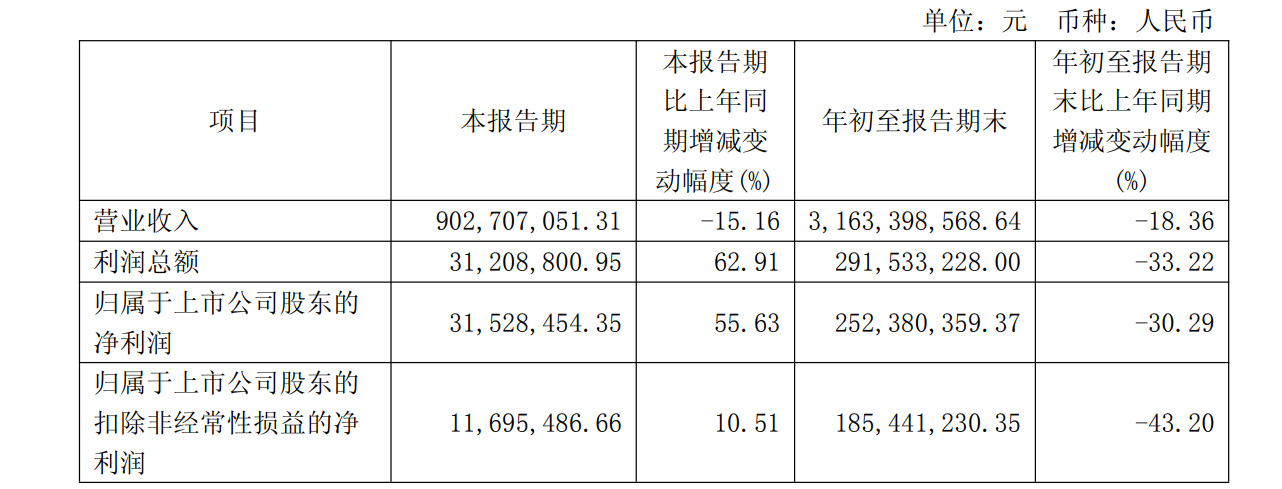
Core Viewpoint - The performance of Bloomage Biotechnology, a leading hyaluronic acid company, continues to be negatively impacted by the ongoing transformation pains in its skin science innovation business, with a significant decline in revenue and mixed profit results in the third quarter of 2025 [1]. Financial Performance - In Q3 2025, the company reported revenue of 903 million yuan, a year-on-year decrease of 15.16%, while net profit attributable to shareholders increased by 55.63% to 31.53 million yuan [1][3]. - For the first three quarters of 2025, revenue decreased by 18.36% to 3.163 billion yuan, and net profit fell by 30.29% to 252 million yuan [1]. Business Segment Analysis - The skin science innovation business has been a major drag on the company's performance, with revenue from this segment declining significantly [4]. - In 2022, the functional skincare business peaked with revenue of 4.607 billion yuan, but in 2023, it showed signs of fatigue, with a year-on-year decline of 18.45% to 3.757 billion yuan [5]. - The skin science innovation business's revenue for 2024 was 2.569 billion yuan, down 31.62%, accounting for 47.92% of the company's main business revenue [5]. Strategic Adjustments - The company has made strategic adjustments to focus on core brands and reduce non-essential brand incubation plans, aiming to strengthen the integration of technological achievements with consumer products [6]. - In Q3 2025, the sales expense ratio dropped to 34.26%, the lowest in five years, due to optimized brand communication and channel structure [6]. Asset Impairment and Investments - The company reported significant asset impairment losses in Q3 2025, totaling 23.25 million yuan, which did not affect the overall profit and loss situation [8]. - Bloomage Biotechnology has made strategic investments in the biopharmaceutical sector, including a 138 million HKD subscription for shares in Saintno Pharmaceuticals, aiming to explore collaboration opportunities [9]. - The company also participated in a strategic placement for Heyuan Biotechnology, investing 20 million yuan, focusing on plant-based bioactive substances [10].