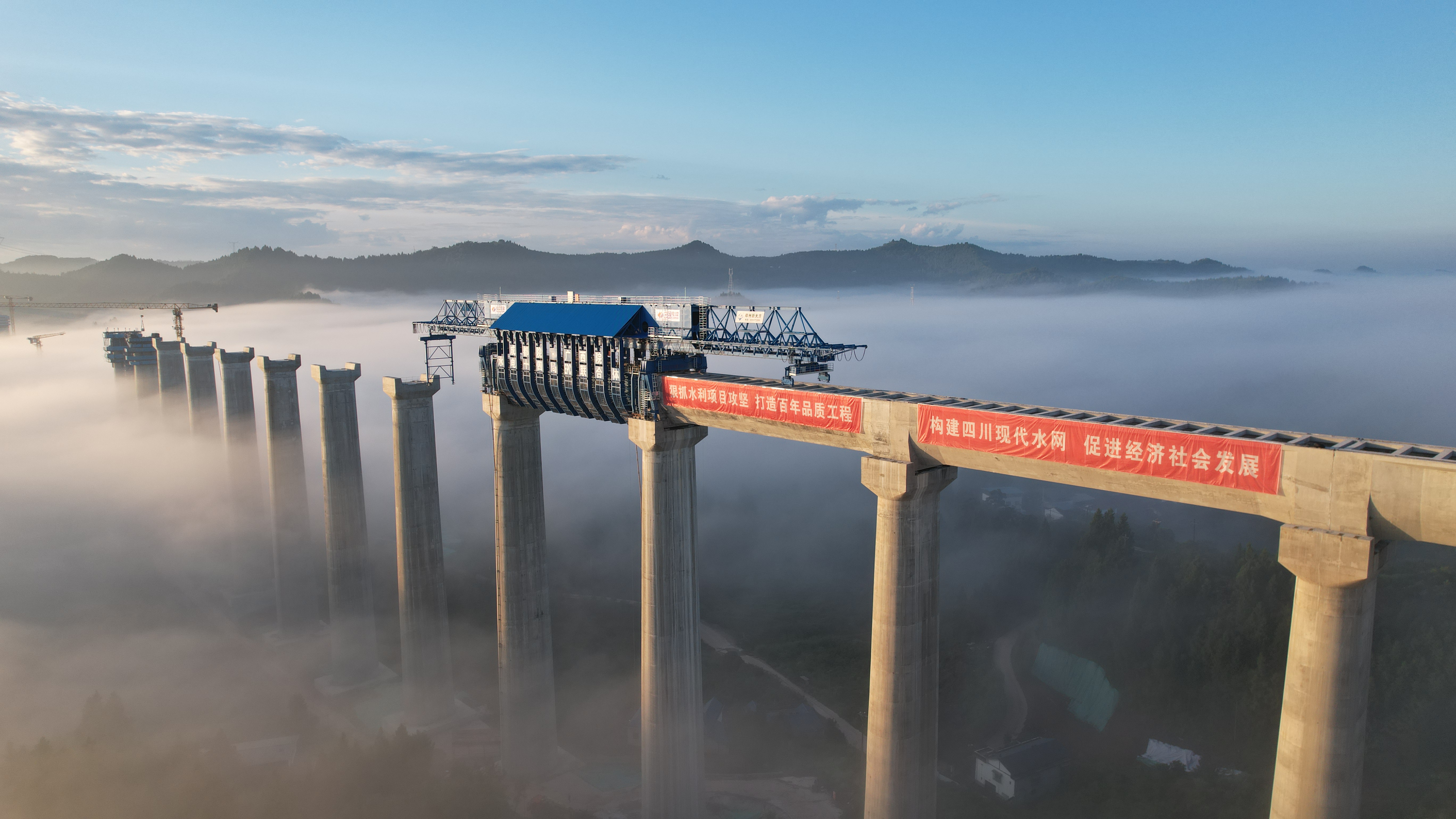
水利基础设施建设

Search documents
我国水利基础设施功能最全惠及人口最多
Xin Lang Cai Jing· 2026-02-27 23:36
Core Insights - The Chinese government is focusing on modernizing water resources and infrastructure as part of its broader modernization strategy, with significant investments planned for water projects during the 14th Five-Year Plan period [2][3] Group 1: Investment and Infrastructure Development - The total investment in water infrastructure during the 14th Five-Year Plan is projected to reach 5.68 trillion yuan, with annual investments exceeding 1 trillion yuan since 2022 [2] - A total of 181 major water projects are under construction, enhancing the connectivity between provincial, municipal, and county water networks with the national water network [2] - The national water network now covers 80.3% of the country's land area, making it the largest and most comprehensive water infrastructure system globally [2] Group 2: Water Supply and Quality Assurance - The new water supply capacity added during the 14th Five-Year Plan period is 31.8 billion cubic meters, with over 10.9 million acres of farmland benefiting from modern irrigation [2] - The rural tap water coverage has reached 96%, with standardized construction and management models improving water supply in rural areas [3] - The water quality assurance system is being enhanced, with services such as reporting, repairs, and payments increasingly available online [3] Group 3: Water Resource Management and Economic Impact - The national water network is crucial for optimizing water resource allocation, ensuring agricultural and industrial water supply [3] - By 2025, water consumption per unit of GDP and industrial value added is expected to decrease by 20% and 25%, respectively, compared to the end of the 13th Five-Year Plan [3] - The annual water consumption is projected to be maintained within 610 billion cubic meters, despite significant economic growth and agricultural productivity [3]
我国建成全球规模最大水利基础设施体系 国家水网覆盖率超八成,农村自来水普及率达96%
Ren Min Ri Bao· 2026-02-27 23:15
Core Insights - The Chinese government is focusing on modernizing water resources and infrastructure as part of its broader modernization strategy, with significant investments planned during the 14th Five-Year Plan period [1][2] - The national water network has been established as the largest and most comprehensive in the world, covering 80.3% of the country's land area, and aims to enhance water security and resource allocation [1][2] Investment and Infrastructure Development - A total investment of 5.68 trillion yuan is targeted for water infrastructure during the 14th Five-Year Plan, with annual investments exceeding 1 trillion yuan for four consecutive years since 2022 [1] - 181 major water projects have commenced during the 14th Five-Year Plan, improving connectivity between provincial, municipal, and county-level water networks [1] Water Supply and Quality Assurance - The rural tap water coverage has reached 96%, with standardized construction and management models implemented to enhance water supply in rural areas [2] - The national water network is expected to optimize water resource allocation, with projections indicating a 20% and 25% reduction in water usage per unit of GDP and industrial value added, respectively, by 2025 [2] Future Goals and Planning - The 15th Five-Year Plan suggests accelerating the construction of a modern water network, focusing on enhancing flood disaster prevention, water resource management, and urban-rural water supply capabilities [2]
全力冲刺,织密城乡“水网”
Xin Lang Cai Jing· 2026-02-06 22:00
Core Viewpoint - The construction of the Chitangwan Reservoir in San Tai County is progressing well, with a completion rate of 65%, and it aims to provide stable irrigation water for 81,200 acres of farmland and serve as an emergency water source for the county [1] Group 1: Infrastructure Development - The Chitangwan Reservoir has a designed height of 51 meters and is currently at a compaction rate of 97.8% [1] - San Tai County is seizing the winter repair period to accelerate various water-related infrastructure projects [1] Group 2: Water Supply Improvement - Since 2025, San Tai County has been promoting integrated urban and rural water supply, enhancing facilities like the second water plant and extending 458 kilometers of water supply pipelines to all towns and 196 administrative villages [1] - Over 270 kilometers of channels have been rehabilitated to ensure safe drinking water for the community [1] Group 3: Agricultural Benefits - The right irrigation canal of the Shengli Reservoir in Badong Town is currently in the concrete pouring phase, with a total length of 15.32 kilometers, benefiting 6,700 acres of farmland across three village groups [1] - Since 2025, San Tai County has constructed a total of 140 kilometers of channels and 12 ponds across eight townships, with plans to initiate 15 new channels and 11 pumping stations soon [1]
“十四五”时期水利基础设施建设全面提速 淮河流域新增水库库容25亿立方米
Ren Min Ri Bao· 2026-02-01 22:32
Core Insights - The investment in the Huai River management during the "14th Five-Year Plan" period reached 606 billion yuan, which is 1.63 times that of the "13th Five-Year Plan" period, indicating a significant acceleration in water conservancy infrastructure development [1] - All 38 projects identified by the State Council for further Huai River management have commenced, with 17 projects completed by the end of the "14th Five-Year Plan" [1] - The capacity of newly constructed reservoirs in the Huai River basin has increased by 2.5 billion cubic meters, with flood control capacity rising by 1.09 billion cubic meters [1] Investment and Infrastructure Development - A total investment of 606 billion yuan was completed for Huai River management, marking a substantial increase compared to the previous five-year period [1] - The construction of flood control projects and the establishment of a rainwater monitoring and forecasting system are progressing rapidly [1] Water Resource Management - The total water consumption in the Huai River basin is maintained within 72.4 billion cubic meters, with groundwater extraction reduced by over 15% compared to the end of the "13th Five-Year Plan" [2] - The effective utilization coefficient of irrigation water for farmland reached 0.609, with water consumption per unit GDP and industrial added value significantly better than the national average [2] Ecological Protection and Monitoring - The health assessment of rivers and lakes in the Huai River basin has been completed, with the establishment of 125 happiness rivers and lakes at the basin level and over 2,200 at the provincial and municipal levels [1] - The area of soil erosion in the basin has decreased by 4,006 square kilometers, with the soil conservation rate improved to 91.3% [1]
“十四五”时期水利基础设施建设全面提速 淮河流域新增水库库容二十五亿立方米
Ren Min Ri Bao· 2026-01-27 01:21
Group 1 - The core viewpoint of the article highlights the significant investment and progress in water management and infrastructure in the Huai River basin during the 14th Five-Year Plan period, with a total investment of 606 billion yuan, which is 1.63 times that of the previous five-year period [1] - By the end of the 14th Five-Year Plan, all 38 projects identified by the State Council for further management of the Huai River have commenced, with 17 projects completed and accepted [1] - The capacity of newly constructed reservoirs in the basin has increased by 2.5 billion cubic meters, with flood control capacity reaching 1.09 billion cubic meters, enhancing the flood control engineering system [1] Group 2 - The evaluation of river and lake health in the Huai River basin has been fully completed, achieving the revival goals for nine major rivers and lakes, and establishing over 2,200 happiness rivers and lakes at various administrative levels [1] - Water resource utilization has been effectively controlled, with total water usage maintained within 72.4 billion cubic meters, and groundwater extraction reduced by over 15% compared to the end of the 13th Five-Year Plan [2] - The effective utilization coefficient of irrigation water in farmland has reached 0.609, with water consumption per unit of GDP and industrial added value significantly better than the national average [2]
水利部答每经问:去年水利项目吸引社会资本创历史新高
Mei Ri Jing Ji Xin Wen· 2026-01-11 12:46
Core Viewpoint - The Chinese government is accelerating the construction of a modern water network to enhance flood disaster prevention, water resource allocation, and urban-rural water supply security, as emphasized in the recent State Council meetings [1] Investment and Financing - Water infrastructure investment has exceeded 1 trillion yuan for four consecutive years, with social capital attracted to water projects reaching 548.5 billion yuan during the 14th Five-Year Plan, an increase of 86.4% compared to the 13th Five-Year Plan [2][4] - During the 14th Five-Year Plan, total investment in water infrastructure reached 5.68 trillion yuan, with local government special bonds, bank loans, and social capital accounting for 2.05 trillion yuan, or 36.1% of the total [3] - The average annual allocation of local government special bonds and bank loans during the 14th Five-Year Plan was 327.9 billion yuan, 2.6 times the average of the 13th Five-Year Plan [3] Social Capital Participation - The government is guiding localities to use various models such as franchising and equity cooperation to attract social capital for water infrastructure projects, with notable examples including partnerships for water resource allocation in Qinghai and integrated urban-rural water supply projects in Guangdong [4] - The introduction of innovative financing models, such as "water-saving loans" and "water rights loans," is aimed at enhancing the market financing capabilities of water projects [3][4] Happiness River and Lake Construction - The Ministry of Water Resources has made significant progress in the construction of "Happiness Rivers and Lakes," with over 1,700 completed by 2025 and a total of more than 5,500 [5][6] - A national standard for evaluating Happiness Rivers and Lakes has been established, providing operational guidelines for local implementations [6] - The construction of Happiness Rivers and Lakes is integrated with local economic development and environmental improvement, creating high-quality waterfront spaces that support socio-economic growth [6]
水利部:力争今年水利基础设施建设和投资保持大规模 高水平态势
Sou Hu Cai Jing· 2026-01-09 11:35
Core Viewpoint - The Ministry of Water Resources aims to maintain large-scale and high-level investment in water infrastructure construction as the starting year of the 14th Five-Year Plan approaches in 2026 [1][5]. Group 1: Investment and Infrastructure Development - The Ministry of Water Resources plans to implement the national "River Strategy" this year, focusing on both existing and new projects, as well as "hard investment" and "soft construction" to enhance the national water network [3]. - The goal is to ensure that water infrastructure construction and investment remain at a large scale and high level, promoting high-quality water development and ensuring water security in China [5]. Group 2: Modernization and Coverage Goals - During the 14th Five-Year Plan period, China will accelerate the construction of a modern water network that is comprehensive, safe, efficient, green, intelligent, and well-regulated [7]. - Key projects include the completion of the South-to-North Water Diversion Middle Line and the promotion of major inter-basin and inter-regional water diversion projects [7]. - The plan includes modernizing irrigation areas to add 40 million mu of irrigated farmland, increasing rural tap water coverage to 98%, and ensuring that large-scale water supply projects cover 78% of the rural population [7].

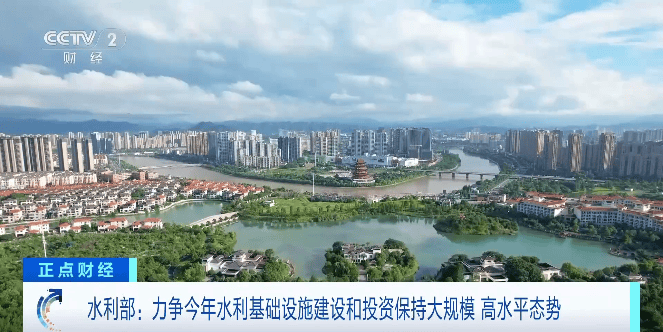
水利部:力争2026年水利基础设施建设和投资保持大规模、高水平态势
Zheng Quan Shi Bao Wang· 2026-01-09 09:43
Core Insights - The National Water Network construction in China has seen significant investment, totaling 5.68 trillion yuan during the 14th Five-Year Plan period, with over 1 trillion yuan invested annually for the past four years [1][2] - The coverage of the National Water Network now reaches 80.3% of the country's land area, providing essential water security for major strategic implementations and economic zones [1] - The Ministry of Water Resources aims to maintain large-scale and high-level investment in water infrastructure through 2026, focusing on both current needs and long-term strategies [2] Investment and Financing - The investment of 5.68 trillion yuan includes 2.05 trillion yuan from local government special bonds, bank loans, and social capital, accounting for 36.1% of the total [2] - The Ministry has successfully increased the average annual allocation of local government special bonds and bank loans to 327.9 billion yuan, which is 2.6 times higher than the average during the 13th Five-Year Plan [2] Attracting Social Capital - During the 14th Five-Year Plan, water projects attracted 548.5 billion yuan in social capital, an increase of 86.4% compared to the previous plan, with a record high of 147.6 billion yuan in 2025 [3] - Innovative financing models, such as the first water infrastructure investment trust fund (REITs) in Zhejiang, have been introduced to enhance funding for water projects [3] - The Ministry is also collaborating with other departments to integrate water network construction with agricultural land development, ensuring that revenues support both initiatives [3]
中国能建锻造能源新质生产力
Zhong Guo Jing Ji Wang· 2025-12-23 14:44
Core Insights - The "Qing Hydrogen No. 1" project, the world's largest integrated green hydrogen and ammonia project, has officially commenced production, marking a significant step in China's energy transition and decarbonization efforts [1] - China Energy Engineering Group (China Energy) is focusing on deepening reforms and enhancing productivity through innovation and optimization of business layouts, aiming to become a leader in energy revolution and water resource security [1][2] - The company has achieved substantial revenue growth in its core energy and water sectors, with a year-on-year increase of 16.76% in revenue and 18.42% in total profit for the first three quarters of 2025 [3] Group 1 - The "Qing Hydrogen No. 1" project is transforming abundant wind and solar resources into green hydrogen energy, contributing to global energy transition [1] - China Energy's strategic focus includes integrating energy with transportation, construction, and digital industries to foster high-quality development [2] - The company has established a comprehensive industrial layout, optimizing resource allocation across its core responsibilities in energy and water [2] Group 2 - China Energy's investment in traditional industries is driving intelligent, green, and integrated transformation, exemplified by major projects like the Longdong carbon capture demonstration and the Dashi Gorge water conservancy project [3] - The company prioritizes technological innovation, with significant investments in R&D, aiming for a budget of 14.6 billion yuan in 2024, nearly double that of 2020 [4] - China Energy is recognized as a key player in national strategic technology, with multiple projects and enterprises selected for government innovation and demonstration programs [5]

水利投资总量实现了从千亿级向两千亿级突破 四川水利交出“十四五”亮眼成绩单
Zhong Guo Jing Ji Wang· 2025-11-03 10:00
Core Insights - The Sichuan provincial government has made significant achievements in water conservancy infrastructure construction during the "14th Five-Year Plan" period, emphasizing the importance of water security and high-quality development [1] Investment and Financing - The total water conservancy investment in Sichuan has increased from the trillion level to the two trillion level, with an expected completion of over 70 billion yuan in water conservancy investment this year, and a total of 280 billion yuan for the "14th Five-Year Plan," which is double that of the "13th Five-Year Plan" [4] - The investment structure has diversified, with 1,507 billion yuan from various levels of government, 484 billion yuan from government special bonds, 503 billion yuan from financial credit, and 306 billion yuan from social capital [4] Modern Water Network Construction - Sichuan has made two major enhancements in the construction of the backbone water network and rural water network, aligning with national requirements for a modern water network [5] - Key projects include the approval of the feasibility report for the "Yijiang Jimi" project, the completion of major irrigation projects, and the implementation of rural water projects benefiting over 22 million rural residents [5] Disaster Prevention and Mitigation - Sichuan has established a comprehensive system for flood control, monitoring and forecasting, and disaster prevention, focusing on safeguarding people's lives and property [7] - The province has improved flood control engineering, built monitoring facilities, and established a joint defense mechanism among multiple departments to effectively respond to disasters [7]