
水权贷

Search documents
从“产品供给”到“价值创造” 内蒙古银行金融服务的深度变革
Xin Lang Cai Jing· 2026-02-05 12:24
Core Insights - Inner Mongolia Bank is transforming its financial services from a single "product supply" model to a comprehensive "value creation" approach, aiming for double-digit growth in asset and liability scales by 2025, with growth rates of 14.51% and 11.29% respectively [1][6] - The bank's strategic focus includes significant credit allocations, with a total loan issuance of 43.05 billion yuan, accounting for over 90% of corporate loan disbursements, and investments in local government bonds totaling 2.45 billion yuan [2][8] Group 1: Strategic Empowerment - The bank is positioning itself as a strategic enabler by providing large-scale credit to support key development areas, including direct financing for major strategic projects [2][8] - It has established a cross-border financial service framework, increasing credit limits for four Mongolian banks to 700 million yuan and adding ten new Russian accounts, resulting in a historical high of 11.2 billion yuan in international settlements, a 13% year-on-year increase [2][8] Group 2: Innovative Financing Solutions - Inner Mongolia Bank has introduced specialized loans for high-standard farmland construction and land consolidation, including the first water rights loan and forest carbon credit pledge loan in the region [3][8] - The bank has launched unique products like "Glass Fiber Loan" and "Cloud Chain Loan," providing over 2 billion yuan in funding to enhance the competitiveness of key industrial clusters [3][8] Group 3: Digital Transformation - The bank has developed a fully online digital credit product system, with the "True Enjoy Loan" reaching a total issuance of 723 million yuan, showcasing the power of digital channels [4][9] - It has become the first city commercial bank in the region to launch a corporate treasury service platform, integrating financial services into core enterprise financial management processes [4][9] - Utilizing big data and AI, the bank is creating precise credit profiles for farmers and mapping credit ecosystems for villages, pushing county-level loan balances to exceed 20 billion yuan [4][9]


“风光氢储车”5条重点产业链贷款余额达1141亿元 金融赋能内蒙古绿色产业高质量发展
Nei Meng Gu Ri Bao· 2026-01-29 10:28
Group 1 - The core viewpoint of the news is that the People's Bank of China Inner Mongolia Branch is enhancing green finance to support high-quality economic development in the region, with a focus on three key principles [2] - By the end of 2025, the loan balance for the "wind-solar-hydrogen storage vehicle" industry chain in Inner Mongolia is expected to reach 114.1 billion yuan, representing a year-on-year increase of 20.1% [2] - The bank is implementing a series of policy documents to support the high-quality development of green industries, including a special action plan for green development financing [2] Group 2 - The bank is promoting the integration of finance and industry, establishing a special re-lending quota of 3 billion yuan for agricultural and small business support, and has already allocated over 4 billion yuan for "water-saving loans" and "water rights loans" [2] - A total of 13.7 billion yuan in linked loans has been issued to green factories and supply chain leaders in Inner Mongolia [2] - The bank is guiding financial institutions to adopt innovative financial products and services, with a focus on supporting renewable energy projects and enhancing financial service capabilities [3] Group 3 - The bank has facilitated the use of new policy financial tools, providing 7.69 billion yuan in funding for 45 "wind-solar-hydrogen storage" projects [3] - Collaborative efforts between local governments and financial institutions have resulted in over 6 billion yuan in credit for enterprises in Baotou and Ordos, supporting the construction of national zero-carbon parks [3] - A comprehensive credit service scheme combining syndicate loans and acceptance bills has provided nearly 2 billion yuan in credit support for local enterprises, enabling the grid connection of a 300 MW photovoltaic power station [3]
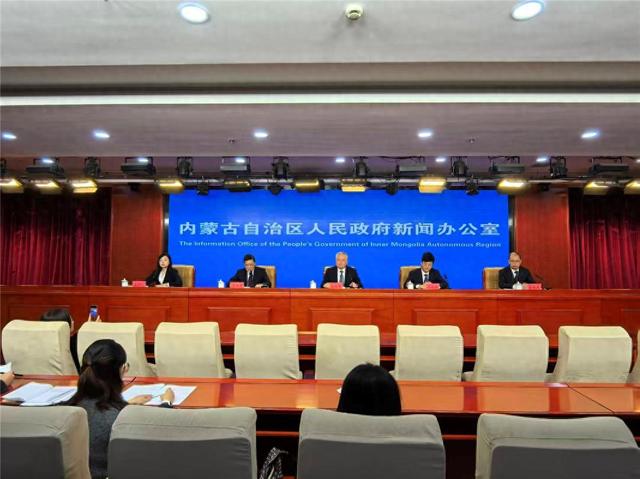
莒县农商银行高质量发展迈上新台阶
Qi Lu Wan Bao· 2026-01-27 06:27
Core Viewpoint - In 2025, Juxian Rural Commercial Bank actively promotes Chinese financial culture, enhances understanding of the political and people-oriented nature of financial work, and successfully achieves high-quality development goals while supporting small and micro enterprises and rural revitalization [1][2]. Group 1: High-Quality Development - The bank implements mechanism innovations to empower high-quality development, introducing new methods such as employee level management and departmental value assessment, ensuring every employee's value is recognized [1]. - The bank's achievements include winning first place in the city’s rural commercial bank sports meeting, digital innovation competition, and audit model skills competition [1]. Group 2: Innovation and Digital Transformation - Digital transformation is highlighted as a new productive force, with the bank focusing on discovering customer needs and responding to customer trust [1]. - The bank leads the industry by launching five innovative services, including "Yijudai" supply chain finance, and nine new financial products such as "Huirong Loan" and "Juguo Fanghua Loan" [1]. - The bank issued the first "Water Rights Loan" in the city and established several firsts, including the first veteran service station and the first integrated social banking cooperation outlet in the county [1]. Group 3: Social Responsibility and Community Engagement - Throughout the year, the bank processed 1.87 million subsidy payments and 16.15 million online transactions, demonstrating its commitment to the community [2]. - The bank actively participates in social activities and public welfare, sponsoring local sports leagues and educational funds, and providing support for students and sanitation workers [2]. - The bank conducted over 1,500 on-site services, enhancing financial fraud prevention and ensuring the safety of citizens' finances [2]. Group 4: Future Outlook - In 2026, the bank aims to continue its practical approach, seeking steady progress and quality improvement, expanding business coverage, and increasing service outreach [2].
莒县农商银行:坚守主责主业 服务社会民生
Qi Lu Wan Bao· 2026-01-21 08:31
Group 1 - The company focuses on serving the county's economic development, enhancing financial service quality, and increasing support for the real economy to contribute to high-quality county economic growth [1] - In 2025, the company aims to align with major county livelihood projects, providing financing support for large urban development projects, including a unique "water rights loan" of 20 million yuan, with a total credit investment of 70 million yuan for water supply and drainage infrastructure improvement [1] - The company has issued loans totaling 5.48 billion yuan to 317 private enterprises, directly or indirectly supporting 21 key projects in the county, thereby providing a strong financial engine for the development of the county's private economy [1] Group 2 - The company has launched the "Cultural Tourism Ancient City Loan" to support merchants in the ancient city, issuing loans of 16.5 million yuan to 21 merchants, and has provided 52.8 million yuan in new loans for key cultural tourism projects [2] - The company has introduced various consumer loan products, such as "Home and Work Loan" and "Agricultural Enjoyment Loan," covering different consumer groups, with a total non-mortgage consumer loan balance of 1.8 billion yuan [2] - The company actively participates in housing and vehicle exhibitions, issuing 65 million yuan in mortgage consumer loans in 2025, and has adjusted mortgage loan rates for 7,900 households to stimulate consumer activity [2]
水利部答每经问:去年水利项目吸引社会资本创历史新高
Mei Ri Jing Ji Xin Wen· 2026-01-11 12:46
Core Viewpoint - The Chinese government is accelerating the construction of a modern water network to enhance flood disaster prevention, water resource allocation, and urban-rural water supply security, as emphasized in the recent State Council meetings [1] Investment and Financing - Water infrastructure investment has exceeded 1 trillion yuan for four consecutive years, with social capital attracted to water projects reaching 548.5 billion yuan during the 14th Five-Year Plan, an increase of 86.4% compared to the 13th Five-Year Plan [2][4] - During the 14th Five-Year Plan, total investment in water infrastructure reached 5.68 trillion yuan, with local government special bonds, bank loans, and social capital accounting for 2.05 trillion yuan, or 36.1% of the total [3] - The average annual allocation of local government special bonds and bank loans during the 14th Five-Year Plan was 327.9 billion yuan, 2.6 times the average of the 13th Five-Year Plan [3] Social Capital Participation - The government is guiding localities to use various models such as franchising and equity cooperation to attract social capital for water infrastructure projects, with notable examples including partnerships for water resource allocation in Qinghai and integrated urban-rural water supply projects in Guangdong [4] - The introduction of innovative financing models, such as "water-saving loans" and "water rights loans," is aimed at enhancing the market financing capabilities of water projects [3][4] Happiness River and Lake Construction - The Ministry of Water Resources has made significant progress in the construction of "Happiness Rivers and Lakes," with over 1,700 completed by 2025 and a total of more than 5,500 [5][6] - A national standard for evaluating Happiness Rivers and Lakes has been established, providing operational guidelines for local implementations [6] - The construction of Happiness Rivers and Lakes is integrated with local economic development and environmental improvement, creating high-quality waterfront spaces that support socio-economic growth [6]
金融活水润绿能
Jing Ji Ri Bao· 2025-12-02 22:09
Group 1 - The core viewpoint of the articles highlights the significant advancements in green finance and renewable energy projects in Gansu Province, particularly focusing on the clean heating project in Lanzhou, which utilizes waste heat from the steel industry to reduce carbon emissions and save energy [1][2]. Group 2 - The Lanzhou clean heating project is a key renewable energy initiative that is expected to save 123,000 tons of standard coal and reduce carbon dioxide emissions by 322,000 tons annually [1]. - The project has a heating capacity of 10 million square meters, with 6 million square meters currently in operation [1]. - Financial innovation plays a crucial role in supporting the project, with Lanzhou Bank providing a dual financing scheme of "green loans + carbon reduction support tools," amounting to a credit of 670 million yuan, of which 289 million yuan has been disbursed [1]. Group 3 - Gansu's financial system is actively promoting green finance, with 368 green projects receiving a total credit of 362.858 billion yuan [2]. - The establishment of a "three-in-one" financing mechanism involving the People's Bank, government departments, and financial institutions has been instrumental in driving green finance initiatives [2]. - The balance of green loans in Lanzhou New Area has increased from 11.49 billion yuan at the end of 2020 to 28.608 billion yuan by the end of September this year, with the proportion of green loans rising from 20.26% to 37.6% [2]. Group 4 - As of the end of September, financial institutions in Gansu have received a total of 93.927 billion yuan in carbon reduction support tools, leading to carbon reduction loans of 139.878 billion yuan [2]. - The total balance of green loans reached 466.669 billion yuan, an increase of 48.526 billion yuan since the beginning of the year, with nearly 80% of the funds directed towards key sectors such as electricity, heat, and transportation [2].
中部首个区域水权交易平台落地武汉
Chang Jiang Shang Bao· 2025-12-02 05:43
Core Insights - The establishment of the Wuhan Trading Service Center marks the second regional water rights trading platform in China and the first in Central China, aimed at activating the market for water resource trading in Hubei Province and contributing to the development of a unified national water rights trading market and the high-quality development of the Yangtze River Economic Belt [1][2] Group 1: Water Rights Trading Concept - Water rights trading transforms saved water resources into tradable assets, allowing water savers to benefit and providing channels for those in need of water, thereby optimizing water resource allocation through market mechanisms [2] - The Wuhan Center will adopt a full-chain service model of "matching + expansion + support," offering diverse trading methods such as agreement transfers and public trading to promote efficient water resource allocation [2][3] Group 2: Operational Framework and Services - The Wuhan Center will focus on regional water rights, water extraction rights, and irrigation water rights trading, as well as the transfer of water-related operating rights and trading of ecological products [3][4] - The center will establish a "one hall, three ports" system, connecting with the China Water Rights Exchange, the Ecological Environment Rights Trading Platform, and the Wuhan Rural Comprehensive Property Rights Exchange [3] Group 3: Initial Transactions and Financing Solutions - On the day of its inauguration, the Wuhan Center completed nine water-related transactions, including water rights trading, water rights loans, and ecological product trading [4] - For instance, the Jingmen City Urban Water Affairs Group secured a loan of 200 million yuan using a water extraction permit of 18 million cubic meters as collateral, addressing financing challenges for water conservancy projects [4]
甘肃张掖:信用转化为融资资本 多点破解小微企业融资难题
Zhong Guo Fa Zhan Wang· 2025-11-24 04:15
Core Insights - Zhangye City in Gansu Province is focusing on addressing the financing challenges faced by small and micro enterprises by building a diversified financing service system to effectively support business development [1][2] Financing Initiatives - The city has implemented a "silver-tax interaction" mechanism, allowing enterprises to convert their tax credit into financing capital, resulting in 3,817 small and micro enterprises receiving a total of 1.687 billion yuan in loans [1] - Financial institutions are customizing innovative financing products tailored to local industry characteristics, such as the first "de-core chain loan" of 850,000 yuan for a public hospital's upstream pharmaceutical suppliers [1] Agricultural Financing - Various products like "live loans," "Hexi Corridor seed industry loans," and "rural revitalization livestock and poultry loans" have been introduced to alleviate financing difficulties for agricultural operators [2] - The total balance of green loans in the city reached 18.687 billion yuan, with a growth rate exceeding the average growth rate of all loans by 3.78 percentage points [2] Technology and Innovation Financing - Products such as "Sci-Tech E-loan" and "Xinglong Intellectual Property Loan" provide rapid credit services to enterprises, with 56 companies receiving a total of 314 million yuan through patent pledges [2] Government Support - The Gansu Jinkong Zhangye Guarantee Company has provided guarantees totaling 839 million yuan for 277 operating entities from January to October this year [2] Future Outlook - By October 2025, the loan balance for small and micro enterprises in Zhangye City is expected to reach 51.245 billion yuan, reflecting a year-on-year growth of 7.03%, which will invigorate business vitality [2]

广西水网建设纵深推进 成全国5个拥有三级水网先导区的省区之一
Guang Xi Ri Bao· 2025-10-29 09:23
Core Insights - During the "14th Five-Year Plan" period, Guangxi has prioritized water network construction as a key support for building a beautiful Guangxi, integrating various water management systems and achieving recognition as a national pilot area for water networks [1][2] Group 1: Water Network Development - Guangxi has established a leadership group for water network planning and construction, focusing on the collaborative development of five networks: flood control and drainage, urban and rural water supply, agricultural irrigation, ecological water, and smart water [1] - Key projects such as the Pinglu Canal and the North Bay water resource allocation project are accelerating, contributing to the construction of the main framework of the water network [2] Group 2: Water Security and Disaster Prevention - The region has improved its flood and drought disaster prevention capabilities, achieving a 74.9% compliance rate for river embankments and successfully managing severe droughts and typhoons this year [2] - The completion of the Datiangxia water conservancy hub and the West River governance project has enhanced water security for economic and social development [2] Group 3: Water Supply and Agricultural Irrigation - Since the beginning of the "14th Five-Year Plan," Guangxi has added 9.5 billion cubic meters of water supply capacity, with rural tap water coverage reaching 91.4% [3] - The region has also improved irrigation efficiency, with the effective utilization coefficient for agricultural irrigation water reaching 0.526, surpassing the planned targets [3] Group 4: Ecological Protection and Economic Growth - Guangxi has addressed 2,432 issues related to river and lake management, with a significant increase in water quality, achieving a 98.2% rate of good water quality in surface water assessment sections [4] - Investment in water conservancy has been increasing annually, with projections for 2025 to exceed 50 billion yuan, and a shift towards diversified financing models [4] Group 5: Smart Water Management - The development of smart water management technologies is underway, enhancing the efficiency of monitoring soil erosion through remote sensing and AI, improving efficiency by over six times [4]
泰州农商银行精绘“绿色金融”蓝图 赋能高质量发展
Jiang Nan Shi Bao· 2025-10-28 07:16
Core Viewpoint - Taizhou Rural Commercial Bank positions green finance as a core strategy to support the "dual carbon" goals and the transformation of the real economy, innovating in systems, products, and services to create a comprehensive green finance service system that injects financial vitality into local development [1] Group 1: Institutional Framework - The bank integrates green development requirements into the entire business process, establishing the "Green Credit Management Measures" to clarify green credit standards and using environmental credit as a key basis for credit approval [1] - It deepens collaboration with environmental departments to form a closed-loop management system of "environmental recognition - credit support - risk prevention," thereby solidifying the foundation for green credit [1] Group 2: Product Innovation - To address challenges in green financing, the bank has developed a "green+" product matrix, introducing innovative products like "Environmental Loans" to solve the guarantee difficulties faced by enterprises [1] - The bank has successfully issued various types of collateral financing, including pollution rights pledge loans, the province's first "carbon rights loan," and "water rights loans," effectively activating the value of environmental resources [1] Group 3: Targeted Services - The bank focuses on the pain points of industrial transformation, implementing precise services in various sectors [1] - In the manufacturing sector, it supports the upgrade and transformation of hazardous chemical disposal enterprises in chemical parks; in transportation, it provides "Transport Loans" to support the upgrade of oil tankers for shipping companies, promoting low-carbon development [1] - In rural revitalization, the bank extends green credit services to agricultural projects, emphasizing support for green agricultural development initiatives [1] Future Outlook - The bank plans to continue deepening green finance innovation, acting as a "production line" for green production and a "catalyst" for energy conservation and emission reduction, contributing to the green transformation of the local economy and society [1]