生命健康科技

Search documents
香港创新科技及工业局:致力推动创科发展 加快发展新质生产力
Zhi Tong Cai Jing· 2026-02-26 11:39
Core Viewpoint - The Hong Kong government is focusing on innovation and technology development, particularly in artificial intelligence (AI) and health technology, as outlined in the latest budget proposal, which aims to enhance productivity and support the growth of the innovation ecosystem [1][2]. Group 1: AI Development - The budget emphasizes the "AI+" development strategy, with initiatives including the establishment of 16 AI-related laboratories and a HKD 3 billion AI funding program [1]. - An AI research institute is set to commence operations in the second half of the year to support AI research and commercialization [1]. - A new "AI+ and Industry Development Strategy Committee" will be formed to focus on life sciences and embodied intelligence [2]. Group 2: Health Technology - The government is establishing a health technology research institute using a "1+3" model, which includes a main institute and three branches created in collaboration with local universities [2]. - The "Industry-Academia-Research 1+ Program" has supported 15 projects, and nearly 500 related enterprises have settled in three major innovation parks [2]. Group 3: New Industrial Development - The "New Industrialization Funding Program" has supported over 120 new smart production lines, attracting more than HKD 1 billion in private investment [2]. - The budget allocates approximately HKD 220 million for the establishment of a National Manufacturing Innovation Center, the first of its kind set up by the country overseas [3]. Group 4: Aerospace and Robotics - The Hong Kong Space Robotics and Energy Center is involved in the national Chang'e 8 mission, with its multifunctional lunar surface operation robot entering initial testing [4]. - The government is accelerating the construction of a third InnoHK research platform focusing on sustainable development, energy, advanced manufacturing, and materials [4]. Group 5: Talent Development - The government is promoting high-quality talent acquisition through various initiatives, including a "Tech Internship Program" that has provided nearly 20,000 internship opportunities [6]. - Over 3,000 outstanding researchers from around the world are collaborating in Hong Kong, supported by a HKD 3 billion "Frontier Technology Research Support Program" aimed at attracting top international talent [6].

陈茂波:香港将主动对接“十五五”规划
Ge Long Hui· 2026-02-25 03:58
Group 1 - The Hong Kong government aims to enhance its role in the national development strategy, particularly in finance, shipping, trade, and innovation technology [1] - Hong Kong's strong foundational research capabilities in AI, health technology, fintech, new materials, and renewable energy will support the construction of a modern industrial system [1] - The city will leverage its unique institutional advantages and efficient logistics services to facilitate bilateral trade and investment, acting as a "super connector" for businesses [1] Group 2 - Hong Kong's world-class universities and international environment are expected to attract top talent in key sectors, while resources will be allocated to nurture local talent [1] - The Chief Executive will lead a cross-departmental team to align Hong Kong's initiatives with the national "14th Five-Year Plan" and develop a five-year plan for the city [1] - The government aims to promote high-quality, high-value, and diversified economic growth through effective governance and market efficiency [1]
李家超:将主动对接国家“十五五”规划 助力企业出海开拓商机
Zhi Tong Cai Jing· 2026-02-24 07:39
Economic Growth and Trade - Hong Kong's economy is projected to grow by 3.5% year-on-year by 2025, with total merchandise exports and imports expected to rise by 12% [1] - The local retail market is steadily recovering, with total retail sales value anticipated to increase by 2025 [1] International Rankings and Business Environment - Hong Kong continues to rank as the world's freest economy and has improved its global competitiveness ranking to third place [1] - The number of registered local companies and those relocated to Hong Kong exceeded 1.55 million, marking an increase of over 96,000 year-on-year [1] - The number of overseas and mainland companies in Hong Kong rose by 11%, reaching over 11,000, while the number of startups also increased by 11% to over 5,200 [1] Five-Year Planning and Economic Strategy - The Hong Kong government is set to develop its first five-year plan in alignment with the national "14th Five-Year Plan," aiming to enhance Hong Kong's competitiveness and international influence [2] - The government has established a new task force to attract mainland enterprises to utilize Hong Kong for international expansion, leveraging its extensive trade network [2] Attraction of High-Value Industries - The government has established an office to attract key strategic industries, successfully bringing 102 key enterprises to Hong Kong over the past three years [3] - These industries include life and health technology, artificial intelligence, fintech, advanced manufacturing, and new energy technology, expected to generate a total investment of HKD 60 billion and create 22,000 high-quality jobs [3] - Over half of these key enterprises are publicly listed, with 12% preparing for listing, and 75% have chosen to establish global or regional headquarters in Hong Kong [3]
四大增长极经济与产业洞察报告(2025):粤港澳篇
GUOTAI HAITONG SECURITIES· 2026-02-08 11:57
Group 1: Economic Structure and Growth - The Guangdong-Hong Kong-Macao Greater Bay Area (GBA) is expected to enhance its industrial structure with a focus on open policies, aiming for sustainable regional development[5] - From 2019 to 2024, the primary industry in Guangdong maintained a GDP contribution of over 4%, with a slight increase to 4.3% in 2024[6] - The secondary industry in Guangdong saw its GDP share remain above 30%, projected at 33.6% in 2024, despite a decline of 1.9 percentage points since 2019[6] - The tertiary industry in Hong Kong has shown significant growth, with the financial sector's GDP contribution rising from 17% in 2019 to 22.7% in 2024, an increase of 5.4 percentage points[16] Group 2: Strategic Industry Development - Guangdong's "14th Five-Year Plan" emphasizes the development of strategic emerging industries, including commercial aerospace and low-altitude economy, with quantum technology as a key growth area[23] - The new generation electronic information industry in Guangdong is projected to reach a revenue of CNY 5.34 trillion in 2024, growing by 13.4% year-on-year[36] - The renewable energy sector is identified as a core growth area, with plans to enhance clean energy applications and develop key technologies by 2025[44] - The GBA aims to foster a collaborative model for technology and industry development, integrating Hong Kong's research capabilities with Guangdong's manufacturing strengths[5]
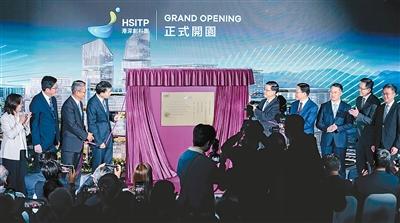
园区“握手” 创新奔涌
Ren Min Ri Bao· 2026-01-13 06:42
Group 1 - The core viewpoint of the news is the opening of the Hong Kong park in the Lok Ma Chau Loop, which signifies a significant achievement in the implementation of the Guangdong-Hong Kong-Macao Greater Bay Area development plan and the practical application of the "One Country, Two Systems" principle [1][2] - The Hong Kong park aims to create a world-class platform for industry-academia-research collaboration, establish an internationally competitive industrial pilot transformation base, gather global innovation resources, and serve as a testing ground for institutional and policy innovation [1] - The park will focus on cutting-edge sectors such as life and health technology, artificial intelligence and robotics, new energy, and high-end intelligent manufacturing, with over 60 companies already signed up and moving in [1] Group 2 - The collaboration between Hong Kong and Shenzhen parks is enhanced by the launch of the cross-river bridge project, which will facilitate the movement of researchers and the management of research goods and funding across borders [2] - The Lok Ma Chau Loop serves as a crucial platform for enriching the practical implications of "One Country, Two Systems," supporting Hong Kong's integration into and service for the national development agenda, and promoting high-quality development in the Greater Bay Area [2] - The synergy between the Hong Kong and Shenzhen parks is expected to generate strong momentum and create more possibilities for innovation and growth [2]
香港财政司司长:建立更蓬勃创科产业,推动经济高质量发展
Zhong Guo Xin Wen Wang· 2026-01-04 09:13
Group 1 - The core viewpoint emphasizes the importance of developing a robust innovation and technology industry in Hong Kong to drive high-quality economic growth, leveraging the synergy between finance and technology [1][2] - The Hang Seng Index rose over 700 points, approximately 2.8%, on the first trading day of 2026, marking the best start since 2013, with technology companies being the main drivers of this increase [1] - By the end of 2025, over 400 new economy companies are expected to be listed in Hong Kong, accounting for about 15% of the total number of listed companies, with their market capitalization and trading volume representing around 30% of the overall market [1] Group 2 - The Hong Kong government encourages technology companies to list and establish research centers in the region, aiming to enhance the local innovation ecosystem and industry [2] - The first three buildings of the Hong Kong-Shenzhen Innovation and Technology Park have been completed, with nearly 80% occupancy in two wet laboratories, hosting over 60 local and international enterprises, primarily in artificial intelligence and life sciences [2] - Hong Kong's unique advantages include connecting various innovation ecosystems, facilitating international funding, attracting top research talent, and providing strong support for technology companies to expand globally [2]
陈茂波:香港将乘势而上建立更蓬勃的创科产业
Xin Hua She· 2026-01-04 06:45
Core Viewpoint - The Hong Kong government aims to leverage the strong performance of the Hang Seng Index, particularly driven by technology companies, to foster a robust innovation and technology ecosystem, promoting high-quality economic development [1]. Group 1: Market Performance - On the first trading day of 2026, the Hang Seng Index rose over 700 points, an increase of approximately 2.8%, marking the best start since 2013 [1]. - The Hang Seng Technology Index increased by 4%, with multiple artificial intelligence-related stocks continuing to attract investor interest [1]. Group 2: New Economy Companies - By the end of 2025, over 400 new economy companies are expected to be listed in Hong Kong, accounting for about 15% of the total number of listed companies, with a market capitalization and trading volume representing around 30% of the overall market [1]. - The government encourages these companies to establish research centers and advanced manufacturing facilities in Hong Kong, leveraging local research capabilities and international talent [1]. Group 3: Collaborative Initiatives - The Hong Kong Digital Port and Jiangsu Province have jointly established the "Hong Kong Jiangsu Innovation Center" to promote a model of "R&D in Hong Kong, application in Jiangsu," facilitating collaborative development between the two regions [2]. - The establishment of the National (Zhongguancun) Torch Innovation Academy's Hong Kong branch aims to enhance talent cultivation and enterprise incubation between Beijing and Hong Kong [1][2]. Group 4: Infrastructure Development - The first three buildings of the Hong Kong-Shenzhen Innovation and Technology Park have been completed, with nearly 80% occupancy in two wet laboratories, hosting over 60 local and international enterprises [2]. - Approximately half of these enterprises are in artificial intelligence and data science, while around 40% are in life and health technology [2].
香江观澜:河套合作区协同发展格局形成 港深迈向全球创科枢纽新征程
Zhong Guo Xin Wen Wang· 2025-12-28 13:01
Core Viewpoint - The opening of the Hong Kong Park of the Hong Kong-Shenzhen Innovation and Technology Cooperation Zone marks a new stage in collaborative development between Hong Kong and Shenzhen, aiming to attract global innovation resources and become a world-class innovation platform [1][3]. Group 1: Overview of the Cooperation Zone - The Hong Kong-Shenzhen Innovation and Technology Cooperation Zone is part of China's "14th Five-Year Plan" and covers an area of approximately 3.89 square kilometers, structured under the concept of "one river, two banks, one area, two parks" [3]. - The cooperation zone consists of two parks: one in Shenzhen, known for its strong manufacturing capabilities, and one in Hong Kong, which focuses on life sciences, artificial intelligence, and robotics [3][4]. Group 2: Infrastructure and Mechanisms - Hong Kong and Shenzhen have established specific solutions for cross-border data flow and biological sample logistics, along with a regular meeting and coordination mechanism to ensure rapid decision-making and policy innovation [4]. - The initiation of the cross-river bridge project symbolizes the physical and collaborative connection between the two parks, facilitating the free flow of talent, capital, data, and materials [4]. Group 3: Initial Attraction and Future Prospects - Over 60 companies and institutions from mainland China, Hong Kong, and overseas have signed leases to move into the Hong Kong Park, covering sectors such as life sciences, microelectronics, new energy, and artificial intelligence [6]. - The Shenzhen Park is also attracting several Fortune 500 R&D centers and Hong Kong academic institutions, which will enhance shared facilities and reduce R&D costs for teams in Hong Kong [6]. - The cooperation zone has established a collaborative development mechanism, with expectations for continuous improvement of infrastructure and the influx of leading global research institutions and enterprises [6].
2025年香港创科生态蓬勃发展
Xin Lang Cai Jing· 2025-12-28 12:13
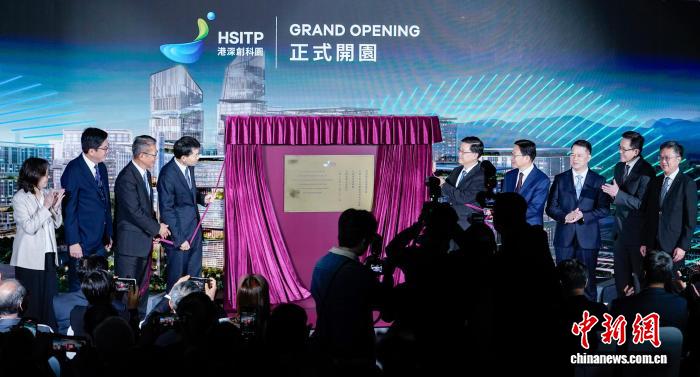
Group 1 - The Hong Kong Special Administrative Region government reported significant growth in the innovation and technology ecosystem in 2025, with the "Shenzhen-Hong Kong-Guangzhou" cluster ranking first globally in the World Intellectual Property Organization's Global Innovation Index [1] - The Hong Kong Park of the Hong Kong-Shenzhen Innovation and Technology Cooperation Zone officially opened on December 22, 2025, attracting domestic and international enterprises and talent [3] - The Innovation and Technology Bureau announced the "New Tin Technology City Development Plan," focusing on developing six key innovation and technology industries, including life and health technology, artificial intelligence, and microelectronics [3] Group 2 - The Cyberport Artificial Intelligence Supercomputing Center has been operational for a year, enhancing computing power to 3000 PFLOPS [4] - The Legislative Council approved a funding of HKD 1 billion for the establishment of the Hong Kong Artificial Intelligence Research Institute, aimed at promoting upstream AI research and downstream application scenarios [4] - The Innovation and Technology Bureau has supported nearly 120 new smart production lines and over 500 potential or leading innovation and technology companies interested in developing or expanding their business in Hong Kong [4]
“香港创科发展的一个里程碑时刻”
Ren Min Ri Bao Hai Wai Ban· 2025-12-23 22:59
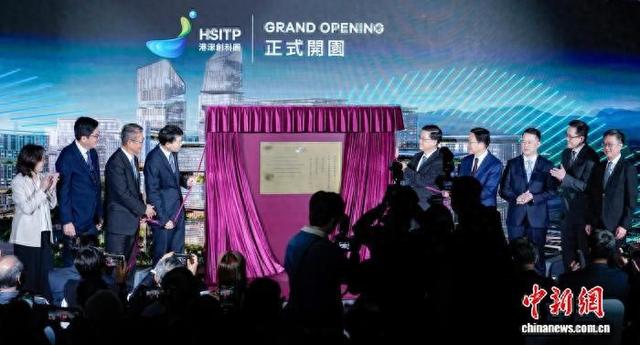
Core Insights - The opening of the Hong Kong section of the He Tao Shenzhen-Hong Kong Science and Technology Innovation Cooperation Zone marks a significant milestone for Hong Kong's innovation and technology development [2] - The Hong Kong government aims to establish the He Tao Hong Kong Park as a world-class platform for industry-academia-research collaboration and a hub for global innovation resources [2] Group 1: Park Overview - The He Tao Shenzhen-Hong Kong Science and Technology Innovation Cooperation Zone spans approximately 3.89 square kilometers, with the Hong Kong section covering 0.87 square kilometers [3] - The park will focus on cutting-edge technology fields such as life and health sciences, artificial intelligence and robotics, new energy, and high-end intelligent manufacturing [3] - Over 60 companies have signed agreements to settle in the park, including leading firms in their respective fields [3] Group 2: Strategic Advantages - The unique location of the park allows for deep collaboration between Hong Kong and Shenzhen, making it an ideal platform for companies to expand internationally [4] - More than 60% of the companies entering the park are from mainland China, while about 25% are from overseas, indicating a strong interest in leveraging Hong Kong as a gateway to the Greater Bay Area and mainland markets [4] - The park benefits from the "One Country, Two Systems" policy, facilitating cross-border flows of data, talent, and capital [4] Group 3: Development Goals - The cooperation zone aims to enhance the efficient flow of innovative elements between the two parks, contributing to the development of the Greater Bay Area [5] - By 2030, the He Tao Hong Kong Park is expected to establish a high-efficiency innovation collaboration mechanism with the Shenzhen Park [6] - The park is projected to become a globally competitive industrial pilot transformation base by 2035, integrating with advanced manufacturing systems in the Greater Bay Area [6] Group 4: Institutional Framework - The establishment of the He Tao Hong Kong Park complements Hong Kong's existing innovation landscape, which includes three major innovation parks and five research institutions [7] - The park's development aligns with the recently announced New Tin Technology City innovation and technology industry development plan, reinforcing Hong Kong's position as an international innovation and technology center [7]