
半导体设计

Search documents
韦尔股份20250429
2025-07-16 06:13
Company and Industry Summary Company Overview - The company operates in the semiconductor industry, focusing on automotive and smartphone sectors, with significant investments in R&D to enhance competitiveness [2][3][4]. Key Points Industry Trends - The global semiconductor industry is experiencing a recovery, driven by the acceleration of smart automotive technology and AI-driven consumer electronics demand [2]. - The automotive market is projected to continue its growth trajectory, with increasing penetration of smart technologies [2][3]. Financial Performance - The company reported a record revenue of 25.67 billion in 2024, a 2% increase from 2023 [2]. - Semiconductor design revenue reached 21.64 billion, accounting for 84.3% of total revenue, marking a 20.62% increase year-over-year [2]. - Distribution revenue was 3.94 billion, representing 15.34% of total revenue, also showing growth [2]. Segment Performance - Revenue from the smartphone segment rose to 9.8 billion, contributing 51% to the semiconductor business, with a 26% increase from the previous year [3]. - The automotive segment generated 5.9 billion, increasing its share to 31% of the semiconductor business, with close to 30% growth [3]. - Medical market revenue grew significantly, with a 60% increase year-over-year, reaching approximately 668 million [4]. Gross Margin and Inventory Management - The overall gross margin improved to 29.4%, a notable increase from the previous year, attributed to product structure optimization and supply chain efficiency [6]. - Inventory turnover remained healthy, with inventory levels stabilizing around 70% by the end of 2024, and turnover days maintained at approximately 130 days [6]. R&D and Future Outlook - The company plans to increase R&D investment by approximately 30% to maintain competitive advantages in automotive and smartphone technologies [24]. - The first quarter of 2025 showed a revenue of 6.47 billion, with a gross margin of 31.03%, indicating a positive trend in operational performance [8]. Market Opportunities - The company is optimistic about the growth potential in the automotive semiconductor market, particularly in the context of increasing demand for advanced driver-assistance systems (ADAS) and autonomous driving technologies [10][13]. - The IoT segment, including applications in drones and cameras, is also expected to see significant growth, contributing to overall revenue [18][26]. Competitive Landscape - The company is positioned to capitalize on the decline of traditional semiconductor firms, with a focus on innovation and technology leadership in the automotive sector [13][43]. - The competitive landscape is evolving, with increasing opportunities in high-end smartphone components and automotive applications, as traditional players face challenges [39][43]. Conclusion - The company is well-positioned for future growth, with strong performance in key segments, a commitment to R&D, and a strategic focus on emerging market opportunities in automotive and IoT technologies [2][4][24].

思特威:预计2025年半年度净利润3.6亿元到4.2亿元,同比增加2.1亿元到2.7亿元
news flash· 2025-07-15 08:18
Core Viewpoint - The company expects to achieve a net profit attributable to shareholders of 360 million to 420 million yuan in the first half of 2025, representing an increase of 210 million to 270 million yuan compared to the same period last year, with a growth rate of 140% to 180% [1] Group 1: Smartphone Sector - The company has deepened cooperation with multiple clients in the smartphone sector, leading to a significant increase in the shipment volume of new high-end 50 million pixel products for flagship smartphones and cost-effective 50 million pixel products for regular smartphones [1] - Revenue from the smartphone sector has shown significant growth due to the increased demand for various applications [1] Group 2: Smart Security Sector - The company has launched new iterative products in the smart security field that exhibit superior performance and competitiveness, resulting in a substantial increase in product sales [1] - The sales revenue from the high-end security product series has significantly increased, with a continuous rise in market share in the professional security sector [1] Group 3: Automotive Electronics Sector - In the automotive electronics sector, the company has seen a substantial year-on-year increase in the shipment volume of new generation products used in intelligent driving, including surround view, panoramic view, and front view systems [1] Group 4: Cost Management and Profitability - The company has managed to control sales, administrative, and financial expenses, striving for cost reduction and efficiency improvement, which has significantly enhanced profitability and led to a notable increase in net profit [1]

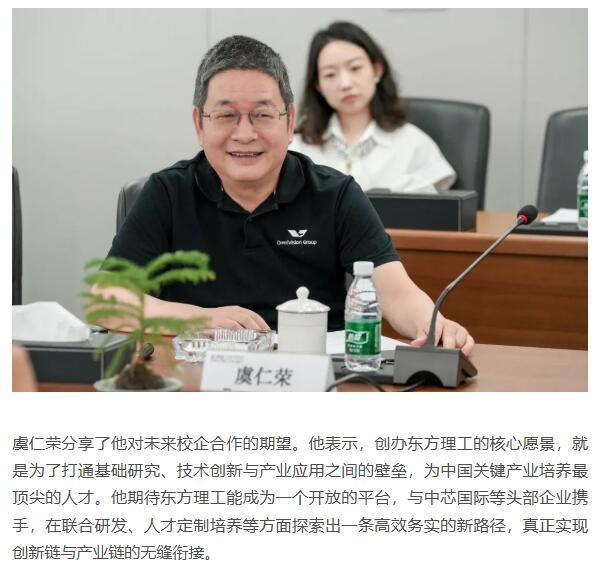
办一所大学教半导体,拥两家公司造半导体 芯片大佬虞仁荣织网,还筹划三地融资发展半导体
Mei Ri Jing Ji Xin Wen· 2025-07-09 12:27
Group 1 - The core viewpoint of the articles highlights the significant activities of Yu Renrong, the leader of OmniVision Technologies, in both the semiconductor industry and education, particularly through the establishment of Dongfang University of Technology [1][3][4] - OmniVision Technologies is planning to list in three locations, with recent efforts to go public in Hong Kong after a successful listing of its subsidiary, Xinhenghui, on the ChiNext board [1][10] - The establishment of Dongfang University of Technology aims to cultivate talent in critical fields such as artificial intelligence, integrated circuits, and new materials, addressing the growing demand for skilled professionals in the semiconductor industry [4][5][10] Group 2 - The university is positioned as a new research-oriented institution, focusing on interdisciplinary studies and aligning with national strategic needs, which is expected to enhance the talent pool for the semiconductor sector [3][4] - Yu Renrong's dual role as a leader in a top semiconductor design firm and as an educational investor is anticipated to foster collaboration between the industry and academia, potentially leading to innovations in semiconductor technology [5][10] - The recent visit of SMIC's chairman to the university indicates a growing interest from major semiconductor manufacturers in collaborating with educational institutions to secure a future talent pipeline [5][7]

“芯片首富”虞仁荣再次征战资本市场,1500亿巨头赴港IPO
3 6 Ke· 2025-07-09 09:41
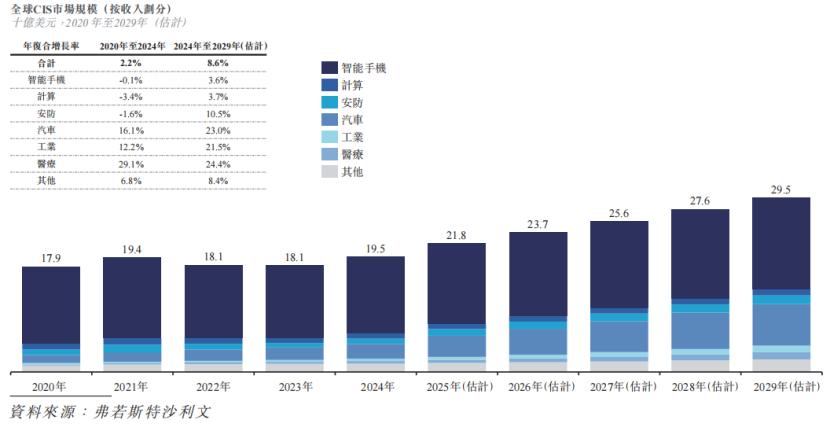
Core Viewpoint - The recent capital activities of Yu Renrong, known as the "Chip King," include the successful IPO of his investment, New Henghui Electronics, and the renaming of his company, Weier Co., to "Haowei Group" [1][2]. Company Overview - Haowei Group, founded in 1995, specializes in image sensor solutions and has expanded through the acquisition of Haowei Technology in 2019. Yu Renrong serves as the chairman and executive director [2]. - The company operates under a Fabless model, focusing on the design, research, and sales of semiconductor products, ranking among the top ten Fabless semiconductor companies globally by 2024 revenue [2]. Business Segments - Haowei Group's primary product lines include: - Image Sensor Solutions: Comprising CIS, CameraCubeChip, LCOS, and ASIC products [3]. - Display Solutions: Including LCD-TDDI, OLED DDIC, and integrated display driver chips [4]. - Analog Solutions: Encompassing PMIC, TVS, and MOSFET [5]. Market Position - By 2024, Haowei Group is projected to be the third-largest supplier of smartphone CIS with a market share of 10.5% and the largest supplier of automotive CIS with a market share of 32.9% [8]. Financial Performance - Revenue for Haowei Group was 20 billion RMB in 2022, increasing to 21 billion RMB in 2023, and projected to reach 25.7 billion RMB in 2024. Net profit decreased from 951 million RMB in 2022 to 544 million RMB in 2023, with a recovery expected to 3.28 billion RMB in 2024 [9][10]. - The gross margin for the years 2022, 2023, and 2024 was 23.7%, 19.9%, and 28.2%, respectively, indicating a decline in 2023 due to inventory management challenges [9][10]. Inventory and Supply Chain - The company has faced high inventory levels, with balances of 12.4 billion RMB, 6.3 billion RMB, and 7 billion RMB for the respective years [11]. - Approximately 85% of revenue in 2024 is expected to come from regions outside mainland China, highlighting potential exposure to international trade dynamics [10]. Research and Development - Haowei Group has invested around 9.4 billion RMB in R&D over the past three years, with R&D expenses accounting for 12.6%, 10.7%, and 10.4% of revenue in the respective years [13]. Future Outlook - The semiconductor industry is characterized by rapid technological advancements, necessitating continuous product and service updates from the company [12]. - The ability to manage inventory effectively and navigate market fluctuations will be critical for the company's future performance [13].
缅怀DSP发明者Jim Boddie
半导体行业观察· 2025-07-09 01:26
Core Viewpoint - The article commemorates the contributions of James R. "Jim" Boddie, a pioneer in digital signal processing (DSP), who passed away at the age of 74. His work at AT&T Bell Labs led to the development of the first successful DSP, DSP1, which significantly advanced the field of signal processing and had widespread applications in various technologies [3][10][12]. Group 1: Early Life and Education - Jim Boddie was born in Tallassee, Alabama, and earned his bachelor's degree in electrical engineering from Auburn University in 1971. He later obtained a master's degree from MIT and completed his PhD at Auburn in 1976 [5][6]. Group 2: Career at AT&T Bell Labs - Boddie joined AT&T Bell Labs in Holmdel, where he contributed to the development of DSP technology. He was instrumental in creating DSP1, which was introduced at the 1980 International Solid-State Circuits Conference (ISSCC) [3][9][10]. - The DSP1 was a groundbreaking product that transitioned signal processing from analog to digital, enabling more complex algorithms to be implemented efficiently [7][8]. - Following DSP1, Boddie led the development of subsequent DSP generations, including DSP2 and DSP32, which featured improved performance and memory capacity [12][13]. Group 3: Later Career and Legacy - In 1998, Boddie co-founded StarCore, a DSP design center, where he served as executive director until his retirement in 2006. StarCore's architecture utilized long instruction word architecture to enhance parallel processing capabilities [13][14]. - Boddie's contributions to DSP technology have had a lasting impact, as digital signal processing is now a fundamental requirement for programmable semiconductors across various applications [15].

孟加拉也要发力半导体
半导体行业观察· 2025-07-07 00:54
Core Viewpoint - Bangladesh aims to become a significant player in the global semiconductor ecosystem by developing a roadmap focusing on skill development, business environment, and policy support [3][4]. Group 1: Roadmap and Strategy - The semiconductor working group in Bangladesh has outlined a roadmap that includes training programs, virtual certification portals, and high-tech laboratories to build a skilled workforce in chip design and testing [3]. - The plan suggests financial incentives, streamlined customs processes, and dedicated zones in high-tech parks to attract investors and startups [3][6]. - The working group emphasizes the importance of international partnerships and joint ventures to leverage talent, technology, and markets [3][5]. Group 2: Opportunities and Challenges - There are significant opportunities in design services, chip testing, and packaging, which are seen as the fastest entry points into the semiconductor industry [5]. - The group anticipates that if their recommendations are implemented, Bangladesh could transition from a marginal player to a strong competitor in the global semiconductor value chain [5][9]. - However, challenges remain, including the need for substantial investment to establish semiconductor manufacturing facilities, which could require up to $12 billion [8]. Group 3: Talent Development - The goal is to train 4,000 to 5,000 engineers annually by 2030 to address the semiconductor talent gap [7]. - Short-term strategies include online learning, industry-led projects, and university collaborations to accelerate skills in chip design, validation, and testing [7]. - The working group highlights the importance of policy stability and ongoing commitment to ensure Bangladesh's position in a projected $1 trillion market by 2030 [7]. Group 4: Industry Support and Growth - Local companies are encouraged to expand operations with government support, including financial assistance like soft loans or grants [7][8]. - The CEO of a leading semiconductor design company in Bangladesh expressed readiness to grow their team from 500 to 1,000 engineers with appropriate support [8]. - The focus will be on consolidating Bangladesh's position in design services and less capital-intensive segments of the value chain [9].

AI入侵EDA,要警惕
半导体行业观察· 2025-07-03 01:13
Core Viewpoint - The article discusses the importance of iterative processes in Electronic Design Automation (EDA) and highlights the challenges posed by decision-making in logic synthesis, emphasizing the need for integrated tools to manage multi-factor dependencies and improve timing convergence [1]. Group 1: EDA Process and Challenges - Iterative loops have been crucial in the EDA process for decades, especially as gate and line delays have become significant [1]. - The consequences of decisions in the EDA process can be far-reaching, affecting multiple other decisions, which complicates achieving acceptable timing [1]. - Serial tool operation can lead to major issues, and achieving timing convergence in logic synthesis is nearly impossible without a concept of iterative learning [1]. Group 2: Integration of Tools - The integration of decision tools, estimators, and checkers into a single tool addresses the issue of multi-factor dependencies, allowing for quick checks during decision-making [1]. - There is a growing need for such integrated functionalities across various fields, enabling users to guide tool operations based on their expertise [1]. Group 3: AI and Verification in EDA - AI hallucinations are recognized as a characteristic rather than a defect, with models generating plausible but not necessarily factual content [3]. - The use of retrieval-augmented generation (RAG) aims to control these hallucinations by fact-checking generated content, similar to practices in EDA [3]. - The industry has a strong emphasis on verification, which is crucial for ensuring the reliability of AI applications in EDA [5]. Group 4: Future Directions and Innovations - The industry is making progress in identifying necessary abstractions for validating ideas efficiently, with examples like digital twins and reduced-order models [6]. - A model generator capable of producing required abstract concepts for verification is deemed essential for mixed-signal systems [6]. - With proper verification, AI could lead to breakthroughs in performance and power efficiency, suggesting a need for a restructuring phase in the industry [6].
每周股票复盘:韦尔股份(603501)召开股东大会并推进H股发行计划
Sou Hu Cai Jing· 2025-06-14 09:11
Core Viewpoint - The company, Weir Semiconductor Co., Ltd. (韦尔股份), has experienced a decline in stock price and is undergoing significant corporate governance changes, including the election of a new board and management team, while also planning to issue H-shares for further capital raising [1][2][4][5]. Group 1: Stock Performance - As of June 13, 2025, Weir Semiconductor's stock closed at 124.51 yuan, down 5.96% from the previous week [1]. - The company's market capitalization is currently 151.52 billion yuan, ranking 5th in the semiconductor sector and 79th among all A-shares [1]. Group 2: Corporate Governance - The first meeting of the seventh board of directors was held on June 10, 2025, where new leadership was elected, including Mr. Yu Renrong as chairman and several other key executives [2][5]. - The 2024 annual general meeting also took place on June 10, 2025, approving multiple important resolutions, including the annual reports and financial statements [3]. Group 3: Future Plans - A second extraordinary general meeting is scheduled for June 18, 2025, to discuss the issuance of H-shares and related fundraising plans [4]. - The company has decided to repurchase shares for cancellation, reducing the total number of shares by 11,213,200 [6][13]. Group 4: Shareholder Changes - The controlling shareholder, Mr. Yu Renrong, has partially released the pledge on his shares, with remaining pledged shares accounting for 52.09% of his holdings [7][9]. - The total pledged shares by the controlling shareholder and related parties amount to 230,604,400, representing 56.44% of their total holdings and 18.95% of the company's total equity [9]. Group 5: Financial Performance - In 2024, Weir Semiconductor achieved a revenue of 25.73 billion yuan, reflecting a year-on-year growth of 22.43%, with semiconductor design and sales revenue at 21.64 billion yuan, up 20.62% [10]. - The company invested 3.25 billion yuan in R&D, constituting 12.61% of its revenue, and held 4,865 authorized patents by the end of 2024 [10].
灿瑞科技: 立信会计师事务所(特殊普通合伙)关于上海灿瑞科技股份有限公司2024年年度报告的信息披露监管问询函的回复
Zheng Quan Zhi Xing· 2025-06-10 13:43
Core Viewpoint - The company reported a significant decline in net profit despite revenue growth, indicating challenges in maintaining profitability amid increased competition and rising costs [2][3][11]. Financial Performance - In 2024, the company achieved revenue of 565.30 million yuan, a year-on-year increase of 24.36%, but recorded a net loss attributable to shareholders of 52.32 million yuan, a decline of 645.35% compared to the previous year [1][2]. - For Q1 2025, revenue was 125.39 million yuan, up 8.86% year-on-year, while the net loss attributable to shareholders was 13.48 million yuan, an increase in loss of 222.94% [1][3]. - The gross profit margin for 2024 was 25.56%, down 3.91 percentage points from the previous year [1][2]. Revenue and Cost Analysis - The decline in net profit was attributed to several factors: 1. Increased market competition leading to a decrease in average selling prices [2][3]. 2. Rising R&D expenses due to ongoing investments [2][3]. 3. Asset impairment losses totaling 11.46 million yuan due to cautious assessments of potential impairment [2][3]. - The company adjusted its pricing strategy to remain competitive, particularly in the power management chip segment, which affected gross margins [6][11]. Product Performance - The main products include smart sensor chips and power management chips, which accounted for over 98% of total revenue in 2024 [6][13]. - The average selling price of smart sensor chips decreased by 3.69% in 2024, while power management chips saw a significant price drop of 19.08% [6][13]. - Sales volume for smart sensor chips increased by 36.88% in Q1 2025, while power management chips experienced a decline of 27.16% [6][13]. Market Trends - The semiconductor industry is entering a recovery phase driven by AI demand and domestic substitution, although specific segments like industrial and automotive markets remain under pressure [4][5]. - The company faces intense competition, particularly in the power management chip market, where price wars are prevalent [5][6]. Gross Margin Analysis - The gross margin for smart sensor chips was 38.98%, down from 40.95%, while power management chips saw a drop from 20.91% to 13.39% [11][14]. - The company’s gross margin decline is consistent with industry trends, where competitors are also experiencing similar pressures [16][18]. Regional and Sales Model Differences - Domestic sales had a gross margin of 28.87%, while international sales were significantly lower at 15.09%, reflecting the product mix and competitive landscape [19]. - The gross margin for direct sales was 19%, compared to 28.84% for distribution sales, highlighting the impact of sales strategies on profitability [18][19].
关税谈判临近,市场如何应对?
2025-06-09 15:30
Summary of Conference Call Records Industry or Company Involved - Focus on the impact of tariff negotiations on the market and various sectors including gold, rare earths, technology, and biopharmaceuticals Core Points and Arguments - **Tariff Negotiations**: The upcoming tariff negotiations are expected to increase market volatility from June 9 to June 20, with a low probability of reaching an agreement by July 8, indicating a prolonged struggle rather than a quick resolution [1][2] - **Gold as a Safe Haven**: Gold prices are anticipated to rebound after recent corrections, with projections suggesting prices could reach $10,000 per ounce in the next 3-5 years [1][3] - **Beneficial Sectors**: Sectors related to U.S.-China tensions, such as gold stocks, rare earths, and permanent magnet materials, are expected to perform well due to rising domestic prices and demand [1][4] - **Technology Sector Catalysts**: The U.S. restrictions on EDA software usage in China are accelerating domestic alternatives, benefiting companies like Huada Jiutian and highlighting the strategic value of industrial software firms [1][5] - **Chinese Innovative Pharmaceuticals**: The Chinese innovative drug sector is performing well, particularly in Hong Kong, driven by new product launches and overseas licensing agreements, alongside reduced costs from U.S. policy changes [1][6][7] - **Digital Currency in Cross-Border Payments**: Digital currencies are becoming crucial in cross-border payments, with China leveraging blockchain and Web 3.0 technologies to enhance settlement efficiency [1][8] - **Impact of U.S.-China Trade War**: The trade war has led to high inflation and economic slowdown in the U.S., while Chinese export-oriented companies are affected differently based on their overseas capacities [1][9] - **Global Negotiation Dynamics**: The U.S. is engaging in trade negotiations with other countries, which may create opportunities for sectors like gold and rare earths, while China’s slower negotiation pace could be advantageous [1][10][11] Other Important but Possibly Overlooked Content - **Financial Technology and Stablecoins**: The demand for stablecoins is rising, with licensed financial institutions likely to benefit from this trend, particularly in cross-border settlements [1][12] - **Investment Opportunities in Digital Currency**: Companies involved in the digital yuan and financial technology sectors, such as JD.com and Ant Group, are positioned as key suppliers in this evolving landscape [1][12][13] - **Market Performance and Future Volatility**: The capital market is currently in a volatile phase, with recommendations to focus on gold and sectors benefiting from U.S.-China tensions, as well as export-oriented companies with overseas production capabilities [1][14]