
平台经济

Search documents
国家发展改革委:为平台价格行为提供明确指引
Ren Min Ri Bao· 2025-08-24 01:40
Core Viewpoint - The introduction of the "Internet Platform Pricing Behavior Rules (Draft for Comments)" aims to promote the healthy development of the platform economy by establishing clear pricing regulations and enhancing transparency in pricing practices [1][2]. Group 1: Background and Purpose - The rapid development of the platform economy in China has positively impacted the real economy and consumer needs, necessitating clearer regulations on pricing behavior to protect consumer interests [2]. - Existing laws provide general guidelines, but specific regulations for the platform economy are needed to create a transparent and predictable pricing supervision mechanism [2]. Group 2: Overall Approach - The rules emphasize a balance between promoting development and regulatory compliance, focusing on standardizing pricing behavior, enhancing transparency, and fostering collaboration among stakeholders [3]. - Key objectives include regulating pricing behavior, promoting transparency, and enhancing cooperation among government, industry associations, and platform operators [3]. Group 3: Pricing Autonomy - The rules affirm the right of platform operators and internal operators to set prices autonomously while regulating the fees charged by platform operators to internal operators [4]. - Platform operators must publicly disclose fee standards and seek input from internal operators when changing pricing rules [4]. Group 4: Pricing Marking Requirements - The rules mandate clear price marking for goods and services, requiring operators to disclose all relevant pricing information without hidden fees [5]. - Specific requirements for promotional pricing, subsidies, and dynamic pricing are outlined to ensure clarity and fairness in pricing practices [5][6]. Group 5: Competition Behavior Regulation - The rules define standards for identifying unfair pricing behaviors such as predatory pricing, price discrimination, and price collusion to maintain a fair competitive environment [7]. - Operators are prohibited from forcing internal operators to sell below cost and must not engage in deceptive pricing practices [8]. Group 6: Consumer Protection - The rules aim to address common consumer grievances related to pricing practices, ensuring that consumers are better protected against misleading pricing and promotional tactics [9]. - By enhancing pricing transparency, the rules are expected to benefit both consumers and businesses operating on platforms [10].
《互联网平台价格行为规则(征求意见稿)》发布
Ren Min Ri Bao· 2025-08-23 22:20
Core Viewpoint - The National Development and Reform Commission, the State Administration for Market Regulation, and the National Internet Information Office have jointly drafted the "Internet Platform Pricing Behavior Rules (Draft for Comments)" to promote the healthy development of the platform economy and solicit public opinions [1]. Group 1: Regulatory Framework - The rapid development of the platform economy in China has positively impacted the real economy, new productive forces, and the needs of the people [1]. - The pricing behavior of operators in the platform economy is closely related to consumer interests, with particular attention to price labeling and big data pricing [1]. - Current laws provide general regulations on pricing behavior, but further refinement and implementation of regulatory requirements are needed in the platform economy sector [1]. Group 2: Public Engagement - The public consultation period for the draft rules is from August 23, 2025, to September 22, 2025 [1]. - Various stakeholders can submit their opinions through online platforms, including the National Development and Reform Commission and the State Administration for Market Regulation [1].
规范平台价格行为 促进经济稳定增长
Zhong Guo Jing Ji Wang· 2025-08-23 17:07
Core Viewpoint - The rapid development of digital technology has made the platform economy a significant part of the national economy, contributing to economic growth through various sectors such as e-commerce, digital finance, online education, and remote healthcare [1] Group 1: Regulation of Platform Pricing Behavior - The "Internet Platform Pricing Behavior Rules (Draft for Comments)" aims to regulate pricing behavior through mandatory, prohibitive, and advocacy norms, incorporating flexible regulatory measures [2] - Mandatory norms emphasize fairness, integrity, and transparency in pricing, particularly in price labeling, which is crucial for consumer rights [2] - Prohibitive norms outline unacceptable pricing practices, including selling below cost to eliminate competition, colluding on prices, false promotional pricing, and differential pricing without user notification [2] Group 2: Special Pricing Norms for Platform Economy - Pricing behavior regulations must consider the unique characteristics of goods and services in the platform economy, such as subscription services for digital content [3] - Clear pricing requirements include displaying product names, prices, and related costs on digital platforms, prohibiting hidden charges [3] - Dynamic and differential pricing must be publicly disclosed, including the rules and factors affecting prices [3] Group 3: Responsibilities of Platforms in Pricing Relations - Platforms have a unique role in protecting consumer rights, especially regarding automatic renewals and payment methods, ensuring consumers are informed and can easily opt-out [4] - Platforms must provide accessible channels for consumers to report pricing and transaction disputes and ensure compliance from sellers [4] - Platforms are also responsible for cooperating with regulatory authorities in investigating pricing disputes [4] Group 4: Internal Supervision Responsibilities of Platforms - Platforms must establish internal pricing management rules and compliance systems, ensuring standards for pricing, promotions, and dynamic pricing are met [5] - Platforms are required to maintain accurate records of pricing information and transactions to ensure transparency and traceability [5] - A dedicated pricing supervision mechanism should be established to facilitate consumer complaints and ensure timely resolution of pricing issues [5]
规范价格行为、推动公开透明 促进平台经济高质量发展——详解《互联网平台价格行为规则(征求意见稿)》
Xin Hua She· 2025-08-23 07:22
Core Viewpoint - The article discusses the introduction of the "Internet Platform Pricing Behavior Rules (Draft for Comments)" aimed at promoting healthy development in the platform economy through standardized pricing behavior and enhanced transparency [1][2]. Background of the Rules - The rapid development of the platform economy in China has positively impacted the real economy and consumer needs, necessitating clearer regulations on pricing behavior to protect consumer interests [2]. - Existing laws provide general guidelines, but specific regulations for the platform economy are needed to ensure compliance and transparency [2]. Overall Approach to Rule Formulation - The rules emphasize a balance between promoting development and regulatory compliance, ensuring stability in regulatory systems while protecting the pricing autonomy of operators [3]. - Key focuses include standardizing pricing behavior, promoting transparency, and enhancing collaboration among stakeholders [3]. Applicability of the Rules - The rules apply to both platform operators and platform-based operators, including those who provide services or sell goods through these platforms [4]. Requirements for Price Marking Behavior - The rules mandate clear price marking on platforms, including the requirement to display product names, prices, and pricing methods [5][6]. - Specific guidelines for promotional pricing, subsidies, and dynamic pricing are also outlined to ensure clarity and fairness [6]. Regulation of Price Competition Behavior - The rules define standards for identifying unfair pricing practices such as predatory pricing, price discrimination, and price collusion to maintain market order [7][8]. - Operators are prohibited from using deceptive practices in pricing and must not manipulate market prices through collusion [8]. Implementation Timeline - The rules are currently open for public comment for one month, after which feedback will be reviewed and incorporated before final issuance [9].
国家发展改革委:对低价倾销、价格歧视等不正当价格行为在平台经济领域的认定标准作出细化规定
Bei Jing Shang Bao· 2025-08-23 05:30
Core Viewpoint - The National Development and Reform Commission, along with other regulatory bodies, has drafted the "Internet Platform Pricing Behavior Rules" to promote healthy development in the platform economy while ensuring regulatory compliance and transparency [1][2]. Group 1: Regulation and Compliance - The rules emphasize a dual approach of promoting development and regulatory compliance, combining preemptive guidance with ongoing supervision [1]. - The rules aim to standardize pricing behavior, enhance transparency, and protect the rights of both operators and consumers [1]. Group 2: Pricing Behavior Standards - The rules provide detailed standards for identifying unfair pricing behaviors such as predatory pricing, price discrimination, and price collusion within the platform economy [2]. - Platform operators are prohibited from forcing internal operators to sell below cost, which could disrupt market competition [2]. - The rules specify that operators cannot set different prices for the same product based on consumer data without their knowledge [2]. Group 3: Transparency and Integrity - The rules require strict adherence to clear pricing regulations and timely disclosure of any changes in fees to enhance social oversight [1]. - Operators are forbidden from using deceptive language or images in pricing, and from manipulating prices through false discounts or misleading comparisons [2].
详解“十四五”市场监管改革:规范监管与促进发展并重
2 1 Shi Ji Jing Ji Bao Dao· 2025-08-22 11:19
Group 1: Market Regulation Achievements - The State Administration for Market Regulation (SAMR) highlighted significant achievements in high-quality market regulation during the 14th Five-Year Plan period, focusing on business environment, market operation, and safety supervision [2][5] - Key areas of focus include reforms in the registered capital system, prevention of excessive penalties for minor infractions, addressing platform economy issues, food safety, and innovation drug approval reforms [2][5] Group 2: Registered Capital Reform - The revised Company Law in 2023 stipulates that the maximum contribution period for limited liability company shareholders is five years, effective from July 1, 2024 [3][5] - The reform aims to curb market irregularities such as inflated registered capital and excessively long contribution periods, enhancing the credibility of registered capital [5][6] Group 3: Prevention of Excessive Penalties - The SAMR is implementing a "double random, one public" regulatory approach to minimize disruptions to normal business operations and enhance administrative enforcement standards [6][7] - A typical case highlighted the issue of disproportionate penalties, prompting the SAMR to withdraw an excessive fine against a local restaurant [6][7] Group 4: Platform Economy Regulation - The SAMR is addressing issues in the platform economy, including algorithm abuse and unfair competition, through ongoing regulatory actions [8][9] - Over the past five years, the SAMR has taken significant actions, including deleting 4.541 million pieces of illegal product information and investigating 105,000 internet-related cases [8][9] Group 5: Food Safety Oversight - Food safety remains a critical focus, with the SAMR enhancing compliance guidance for platform enterprises and increasing special inspections to address issues like "ghost deliveries" and false claims [12][13] - The SAMR has introduced new regulations to clarify food safety responsibilities among various stakeholders in the online food sales ecosystem [12][13] Group 6: Innovation Drug Approval - The pharmaceutical industry in China has seen rapid development, with 204 innovative drugs and 265 innovative medical devices approved since the beginning of the 14th Five-Year Plan [14][15] - The SAMR is streamlining the drug approval process, aiming to complete reviews of key innovative drugs within 30 working days and significantly reducing the time for supplementary application reviews [14][15]

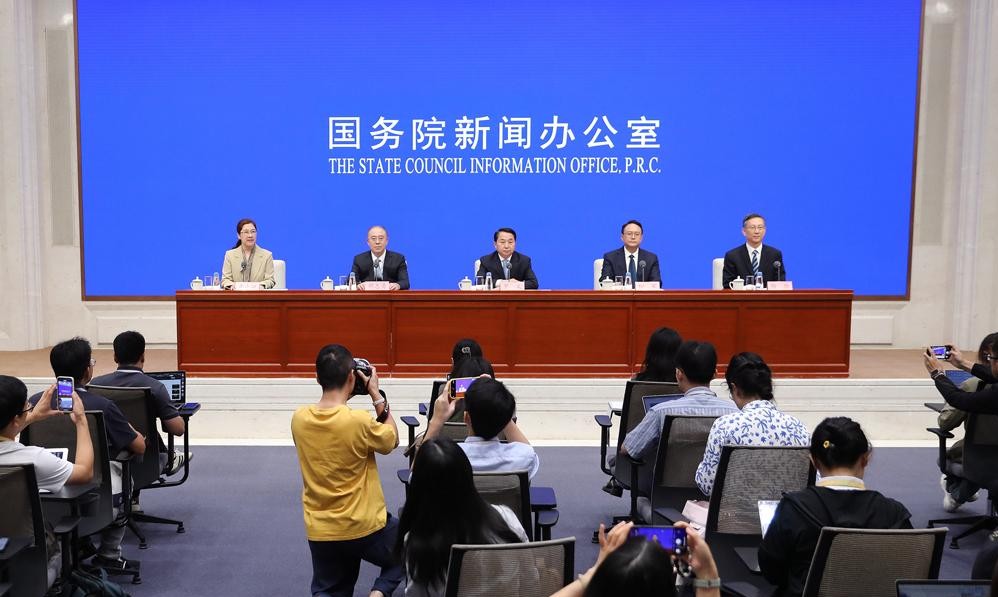
国家市场监督管理总局:不断健全平台经济常态化监管制度
Qi Huo Ri Bao Wang· 2025-08-22 08:03
Core Viewpoint - The rapid development of the platform economy in China is accompanied by issues such as algorithm abuse and unfair competition, necessitating regulatory measures to promote healthy industry growth [1][2] Group 1: Regulatory Actions - The National Market Supervision Administration emphasizes a balanced approach to encourage innovation while regulating the platform economy [1] - A significant crackdown on irregularities has led to the removal of 4.541 million pieces of illegal product information and the suspension of services for 58,000 online stores [1] - A total of 105,000 internet-related cases have been investigated, showcasing the administration's commitment to maintaining order in the online market [1] Group 2: Future Directions - The administration plans to continue enhancing the regulatory framework for the platform economy, focusing on both regulation and development [2] - There will be an emphasis on improving preventive and penetrating regulatory capabilities to ensure the sustainable and healthy development of the platform economy [2]
三只羊、东北雨姐被点名,市场监管总局发声,信号很大
21世纪经济报道· 2025-08-22 05:41
Core Viewpoint - The article discusses the rapid development of the platform economy in China, highlighting the need for effective regulation to address issues such as algorithm abuse and unfair competition while promoting healthy industry growth [1]. Group 1: Regulatory Framework - The government aims to balance innovation encouragement and regulatory compliance by establishing a policy framework that promotes orderly competition and innovation in the platform economy [2]. - New regulations such as the "Network Transaction Supervision Management Measures" and the "Interim Measures for Network Transaction Law Enforcement Cooperation" have been introduced to enhance regulatory effectiveness [2]. - The establishment of a national standardization technical committee for platform economy governance is intended to strengthen industry self-discipline and set clear competition rules [2]. Group 2: Enforcement Actions - The regulatory authorities have conducted special actions to address market irregularities, resulting in the removal of 4.541 million illegal product listings and the suspension of services for 58,000 online stores [2]. - Significant cases in the live e-commerce sector, such as "Three Sheep" and "Northeast Rain Sister," have been investigated to combat irregularities [2]. - Platforms are required to eliminate unreasonable restrictions such as "refund only" policies and to enhance the transparency and reasonableness of their fees [2]. Group 3: Service Improvement - The government has issued guidelines to encourage platforms to improve compliance management and has provided compliance prompts during major sales events like "6.18" and "Double Eleven" [4]. - Initiatives to offer government data comparison services to platforms aim to help them effectively intercept and remove non-compliant entities [4]. - Continuous communication with various stakeholders, including platforms, merchants, and delivery personnel, is emphasized to ensure a more responsive regulatory approach [4]. Group 4: Future Directions - The regulatory body plans to maintain a dual focus on regulation and development, enhancing the platform economy's ongoing health and sustainability through improved monitoring systems [4].
市场监管总局答21:督促全面取消“仅退款”,对平台乱象出重拳
2 1 Shi Ji Jing Ji Bao Dao· 2025-08-22 04:31
Core Viewpoint - The Chinese platform economy is undergoing a critical transformation, facing challenges such as algorithm abuse and unfair competition, while the government aims to balance regulation and support for healthy industry development [2][4]. Group 1: Regulatory Framework - The government is establishing a policy system to encourage innovation while ensuring orderly competition in the platform economy, including the introduction of various regulations such as the "Network Transaction Supervision Management Measures" and the "Interim Measures for Network Transaction Law Enforcement Cooperation" [4]. - Amendments to the Anti-Monopoly Law and the Anti-Unfair Competition Law are underway, along with the issuance of guidelines specific to the platform economy to clarify competition rules [4]. Group 2: Enforcement Actions - Regulatory authorities have taken significant actions against market irregularities, resulting in the removal of 4.541 million pieces of illegal product information and the suspension of services for 58,000 online stores [4]. - Major cases in the live e-commerce sector have been addressed, including investigations into significant violations by entities such as "Three Sheep" and "Northeast Rain Sister" [4]. Group 3: Service Initiatives - The government is promoting compliance management among platform enterprises by issuing guiding opinions and providing services such as government data comparison to help platforms identify and eliminate non-compliant entities [5]. - Regular communication with various stakeholders, including platforms, merchants, and delivery personnel, is being conducted to enhance regulatory warmth and responsiveness [5]. Group 4: Future Directions - The government plans to continue enhancing the regulatory framework for the platform economy, focusing on preventive and comprehensive regulatory capabilities to ensure sustainable and healthy development [5].
市场监管总局:“十四五”期间出台质量融资增信措施 助3万家企业获贷款超2000亿元
智通财经网· 2025-08-22 03:58
Group 1 - The State Administration for Market Regulation (SAMR) has established a fair competition review mechanism, reviewing 42,200 important policy measures and proposing amendments to 11,400 of them to prevent policies that are detrimental to the construction of a unified national market [10][12] - During the 14th Five-Year Plan period, the SAMR has handled nearly 50,000 cases of unfair competition, including 4,296 cases of online unfair competition, optimizing the competitive ecosystem of both online and offline markets [12][6] - The SAMR has implemented a series of measures to enhance the quality of enterprises, including the establishment of chief quality officers in 279,000 companies, resulting in an average annual revenue growth of 9.7% for small and micro enterprises involved in quality improvement initiatives [2][46] Group 2 - The SAMR has strengthened the regulation of food safety, handling 2.26 million food safety cases and maintaining a food safety compliance rate of over 99.4% for drug inspections [7][29] - The SAMR has revised key laws such as the Company Law and the Anti-Monopoly Law, enhancing the regulatory framework for market operations and increasing the enterprise credit index from 128.6 in 2020 to 161.61 in the first half of 2025 [6][10] - The SAMR has facilitated the establishment of a unified market by promoting regional market integration, achieving "one network for handling" across multiple provinces and cities, and implementing shared electronic certificate standards [12][11] Group 3 - The SAMR has focused on enhancing the quality of the pharmaceutical industry, approving 204 innovative drugs and 265 innovative medical devices during the 14th Five-Year Plan period, with a significant increase in the number of innovative drugs under research [35][52] - The SAMR has implemented a comprehensive reform of drug and medical device regulation, emphasizing the entire lifecycle of drug safety and quality, and has established a dynamic regulatory mechanism for drug safety risk assessment [34][52] - The SAMR has actively supported the development of quality standards, issuing over 13,000 national standards and leading the formulation of 1,079 international standards during the 14th Five-Year Plan period [38][40]