智能制造业

Search documents
合锻智能: 合肥合锻智能制造股份有限公司信息披露管理制度(2025年8月修订)
Zheng Quan Zhi Xing· 2025-08-01 16:13
General Principles - The purpose of the information disclosure management system is to standardize the behavior of information disclosure obligors, enhance management of information disclosure affairs, and protect the legitimate rights and interests of investors [1] - Information disclosure obligors must fulfill their disclosure obligations in a timely manner, ensuring that the information is true, accurate, complete, and easy to understand, without any false records or misleading statements [1][2] - Information must be disclosed simultaneously to all investors, and no advance disclosure to any individual or entity is allowed, except as provided by law or regulations [1][2] Voluntary Disclosure - Information obligors may voluntarily disclose information relevant to investors' value judgments and investment decisions, provided it does not conflict with legally required disclosures [2] - Voluntary disclosures must adhere to the principles of fairness, continuity, and consistency, and must not be used to manipulate market prices [2] Reporting Requirements - The main types of information disclosure documents include periodic reports, temporary reports, prospectuses, fundraising explanations, listing announcements, and acquisition reports [2][3] - Legally required disclosures must be published on the Shanghai Stock Exchange website and in media that meet the criteria set by the China Securities Regulatory Commission (CSRC) [3] Periodic Reports - Companies are required to disclose annual and semi-annual reports, which must include significant information affecting investors' value judgments and investment decisions [4] - Annual reports must be completed and disclosed within four months after the end of the fiscal year, while semi-annual reports must be completed within two months after the end of the first half of the fiscal year [4] Content of Reports - Annual reports must include company basic information, major accounting data, stock and bond issuance and changes, shareholder information, management discussions, and significant events during the reporting period [4][5] - Companies must disclose risk factors that may significantly impact their core competitiveness, operations, and future development [5] Temporary Reports - Companies must immediately disclose significant events that may have a substantial impact on the trading price of their securities when investors are not yet aware of them [7] - Significant events include major legal liabilities, asset impairment, changes in major debtors' financial status, and other events specified by law [7][8] Disclosure Procedures - The procedures for preparing, reviewing, and disclosing periodic reports involve senior management, the audit committee, and the board of directors [33] - The company secretary is responsible for organizing the disclosure of both periodic and temporary reports [34] Confidentiality and Accountability - Company directors and senior management have a duty to maintain confidentiality regarding undisclosed information and must not engage in insider trading [44][46] - The company implements a responsibility accountability system for information disclosure obligors who fail to fulfill their duties, leading to significant errors or economic losses [46][47]

合锻智能: 合肥合锻智能制造股份有限公司投资者关系管理办法(2025年8月修订)
Zheng Quan Zhi Xing· 2025-08-01 16:13
Core Points - The article outlines the investor relations management measures of Hefei Hozon Intelligent Manufacturing Co., Ltd, aiming to enhance communication between the company and its investors, improve corporate governance, and increase overall corporate value [1][2]. Group 1: Principles of Investor Relations Management - The basic principles of investor relations management include compliance, equality, proactivity, and honesty [2][3]. - The company must treat all investors equally, especially small and medium-sized investors, and create opportunities for their participation [2][3]. - The company should actively listen to investor feedback and respond to their demands in a timely manner [2][3]. Group 2: Content and Methods of Investor Relations Management - Key communication topics with investors include the company's development strategy, legal information disclosure, operational management information, environmental, social, and governance information, and shareholder rights [6][7]. - The company should utilize multiple channels and platforms for investor relations management, including official websites, investor education bases, and social media [6][7]. - The company is required to establish dedicated communication lines for investor inquiries and ensure timely responses [6][7]. Group 3: Organization and Implementation of Investor Relations Management - The board chairman is the primary responsible person for investor relations management, while the board secretary coordinates the activities [18][19]. - The company must ensure that all personnel involved in investor relations management adhere to strict guidelines to avoid disclosing non-public information or misleading statements [20][21]. - Regular training for board members and staff on investor relations management is essential to enhance their understanding of relevant laws and regulations [10][11].
合锻智能: 合肥合锻智能制造股份有限公司对外投资管理制度(2025年8月修订)
Zheng Quan Zhi Xing· 2025-08-01 16:13
Core Points - The document outlines the external investment management system of Hefei Huoju Intelligent Manufacturing Co., Ltd. to enhance investment efficiency and mitigate risks [1] - The system aims to establish an effective investment mechanism for decision-making and management of external investments [1] Chapter 1: General Principles - External investment refers to various investment activities made by the company to obtain future returns using monetary funds, equity, land use rights, and other legally permitted assets [1] - The principles of external investment include compliance with national laws, alignment with the company's long-term development strategy, and safeguarding the fundamental interests of the company and its shareholders [1] Chapter 2: Approval Authority for External Investments - The decision-making bodies for external investments are the shareholders' meeting, the board of directors, and the general manager, each operating within their respective authority [2] - Certain investment matters must be submitted to the shareholders' meeting if they meet specific thresholds, such as asset total exceeding 50% of the company's audited total assets or transaction amounts exceeding 50% of the audited net assets with an absolute amount over 50 million [2][3] Chapter 3: Internal Control of Major Investments - The company must designate relevant departments to conduct feasibility studies, risk assessments, and monitor the execution of major investment projects [4] - The board of directors should regularly review the progress and effectiveness of major investments and hold responsible parties accountable for any deviations from planned investments [5] Chapter 4: Daily Management of External Investments - The general manager is responsible for the daily management of external investment projects [6] - For joint ventures or partnerships, the company should appoint management personnel to influence operational decisions [6] Chapter 5: Transfer and Recovery of External Investments - The company can recover investments under certain conditions, such as project completion or inability to repay debts [7] - The company may transfer investments if they no longer align with business direction or if there are continuous losses [7] Chapter 6: Information Disclosure - The company must fulfill information disclosure obligations in accordance with relevant laws and regulations [7] - The investment management system applies to all external investment activities of the company and its subsidiaries [7]
走进华为黑灯工厂:1400台机器人承包生产线,90后工程师年薪曝光
Sou Hu Cai Jing· 2025-07-25 04:17
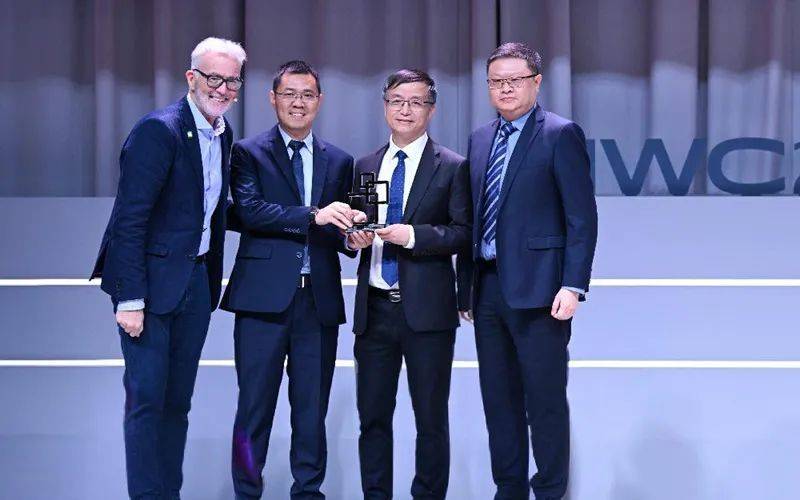
Core Insights - The article highlights the emergence of "dark factories" in China, specifically the 5G-A smart dark factory developed by China Unicom, Gree, and Huawei, which has won the GSMA GLOMO award for best mobile internet economic innovation [1][3] - The concept of a "dark factory" refers to an intelligent manufacturing environment where all processes from raw materials to finished products occur without human presence, marking a significant transformation in the manufacturing industry [3][5] Group 1: Technological Advancements - The 5G-A smart dark factory in Zhuhai Gree has achieved an impressive production efficiency increase of 86%, with an annual output of 12 million split air conditioners and zero defects [5] - Huawei's deterministic IP network solution addresses the challenges of traditional industrial control systems, providing end-to-end guaranteed latency and enabling remote centralized monitoring across industrial parks [5][6] - The deterministic IP network solution includes three core technologies: periodic forwarding, resource reservation, and path planning, ensuring low latency of less than 30 microseconds [5][6] Group 2: Practical Applications - The collaboration between Huawei, China Unicom, and Gree has resulted in a fully connected equipment environment, intelligent logistics, and comprehensive quality inspection in the Zhuhai factory [7] - In Chongqing, the Changan Automobile factory, developed in partnership with Huawei and China Unicom, is now Asia's largest "dark factory," capable of producing 280,000 vehicles annually with a new car rolling off the line every 60 seconds [7][9] - The integration of over 12,000 devices into a digital production platform has enabled a complete digital twin of the manufacturing process, showcasing the rapid advancement in smart manufacturing [9] Group 3: Workforce Transformation - The shift to smart factories is not about eliminating jobs but rather creating safer, more efficient, and higher-value roles, similar to how the automobile industry created new jobs when it replaced horse-drawn carriages [10][11] - New job roles such as AI trainers and digital twin engineers are emerging, with salaries reaching up to one million yuan, reflecting the changing landscape of employment in the manufacturing sector [10][11] - The ability to control machinery remotely, even from hundreds of kilometers away, allows for greater flexibility in factory locations and workforce management, emphasizing the importance of skilled workers who can utilize intelligent tools [10][11]


学位从有到优,第三轮回天行动计划追求品质提升
Xin Jing Bao· 2025-07-23 06:35
Core Insights - The third round of the "Huitian Action Plan" is being developed with a focus on quality improvement and precise governance, particularly in education, aiming to enhance access to prestigious schools for residents [1] - Since 2018, the plan has implemented over 240 key projects addressing residents' concerns in the Huitian area, transforming it from a "sleepy city" to a vibrant and livable community [1][2] Group 1: Education and Healthcare - The initiative "Huitian has Education" has added over 22,000 school places and established 42 public kindergartens, partnering with 17 prestigious schools to improve local educational opportunities [1] - "Huitian has Healthcare" has seen the construction of new top-tier hospitals, adding over 1,900 beds and ensuring comprehensive community health service coverage [1] Group 2: Infrastructure and Environment - The "Huitian has Roads" initiative has established a primary road network, improving commuting efficiency through the completion of significant road projects and the opening of previously blocked routes [2] - "Huitian has Green" has created 17 parks, increasing green space by 408 hectares, and developed a comprehensive cycling and walking network [2] Group 3: Commerce and Employment - The "Huitian has Shopping" initiative has upgraded three major commercial districts and established over 140 convenient service points, achieving near-total coverage of a "15-minute" living circle [3] - "Huitian has Industry" has launched 24 innovation centers, attracting over 1,700 project teams and 28,000 employees, while also promoting significant industrial projects [3] Group 4: Overall Impact - The overall development level in the Huitian area has significantly improved, with key indicators surpassing the city average, and nearly 90% of residents expressing satisfaction with the improvements [3]
从中博会看“广东制造”新未来
Sou Hu Cai Jing· 2025-06-30 23:15
Core Insights - The 20th China International Small and Medium Enterprises Expo (CISME) showcased over 2,000 enterprises from more than 50 countries and regions, with over 10,000 buyers attending, resulting in intended transaction amounts exceeding 100 billion yuan, highlighting the vitality of China's economy and the transformation of "Guangdong Manufacturing" [1] Group 1: Economic Contribution of SMEs - SMEs are the backbone of Guangdong's economy, contributing over 50% of the province's GDP, over 60% of its import and export value, over 70% of technological innovations, over 80% of new employment, and over 90% of business entities [1] - As of the end of 2024, Guangdong has 19.0488 million registered business entities, accounting for about 10% of the national total, with over 7.74 million SMEs, representing about 12.5% of the national total [1] Group 2: Innovation and Technological Advancements - The expo highlighted the innovative capabilities of "Guangdong Manufacturing," featuring advanced products such as robots for various tasks, showcasing the emphasis on technological innovation and continuous investment by SMEs [2] - Guangdong has been promoting the opening of technological infrastructure and innovation platforms to SMEs, implementing initiatives like "Artificial Intelligence+" and "Robotics+" to support industrial upgrades and digital transformation [2] Group 3: International Expansion - The expo aimed to create a global brand for SMEs, enhancing cooperation with over 50 countries and regions, thus expanding the international network of Guangdong SMEs [2] - Companies like Lingdu Intelligent derive 60% of their sales from overseas, indicating a strong international presence and collaboration with top global manufacturers [2] Group 4: Future Outlook - The vitality and strength of SMEs are directly linked to the economic health of Guangdong, with a focus on innovation and international market expansion paving the way for a prosperous future [3]
四川加快推进制造业智改数转 这个平台专门打造“样板间”
Zhong Guo Chan Ye Jing Ji Xin Xi Wang· 2025-06-25 01:16
Core Insights - The article discusses the establishment of a digital transformation platform in Sichuan Province aimed at enhancing the integration of digital economy and traditional manufacturing, referred to as "智改数转" [1][6] Group 1: Digital Transformation Initiatives - Sichuan's digital transformation platform has gathered 183 quality suppliers and detailed 392 "small, fast, light, precise" products and services [1][4] - The Sichuan Digital and Green Development Promotion Center has organized 264 various exchange activities, serving over 2,400 enterprises [1][5] - As of May 2023, the CNC rate of key processes in industrial enterprises reached 64.7%, and the penetration rate of digital R&D design tools reached 85.3% [1][6] Group 2: Case Studies and Success Stories - Chengdu Hanjing New Material Technology Co., Ltd. expects a 10% reduction in labor costs and over 5% improvement in production efficiency through digital transformation [1] - Long-term partnerships with leading companies like Changhong have resulted in significant improvements, such as a 99.98% accuracy rate in visual inspection equipment [2][5] - Hanjing New Material has identified the need for high-end product expansion and is leveraging the resources from the promotion center to implement digital solutions [5][6] Group 3: Challenges and Solutions - Many enterprises face challenges such as "not knowing how to transform," "not daring to transform," and "unable to afford transformation" [3][6] - The promotion center acts as a "triage" service, providing tailored solutions to enhance the success rate of digital transformation initiatives [3][4] - Financial support mechanisms, including equity investment and guaranteed loans, have been introduced to alleviate funding pressures for enterprises [6][7] Group 4: Future Directions - The Sichuan government plans to enhance the operational service system of the promotion center and expand the pool of quality suppliers [7] - Future initiatives will focus on policy frameworks, service supply, benchmark applications, and the development environment to further advance the digital transformation of Sichuan's manufacturing sector [7]
四川省首批先进级智能工厂名单公示 长虹8家智能工厂榜上有名!
Zhong Jin Zai Xian· 2025-06-20 02:14
Core Viewpoint - Sichuan Province has announced the first batch of 104 advanced intelligent factories, with 19 located in Mianyang, and 8 of these belonging to Changhong Holding Group, representing 42% of Mianyang's total [1][2]. Group 1: Intelligent Factory Selection - The selection process for advanced intelligent factories in Sichuan was conducted by the Sichuan Provincial Economic and Information Technology Department, following guidelines from multiple national ministries [2]. - The selected factories underwent a rigorous evaluation process, including self-assessment, recommendations from local economic and information bureaus, expert reviews, on-site inspections, and consultations with safety and environmental departments [2]. Group 2: Changhong's Manufacturing Strategy - Changhong has focused on "quality improvement, cost reduction, and efficiency enhancement" as its main operational line, emphasizing five key paths: lean, automation, digitalization, intelligence, and greening [2]. - The company is implementing smart upgrades across 22 global manufacturing bases and 65 factories, integrating AI with manufacturing to enhance production lines and create flexible manufacturing environments [2][3]. Group 3: Industry Impact and Future Plans - Changhong's intelligent factories are characterized by high levels of automation and transparency, reflecting the company's commitment to innovation and adaptation to industry trends [3]. - The selection of Changhong's eight factories as advanced intelligent factories is expected to serve as a benchmark for further development in intelligent manufacturing within the company [3].

新华鲜报丨共赴这场“东方之约”!南博会多元交融有看点
Xin Hua Wang· 2025-06-19 14:22
Group 1 - The 9th China-South Asia Expo and the 29th Kunming Import and Export Commodities Fair has officially opened, featuring over 2,500 enterprises from 73 countries and regions [1][9] - The exhibition area has expanded significantly from 50,000 square meters to 160,000 square meters since its inception in 2013, showcasing diverse products from South Asia and Southeast Asia [1][9] - The event serves as a platform for deepening economic and trade cooperation between China and regional countries, with initiatives like joint research on export capacity with Pakistan and successful seafood projects with the Maldives [3][5] Group 2 - The expo highlights a variety of unique products, including Nepalese cashmere, Afghan carpets, and Indonesian spices, creating a vibrant trade corridor [3][5] - The presence of major global companies and innovative technologies, such as AI robots and smart manufacturing, reflects the growing demand for green transformation in South Asia and Southeast Asia [5][10] - The event has facilitated over 11 billion USD in foreign trade transactions and aims for a trade volume of nearly 200 billion USD between China and South Asian countries by 2024, marking a significant growth of approximately 6.3% annually over the past decade [9][10]

平稳运行!重要经济数据公布
21世纪经济报道· 2025-06-16 08:05
Economic Overview - In May, the overall economy maintained stable operation, with the macro policy effects such as the "old-for-new" consumption policy continuing to be released, and the export sector showing resilience [1][3] - The total retail sales of consumer goods in May increased by 6.4% year-on-year, accelerating by 1.3 percentage points from the previous month, marking the highest monthly growth rate this year [1][2] Consumption and Retail - The service retail sales from January to May grew by 5.2%, which is a slight acceleration compared to the previous four months, indicating a strong impact from holiday consumption [1][2] - The "618" e-commerce promotion and the "old-for-new" policy contributed to a further acceleration in consumer goods consumption in June [6] Investment and Export - Fixed asset investment (excluding rural households) from January to May grew by 3.7%, a decline of 0.3 percentage points from the previous period, with real estate investment dragging down the overall figure [2][4] - Real estate investment fell by 10.7% year-on-year from January to May, with the decline expanding by 0.4 percentage points compared to the previous period [2] - Manufacturing investment increased by 8.5% and infrastructure investment grew by 5.6% during the same period [2] Trade Performance - In May, exports grew by 4.8% year-on-year, while imports decreased by 3.4%, reflecting the resilience of exports despite a challenging external trade environment [2][3] - Cumulatively, from January to May, exports increased by 6%, while imports fell by 4.9%, indicating a strong export performance driven by "export rush" behaviors [2] Industrial Production - The industrial added value for large-scale enterprises in May increased by 5.8% year-on-year, maintaining a growth rate above 5.5% [4][5] - The service production index grew by 6.2% year-on-year in May, boosted by holiday consumption and a recovery in exports to the U.S. [4] Future Outlook - The chief economist at CITIC Securities highlighted that the "old-for-new" policy has supported the demand for major consumer goods, and further support for rural and lower-tier markets could enhance domestic consumption [6] - The government aims to implement more proactive macro policies to strengthen domestic circulation and promote high-quality economic development [5][6]