
医疗科技

Search documents
合富中国: 合富中国关于募集资金专户完成销户的公告
Zheng Quan Zhi Xing· 2025-07-03 16:27
Core Viewpoint - The company has completed the cancellation of its fundraising special accounts, following the approval of its fundraising management and usage protocols, ensuring compliance with regulatory requirements [1][2][3]. Fundraising Basic Information - The company raised a total of RMB 416,960,308.00 through its initial public offering of 99,513,200 shares at a price of RMB 4.19 per share, with all funds received by February 11, 2022 [1]. Fundraising Management and Storage - The company established a fundraising management system to ensure proper storage and usage of the raised funds, signing a tripartite supervision agreement with relevant banks and its sponsor [2]. - A quadripartite supervision agreement was later signed to allow the company to provide loans to its wholly-owned subsidiary for project implementation [2]. Fundraising Account Cancellation - The company decided to open a new special account for fundraising to improve the yield of the raised funds and subsequently canceled the previous accounts, with the cancellation process completed by March 11, 2025 [3][4]. - The total balance of the canceled fundraising accounts was transferred to the new account, and all relevant agreements were terminated [4].

一次脑部扫描就能估算衰老速度
Ke Ji Ri Bao· 2025-07-03 00:52
Core Insights - A new tool based on brain scan images has been developed to estimate the aging speed of individuals, which can predict risks of dementia, cardiovascular diseases, lung diseases, and early death [1][2] - The tool, named DunedinPACNI, was trained using MRI images from 860 participants at age 45 and validated with data from 42,583 participants in the UK Biobank and 1,737 brain images from the Alzheimer's Disease Neuroimaging Initiative [1][2] Group 1 - The DunedinPACNI model indicates that individuals who age faster perform worse on cognitive tests and experience quicker hippocampal atrophy, leading to a higher likelihood of developing dementia in the coming years [2] - Accelerated agers not only show significant declines in brain function but also have poorer overall health, with a significantly increased probability of common age-related diseases such as heart disease, stroke, and chronic lung disease [2] - The risk of being diagnosed with chronic diseases within a few years is 18% higher for accelerated agers, and their mortality risk is approximately 40% higher [2] Group 2 - The research team acknowledges that the tool is still some distance from clinical application and requires further validation across different age groups, ethnicities, and equipment environments for stability and accuracy [2]
苏州麦迪斯顿医疗科技股份有限公司2025年半年度业绩预告
Shang Hai Zheng Quan Bao· 2025-07-02 19:14
Core Viewpoint - The company, Suzhou Mediston Medical Technology Co., Ltd., is expected to achieve a turnaround in its financial performance for the first half of 2025, projecting a net profit of between 25 million to 27 million yuan, compared to a significant loss in the same period of the previous year [2][3]. Financial Performance Summary - The projected net profit for the first half of 2025 is estimated to be between 25 million to 27 million yuan, with a net profit excluding non-recurring gains and losses expected to be between 4 million to 6 million yuan [2][4]. - In the same period of 2024, the company reported a net loss of 76.3352 million yuan, indicating a substantial improvement in financial performance [3][6]. Reasons for Turnaround - The primary reason for the expected turnaround is the completion of a significant asset sale that involved divesting from the loss-making photovoltaic business, which had negatively impacted the company's profitability in the previous year [9]. - The company has adopted a strategic focus on its core medical business, enhancing its asset-light model, and building a platform-based ecosystem, which has contributed to improved operational efficiency and cost control [9].

麦迪科技: 麦迪科技2025年半年度业绩预告
Zheng Quan Zhi Xing· 2025-07-02 16:16
Group 1 - The company expects to achieve a net profit attributable to the parent company of between 25 million and 27 million yuan for the first half of 2025, compared to a loss of 76.33 million yuan in the same period last year, indicating a turnaround to profitability [1][2] - The net profit attributable to the parent company, after deducting non-recurring gains and losses, is expected to be between 4 million and 6 million yuan for the first half of 2025 [1][2] - The previous year's net profit was significantly negative at -160.45 million yuan due to losses in the photovoltaic business [2] Group 2 - The company has completed a major asset sale, divesting its photovoltaic business, which is a key factor in the expected improvement in financial performance [2] - The company is focusing on three strategic initiatives: concentrating on the medical core business, enhancing asset-light attributes, and building a platform ecosystem to optimize business structure and improve operational stability and risk resistance [2] - The company has implemented refined management practices to continuously enhance operational efficiency and cost control, thereby improving profitability [2]
国内外科技互联网公司积极布局医疗行业,港股互联网ETF(159568)回调蓄势,盘中交投活跃
Sou Hu Cai Jing· 2025-07-02 05:45
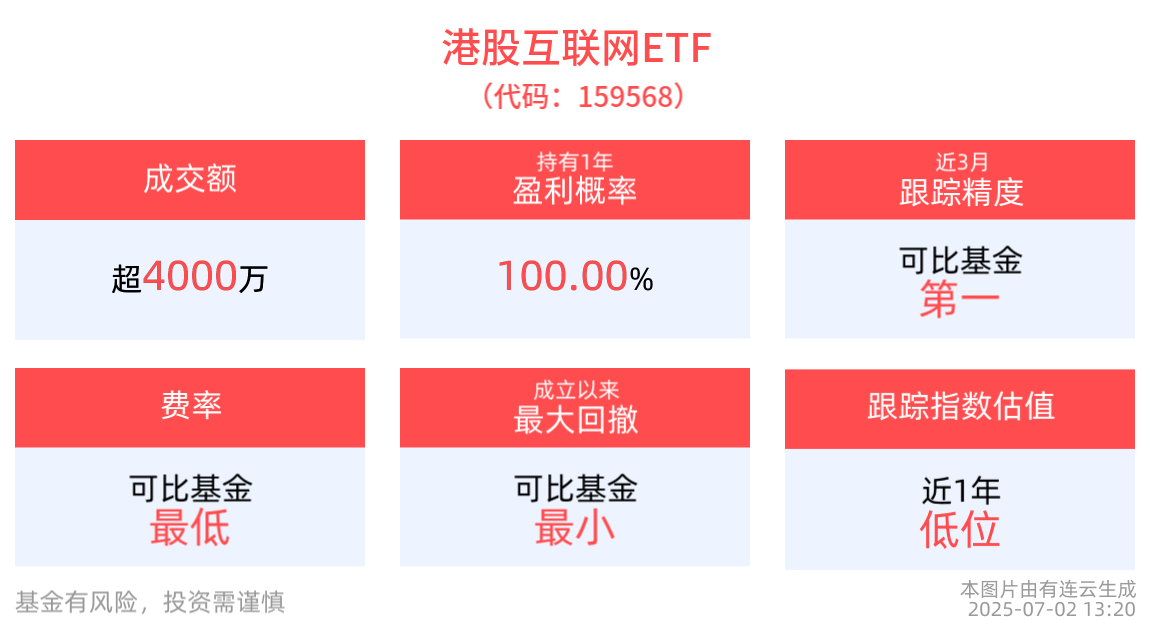
Group 1: Market Performance - As of July 2, 2025, the CSI Hong Kong Internet Index (931637) decreased by 0.88%, with mixed performance among constituent stocks [3] - The Hong Kong Internet ETF (159568) fell by 1.33%, with the latest price at 1.71 yuan, while it recorded a cumulative increase of 0.99% over the past week as of July 1, 2025 [3] - The Hong Kong Internet ETF had a turnover rate of 12.93% during the trading session, with a transaction volume of 41.67 million yuan, indicating active market trading [3] Group 2: Company Developments in Healthcare - Domestic companies like JD Health launched a self-developed medical model "Jingyi Qianxun" and established partnerships with over 150,000 pharmacies by Q1 2025 [4] - ByteDance entered the healthcare sector through acquisitions and established an AI drug development department [4] - Tencent introduced AI platforms for early disease screening and drug discovery, enhancing diagnostic efficiency for healthcare professionals [4] - Internationally, Google, NVIDIA, and Microsoft made significant advancements in AI tools for healthcare, including open-sourcing AI frameworks and developing clinical workflow assistants [4] Group 3: ETF Performance Metrics - The Hong Kong Internet ETF recorded a 54.80% net value increase over the past year, ranking 122 out of 2889 index funds, placing it in the top 4.22% [5] - The ETF achieved a maximum monthly return of 30.31% since inception, with a historical one-year profit probability of 100% [5] - The ETF's management fee is 0.50%, and the custody fee is 0.10%, which are among the lowest in comparable funds [5] - The latest price-to-earnings ratio (PE-TTM) for the index tracked by the ETF is 22.3, indicating a valuation below 80.75% of the time over the past year [5] Group 4: Index Composition - The CSI Hong Kong Internet Index consists of 30 listed companies related to internet businesses, reflecting the overall performance of internet-themed stocks within the Hong Kong Stock Connect [6] - As of June 30, 2025, the top ten weighted stocks in the index accounted for 72.11% of the total index weight, including major players like Xiaomi, Tencent, and Alibaba [6]


“夕发朝至”动卧连通京蓉,成都企业家:“时空折叠”打开产业合作新机遇
Sou Hu Cai Jing· 2025-07-02 05:35
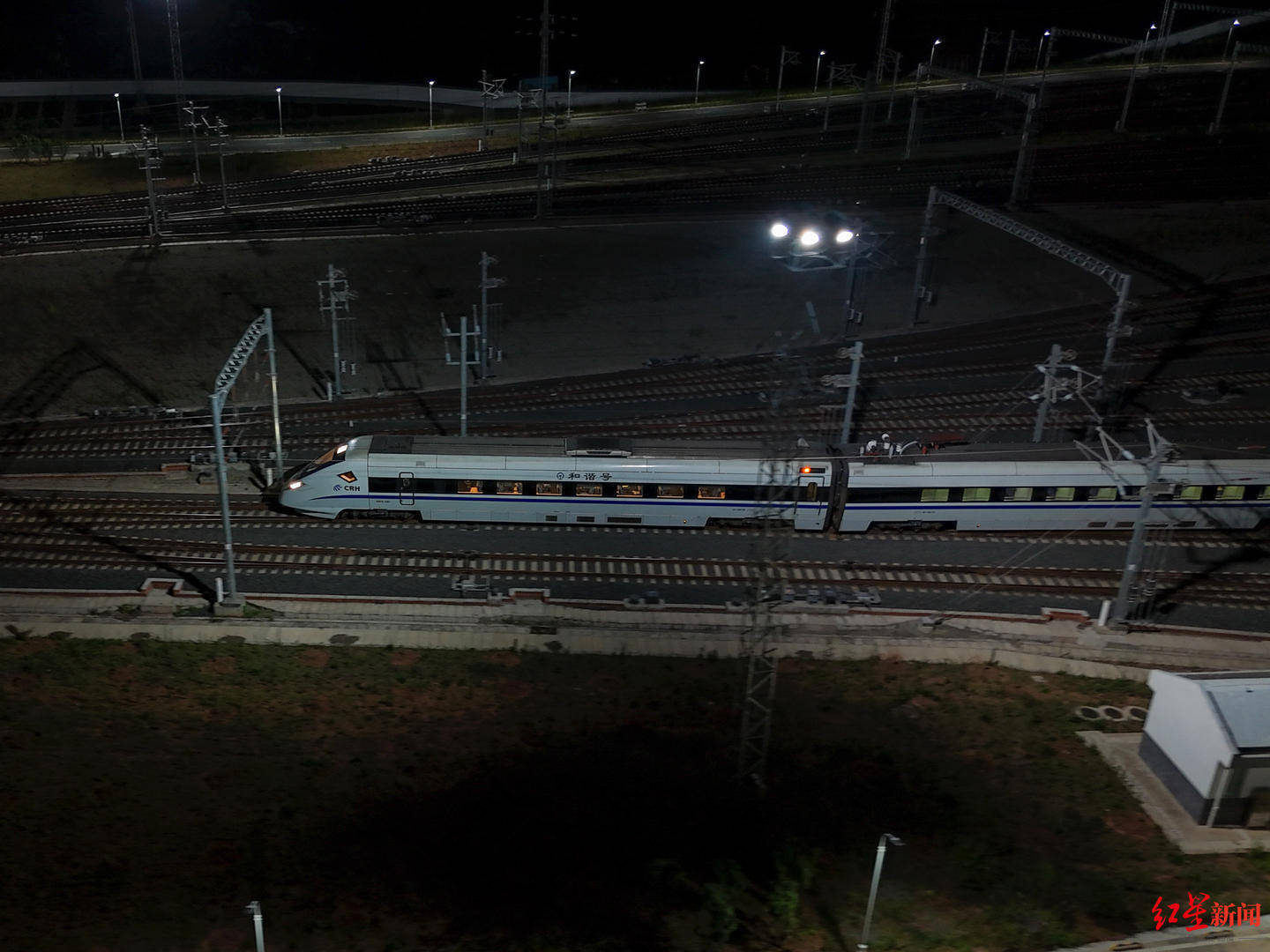
Core Viewpoint - The launch of the "evening departure, morning arrival" sleeper train from Chengdu to Beijing is set to enhance business travel efficiency and foster collaboration between the Chengdu and Beijing-Tianjin-Hebei regions, viewed as a "conveyor belt for innovative elements" and a "time ledger for business costs" [1] Group 1: Business Travel Efficiency - The new sleeper train will cover the 1800 kilometers between Chengdu and Beijing in 11 hours, allowing for daily two trips [1] - This travel mode enables entrepreneurs to save over ten days of effective working time annually, facilitating same-day communication and next-day arrival for business meetings [4] Group 2: Technological Collaboration - The train service is expected to deepen collaboration between the Chengdu humanoid robot innovation center and the resource-rich Beijing-Tianjin-Hebei region, which houses over 60% of the country's key laboratories and standard organizations in robotics [4] - The train will significantly shorten the time required for technical exchanges, allowing high-end talent to move freely between Chengdu and Beijing [6] Group 3: Healthcare and Medical Technology - The sleeper train is seen as a regional integration accelerator, linking Chengdu's technological innovation capabilities with the robust hospital systems in Beijing-Tianjin-Hebei [10] - It facilitates easier access to top clinical experts and research platforms, enhancing collaboration in medical technology and AI remote surgery [10][11] Group 4: Entrepreneurial Opportunities - The train service is expected to create new industrial opportunities, as companies like Xingti Glory are expanding their operations in Chengdu while maintaining connections with Beijing [18] - The establishment of a rocket assembly base in Chengdu is anticipated to enhance the local aerospace industry and attract investment [18]
塞力斯医疗科技集团股份有限公司可转债转股结果暨股份变动公告
Shang Hai Zheng Quan Bao· 2025-07-01 20:35
Summary of Key Points Core Viewpoint - The announcement provides an update on the conversion of the company's convertible bonds into common shares, detailing the cumulative conversion amounts and the remaining unconverted bonds. Group 1: Conversion Status - As of June 30, 2025, a total of 1.719 million yuan of "Saili Convertible Bonds" has been converted into 114,799 shares, representing 0.0560% of the company's total share capital before conversion [2][9]. - The amount of unconverted "Saili Convertible Bonds" as of June 30, 2025, is 417.811 million yuan, accounting for 76.9010% of the total issuance [2][9]. - During the period from April 1, 2025, to June 30, 2025, the cumulative conversion amount was 17,000 yuan, resulting in 1,414 shares, which is 0.0007% of the total share capital before conversion [2][9]. Group 2: Convertible Bond Issuance Overview - The company issued 5.4331 million convertible bonds on August 21, 2020, with a total value of 54.331 million yuan and a maturity of six years [3][4]. - The initial coupon rates for the bonds are set at 0.50% for the first year, increasing to 3.00% by the sixth year [3]. Group 3: Conversion Price Adjustments - The initial conversion price was set at 16.98 yuan per share, which was subsequently adjusted downwards to 13.71 yuan on September 9, 2024, and further to 12.71 yuan on October 28, 2024 [5][7]. - The conversion price was later adjusted to 12.50 yuan due to share buybacks and cancellations, and then further reduced to 12.00 yuan on February 10, 2025 [8][9]. Group 4: Share Capital Changes - The total share capital increased by 1,414 shares due to the conversion of convertible bonds during the specified period [10]. - The company also experienced a reduction in share capital due to the cancellation of shares from buybacks, totaling 10,371,040 shares [11].

透视蚂蚁ESG报告:AI重点落子“金融+医疗” 子公司业务版图浮现
Zhong Guo Jing Ying Bao· 2025-07-01 11:29
Core Insights - Ant Group has released its 2024 Sustainable Development Report, focusing on creating inclusive services in the AI era and addressing social issues [1] - The report highlights a strategic refresh towards AI applications in finance, healthcare, and daily life, with a significant user base from lower-tier cities [2][3] Group 1: ESG Strategy and Focus Areas - The report has optimized its ESG topics from 19 to 13, emphasizing dual value creation in the AI era, with key issues including inclusive products, technological transformation, data security, governance, and talent development [2] - Ant Group aims to apply AI in three main areas: finance, healthcare, and daily life, with over 130 million users served by its AI assistants [2] Group 2: Financial Services and Innovations - Ant Group's core business remains in finance, with continuous technological advancements in payment methods, including the new "tap to pay" feature, which has reached over 100 million users [2] - Ant Group's subsidiary, MyBank, reported serving 68.51 million small and micro customers, leveraging AI technology for comprehensive financial services [4][5] Group 3: Healthcare Initiatives - In the healthcare sector, Ant Group has activated over 660 million users of its electronic medical insurance credentials and is expanding its digital health services [3] - The company has made significant investments in R&D, totaling 23.45 billion yuan in 2024, with a focus on AI and data technologies [3] Group 4: Global Expansion and Business Lines - Ant International has unveiled its four major business lines, including global wallet services and merchant payment solutions, serving over 1 billion merchants and 1.7 billion consumer accounts worldwide [5] - Ant Consumer Finance reported that its service "Huabei" has reached over 400 million consumers, with a significant portion from lower-tier cities [6]
王凌航:AI将重塑医疗生态,让医疗资源普惠可及
Xin Jing Bao· 2025-07-01 08:22
过去几年,人工智能在医疗健康领域的落地速度令人瞩目,北京、上海、浙江、广东等多地依托自身的 产业资源禀赋展开AI医疗的良性竞争。 这个需要AI产品具备足够优质的数据和智能化分析能力。就以皮肤拍照这个功能为例,据了解,AQ结 合全球超2000万临床病例数据库,能精准识别25种常见皮肤疾病,并给出合理健康建议,这对于皮肤科 医生来说无疑是很大的减负。 6月26日,蚂蚁集团推出的AI健康App——AQ,集成了健康科普、就诊咨询、报告解读、健康档案等超 百项AI功能,同时链接全国超5000家医院、近百万医生、近200个名医AI分身等专业医疗服务。 我认为,作为一个医疗行业的运用,蚂蚁AQ贴合了当下临床及用户需求场景。 我们已经进入了人工智能的时代,积极拥抱AI的发展已经成为全社会、全球的共识。在公共卫生健康 体系中,AI也具有非常重要的战略意义,积极引入AI已经成了一种行业共识。 我认为,AQ这样的运用将逐步改变我们对"医生""诊疗""随访""健康管理"的传统认知。与以往用于辅助 科研或后台分析的工具不同,今天的AI医疗产品正直接走向临床一线,成为医生的助手、患者的顾 问,甚至是撬动医疗体系改革的杠杆。 以前我们经常 ...
8点1氪|招聘单位回应虐猫考生进入考察公示;哪吒2下映,累计总票房154.4亿;日本将征收每人每月最高1650日元单身税
3 6 Ke· 2025-07-01 00:06
Group 1: IPO Applications - Shanghai Magnesium Health Technology Group has submitted an IPO application to the Hong Kong Stock Exchange, with joint sponsors including Goldman Sachs, CICC, and HSBC [1] - Xizhi Technology plans to issue approximately 140 million shares at an initial price of HKD 16.8 per share, aiming to raise up to HKD 23.6 billion (USD 3.01 billion) in its IPO, with Morgan Stanley and CICC as joint sponsors [2] - Huizhou EVE Energy has submitted an IPO application to the Hong Kong Stock Exchange, with CITIC Securities as the exclusive sponsor [3] - MagiTech has submitted an IPO application to the Hong Kong Stock Exchange, with joint sponsors including CICC, Citigroup, and Deutsche Bank [4] - Lens Technology has announced its global offering of H-shares, with a base offering of 262 million shares and an initial price range of HKD 17.38 to HKD 18.18, expected to list on July 9, 2025 [5] - Beijing Tongrentang Medical Investment has submitted an IPO application to the Hong Kong Stock Exchange, with CICC as the exclusive sponsor [6] Group 2: Market Developments - JD's Seven Fresh is accelerating its market coverage in North China, with new stores planned in Beijing, Tianjin, and Shijiazhuang [10] - CATL has established a new company, Times Electric Service Technology, focusing on the sales of new energy vehicles and related infrastructure [13] - LG Electronics has acquired Norway's OSO Group to expand its presence in the European HVAC market [16] Group 3: Financial Updates - The gold price per gram for major brands has dropped significantly, with Chow Sang Sang at HKD 985, down from HKD 1038, and other brands showing similar declines [9] - TikTok has launched an in-app shopping feature in Japan, allowing users to buy and sell products directly through the app [17]