水产养殖

Search documents
第八届小龙虾产业大会:小龙虾年产量超300万吨,加工业回暖
Bei Ke Cai Jing· 2025-06-17 14:10
Group 1 - The 2025 Eighth Crawfish Industry Conference was held in Yongxiu County, Jiujiang City, Jiangxi Province, focusing on "Brand Empowerment to Promote Coordinated Development of the Crawfish Industry Chain" [1] - In 2024, China's crawfish industry is expected to see a decline in primary production, a recovery in processing, and a rebound in circulation and exports, with a total farming area of nearly 30 million acres and a production exceeding 3 million tons [1][2] - The industry is becoming a vital part of ensuring food security, increasing farmers' income, and supporting rural revitalization, accounting for about 10% of the total freshwater aquaculture production in China [1] Group 2 - The conference gathered experts and industry leaders to discuss various topics, including green farming, quality seedling breeding, processing technologies, and new models for agricultural management [2] - The overall development of the crawfish industry in 2024 is stable, with production area and output remaining steady, although income from farming has decreased due to low prices [2] - Export volume and value of crawfish are expected to grow year-on-year in 2024, with the Middle East and Southeast Asia emerging as new highlights for exports [2] Group 3 - Technical exchange meetings were held to discuss intensive breeding techniques, pond farming methods, and innovative practices in Jiangxi's crawfish farming [3] - The conference emphasized the importance of technological innovation and model upgrades to enhance the competitiveness and added value of the crawfish industry [3] - The event aims to activate the rural economy and promote high-quality development in county economies through the crawfish industry [3]
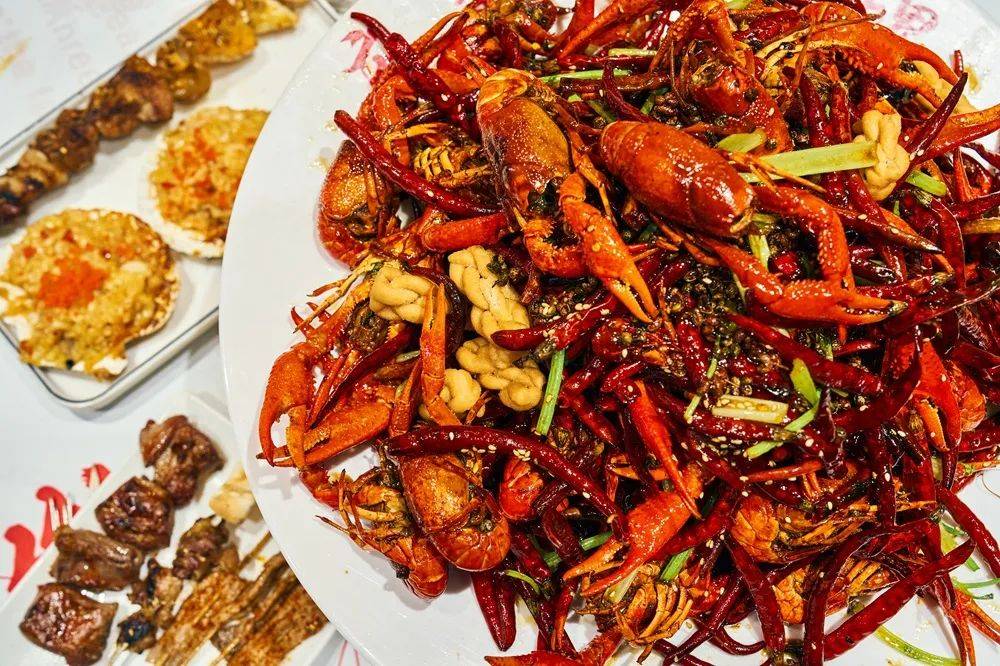
小龙虾,大降价!
Sou Hu Cai Jing· 2025-06-17 09:30
Core Viewpoint - The price of crayfish in China has significantly decreased, with some sizes dropping by over 70%, making it the cheapest time of the year for consumers [2][3]. Price Trends - In the first four months of the year, the wholesale price of crayfish peaked at 35 yuan per jin, dropping to 19 yuan per jin in May [3]. - Specific price reductions include: - 3-5 tael crayfish from 20 yuan to 10 yuan per jin - 5-6 tael crayfish from 30 yuan to 13 yuan per jin - 6-8 tael crayfish from 40 yuan to 15 yuan per jin [2]. - As of May 20, prices for different sizes were reported as follows: - Small crayfish at 10 yuan per jin - Medium crayfish at 11.5 yuan per jin - Large crayfish at 16 yuan per jin - Extra-large crayfish at 25 yuan per jin [3]. Market Dynamics - The volume of crayfish sold has increased dramatically, with daily sales rising from 2,000-3,000 jin to 30,000-50,000 jin in mid-May [4]. - The peak season for crayfish is from May to June, leading to a surge in supply and a potential price war [4][5]. - The crayfish industry in China is stabilizing, with advancements in farming techniques and expansion in traditional and emerging production areas [4]. Supply Chain and Logistics - Enhanced logistics, including temperature-controlled transportation and efficient distribution methods, have reduced transportation costs and improved delivery times [6]. - The crayfish supply chain has adapted to meet consumer demand, with a focus on fresh and quick delivery [6]. Employment and Market Development - The growing crayfish market has created new job opportunities, such as sorting workers and quality inspectors [7]. - The diversification of the dining market, including ready-to-eat and frozen products, has increased consumer choices [7]. Industry Recommendations - Industry experts suggest that regulatory measures should be implemented to prevent overproduction and excessive competition in the market [7]. - Long-term strategies should focus on scientific planning of the crayfish industry layout and technological advancements in farming practices [7].

四川泸州江北镇高密度养鱼“游”出产业新活力
Zhong Guo Chan Ye Jing Ji Xin Xi Wang· 2025-06-17 07:02
Core Insights - The project represents the first high-density fish farming initiative in Luzhou, Sichuan, showcasing an innovative model that enhances industry efficiency and increases farmers' income [1][2] - The base can raise over 100 pounds of fish per cubic meter of water, significantly surpassing traditional farming methods [1] - The facility has developed a comprehensive water quality management system to ensure optimal conditions for fish growth, which is crucial for high-density farming [1] Group 1: Project Overview - The high-density fish farming project is a pioneering effort in Luzhou, supported by government policies and subsidies, which boosts confidence in exploring large-scale aquaculture [2] - The base not only cultivates bass but also introduces sturgeon and mandarin fish, aiming to share technical expertise with local farmers and diversify the industry [2] Group 2: Technological and Environmental Innovations - The project employs advanced water quality control measures, including self-developed sewage treatment equipment and custom bacterial strains tailored to local fish species [1][2] - The dynamic regulation of oxygen levels in the water creates a healthy environment for fish, laying a solid foundation for high-density farming [1]
海大5000万元买“无刺草鱼”技术引热议,基因编辑是丰饶之角还是潘多拉魔盒
Nan Fang Nong Cun Bao· 2025-06-17 03:31
Core Viewpoint - The recent investment of 50 million yuan by Haida Group in "spine-free grass carp" gene editing technology has sparked significant discussion, highlighting the contrasting perceptions of gene editing as either a boon or a Pandora's box in agriculture [2][5]. Group 1: Gene Editing Technology Overview - Gene editing is referred to as the "5G technology" of agriculture, focusing on precise modifications of an organism's own genes without introducing foreign genes, which distinguishes it from traditional genetic modification [4][11][13]. - The efficiency of gene editing is notable, with the time required to cultivate a new variety being significantly reduced to 4-6 years compared to 8-12 years for transgenic breeding [25][26]. Group 2: Regulatory Challenges - Despite advancements, the commercialization of gene-edited animals in China faces hurdles due to stringent regulations that equate gene-edited animals with transgenic organisms, requiring extensive safety evaluations [36][37]. - Currently, there are no established safety evaluation guidelines for agricultural gene-edited animals in China, which hampers their market entry [42][43]. Group 3: Global Context and Future Prospects - Internationally, countries like Argentina, the USA, and Japan have approved various gene-edited animal products, indicating a faster pace of commercialization compared to transgenic animals [72]. - The potential for China's gene-edited animals to capitalize on the current global momentum could significantly influence the future landscape of the aquaculture industry [73].


A股水产概念持续走高,中水渔业触及涨停,国联水产、大湖股份、獐子岛、神农种业、百洋股份、好当家等跟涨。
news flash· 2025-06-17 01:40
Group 1 - The A-share aquatic product sector continues to rise, with Zhongshui Fisheries hitting the daily limit increase [1] - Other companies such as Guolian Aquatic Products, Dahu Co., Zhangzidao, Shennong Seed Industry, Baiyang Co., and Haodangjia also experienced gains [1]


珠海首次!室内循环水成功孵化石斑鱼
Nan Fang Nong Cun Bao· 2025-06-16 11:30
Core Viewpoint - The successful indoor recirculating water incubation of grouper fish in Zhuhai marks a significant advancement in agricultural research and technology, showcasing the potential for innovative aquaculture practices in the region [11][21]. Group 1: Incubation Process - The first batch of fish eggs, weighing 1.2 pounds and approximately 1 million eggs, was successfully incubated, with expectations for a good harvest [2][6]. - The incubation process involves several stages, including hatching the eggs into fish fry, then nurturing them into juvenile fish, requiring meticulous care akin to raising infants [7][8]. - The first incubation attempt on April 4 resulted in 240,000 fry being sold by May 18, indicating a positive market response and prompting a second incubation [15][16]. Group 2: Technological Innovation - The indoor recirculating water incubation system is a key innovation in aquaculture, often referred to as the "chip" of the aquaculture industry, which enhances the success rate of fish hatching [23][24]. - The system includes components such as breeding pools, ecological processors, protein separators, temperature control systems, water quality monitoring systems, and automatic feeding systems, ensuring stable water quality throughout the incubation process [42][44]. - The technology has received three national utility model patents, highlighting its uniqueness and potential impact on the industry [44]. Group 3: Challenges and Expertise - Incubating grouper fish is particularly challenging, with critical stages including the opening of the mouth within three days of hatching and the metamorphosis process, which requires careful management to prevent larger fry from consuming smaller ones [25][26][28]. - The team includes a Hong Kong aquaculture expert, Zhang Zhiming, whose expertise is crucial for overcoming the difficulties associated with grouper incubation [26][34]. Group 4: Future Prospects - The company plans to expand its operations with the construction of additional facilities and breeding pools, which will enhance the capacity to grow juvenile grouper fish into larger sizes, thereby increasing economic benefits [57][58]. - The successful incubation of grouper fish is part of a broader strategy to develop sustainable aquaculture practices and contribute to rural revitalization efforts [60][61].
广东阳江:法治助推特色农业健康发展
Ren Min Wang· 2025-06-16 01:13
Core Viewpoint - The development of aquaculture in Yangjiang, Guangdong, has become a key industry for agricultural growth and farmer income, but it has also led to an increase in disputes, prompting the establishment of a comprehensive judicial service system to promote healthy agricultural development through legal means [1]. Group 1: Aquaculture Industry Development - Yangjiang is known for its rich agricultural resources and has developed a modern aquaculture industry, particularly in oyster farming, which is a significant economic pillar for the region [2][4]. - The "Chengcun oyster" from Yangxi County is recognized as a national geographical indication product and has a history of nearly 200 years, contributing to the local economy [2]. Group 2: Dispute Resolution Mechanisms - The establishment of "judge workstations" has facilitated the rapid resolution of disputes, allowing for immediate involvement in grassroots conflict mediation [4]. - In a recent case, a dispute arose between two villagers over damaged oyster rafts, which was resolved through mediation by a local judge, emphasizing the importance of timely conflict resolution to prevent further losses [3][4]. Group 3: Judicial Efficiency and Community Engagement - The Yangjiang court system has implemented a "1+6+N" grassroots governance model, setting up 199 "judge workstations" to engage directly with community disputes and support industry development [4]. - The court has focused on improving judicial efficiency, with a decrease in case ratios from 1:1.58 in 2022 to 1:1.44 in 2024, indicating a more effective resolution process [8]. Group 4: Legal Education and Risk Prevention - The Yangjiang court has initiated educational programs for local oyster farmers to raise awareness about legal risks in transactions, emphasizing the importance of written agreements and proper identification of trading partners [9][10]. - A judicial service brand called "Qin Qing Yi Qi Xing" has been established to provide tailored legal support to local businesses, benefiting over 200 enterprises by addressing common legal issues [10].
智能化养鱼效益高
Jing Ji Ri Bao· 2025-06-15 22:00
Core Insights - The article highlights the development of the aquaculture industry in Dancheng County, Henan Province, focusing on the establishment of the Kangquan Ecological Aquaculture Base, which utilizes modern farming techniques to enhance productivity and economic benefits [1][2]. Group 1: Aquaculture Development - Dancheng County has revitalized 21,500 acres of abandoned ponds and idle land to promote modern aquaculture, aiming to increase agricultural efficiency, rural vitality, and farmers' income [1]. - The Kangquan Ecological Aquaculture Base employs an "ecological multi-layer mixed breeding" model, resulting in an increase of approximately 2,000 pounds per acre in yield and a 19% improvement in economic benefits compared to traditional methods [1]. - The county has successfully applied for a provincial-level fishery industry demonstration park project and collaborates with local research institutions to promote modern aquaculture technologies [1]. Group 2: Industry Management and Support - Dancheng County established a Fishery Development Association, involving 98 aquaculture households and cooperatives, which has positively impacted over 1,000 farmers [2]. - A fishery big data management platform has been created to monitor aquaculture conditions remotely and provide online expert diagnosis and services, enhancing the digital management of the industry [2]. - The county has implemented a development plan for the aquaculture industry, committing at least 20 million yuan annually to support enterprises with strong income-generating capabilities and offering financial incentives for top-performing towns in aquaculture development [2].
从“深海”到“餐桌”,日照打造三文鱼全产业链发展新样板
Qi Lu Wan Bao Wang· 2025-06-14 13:37
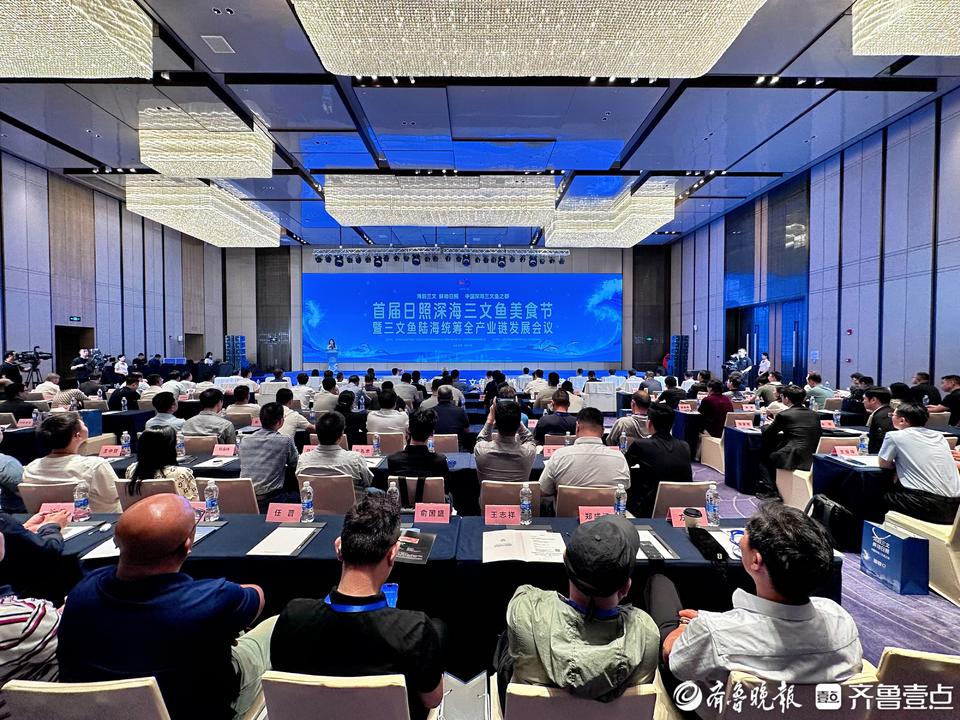
6月13日,以"海韵三文鲜动日照中国深海三文鱼之都"为主题的首届日照深海三文鱼美食节暨三文鱼陆海统筹全产业链发展会议在日照举 行,吸引了众多业内专家、企业代表及美食爱好者的关注。 如今,日照已围绕三文鱼全产业链展开布局,建成三文鱼苗种产业基地、孵化基地、良种基地等陆基工厂化苗种繁育车间,具备年产300 万尾鱼苗的能力。创新推行"山海接力""陆海统筹"养殖模式,吸引瑞沣、天旺、万禾等多家民营企业与社会资本参与。目前,全市拥有7 家三文鱼育养企业,布局11座桁架式养殖网箱,建成1000余口重力式深水网箱,养殖水体达25万立方米。日照计划未来积极引进深远海 养殖网箱与智能化养殖平台,加快产业标准体系建设,全力打造全国首个三文鱼全产业链发展示范区。 活动现场,与会来宾通过品牌宣传片深入了解日照三文鱼产业发展情况,山东省农业农村厅、日照市领导的致辞,更坚定了企业单位发 展三文鱼产业的信心。来自中国水产科学研究院、中国海洋大学、上海交通大学等机构及相关企业的专家学者齐聚一堂,围绕产业发展 现状、趋势与挑战展开深入探讨。专家们指出,凭借优越的海洋资源与完善的产业基础,日照在三文鱼养殖、加工及市场拓展方面成绩 斐然,陆海接力 ...
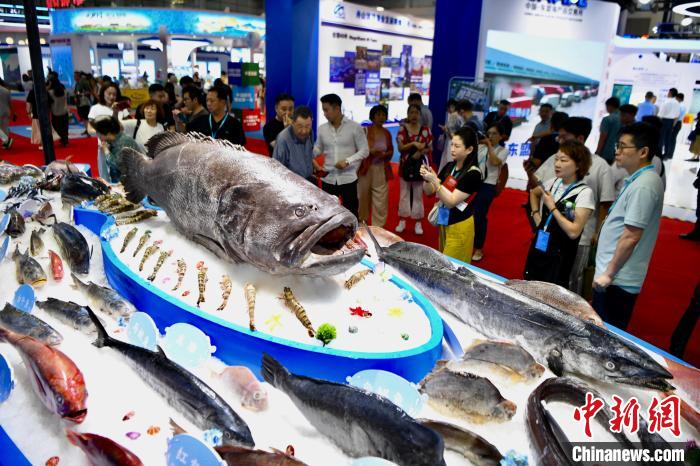
福州渔博会开幕 逾30个国家和地区企业参展参会
Zhong Guo Xin Wen Wang· 2025-06-13 15:49
Group 1 - The 17th China (Fuzhou) International Fisheries Expo has commenced in Fuzhou, attracting over 30 countries and regions to participate [1][3] - The expo features a comprehensive display area of 57,000 square meters with nearly 500 enterprises showcasing their products across various specialized zones, including international, seafood prepared dishes, catering ingredients, and seafood processing [3] - Notably, the number of international exhibition groups has reached a record high, with countries like Thailand, Vietnam, Indonesia, and South Korea participating in group formats, and Iran and Brunei making their debut at the expo [3] Group 2 - The event highlights the potential for cooperation between China and Brazil in the fisheries sector, as Brazil's special advisor to the Minister of Fisheries and Aquaculture expressed eagerness to deepen collaboration with China [3] - Thai seafood products, such as fish paste rose and crispy fish snacks, have garnered attention, with Thai exhibitors aiming to expand their market presence in China [3] - Concurrently, a forum on marine economy and fisheries development discussed topics such as the current state of Asian fisheries, innovations in Thai marine aquaculture, and the role of AI in empowering the entire fisheries industry chain, providing new insights for international collaboration and industry synergy [4]