
航空航天

Search documents
股价提前异动!德力股份新主火速生变,翼元航空将入主
Bei Jing Shang Bao· 2025-12-24 14:35
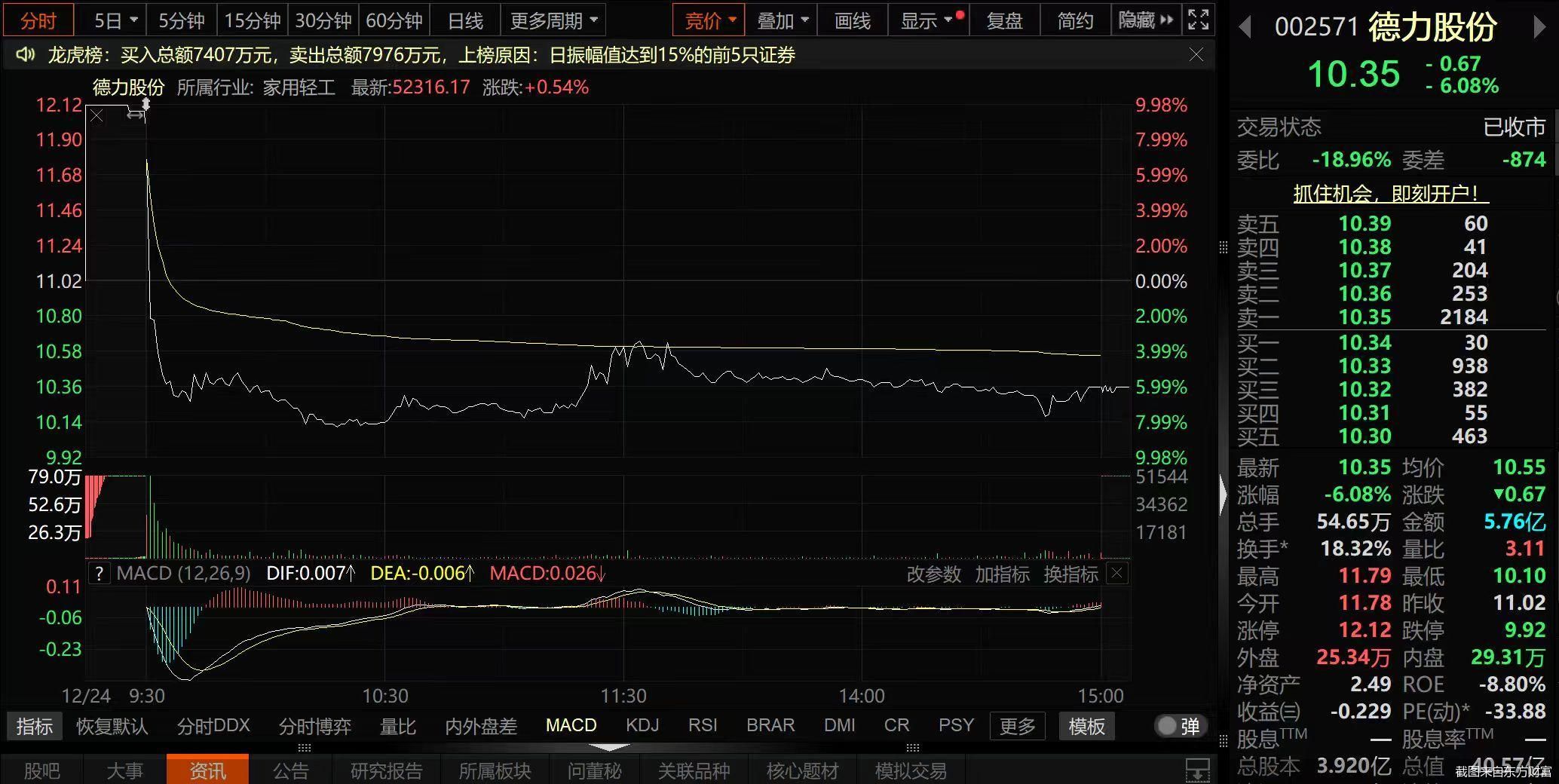
Core Viewpoint - The ownership change of Delixi Co., Ltd. (德力股份) has been announced, with the new controlling shareholder being Liao Ning Yiyuan Aviation Technology Co., Ltd. (翼元航空), leading to significant market reactions and concerns regarding the company's future direction and financial health [1][3][5]. Group 1: Ownership Change Details - The new share issuance plan involves a change in the controlling shareholder from Xinjiang Bingxin Jian High-tech Industry Investment Operation Partnership to Yiyuan Aviation, with the actual controllers being Wang Tianzhong and Xu Qinghua [1][3]. - The stock price of Delixi experienced a decline of 6.08% on December 24, closing at 10.35 yuan per share, following the announcement of the new share issuance plan [1][3]. - The new issuance plan aims to raise up to 885 million yuan, with the shares priced at 7.53 yuan each, and all proceeds intended for enhancing liquidity or repaying bank loans [3][5]. Group 2: Financial Performance and Challenges - Delixi has reported net losses for three consecutive years, with a loss of approximately 89.8 million yuan in the first three quarters of the current year [1][11]. - The company's asset-liability ratio has been increasing, reaching 68.08% by the end of 2024, indicating growing financial pressure [10]. - Revenue for Delixi has been declining, with a reported revenue of approximately 1.19 billion yuan in the first three quarters of this year, a year-on-year decrease of 11.07% [11]. Group 3: New Shareholder Background - Wang Tianzhong and Xu Qinghua, the new controllers, are associated with Huatian Aviation Technology Co., Ltd., which specializes in aerospace and deep-sea equipment, indicating a potential shift in Delixi's strategic focus [7][8]. - Huatian achieved revenues of approximately 190 million yuan and 77.9 million yuan for 2024 and the first nine months of 2025, respectively, with net profits of 62 million yuan and 14.6 million yuan [8]. Group 4: Market Reactions and Regulatory Concerns - The stock price of Delixi saw unusual fluctuations prior to the announcement, raising concerns about potential insider trading investigations [4][6]. - The change in the share issuance plan occurred just over two months after the previous announcement, with the fundraising target increasing from 720 million yuan to 885 million yuan [5].


中航高科:截至2025年12月19日公司股东户数101577户
Zheng Quan Ri Bao Wang· 2025-12-24 12:18
Group 1 - The core point of the article is that AVIC High-Tech (600862) reported a total of 101,577 shareholders as of the market close on December 19, 2025 [1]

A股公告精选 | 贵州茅台(600519.SH)拟回购不超过30亿股份 众泰汽车(000980.SZ)与两家债权人达成和解
智通财经网· 2025-12-24 12:08
Group 1 - Spring Technology has received a procurement order for robot products from Lexiang Technology amounting to 43.2628 million yuan, which signifies recognition of its manufacturing technology and lays the foundation for future business expansion in robot products [1] - Huayin Technology signed a framework procurement contract worth 254 million yuan for special functional materials for aircraft fuselage, reflecting the implementation of its strategic layout centered on aviation engines and expanding into high-end manufacturing [2] - Wankai New Materials' subsidiary signed a procurement contract with Lingxin Qiaoshou for lightweight components and assembly services for humanoid robot arms, with a total contract value of 10 million yuan [3] Group 2 - Nanshan Aluminum established a wholly-owned subsidiary in Hainan with an investment of 5 million yuan to leverage the Hainan Free Trade Port policy and enhance its regional industrial layout [4] - Guizhou Moutai plans to repurchase shares worth between 1.5 billion and 3 billion yuan at a price not exceeding 1863.67 yuan per share, aimed at reducing registered capital [13] - Zhongtai Automobile reached a settlement with two banks to avoid large financial disputes, allowing for the release of frozen assets and facilitating operational liquidity [12]


俄罗斯苏-57战机搭载新型发动机首飞
Qi Lu Wan Bao· 2025-12-24 10:54
Core Viewpoint - The Russian National Technology Group announced that the Su-57 fighter jet has successfully flown with the new "177 type" engine, marking a significant advancement in its capabilities [1] Group 1 - The flight tests for the fifth-generation Su-57 fighter jet equipped with the "177 type" engine have commenced [1] - The new engine is developed by the United Engine Corporation specifically for fifth-generation aircraft [1] - The "177 type" engine features lower fuel consumption and significantly improved lifespan metrics [1]
助力企业拓市场 成都金牛区举行产业生态供需对接活动
Mei Ri Jing Ji Xin Wen· 2025-12-24 09:37
Core Insights - Chengdu's Jin Niu District held an industry supply-demand matching event focusing on ten key industrial chains, including rail transit, low-altitude economy, aerospace, biomedicine, and artificial intelligence, gathering nearly 200 enterprises and service institutions [1][2] Group 1: Event Overview - The event adopted an "industry chain group" participation model, with each group consisting of over 20 industry representatives, including chain leaders, local government departments, financial institutions, law firms, human resources, intellectual property service agencies, and industry associations [1] - The event aimed to upgrade from "single enterprise service" to "industry chain ecological empowerment" through collaborative and scenario-based exchanges [1] Group 2: Key Announcements - The Jin Niu District officially released and detailed the "Face-to-Face Weekly Chain Leader Reception Work Mechanism," led by district leaders and industry chain leaders to address enterprise demands and development challenges [1] - The mechanism is part of Jin Niu District's innovative measures to optimize the business environment and enhance service efficiency [1] Group 3: Supply-Demand Matching and Opportunities - The event featured representatives from key enterprises in five major industries, sharing over 50 cooperation demands [2] - Four main categories of supply-demand and cooperation lists were presented, including: - A "Private Investment Opportunity List" with 50 opportunities totaling over 38 billion yuan [2] - A "Jin Niu-made 'Hot Products' and Enterprise Supply-Demand Capability List" featuring over 120 products from more than 110 enterprises [2] - An "Excellent Enterprise Building Opportunity List" with 62 key buildings covering over 5000 square meters and a total investment area of 2.3 million square meters [2] - A "Jiaozi Cold Chain Logistics Base Project Cooperation Demand List" involving a total area of 207 acres and a total investment of 4 billion yuan [2] Group 4: Future Plans - Jin Niu District plans to continue organizing "one chain, one special session" matching activities, focusing on strengthening industrial chains, optimizing service chains, and enhancing value chains [2] - The district will leverage a "small center + large platform" coordination model to follow up on cooperation intentions established during the event, facilitating the transformation of opportunities into tangible projects for high-quality development [2]
华秦科技签订2.54亿元销售合同
Zhi Tong Cai Jing· 2025-12-24 08:16
Group 1 - The company, Huajin Technology (688281.SH), has signed a framework procurement contract with a client, with a total contract value of 254 million yuan (including tax) [1] - The contract pertains to special functional materials for aircraft fuselage [1] - This transaction is part of the company's routine operational sales contracts and is expected to have a positive impact on the company's operating performance if executed smoothly [1]

航材股份:未来将持续关注在商业航天方面的商业机会
Ge Long Hui· 2025-12-24 08:03
Group 1 - The company is in the early stages of commercial aerospace and currently, the revenue from this sector constitutes a low percentage of total operating income [1] - The company will continue to monitor business opportunities in the commercial aerospace sector in the future [1]

产品出海,枢纽联通:摩洛哥投资与出口的双轮驱动
Sou Hu Cai Jing· 2025-12-24 07:58
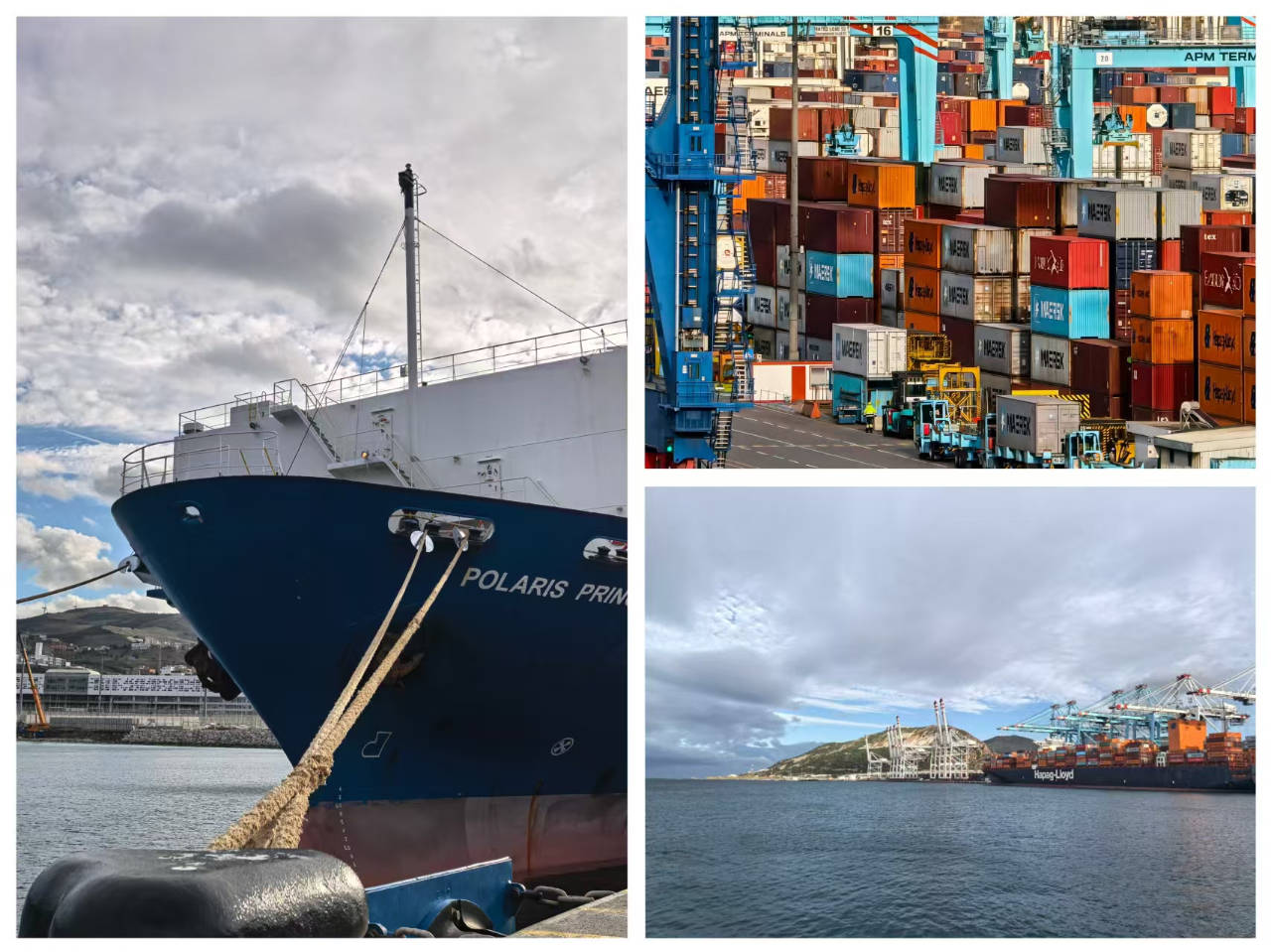
Core Insights - Morocco is transforming into a pivotal point for intercontinental supply chains, leveraging its unique agricultural exports and the operation of world-class ports like the Tangier Mediterranean Port [1][4] - The country is increasingly attracting international investments through systematic policies, establishing a development pattern that connects product exports with logistics hubs, thereby enhancing its role in the global economic system [1][4] Agricultural Exports - Morocco has evolved from a traditional supplier to a significant exporter of high-value agricultural products, ranking among the top suppliers of tomatoes and citrus fruits globally [4] - Over the past 20 years, Morocco's total fruit and vegetable production has increased by 25%, with fruit production rising by 33% from under 4 million tons to over 5 million tons, and vegetable production growing by 17% [4] - The agricultural export value has surged nearly 500% over the past two decades, with tomato exports to Europe projected to reach €1 billion in 2024 [4] - For the 2024-2025 season, Morocco's fruit and vegetable exports are expected to reach 1.6 million tons, marking an 18% year-on-year increase [4] Market Expansion - The Asian market is emerging as a new growth area for Moroccan agricultural exports, with significant increases in the export of fruits and vegetables, particularly blueberries and citrus products [5] - Modern processing centers have been established to cater specifically to the Asian market, showcasing the potential for further growth in this region [5] Logistics and Infrastructure - Morocco has developed a dual logistics network of air and sea transport to ensure the freshness of its agricultural products, with direct cargo routes to Hong Kong and Singapore for high-value items [8] - The Tangier Mediterranean Port plays a crucial role in supporting Morocco's agricultural exports, ranking 17th among the world's major container ports, with a throughput of 141.2 million tons in 2024, accounting for nearly 59% of the country's total port throughput [11][15] - The port's infrastructure has seen significant growth, with a 15.2% increase in total throughput in 2024, driven by simultaneous growth in imports, exports, and transshipment [11] Investment and Economic Strategy - Morocco is implementing a dual-engine strategy focused on investment and export, attracting investors from various sectors including automotive, battery, aviation, textiles, and digital industries [16][18] - The Moroccan Investment and Export Development Agency is actively supporting local businesses and SMEs in expanding their global market presence, aiming to establish "Made in Morocco" as a credible international brand [18] - In 2024, Morocco's goods trade export value reached $45.49 billion, a 5.8% increase, with key exports including automobiles ($15.76 billion), phosphates ($8.67 billion), and agricultural products ($8.58 billion) [20]
蓝箭航天完成IPO辅导,商业航天继续飙升,航空航天ETF(159227)大涨2.81%
Mei Ri Jing Ji Xin Wen· 2025-12-24 07:49
Core Viewpoint - The A-share market indices collectively rose, with the commercial aerospace sector maintaining strong momentum, highlighted by significant gains in related stocks and the completion of Blue Arrow Aerospace's IPO guidance work, indicating a pivotal step in its capital market journey [1] Group 1: Market Performance - As of 13:22, the Aerospace ETF (159227) increased by 2.81%, with a trading volume of 271 million yuan, leading its category [1] - Key stocks such as New Jingang and China Satellite reached their daily limit, while others like Guanglian Aerospace, Shanghai Hanxun, and Zhenxin Technology also saw gains [1] Group 2: Industry Developments - Zhongyin Securities believes that the commercial aerospace theme is entering a "warming" phase, supported by improved top-level design and new policy backing, which clarifies the development blueprint for the industry [1] - The recent acceleration in the launch of low-orbit satellite networks for satellite internet in China is expected to lead to a normalized and high-frequency launch phase, benefiting the upstream and downstream of the industry chain [1] Group 3: ETF and Sector Composition - The Aerospace ETF (159227) closely tracks the National Aerospace Index, covering leading companies across the entire industry chain, including fighter jets, aircraft engines, rockets, missiles, satellites, and radars, aligning perfectly with the "integrated air and space" strategic direction [1] - The commercial aerospace concept accounts for a high weight of 64% within the ETF, with top ten holdings including Aerospace Development, China Satellite, Aerospace Electronics, AVIC Aircraft, and AVIC High-Tech [1]
下好“一盘棋”唱好“双城记”成渝双核联动联建积厚成势
Si Chuan Ri Bao· 2025-12-24 07:27
Core Insights - The Chengdu-Chongqing Economic Circle is rapidly developing, with the Chengdu-Chongqing dual core expected to achieve a GDP of 4.87 trillion yuan in 2024, accounting for 55.83% of the economic circle [1] - The dual core has established a three-tier cooperation mechanism to enhance collaboration between the two cities, focusing on five key areas of development [1] Economic Performance - In the first half of this year, the Chengdu-Chongqing dual core achieved a GDP of 2.47 trillion yuan, with Chengdu contributing 1.21 trillion yuan, representing 57.2% of the economic circle [1] - The cumulative operation of the China-Europe Railway Express has surpassed 120,000 trains, with 38,000 trains originating from the Chengdu-Chongqing brand, maintaining a leading position in the country [2] Infrastructure Development - The Chengdu-Chongqing dual core is enhancing infrastructure connectivity, with daily high-speed train services increasing to 102 pairs and average intervals reduced to 5-10 minutes [2] - The two cities are jointly working on the construction of a world-class airport cluster, aiming to improve international air rights and resource allocation [2] Industrial Collaboration - The Chengdu-Chongqing region has developed two national advanced manufacturing clusters, with a total scale exceeding 2.2 trillion yuan, focusing on electronic information and biomedicine [4] - The automotive industry cluster has attracted over 600 smart connected vehicle component companies, with significant advancements in hydrogen fuel cell vehicles and electric vehicles [5] Innovation Ecosystem - The Chengdu-Chongqing dual core aims to build a nationally influential technology innovation center, with initiatives for policy sharing and collaborative research [8] - The establishment of the first national laboratory in the western region and various collaborative laboratories is underway to support innovation in multiple sectors [8] Financial Integration - The dual core is enhancing financial services to support the real economy, including the establishment of a cross-regional foreign debt facilitation pilot and a unified rural property trading market [9][10] - Collaborative financial initiatives have led to the creation of investment funds exceeding 15 billion yuan to support strategic emerging industries [10] Public Service Enhancement - The implementation of a credit report system to replace multiple compliance certificates is set to improve efficiency for businesses operating across the two cities [11] - A cultural tourism corridor has been established, featuring a joint card for over 60 scenic spots, promoting integrated cultural and tourism development [11][12]