文化产业

Search documents
文化新质生产力如何推动“两个文明”相协调的现代化?
Xin Lang Cai Jing· 2026-01-13 00:13
Group 1 - The core viewpoint emphasizes that high-quality development is a fundamental principle and primary goal during the "14th Five-Year Plan" period, with cultural new productive forces playing a crucial role in promoting this development [1] - Cultural new productive forces are driving a systematic reconstruction of material civilization, influencing production practices and consumption methods beyond just technological aspects [2] Group 2 - Cultural new productive forces are reshaping cultural production practices, transitioning from traditional content reproduction to autonomous generation, significantly enhancing content supply capabilities through technologies like AI-generated content (AIGC) [2] - The production logic has evolved, redefining production boundaries and creative roles, while platform-based and networked production fosters interactive and collaborative creation processes [2] - Cultural production is expanding from traditional industries into broader social practice fields, facilitating cross-industry collaboration and making cultural industries a vital force for multi-industry integration [2] Group 3 - Cultural new productive forces are reconstructing cultural consumption patterns, shifting from one-way acceptance to co-creation, where consumers actively participate in cultural value reproduction [3] - Consumption behavior is increasingly networked and collaborative, relying on algorithmic recommendations and social connections, forming a synergistic network of "algorithm-user-content" [3] - The nature of cultural consumption is evolving from mere possession of symbols to their reproduction, with digital tools enabling the re-encoding and meme-like dissemination of cultural symbols [3] Group 4 - Cultural new productive forces support the elevation of spiritual civilization by embedding cultural innovation and ideological production into social sciences and moral thought, driving overall advancement [4] Group 5 - The "14th Five-Year Plan" suggests leveraging new technological revolutions and industrial transformations to enhance the overall effectiveness of the national innovation system, fostering a collaborative innovation framework among education, technology, and culture [5] - In education, digital and intelligent technologies are transforming teaching from one-way knowledge transfer to participatory meaning generation, cultivating modern citizens with innovative capabilities [5] - In technology, scientific research is shifting towards cultural rationality, enhancing the cultural connotation of technological innovation [5] - In culture, new productive forces are leading to a smart phase of cultural production, expanding the depth of cultural content through sharing and co-creation [5] Group 6 - Cultural new productive forces are reinforcing the socialist moral framework through digital dissemination and interactive networks, promoting the core socialist values in social life [6][7] - Public morality is being transformed from promotional guidance to participatory engagement, with systems like credit ratings enhancing the feedback mechanism for public behavior [7] - Digital narratives and network culture are evolving family ethics from static teachings to dynamic generation, allowing traditional virtues to be expressed in new cultural contexts [7] Group 7 - Cultural new productive forces are essential for constructing and disseminating a new form of human civilization, facilitating the coordinated development of material and spiritual civilizations [8] - The transition from efficiency-driven material civilization to culture-empowered production processes enhances the humanistic and ecological aspects of material products [8] - The spiritual civilization is evolving from mere ideological declarations to experiential and shareable realities, with digital arts and online education expanding the social foundation of spiritual production [8] Group 8 - The development quality of cultural enterprises and industries is being enhanced, reflecting a people-centered approach that ensures cultural consumption meets diverse needs while reinforcing social value [8] - The integration of technology, systems, and values in cultural new productive forces supports the global dissemination of Chinese civilization, transforming it into an interactive and co-creative process [8]
学习规划建议每日问答丨如何理解大力发展文化旅游业
Xin Hua She· 2026-01-12 13:21
Core Viewpoint - The article emphasizes the importance of integrating culture and tourism to enhance economic and social development, as outlined in the Central Committee's proposal for the 15th Five-Year Plan, highlighting the role of cultural tourism in building a culturally strong and tourism-oriented nation [1] Group 1: Industry Significance - Cultural tourism is a vital part of the national economy and a key avenue for meeting the public's demand for a better life, characterized by creativity, sustainability, and low resource consumption [2] - The cultural tourism sector has shown significant growth, with projected revenues of approximately 19.1 trillion yuan in 2024, reflecting a 7.1% increase, and domestic travel expenditures expected to reach about 5.8 trillion yuan, marking a 17.1% rise [2] Group 2: Development Strategies - The article outlines four key areas for advancing cultural tourism: 1. Cultivating new business models that integrate culture and tourism, enhancing the quality of tourism through cultural elements and promoting cultural consumption through tourism [3] 2. Promoting technological innovation in culture and tourism, leveraging technologies like 5G and big data to enhance traditional cultural industries and improve tourism service quality [4] 3. Coordinating domestic and international markets by enhancing cultural exchanges and encouraging competitive practices among cultural and tourism enterprises [4] 4. Improving policy support for cultural tourism, including financial backing and regulatory frameworks to foster investment and development in the sector [4]
证券力量推动文化强国建设的时代实践
Zheng Quan Shi Bao Wang· 2026-01-12 10:59
Group 1 - The relationship between culture and capital is undergoing profound changes, with the securities industry playing an increasingly significant role in supporting and leading cultural development [1][7] - The securities industry is becoming a vital force in modernizing, scaling, and professionalizing the cultural industry, providing comprehensive support through a multi-layered financing system [1][2] - Cultural enterprises are experiencing a transformation in their operational standards and governance structures due to the involvement of securities institutions, which enhances their market value and optimizes the cultural industry structure [1][2] Group 2 - The capital market is facilitating the conversion of cultural elements into tangible value and optimizing resource allocation, addressing long-standing challenges in the marketization and capitalization of cultural resources [2][3] - The securities industry is establishing valuation logic based on core cultural elements, enabling cultural enterprises to engage in capital operations with their unique creative assets [2][3] - Through various financial mechanisms, the capital market is enhancing the efficiency of the cultural industry chain and expanding the comprehensive revenue streams of cultural resources [2][3] Group 3 - The digital culture sector is the fastest-growing segment of the cultural industry, with the securities industry providing essential support for its expansion and upgrade through capital guidance and technology investment [3][4] - Securities institutions are facilitating the entry of digital cultural enterprises into the capital market, enabling them to secure larger funding for technological development and content innovation [3][4] - The integration of technology and culture is being accelerated by the securities industry, enhancing production efficiency and diversifying cultural product forms [3][4] Group 4 - The securities industry is promoting the optimization of governance structures in cultural enterprises, ensuring that cultural content production aligns with public cultural values [5][6] - As cultural enterprises enter the capital market, their organizational structures and decision-making processes become more transparent and professionalized, leading to improved internal governance [5][6] - The industry is also enhancing public engagement in cultural construction through investor education and cultural outreach initiatives [5][6] Group 5 - The securities industry is aiding the international dissemination of Chinese culture and enhancing cultural soft power through global capital allocation and cross-border investment platforms [6][7] - By facilitating overseas listings and international investment funds for cultural enterprises, the securities industry is helping expand cultural brands into global markets [6][7] - Capital support for the internationalization of cultural technology and digital content is enriching the expression and dissemination of Chinese culture on the global stage [6][7]
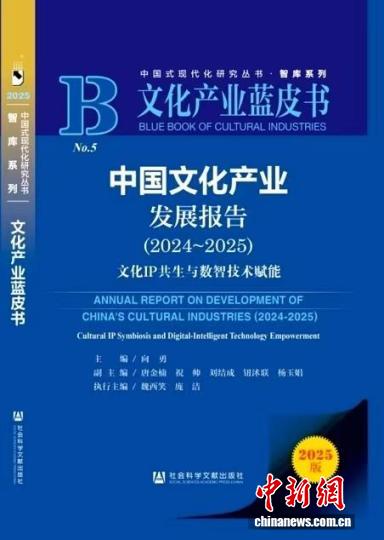
《中国文化产业发展报告(2024 ~ 2025)》发布
Zhong Guo Xin Wen Wang· 2026-01-12 10:54
Core Insights - The report titled "China Cultural Industry Development Report (2024-2025)" emphasizes the theme of "Cultural IP Symbiosis and Digital Technology Empowerment" and outlines the overall blueprint for China's cultural industry in the digital intelligence era [1][3]. Group 1: Macro Overview - The first section provides a comprehensive summary of the macro trends, basic characteristics, and phase achievements of China's cultural industry from 2024 to 2025, analyzing industrial structure adjustments and growth momentum transformations [3][4]. - It highlights the strategic direction and overall framework of China's cultural industry in the new development stage [3]. Group 2: Cultural Consumption and Value Innovation - The second section focuses on the upgrade of cultural consumption, exploring how cultural value drives consumption growth, particularly through the creative transformation of traditional Chinese culture [3][4]. - It examines the contemporary expression of Eastern aesthetic life, the full-chain shaping and nurturing mechanisms of cultural IP, and the activation and innovative dissemination of cultural heritage in modern contexts [3][4]. Group 3: Digital Empowerment and Innovative Integration - The third section addresses the profound impact of disruptive technologies like artificial intelligence and big data on the cultural industry, analyzing key applications and integration models in public cultural services, performing arts, digital publishing, and cultural data governance [4][5]. - It deepens the theoretical understanding of artistic innovation methodologies and the generation mechanisms of new scene-based business models from the perspective of deep coupling between culture and technology [4]. Group 4: Cultural Tourism and Scene Innovation - The fourth section focuses on the high-quality development of cultural tourism integration, systematically reviewing the development paths and typical cases of emerging business formats such as digital cultural tourism experiences and immersive cultural tourism scenes [4][5]. - It analyzes the comprehensive effects of new scenes on regional economies, cultural identity, and the upgrading of consumption structures [5]. Conclusion - The report provides solid data support, in-depth theoretical analysis, and cutting-edge practical cases, presenting an innovative landscape and development direction for China's cultural industry in the context of digital intelligence [5]. - It serves as an important decision-making reference for policymakers, industry managers, and researchers, while also offering valuable insights for cultural enterprises and practitioners to grasp industry trends and explore innovative paths [5].

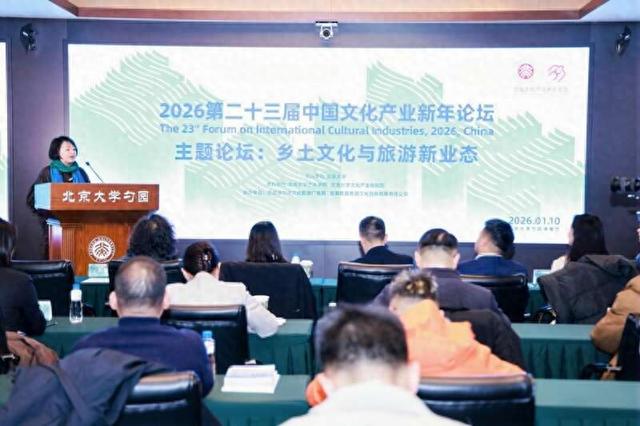
“乡土文化与旅游新业态”主题论坛举办
Xin Lang Cai Jing· 2026-01-12 09:46
中国青年报客户端讯(中青报·中青网记者 王海涵)1月10日,第二十三届中国文化产业新年论坛在北京 举办。"乡土文化与旅游新业态"主题论坛作为重要单元,于当天下午在北京大学举办。论坛指出,乡土 文化的当代转化,必须依靠创意与科技的双轮驱动、治理与运营的系统支撑、文化与产业的深度融合。 来源:中国青年报客户端 活动现 场。协办单位供图 论坛设置两场专题对话,聚焦"治理"与"运营"。中国科学技术大学赵征教授主持"治理——非标创意的 规则构建与区域协同共生"对话,黄山市歙县文旅体局局长吴炯以非遗徽州鱼灯IP为例,阐释了文化符 号在当地的全场景运用中,以及文旅体融合过程中的经济收益共享机制;杭州市临安区文旅局副局长章 薇则介绍了整村运营中激励与退出机制的设计思路。 全联旅游业商会自驾游与房车露营分会会长于波主持了"运营——新业态的产业链协同与乡村价值创 新"对话,四川省营地与自驾游协会秘书长李明阐述了自驾社群如何通过主题化、社群化运营激活乡村 文旅消费;黄山市黟县徽黄旅游集团总经理黄伟分享了世界文化遗产地从"门票经济"向"场景经济"转型 中的特色做法;中汽摩联汽车露营分会委员李颀,分析了闲置营地盘活中的轻资产运营与内容 ...
文化和旅游部产业发展司司长缪沐阳:人工智能正在重塑文化产业全链条
Zhong Guo Jing Ji Wang· 2026-01-12 03:02
Core Viewpoint - The integration of artificial intelligence and cultural industries is reshaping the entire cultural production chain, presenting both opportunities and challenges for achieving deep integration and value co-creation in the context of digital technology development [1] Group 1: Development Logic - Digital intelligence is reconstructing the production paradigm of the cultural industry, breaking traditional limitations and creating a new closed-loop of "demand perception—creative generation—precise dissemination" [2] - The transformation enhances industry efficiency and stimulates innovation across the entire chain [2] Group 2: Value Dimension - Digital intelligence expands the empowerment space of the cultural industry, making cultural value transmission more efficient and precise [2] - In public culture, digital transformation extends service reach; in cultural tourism, intelligence enhances industry value; in cultural heritage, smart technology supports the innovation of traditional culture [2] Group 3: Development Pattern - The integration of culture and technology is a global trend, and those who seize digital technology opportunities will gain a competitive edge in the cultural industry [3] - China has a first-mover advantage in the digital economy, with improving infrastructure and increasing technological research and application capabilities [3] Group 4: Recommendations for the 14th Five-Year Plan - Strengthen infrastructure construction to solidify the foundation for digital development, enhance network coverage, and optimize cultural data supply [4] - Promote innovation and upgrade business models, integrating digital technology with content creation, distribution, and consumer experience [4] - Cultivate innovative entities and enhance core capabilities in digital intelligence, supporting cultural enterprises in technology R&D and fostering a collaborative innovation ecosystem [5][6] Group 5: Policy Support and Market Environment - Establish a supportive policy framework to promote coordinated fiscal, tax, investment, and financial policies for cultural economic development [6][7] - Optimize the market environment by creating a unified, open, and competitive cultural market, encouraging resource flow and fair competition [7] - Address risks associated with digital development, including technological, security, and ethical risks, while promoting industry self-regulation and compliance with laws [7]
文化新质生产力推动“两个文明”相协调的现代化
Xin Lang Cai Jing· 2026-01-11 20:19
Group 1: High-Quality Development and Cultural New Productive Forces - The core principle and primary goal of the "14th Five-Year Plan" is high-quality development, emphasizing the role of new cultural productive forces in promoting this development [1] - Cultural new productive forces are driving a systematic reconstruction of material civilization, influencing production practices and consumption methods beyond just technology [2] Group 2: Reshaping Cultural Production Practices - Cultural new productive forces have become a significant concept in cultural enterprises, leading to a transformation in production practices that extends beyond internal integration to deeper changes in production logic, organizational methods, and industry boundaries [2] - The shift from traditional content reproduction to autonomous generation is facilitated by AI-generated content (AIGC), enhancing the internal nature of cultural productivity and redefining production boundaries and creative roles [2] Group 3: Redefining Cultural Consumption - The "14th Five-Year Plan" suggests boosting consumption by expanding the supply of quality consumer goods and services, with cultural new productive forces reshaping the underlying logic of cultural consumption [3] - Cultural consumption is evolving from a one-way acceptance model to a co-creation model, where consumers participate in the cultural value reproduction process [3] - The reliance on algorithmic recommendations and social connections is increasing, leading to a collaborative network in cultural consumption [3] Group 4: Promoting Spiritual Civilization - Cultural new productive forces, supported by digital technology and intelligent algorithms, are embedded in social sciences and moral thought, providing momentum for the overall leap in socialist spiritual civilization [4] Group 5: Modernizing Education, Technology, and Culture Systems - The "14th Five-Year Plan" emphasizes seizing opportunities from the new round of technological revolution and industrial transformation to enhance the overall effectiveness of the national innovation system [5] - Digital and intelligent technologies are transforming education from a one-way knowledge transfer to a participatory meaning generation process, fostering modern citizens with innovative capabilities [5] Group 6: Strengthening Socialist Moral Systems - Cultural new productive forces promote the integration of socialist core values into social life, leading to a generative development of the moral system [6] - The digitalization of public ethics and the creation of civilized cities shift public morality from promotional guidance to situational participation [7] Group 7: Building a New Form of Human Civilization - Cultural new productive forces facilitate the coordinated development of material and spiritual civilizations, laying the foundation for a new form of human civilization [8] - The transition from efficiency-oriented material civilization to culture-empowered production processes enhances the humanistic and ecological aspects of material products [8] Group 8: Enhancing Cultural Industry Quality - The focus on people-centered development in constructing a new form of human civilization emphasizes the importance of public cultural services and the synchronization of cultural industry innovation and social value [8] - High-quality cultural products, such as books and digital creativity, not only meet diverse cultural needs but also strengthen the cultural foundation for social sharing [8]
共绘AI时代文化新图景,海淀文化产业对话会在北大举行
Xin Lang Cai Jing· 2026-01-10 13:17
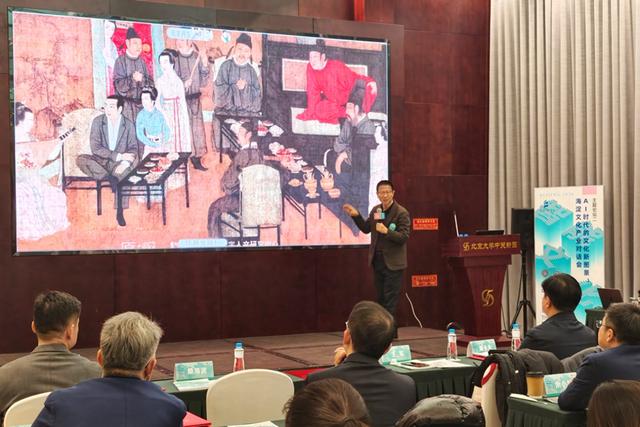
Group 1 - The core theme of the event is the deep transformation of the global cultural ecology by new technologies such as artificial intelligence, as discussed at the "2026 23rd China Cultural Industry New Year Forum" held in Haidian District, Beijing [1][3] - Experts from universities, research institutions, and enterprises shared insights on how AI empowers cultural innovation, with presentations covering topics like AI-enabled smart cultural tourism experiences and the evolution of cultural computing from data to insights [3][5] - The Haidian District is leveraging its comprehensive AI industry chain to promote the integration of technology and culture, having released a "1+2" policy to support the development of "AI + culture," outlining over thirty specific measures across nine key areas [5][7] Group 2 - The district's ongoing efforts during the 14th Five-Year Plan period focus on deepening the integration of culture and technology, enhancing public cultural services, and optimizing cultural supply structures to stimulate cultural consumption potential [7]
海淀文化产业对话会在京举行
Bei Jing Shang Bao· 2026-01-10 11:36
Core Insights - The dialogue conference focused on "Open Collaboration: A New Cultural Landscape in the AI Era," emphasizing the integration of artificial intelligence in cultural innovation and high-quality development of the cultural industry [1][2] - Haidian District is leveraging its full-stack industrial chain in artificial intelligence to promote the synergy between technology and culture, aiming to build a strong cultural district [1] - The cultural industry in Haidian has maintained a high operational scale during the 14th Five-Year Plan period, with deepening integration of culture and technology, leading to the emergence of new business formats and models [1] Group 1 - The conference was organized by the Propaganda Department of the Haidian District Committee and the School of Arts at Peking University, with support from various cultural and research institutions [1] - Haidian District plans to continue promoting the deep integration of culture and technology during the 15th Five-Year Plan period, focusing on key areas such as "AI + Culture" [2] - The district aims to enhance public cultural services and optimize the cultural supply structure to stimulate cultural consumption potential [2]
保利文化(3636.HK):响应一带一路签约捷克,推进股权激励全年业绩可期
Ge Long Hui· 2026-01-09 01:20
Core Viewpoint - Poly Culture reported a revenue of 637 million RMB for Q1 2019, a year-on-year decrease of approximately 10.5%, with a net loss of about 9.4 million RMB compared to a net profit of 18.5 million RMB in the same period last year, primarily due to macroeconomic downturns and increased pressure on art auction returns [1][2] Group 1: Business Performance - The decline in Q1 performance is attributed to macroeconomic adjustments, financial market deleveraging, liquidity tightening, and external economic turbulence, leading to increased pressure on art auction returns compared to previous years [1] - Despite the poor performance, Poly Culture has maintained a stable business model, which is expected to evolve due to its responsibilities as a leading player in China's cultural industry [1][6] Group 2: Strategic Initiatives - Poly Culture has expanded its traditional business areas—performance and theater management, art operation and auction, and cinema investment management—by launching four new business initiatives under the "Cultural+" strategy, enhancing its valuation and strategic layout [2][3] - The new business initiatives include "Cultural Finance," "Art Education," "Cultural Tourism," and "Cultural Asset Operation," which aim to integrate culture with various sectors and enhance brand influence [2][3] Group 3: Partnerships and Collaborations - Poly Culture has partnered with Digital Kingdom, a leading high-tech company, to leverage advanced technologies such as VR and AR, enhancing its internationalization efforts and creating synergies across various business segments [3][4] - The collaboration with Digital Kingdom is expected to improve Poly Culture's innovation capabilities and brand image, facilitating connections with Hollywood and enhancing audience reach [3][4] Group 4: Market Position and Future Outlook - Poly Culture actively responds to the Belt and Road Initiative, promoting cultural exchanges and development, evidenced by nearly 500 performances in 2018 across Belt and Road countries [5][6] - The company has implemented an H-share stock appreciation rights incentive plan to align management interests with company performance, which is expected to drive growth in 2019 despite the initial Q1 challenges [7][8] - The current market valuation of Poly Culture stands at 2.315 billion RMB, with a PE ratio of 8.4 and a PB ratio of 0.47, indicating a historical low, but the fundamentals remain strong, and future collaborations and new business initiatives are anticipated to drive valuation recovery [10]