海洋科技

Search documents
聚焦海洋科技 “星耀鹏城”20+8产业沙龙第10期召开
Zheng Quan Shi Bao Wang· 2025-10-30 07:14
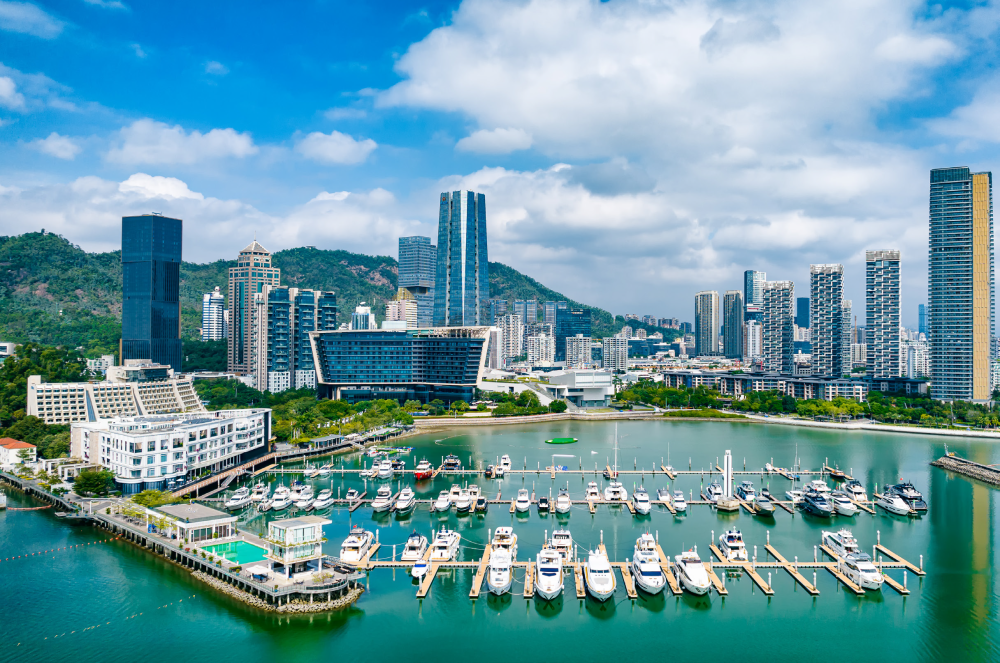
据了解,深圳上市公司协会—香蜜湖CVC创新服务中心2025年已成功举办10期"星耀鹏城"20+8产业沙 龙系列活动。深圳正在通过其强大的金融+科技+产业生态协同,积极布局"十五五"未来产业新机遇。 人民财讯10月30日电,10月30日,香蜜湖金融+系列活动之"星耀鹏城"20+8产业沙龙——海洋科技投融 资并购专场在福田国际创新中心举行。本次活动恰逢"十五五"规划开局之际,旨在助力深圳加速布局海 洋经济新赛道,吸引了海洋科技领域龙头企业、创新企业及知名投资机构代表逾70人参与。 ...
我国三大海洋经济圈持续扩能,沪深青等城市海洋国际竞争力提升
2 1 Shi Ji Jing Ji Bao Dao· 2025-10-30 03:33
Core Insights - The "China Marine Economy Development Report 2025" indicates that the national marine GDP reached 10.5 trillion yuan in 2024, reflecting continuous expansion of the marine economy and significant advancements in marine technology innovation and resource utilization [2] Group 1: Marine Economic Zones - The northern, eastern, and southern marine economic zones have shown sustained growth, with marine GDPs of 31,899 billion yuan, 33,446 billion yuan, and 37,858 billion yuan respectively, representing nominal growth rates of 33.1%, 37.7%, and 33.3% compared to 2020 [2] Group 2: Marine Strong Provinces and Modern Marine Cities - Shandong has enhanced its marine technology capabilities, utilizing the world's fastest supercomputer "Shenwei Marine Light" [3] - Zhejiang's port integration reforms have led to significant growth, with Ningbo-Zhoushan Port achieving its highest container throughput growth in seven years [3] - Guangdong is developing billion-level industrial clusters in marine engineering and offshore wind power, with the successful operation of the world's first megawatt-level seawater electrolysis hydrogen production facility [3] Group 3: Marine Economic Development Demonstration Zones - Sixteen marine economic development demonstration zones have made notable progress in promoting high-quality marine economic development based on their unique advantages [4] - Tianjin has established the first domestically produced seawater desalination production line, while Weihai's national distant-water fishery base has achieved a 90% return rate for self-caught seafood [4] - Qingdao has released a billion-level model "Hanhai Xingyun," and Lianyungang has operated 911 China-Europe freight trains, marking a 13% increase [4]

二0二五中国海洋经济博览会开幕
Zhong Guo Zi Ran Zi Yuan Bao· 2025-10-30 01:07
Core Points - The 2025 China Marine Economy Expo opened in Shenzhen, Guangdong Province, focusing on the theme "Digital Intelligence Deep Blue Co-creating the Future" [1] - The event aims to establish a new market-oriented operational model for the marine industry and accelerate the new quality productivity of marine industries [1] - The Ministry of Natural Resources emphasizes the importance of the expo as a significant indicator for China's marine economic development and a high-end platform for global blue cooperation [1] Exhibition and Activities - The expo features three main components: exhibitions, forums, and supporting activities, covering an exhibition area of approximately 40,000 square meters with over 300 leading marine technology enterprises and institutions [1] - Key achievements such as the "Top Ten Achievements of Deep Sea Journey in 35 Years" were announced, and a cooperation agreement for the "Shenzhen International Marine Innovation Research Institute" was signed [1] - Various forums, including the Marine Central City Forum, attracted experts and representatives to discuss themes like blue economy, technological innovation, ecological protection, and global marine governance [1] Business Opportunities - The expo includes multiple business activities such as investment promotion, new product and technology launches, and investment and financing matchmaking, creating bridges between enterprises, universities, research institutions, and financing entities [1]
300多家涉海龙头企业集结 2025海博会深圳启幕
2 1 Shi Ji Jing Ji Bao Dao· 2025-10-29 09:57
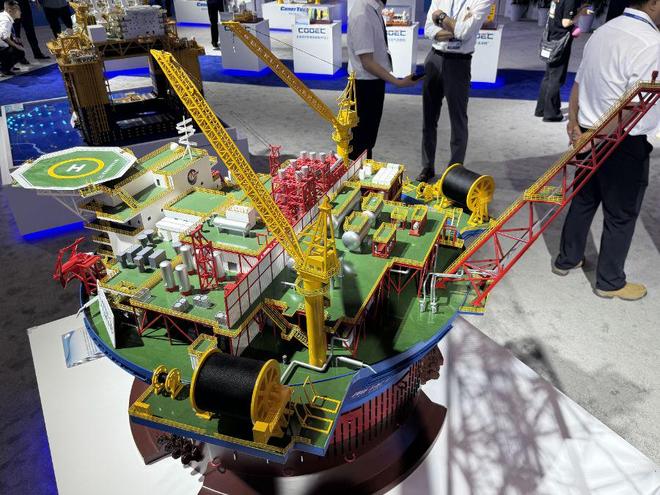
Core Insights - The 2025 China Marine Economy Expo (referred to as "Marine Expo") opened in Shenzhen, themed "Digital Intelligence Deep Blue, Co-creating the Future," marking its first market-oriented exhibition with an area of 40,000 square meters and over 300 participating enterprises [1] Group 1: Exhibition Highlights - The Marine Expo focuses on four core areas: marine energy, deep-sea technology, marine intelligent equipment, and marine electronic information, while also extending to high-potential sectors like marine modern services, marine biomedicine, and coastal tourism [2] - Major companies, including Fortune 500 firms, large state-owned enterprises, and specialized "little giant" companies, participated in the exhibition, showcasing advanced marine technologies and equipment [2] Group 2: Technological Innovations - The "Marine Oil 119" platform integrates 14 oil and gas production modules and features the most complex offshore oil and gas processing technology in China, equivalent to a 300,000 square meter onshore facility [3] - The "Sea Aster 1" platform employs 15 key technologies for intelligent control and introduces a new desulfurization device and dual-fuel generator, enhancing energy efficiency and environmental sustainability [3] - The "Sea Base 2" platform utilizes digital twin technology for real-time monitoring and AI algorithms to optimize structural stress, extending its design life to 50 years and improving operational efficiency [3] Group 3: International Collaboration - The Marine Expo emphasizes international collaboration, featuring seven core forums discussing topics such as blue economic growth and global marine governance, including the APEC International Marine Seminar [4] - Experts highlight that new technologies will drive high-quality development in the marine economy, transitioning from resource exploitation to sustainable development led by technological innovation [4] Group 4: Future Directions in Marine Development - The core directions of the "Deep Blue Revolution" are summarized as "inward, deep, intelligent, and green," focusing on understanding marine life systems, advancing deep-sea exploration technologies, creating a "transparent ocean" through digital integration, and promoting harmonious coexistence with nature [5][6]
300多家涉海龙头企业集结,2025海博会深圳启幕
2 1 Shi Ji Jing Ji Bao Dao· 2025-10-29 09:08
Core Insights - The 2025 China Marine Economy Expo, themed "Digital Intelligence Deep Blue, Co-creating the Future," is being held in Shenzhen from October 28 to 30, showcasing over 300 leading enterprises and technology companies in the marine sector [1][2] - The expo features four core exhibition areas focused on marine energy, deep-sea technology, marine intelligent equipment, and marine electronic information, along with three high-potential application fields: modern marine services, marine biomedicine, and coastal tourism [1][2] - The event aims to create a platform for communication and cooperation in the marine economy, with participation from Fortune 500 companies, large state-owned enterprises, and specialized "little giant" firms [1][2] Industry Developments - The "Marine Oil 119" platform integrates 14 oil and gas production function modules, representing the most complex offshore oil and gas processing technology in China, akin to a 300,000 square meter onshore facility [3] - The "Hurricane One" platform features a smart integrated control system and new natural gas desulfurization technology, enhancing energy efficiency and environmental sustainability in offshore oil fields [3] - The "Sea Base Two" platform employs digital twin technology with 16,000 monitoring points, optimizing structural stress through AI algorithms, extending its design life to 50 years, and improving operational efficiency by 22% [3] Future Directions - The marine economy is expected to transition from resource exploitation to a model driven by technological innovation and sustainable development, termed the "Deep Blue Revolution" [4][5] - This revolution is characterized by four dimensions: inward exploration of marine life systems, deep-sea technological advancements, the creation of a "transparent ocean" through digital monitoring, and a harmonious coexistence with nature [5][6] - Future marine development will focus on renewable energy sources such as offshore wind, tidal, and wave energy, contributing to a "blue energy grid" for coastal economic and social development [6]

10.5万亿元!国家发改委、自然资源部发布重要报告
中国能源报· 2025-10-29 09:06
Core Insights - The report highlights significant advancements in China's marine economy, with the national marine GDP reaching 10.5 trillion yuan in 2024, indicating continuous expansion and structural adjustment in marine industries [1] Group 1: Marine Economic Circles - The northern, eastern, and southern marine economic circles are experiencing sustained growth, with marine production values of 318.99 billion yuan, 334.46 billion yuan, and 378.58 billion yuan respectively in 2024, reflecting nominal growth rates of 33.1%, 37.7%, and 33.3% compared to 2020 [2] Group 2: Marine Strong Provinces and Modern Marine Cities - Shandong has enhanced its marine technology capabilities, utilizing the world's fastest supercomputer "Shenwei·Ocean Light" [3] - Zhejiang's port integration reforms have led to significant growth, with Ningbo-Zhoushan Port achieving its highest container throughput growth in seven years [3] - Guangdong is developing billion-level industrial clusters in marine engineering and offshore wind power, with the successful operation of the world's first megawatt-level seawater electrolysis hydrogen production facility [3] Group 3: Marine Economic Development Demonstration Zones - Sixteen marine economic development demonstration zones are making notable progress in high-quality marine economic development, with achievements such as the establishment of China's first domestically produced seawater desalination production line in Tianjin [4] - The national first blue carbon auction was completed in Ningbo, and Shenzhen has over 82,000 invention patents related to marine enterprises [4]
《中国海洋经济发展报告2025》发布:全国海洋生产总值超10万亿元
Zhong Guo Xin Wen Wang· 2025-10-29 08:08
Core Insights - The "China Marine Economy Development Report 2025" highlights significant advancements in China's marine economy, with a national marine production value reaching 10.5 trillion yuan in 2024, indicating continuous expansion and structural adjustment in the marine industry [1] Group 1: Marine Economic Circles - The northern, eastern, and southern marine economic circles are experiencing sustained growth, with marine production values of 31,899 billion yuan, 33,446 billion yuan, and 37,858 billion yuan respectively in 2024, representing nominal growth rates of 33.1%, 37.7%, and 33.3% compared to 2020 [1] Group 2: Marine Strong Provinces and Modern Marine Cities - Shandong has enhanced its marine technology capabilities, utilizing the world's fastest supercomputer "Shenwei·Marine Light" [2] - Zhejiang's port integration reforms have led to significant growth, with Ningbo-Zhoushan Port achieving its highest container throughput growth in seven years [2] - Guangdong is developing billion-level industrial clusters in marine engineering equipment and offshore wind power, with the successful operation of the world's first megawatt-level seawater electrolysis hydrogen production facility [2] Group 3: Marine Economic Development Demonstration Zones - Sixteen marine economic development demonstration zones are making notable progress in high-quality marine economic development, with Tianjin establishing the first domestically produced seawater desalination production line [3] - The national distant-water fishery base in Weihai has achieved a 90% return rate for self-caught aquatic products [3] - Shenzhen has over 82,000 invention patents related to marine enterprises, indicating a strong innovation capacity in the marine sector [3]
去年全国海洋生产总值达到10.5万亿元
Xin Jing Bao· 2025-10-29 07:18
Core Insights - The "China Marine Economy Development Report 2025" indicates significant growth in the marine economy, with the national marine production value reaching 10.5 trillion yuan last year [1] - In 2024, the northern, eastern, and southern marine economic circles are projected to have marine production values of 31,899 billion yuan, 33,446 billion yuan, and 37,858 billion yuan respectively, reflecting nominal growth of 33.1%, 37.7%, and 33.3% compared to 2020 [1] Group 1: Marine Economic Development - The report highlights breakthroughs in marine economic activities, with coastal regions actively exploring marine resource potential and enhancing economic vitality [1] - Key marine provinces such as Shandong, Zhejiang, and Guangdong have shown remarkable performance, with Shandong enhancing its marine technology capabilities and Zhejiang achieving record container throughput at its ports [1] Group 2: Modern Marine City Construction - Cities like Shanghai, Shenzhen, and Qingdao have improved their international competitiveness in marine sectors, while others like Tianjin and Dalian have focused on integrating port, industry, and city development [2] - The report notes that 16 marine economic development demonstration zones have made significant progress in high-quality marine economic development, with initiatives such as the establishment of a domestic seawater desalination production line in Tianjin and the launch of a large-scale deep-sea microorganism library in Xiamen [2]
中科海讯(300810)季报点评:Q3单季度减亏显著 信用减值损失大幅收窄
Xin Lang Cai Jing· 2025-10-28 12:41
Core Insights - The company reported a revenue of 145 million yuan for the first three quarters, a year-on-year decrease of 0.41%, with a net profit attributable to shareholders of -76.92 million yuan, narrowing the loss by 16.27% year-on-year [1] - In Q3 alone, the company achieved a revenue of 49.08 million yuan, representing a year-on-year increase of 24.35%, while the net profit attributable to shareholders was -12.25 million yuan, showing a significant reduction in losses [1] Financial Performance - For the first three quarters, the company’s revenue was 145 million yuan, with a net profit of -76.92 million yuan, and a non-recurring net profit of -77.89 million yuan, both showing a year-on-year reduction in losses [1] - In Q3, the gross margin was 33.23%, an increase of 1.38 percentage points year-on-year, while the net margin narrowed to -25.71% [1] Expense Analysis - In Q3, sales expenses were 1.61 million yuan, down 10.12% year-on-year, while management expenses were 11.60 million yuan, up 23.69% year-on-year [2] - Credit impairment losses were significantly reduced, with a provision of 7.97 million yuan in Q3, a year-on-year decrease of 74.77% [2] Balance Sheet Highlights - As of Q3, the company’s contract liabilities reached 158 million yuan, a year-on-year increase of 97.5%, attributed to an increase in received prepayments [2] Strategic Initiatives - The company is deepening its regional layout and enhancing its capabilities in intelligent scenarios, with plans to establish a wholly-owned subsidiary in Guangxi with a registered capital of 8 million yuan [2] - A strategic cooperation agreement was signed with Guangxi Beibu Gulf International Port Group to focus on smart ports and marine big data [2] Incentive Plans - The company announced a stock incentive plan on May 12, 2025, proposing to grant up to 1.49 million restricted shares to 78 individuals, which is about 1.26% of the total share capital [3] - The plan aims to motivate management and key employees, reflecting the company's confidence in future business expansion and performance improvement [3] Profit Forecast - The company forecasts net profits attributable to shareholders of 7 million yuan, 33 million yuan, and 44 million yuan for 2025, 2026, and 2027, respectively, with corresponding PE ratios of 760, 156, and 116 times [3]

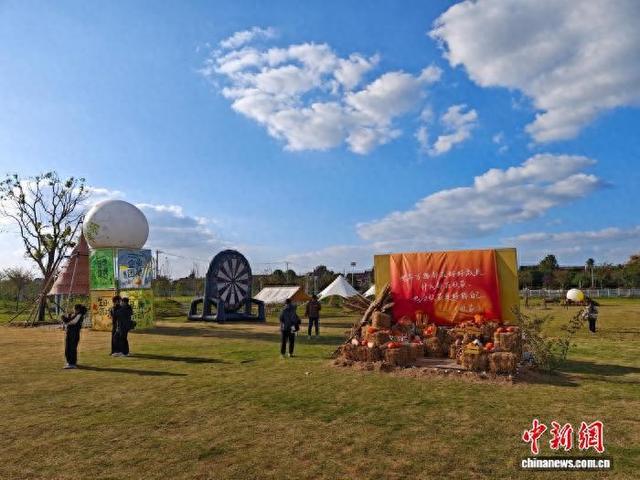
(活力中国调研行)从草坪经济到海洋科技 江苏南通多元探索绘新卷
Zhong Guo Xin Wen Wang· 2025-10-25 11:18
Economic Development - Nantong's GDP is projected to reach 1.24 trillion yuan in 2024, showcasing strong economic resilience and development potential [1] - The textile industry, a pillar of Nantong's economy, is expected to generate 240.7 billion yuan in output value in 2024, reflecting a year-on-year growth of 12.64% [6] Industry Innovation - XinYuan Silk Group has developed a complete industrial chain from "silkworm cocoons to silk products to biomedicine," successfully applying self-developed silk protein bone screws in the medical field [6] - HuaYi Fashion has integrated traditional craftsmanship with modern technology, establishing the first intelligent production line for non-heritage tie-dyeing in China, improving production efficiency by five times and achieving a dye utilization rate of 92% [6] Ecological and Urban Development - Nantong has transformed the Wushan and riverside areas from polluted industrial zones into a "green living room," with the Jiangsu Sports Park becoming a comprehensive landscape space for leisure, fitness, and culture [4] - The city has implemented significant ecological restoration efforts, including the removal of polluting enterprises and the reconstruction of wetland banks, promoting a harmonious coexistence between people and nature [3][4] Technological Advancements - The Southeast University Nantong Marine Research Institute focuses on four core areas: marine equipment, new energy, engineering construction, and AI in deep-sea mining, providing strong support for the intelligent development of marine resources [7] - Zhongtian Technology Group, Nantong's largest advanced manufacturing enterprise, has established a diverse industrial matrix with over 80 subsidiaries and 16,000 employees, achieving a revenue of 101 billion yuan in 2024 [7]