私募股权

Search documents
私募股权S市场迎三大变局!
Zheng Quan Shi Bao Wang· 2025-10-23 13:49
Core Insights - The Chinese private equity secondary market (S market) has seen significant growth, with 395 transactions totaling 107.8 billion yuan in 2024, a 46% year-on-year increase. In the first half of 2025, transactions rose to 542, surpassing the total for 2024, with a transaction scale of 78.4 billion yuan [1][2]. Group 1: Market Dynamics - The S market is becoming a crucial avenue for asset management and value maximization due to increasing exit difficulties and prolonged exit cycles in the primary market [1][2]. - As of mid-2025, approximately 71% of funds established between 2011 and 2020 are still in the exit phase, with over 30,000 funds actively managing investments in more than 40,000 unlisted companies [2][3]. Group 2: Participation and Trends - The buyer landscape in the S market has diversified, with state-owned enterprises (SOEs) increasingly establishing S funds, contributing to a multi-faceted LP structure. From 2024 to mid-2025, 17 new S funds were linked to local SOEs [3][4]. - The shift towards SOE participation is seen as a dual win, aligning with national strategies while providing short-term cash returns and optimizing asset allocation [3][4]. Group 3: Transaction Models - The transaction models in the S market are evolving from simple share transfers to more innovative and complex structures, including GP-led continuation funds and flexible transaction arrangements [5][6]. - The introduction of structured and thematic products is anticipated, enhancing adaptability to different investor needs and improving market efficiency [6][7]. Group 4: Valuation and Pricing - The S market is transitioning from a "bargain hunting" phase to a "professional pricing" era, driven by enhanced understanding among GPs and LPs, as well as the entry of institutional buyers demanding higher valuation standards [7][8]. - The key to resolving pricing challenges lies with GPs, who must effectively communicate asset risks and returns to align with buyer expectations, thereby increasing transaction success rates [7][8].
另类投资简报 | 高市早苗胜选后日本央行预计放缓加息,市场对日元前景激烈博弈
彭博Bloomberg· 2025-10-23 06:04
Market Overview - The Bloomberg Hedge Fund Index showed an overall increase of 2.2% last month, marking the best monthly performance since May. Year-to-date returns for hedge funds have reached 9.8%, with equity funds leading at a 15% increase [4][5]. - The trading activity on October 6 indicated that most selling of the yen was due to macro hedge funds closing bullish positions rather than establishing new bearish positions. This was influenced by expectations of increased fiscal expansion following the potential election of high-profile candidates in Japan [4]. Performance Summary - The Bloomberg Hedge Fund Index recorded a 1-month return of 2.24%, a 3-month return of 5.42%, and a year-to-date total return of 9.76% [5]. - Equity hedge funds had a 1-month return of 2.57%, a 3-month return of 7.16%, and a year-to-date return of 14.79% [5]. Industry Highlights - Bain Capital agreed to sell multiple data centers in China to Shenzhen Dongyangguang Industrial Development Co., with a transaction valuation of approximately $4 billion. This acquisition is led by a consortium of institutional investors including insurance companies and local government funds [4]. Strategic Moves - CVC has joined the equity bidding for Indian financial company Avendus, indicating ongoing strategic investments in emerging markets [6].


AI基建远未到头?PE巨头阿波罗:AI的能源需求“在我们有生之年”都无法满足
Hua Er Jie Jian Wen· 2025-10-23 05:45
Core Insights - Apollo Global Management's executive warns of a significant gap between the energy demand driven by artificial intelligence (AI) and the current global electricity supply, suggesting this gap may never be bridged within our lifetime [1] - The investment community is shifting from an "energy transition" mindset to a more urgent "energy increment" approach, recognizing that renewable energy alone cannot meet the demands of the AI era [2] Group 1: Energy Increment Reality - The current situation is characterized as "energy increment," necessitating a substantial increase in overall energy supply to meet the explosive demand from AI data centers [2] - Apollo has committed or arranged approximately $60 billion in investments related to energy transition, infrastructure, and sustainability since 2022, exceeding half of its $100 billion investment target by 2030 [2] Group 2: Investment Strategy and Standards - Apollo has developed its own classification standards for guiding investments, which provide a competitive advantage through in-depth analysis of industries and technologies [3] - A project is considered a "transition deal" if a significant portion of its revenue is related to transition activities or has designated transition financing [3] Group 3: Political Environment and Investment Opportunities - Despite political changes affecting renewable energy investments in the U.S., the overall investment opportunities remain robust, with trillions of dollars still available [4] - Major financial firms continue to view low-carbon transition as a powerful trend, with significant funds raised for investments in this area [4] Group 4: Balancing Perspectives - The transition to low-carbon energy is underway and unstoppable, but the urgent need for energy to fuel the AI boom means that more energy is required [5] - Key drivers for success will include energy storage, transmission, and distribution capabilities [5]

AI缺的是芯片吗?是电!私募巨头Applo:能源缺口“有生之年难以弥合”
Hua Er Jie Jian Wen· 2025-10-22 13:06
Core Insights - The biggest bottleneck facing the AI revolution may not be chips, but rather electricity [1] - There exists a significant gap between the demand for AI and the current capabilities of the global power grid in generation and transmission [1] - Sustainable energy investors need to accept that renewable energy alone is insufficient to power the AI era [1] Energy Addition vs. Energy Transition - The current global priority is "energy addition," which involves increasing every type of energy source, rather than solely focusing on "energy transition" [1] - Despite the need for energy addition to support AI development, this does not imply abandoning clean energy [1] - Energy storage, transmission, and distribution capabilities are also critical for success [1] Investment in Clean Energy - Investing in clean energy and decarbonization technologies remains a profitable strategy [1] - Since 2022, the company has committed or arranged approximately $60 billion in investments related to energy transition, infrastructure, and sustainability, exceeding half of its $100 billion target set for 2030 [1]
前首富被判无罪!却输给一个金融男,韩国富豪圈早变了天
Sou Hu Cai Jing· 2025-10-22 08:31
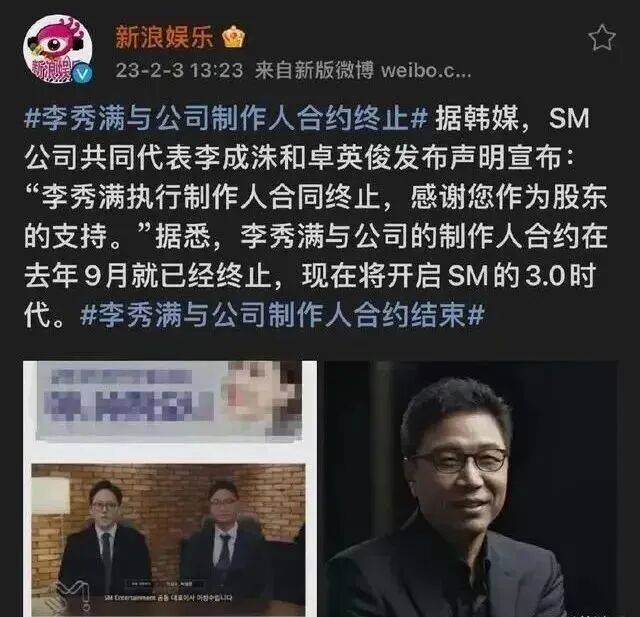
Group 1 - The former richest man in South Korea, Kim Beom-soo, founder of Kakao, was acquitted after being accused of stock manipulation, which had significant implications for the South Korean wealthy circle [1][2][3] - Following the acquittal, Kakao's stock price surged by 4%, indicating market optimism regarding Kim's legal situation [3] - The current richest individual in South Korea is now a financial mogul, marking a shift in the landscape of wealth in the country [1][3] Group 2 - The stock manipulation case involved Kakao's strategic moves in the entertainment sector, particularly its competition with HYBE for control over SM Entertainment, a major player in the Korean entertainment industry [4][8] - The entertainment company SM, founded by Lee Soo-man, has seen significant growth but faced challenges due to competition from HYBE, which has led to internal conflicts and market volatility [4][8][9] - Kim Beom-soo's attempts to expand Kakao's influence in the entertainment sector ultimately resulted in legal troubles, highlighting the risks associated with aggressive market strategies [9][16] Group 3 - Kim Beom-soo's entrepreneurial journey began with his education and early career at Samsung, leading to the creation of Kakao, which became a dominant player in the mobile internet space in South Korea [10][12] - Despite initial success, Kakao's growth has plateaued due to market saturation and competition, prompting Kim to explore new business avenues, including entertainment and AI [13][16] - The overall market valuation of Kakao has significantly declined, with its current market cap around $20 billion, a 75% drop from its peak, reflecting broader challenges in the tech and entertainment sectors [16]
前首富被判无罪,却输给一个金融男,韩国富豪圈早变了天
3 6 Ke· 2025-10-22 06:55
Group 1: Key Events and Outcomes - Kakao founder Kim Beom-soo was acquitted of stock manipulation charges after a year-long legal battle, which had significant implications for his freedom and reputation in the business community [1][7] - Following the acquittal, Kakao's stock price rose by 4%, indicating market confidence in the company post-verdict [1] - The current wealth landscape in South Korea has shifted, with a new financial figure emerging as the country's richest individual, overshadowing traditional conglomerate families [1][15] Group 2: Company Background and Market Dynamics - Kakao, founded by Kim Beom-soo, has evolved into a major player in South Korea's tech landscape, initially gaining traction with its messaging app Kakao Talk and expanding into various sectors including e-commerce and digital payments [10][11] - The company faced challenges in growth due to a saturated domestic market and competition from international platforms, limiting its user base expansion [11][12] - In an effort to enhance its market value, Kakao pursued a strategy of spinning off its profitable divisions, which at one point led to a valuation exceeding 112 trillion KRW (approximately 6.34 billion USD) [12][14] Group 3: Competitive Landscape - The entertainment sector in South Korea has seen intense competition, particularly between Kakao and HYBE, with both companies vying for control over SM Entertainment, a major player in the industry [6][7] - The internal conflict within SM Entertainment, involving founder Lee Soo-man and his nephew Lee Sung-soo, has further complicated the competitive dynamics, impacting stock prices and market strategies [2][5] - HYBE's attempt to acquire SM was thwarted by Kakao's strategic stock purchases, leading to legal disputes and highlighting the aggressive tactics employed by both companies in the entertainment sector [6][7]
全球保险巨头加速转向私募资产 贝莱德:此为“结构性转变”非短期配置
Zhi Tong Cai Jing· 2025-10-21 06:56
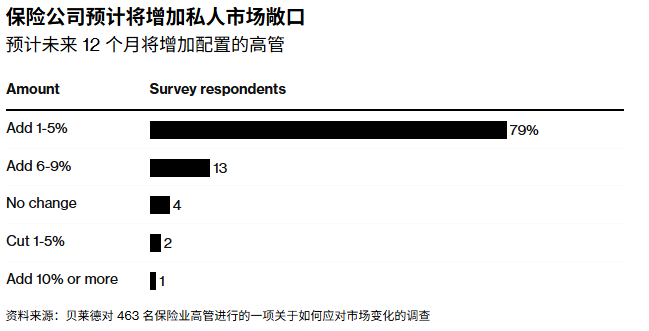
Core Insights - The global insurance industry, managing $23 trillion in assets, is planning to increase allocations to private markets as a strategy to smooth long-term returns [1] - A survey of 463 insurance executives revealed that 93% expect to increase private asset holdings in the next 12 months, while only 3% anticipate a decrease [1] - Investment-grade private credit, including infrastructure debt and private bonds, remains the most favored asset class among investors [1] Group 1 - Insurance companies have increasingly embraced alternative assets, with private equity firms acquiring insurance companies driving growth in private credit, raising concerns among lawmakers about potential risks in the $1.7 trillion market [4] - Executives in the insurance industry are currently prioritizing the diversification and low volatility potential of private assets over merely seeking higher returns [4] - Liquidity is the primary concern for insurance executives when selecting private assets [4] Group 2 - The interest in private assets is seen as a long-term structural shift rather than a trend driven by low interest rates, according to BlackRock's global insurance strategist Mark Erikson [5] - Despite significant investments in private credit by large insurance companies, smaller firms are also beginning to increase their allocations to alternative assets [4] - Following the prolonged low interest rate environment since the 2008 financial crisis, insurance companies have turned to private markets for yield, and recent interest rate hikes have not led to a reduction in private asset allocations [4]
家族企业传承难助推日本私募股权热潮,行业人士:当心过热风险
第一财经· 2025-10-20 09:41
Core Viewpoint - Japanese family businesses are facing dual challenges of a lack of interested and capable successors and high inheritance tax rates, leading to an increasing trend of selling businesses to private equity funds, which has fueled the private equity boom in Japan [3][4]. Group 1: Market Trends - The annual transaction volume in Japan's private equity market has exceeded 3 trillion yen (approximately 20 billion USD) for four consecutive years, with a year-on-year increase of over 30% this year, reaching 29.19 billion USD [7]. - Approximately one-third of Japanese small and medium-sized enterprise owners aged 70 and above will have no successors by 2025, according to a World Economic Forum report [7]. - Over 90% of Japan's small and medium-sized enterprises are family-owned, with over 65% of private equity mergers and acquisitions stemming from succession cases [8]. Group 2: Factors Driving Change - The high inheritance tax rate in Japan, which can reach up to 55% for large estates, often forces heirs to sell assets quickly to raise cash, making private equity an increasingly attractive option [8]. - Cultural shifts are occurring, with traditional views on selling equity changing as family business owners recognize the need for investors, including foreign private equity investors [9]. - The "employment ice age" in Japan has exacerbated the leadership crisis, as there is a lack of experienced professionals to take over businesses [7]. Group 3: Regulatory and Economic Environment - Regulatory reforms introduced by the Japanese government since 2015-2016 have spurred the growth of the private equity market, including mandatory external directors and increased capital return requirements for listed companies [11]. - The long-term depreciation of the yen has made Japanese assets relatively cheap for dollar investors, further increasing foreign private equity investment [11]. - Despite the growth, private equity investment in Japan currently accounts for only about 0.4% of the GDP, compared to 1.3% in the U.S. and 1.9% in Europe, indicating that Japan remains a developing market in terms of private equity maturity [12].

家族企业传承难助推日本私募股权热潮,行业人士:当心过热风险
Di Yi Cai Jing Zi Xun· 2025-10-20 06:52
Core Insights - Japanese family businesses are facing dual challenges of a lack of interested and capable successors and high inheritance tax rates, leading to an increasing trend of selling to private equity funds, which has fueled a private equity boom in Japan [1][3][4] Group 1: Market Trends - The annual transaction volume in Japan's private equity market has exceeded 3 trillion yen (approximately 20 billion USD) for four consecutive years, with a year-to-date increase of over 30% in transactions, reaching 29.19 billion USD [3] - Approximately one-third of Japanese small and medium-sized enterprise owners aged 70 or older will lack successors by 2025, creating a significant market for private equity transactions [3] - Over 90% of Japan's SMEs are family-owned, with more than 65% of private equity mergers and acquisitions stemming from succession issues [4] Group 2: Cultural Shifts - There has been a cultural shift among Japanese family business owners, who are increasingly considering selling their companies to private equity investors, including foreign firms, as a viable option [5] - Successful transformations by foreign private equity giants like KKR and Bain have alleviated concerns among Japanese business owners about losing control over their companies [5] Group 3: Regulatory and Economic Factors - Japanese government regulatory reforms since 2015-2016 have spurred private equity market growth by imposing external board member requirements and increasing capital return rates for listed companies [6] - The long-term depreciation of the yen has made Japanese assets relatively cheaper for dollar investors, further attracting global private equity funds [6] Group 4: Market Risks - Some market participants are warning of overheating risks in the Japanese private equity market, as increased capital inflow may lead to higher premiums being paid for transactions [6] - Despite the growth in private equity investments, they currently account for only about 0.4% of Japan's GDP, compared to 1.3% in the U.S. and 1.9% in Europe, indicating that Japan remains a developing market in terms of private equity maturity [7]

“PE巨头”黑石总裁:华尔街低估了AI的颠覆性,现在投项目首先评估“颠覆风险"
美股IPO· 2025-10-19 22:59
Core Viewpoint - The article emphasizes that Blackstone has elevated AI risk assessment to the highest priority in investment decisions, warning that traditional industries may face significant disruption from AI technologies [2][3][5]. Group 1: AI Disruption Risks - Blackstone's President Jonathan Gray warns that Wall Street investors are underestimating the potential of AI to render entire industries obsolete [2][5]. - The company has mandated that all investment teams must outline the impact of AI on their investment memorandums, focusing on how AI affects business models in sectors like accounting, legal, and data processing [3][4]. - Gray compares the disruption caused by AI to the fate of New York taxi medallions, which lost 80% of their value due to the rise of ride-sharing apps, highlighting the rapid changes AI can bring to traditional business models [3][5]. Group 2: Investment Strategy Adjustments - Blackstone is actively reassessing both new transactions and existing portfolio companies in light of AI risks, particularly in sectors vulnerable to AI-driven competition [3][6]. - Despite recognizing the risks, Blackstone is also positioning itself to capitalize on AI opportunities, investing heavily in utility companies that power data centers and repositioning industrial portfolio companies to sell products to AI infrastructure providers [6]. - Gray notes that while AI may cause economic disruption, it could also lead to significant productivity gains and the creation of trillions of dollars in new enterprise wealth, urging teams not to overlook AI-related opportunities [6].