通用设备

Search documents
创远信科(831961):2025H1营收同比+18%,高研发投入保障低空、卫星等技术竞争力
Hua Yuan Zheng Quan· 2025-08-19 14:36
Investment Rating - The investment rating for the company is "Accumulate" (maintained) [5] Core Views - The company achieved a revenue growth of 18% year-on-year in H1 2025, supported by high R&D investment to enhance competitiveness in low-altitude and satellite technologies [5] - The projected net profits for the company from 2025 to 2027 are estimated to be 0.19 billion, 0.34 billion, and 0.49 billion respectively, corresponding to current price-to-earnings ratios of 181.0, 104.2, and 71.4 times [6] - The company is focusing on increasing investments in core markets such as 5G/6G, vehicle networking communication testing, and low-orbit, low-altitude sectors, which are expected to provide new growth opportunities [6] Financial Performance Summary - In H1 2025, the company reported a revenue of 1.11 billion (yoy +18%) and a net profit of 6.32 million (yoy +354%), with a significant improvement in cash flow from operating activities [9] - The revenue from electronic testing and measurement instruments increased by 19% year-on-year, with a gross margin of 55.73% [9] - The R&D expenditure accounted for 65.72% of revenue in H1 2025, indicating a strong commitment to product development and innovation [9] - The company has applied for a total of 536 patents, including 370 invention patents, showcasing its focus on technological advancement [9] Earnings Forecast and Valuation - The company's projected revenues for 2025, 2026, and 2027 are 2.69 billion, 3.17 billion, and 3.80 billion respectively, with year-on-year growth rates of 15.51%, 18.11%, and 19.85% [8] - The expected net profit for 2025 is 0.19 billion, with a significant increase in profitability anticipated in the following years [8] - The company is expected to maintain a gross margin of around 51.67% to 52.03% over the forecast period [10]

川润股份(002272.SZ):上半年净亏损2357.15万元
Ge Long Hui A P P· 2025-08-19 11:32
格隆汇8月19日丨川润股份(002272.SZ)公布半年度报告,公司实现营业收入人民币80,407.58万元,同比 增加25.08%;综合毛利率16.75%,同比下降0.27%;实现归属于上市公司股东的净利润人民币-2,357.15 万元,同比增长58.35%;归属于上市公司股东的扣除非经常性损益的净利润-2,354.60万元,同比增长 62.41%。 ...

3连板川润股份:上半年净亏损2357.15万元
Xin Lang Cai Jing· 2025-08-19 10:51
转自:智通财经 【3连板川润股份:上半年净亏损2357.15万元】智通财经8月19日电,川润股份(002272.SZ)发布2025年 半年度报告,公司实现营业收入8.04亿元,同比增长25.08%;归属于上市公司股东的净利润为-2357.15 万元。 ...
川润股份:2025年上半年净亏损2357.15万元
Xin Lang Cai Jing· 2025-08-19 10:41
Core Viewpoint - The company reported a revenue of 804 million yuan for the first half of 2025, reflecting a year-on-year growth of 25.08% [1] - The net loss attributable to shareholders narrowed to 23.57 million yuan, a decrease of 58.35% compared to the previous year [1] - The company announced plans not to distribute cash dividends, issue bonus shares, or increase capital from reserves [1] Financial Performance - Revenue for the first half of 2025 reached 804 million yuan, marking a 25.08% increase year-on-year [1] - The net loss for the period was 23.57 million yuan, which is a significant improvement, narrowing by 58.35% from the previous year [1] Dividend Policy - The company has decided not to distribute cash dividends for the current period [1] - There will be no issuance of bonus shares or capital increase from reserves [1]
8月19日晚间重要公告一览
Xi Niu Cai Jing· 2025-08-19 10:10
Group 1 - Beishimei achieved a net profit of 34.71 million yuan in the first half of 2025, a year-on-year increase of 109.70%, with operating income of 776 million yuan, up 16.57% [1] - Tianli Technology reported a net profit of 8.02 million yuan, reversing a loss of 17.91 million yuan from the previous year, despite a 3.54% decline in operating income to 231 million yuan [2] - Jiejie Microelectronics posted a net profit of 247 million yuan, a 15.35% increase, with operating income rising 26.77% to 1.6 billion yuan [3] Group 2 - Henghua Technology's net profit decreased by 3.98% to 6.06 million yuan, despite a significant 78.31% increase in operating income to 373 million yuan [4] - Sunshine Dairy reported a net profit of 59.82 million yuan, an 8.27% increase, with operating income declining by 7.03% to 237 million yuan [5] - Huabang Health's net profit grew by 23.9% to 388 million yuan, with operating income slightly increasing by 0.39% to 5.945 billion yuan [7] Group 3 - Zhongnan Culture's net profit surged by 524.45% to 60.99 million yuan, with operating income increasing by 30.93% to 559 million yuan [8] - Feilong Co. announced the use of 50 million yuan of idle funds for cash management [9] - Mingpu Optical Magnetics received a patent for a new optical communication device [10] Group 4 - Jucan Optoelectronics plans to use up to 400 million yuan of idle funds for cash management [11] - Xinhongye intends to acquire 62% of Yangzhou Shuguang's shares, enhancing its market presence [12] - Victory Co. reported a net profit of 88.44 million yuan, a 7.77% increase, with operating income of 2.158 billion yuan, down 1.64% [14] Group 5 - Aoya Co. reported a net loss of 22.33 million yuan, with operating income declining by 28.29% to 197 million yuan [15] - Furan Energy achieved a net profit of 310 million yuan, a 7.27% increase, with operating income rising by 8.59% to 15.338 billion yuan [16] - Wantong Development's chairman was detained, but the investigation is unrelated to the company's operations [17] Group 6 - An Tong Holdings reported a net profit of 512 million yuan, a 231.49% increase, with operating income of 4.384 billion yuan, up 24.60% [28] - Tailin Microelectronics achieved a net profit of 101 million yuan, a 274.58% increase, with operating income of 503 million yuan, up 37.72% [30] - Zhonghang Shenfei expects a net profit decline of approximately 29.78% to 1.136 billion yuan, with a projected revenue of 14.628 billion yuan, down 32.35% [34] Group 7 - Jingjiawei reported a net loss of 87.61 million yuan, with operating income declining by 44.78% to 193 million yuan [35] - Xizang Tianlu posted a net loss of 112 million yuan, despite a 19.88% increase in operating income to 1.409 billion yuan [36] - Jintian International's net profit decreased by 22.53% to 188 million yuan, with operating income down 14.36% to 1.412 billion yuan [37] Group 8 - Ningbo Jingda plans to invest 20 million yuan to establish a wholly-owned sales subsidiary [38] - Ningbo Jingda reported a net profit of 65.05 million yuan, a 25.77% decrease, with operating income of 401 million yuan, up 1.10% [39] - Shengquan Group achieved a net profit of 501 million yuan, a 51.19% increase, with operating income of 5.351 billion yuan, up 15.67% [40]
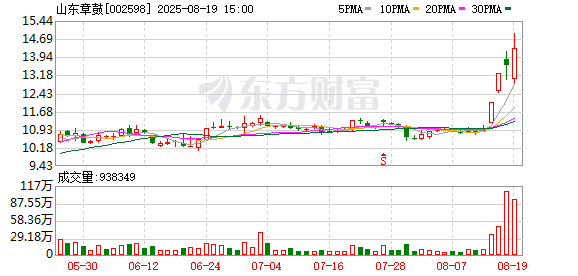
山东章鼓龙虎榜数据(8月19日)
Zheng Quan Shi Bao Wang· 2025-08-19 09:11
山东章鼓8月19日交易公开信息 | 买/ | 会员营业部名称 | 买入金额(万 | 卖出金额(万 | | --- | --- | --- | --- | | 卖 | | 元) | 元) | | 买一 | 东方财富证券股份有限公司拉萨团结路第一证券营业部 | 1380.36 | 1190.19 | | 买二 | 机构专用 | 1317.82 | 685.50 | | 买三 | 东方财富证券股份有限公司拉萨东环路第一证券营业部 | 1195.89 | 1326.91 | | 买四 | 中信建投证券股份有限公司安徽分公司 | 1126.97 | 22.92 | | 买五 | 东方财富证券股份有限公司拉萨东环路第二证券营业部 | 1101.17 | 1370.00 | | 卖一 | 东方财富证券股份有限公司拉萨东环路第二证券营业部 | 1101.17 | 1370.00 | | 卖二 | 东方财富证券股份有限公司拉萨东环路第一证券营业部 | 1195.89 | 1326.91 | | 卖三 | 东方财富证券股份有限公司拉萨金融城南环路证券营业 部 | 995.42 | 1251.33 | | 卖四 | 东方财富证券股 ...


工业母机ETF(159667)涨超1.8%,行业景气度获数据验证
Mei Ri Jing Ji Xin Wen· 2025-08-19 05:47
Group 1 - The mechanical industry is expected to see improved economic benefits in the first half of 2025, with revenue and total profit for large-scale enterprises increasing by 7.8% and 9.4% year-on-year, respectively, both exceeding the national industrial level [1] - Fixed asset investment shows a mixed performance, with an overall growth rate of 3.8% in the mechanical industry; investment in the automotive and general equipment sectors increased by 22.2% and 16.6%, respectively, while specialized equipment grew by 6.2% [1] - In the general equipment sector, the production of metal cutting machine tools and industrial robots increased by 13.5% and 35.6% year-on-year, respectively, and excavator sales in the engineering machinery sector rose by 16.8% [1] Group 2 - The "Guiding Opinions on Financial Support for New Industrialization" aims to establish a financial system supporting the high-end, intelligent, and green development of the manufacturing industry by 2027, with a focus on financing support for the industrial mother machine and instrumentation sectors [1] - The Industrial Mother Machine ETF (159667) tracks the China Securities Machine Tool Index (931866), which selects listed companies involved in machine tool manufacturing and its upstream and downstream industries to reflect the overall performance of quality enterprises in this field [1] - Investors without stock accounts can consider the Guotai China Securities Machine Tool ETF Initiated Link A (017471) and Guotai China Securities Machine Tool ETF Initiated Link C (017472) [1]
午评:沪指涨0.3% CPO、创新药概念涨幅居前
Zheng Quan Shi Bao Wang· 2025-08-19 04:30
人民财讯8月19日电,A股三大指数早盘集体走高,截至午间收盘,沪指涨0.3%,深证成指涨0.3%,创 业板指涨0.39%。北证50指数涨3.16%,再创新高。盘面上,创新药、减肥药概念走强,博济医药等涨 停;白酒股异动拉升,酒鬼酒涨停;机器人概念活跃,南方精工涨停。此外,CPO、稀土永磁、华为鸿 蒙等概念涨幅居前,航天军工、券商、保险等板块表现疲弱。全市场超3200只个股上涨,半日成交额约 1.68万亿元。 ...
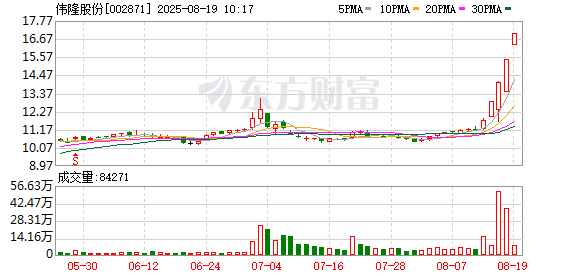
伟隆股份录得4天3板
Zheng Quan Shi Bao Wang· 2025-08-19 02:16
(文章来源:证券时报网) 近日该股表现 | 日期 | 当日涨跌幅(%) | 换手率(%) | 主力资金净流入(万元) | | --- | --- | --- | --- | | 2025.08.18 | 9.97 | 25.15 | 6019.89 | | 2025.08.15 | 9.09 | 34.30 | 4521.20 | | 2025.08.14 | 10.00 | 5.80 | 5482.51 | | 2025.08.13 | 4.56 | 10.24 | 1436.55 | | 2025.08.12 | -0.18 | 3.63 | -61.86 | | 2025.08.11 | 0.81 | 3.94 | -212.13 | | 2025.08.08 | 1.18 | 4.52 | -183.55 | | 2025.08.07 | 0.09 | 3.31 | -45.12 | | 2025.08.06 | 0.64 | 3.42 | -257.96 | | 2025.08.05 | 1.39 | 4.71 | -510.48 | 注:本文系新闻报道,不构成投资建议,股市有风险,投资需谨慎。 伟 ...

国海证券晨会纪要-20250819
Guohai Securities· 2025-08-19 00:03
Group 1 - The report highlights that Kaiyin Technology achieved a year-on-year increase in net profit of 11.75% in the first half of 2025, despite a slight decline in revenue [3][4] - The company reported a revenue of 5.66 billion yuan in H1 2025, with a net profit of 0.47 billion yuan, indicating a strong performance in profitability [4][5] - The company is increasing its R&D investment, with a total of 71.41 million yuan in H1 2025, which is expected to support the launch of innovative products [5] Group 2 - Dingyang Technology reported a revenue of 2.79 billion yuan in H1 2025, representing a year-on-year growth of 24.61%, and a net profit of 0.77 billion yuan, up 31.54% [6][7] - The company’s high-end products saw a revenue increase of 71.92%, with high-end products now accounting for 30% of total revenue [7][8] - The overall gross margin for Dingyang Technology was 60.06%, with a net margin increase to 27.57% [8] Group 3 - Baiya Co. achieved a revenue of 17.64 billion yuan in H1 2025, a 15.12% increase year-on-year, with a net profit of 1.88 billion yuan, up 4.64% [9][10] - The company is focusing on optimizing its product structure and expanding its offline channels, which have shown steady growth despite challenges in online sales [10][11] - The gross margin for Baiya Co. was 53.24%, with a net margin of 10.66% [11][12] Group 4 - Darentang reported a revenue of 26.51 billion yuan in H1 2025, a decrease of 33.15%, but a significant net profit increase of 193.08% to 19.28 billion yuan due to asset transfers [13][14] - The company’s core product sales, particularly the fast-acting heart-saving pill, showed robust growth, with sales reaching 11.28 billion yuan [14][15] - Darentang is actively expanding its retail presence and promoting new retail strategies to drive growth [15] Group 5 - The automotive industry saw a 14.7% year-on-year increase in passenger car wholesale sales in July 2025, with a total of 228.7 million units sold [17][19] - The new Wanjie M7 model is set to launch in September 2025, indicating ongoing innovation in the automotive sector [18][19] - The report suggests a positive outlook for the automotive sector, driven by policies supporting vehicle upgrades and a shift towards high-end and intelligent vehicles [20] Group 6 - Beite Technology reported a revenue of 11.13 billion yuan in H1 2025, a 15% increase year-on-year, with a net profit of 0.55 billion yuan, up 45% [22][23] - The company is focusing on cost reduction and efficiency improvements, which have positively impacted its profitability [23][24] - Beite Technology is expanding its global production capacity, particularly in the robotics sector, which is expected to contribute significantly to future growth [24][25] Group 7 - Geely Automobile achieved a revenue of 150.28 billion yuan in H1 2025, a 26.5% increase, with a core net profit of 66.6 billion yuan, up 101.7% [26][27] - The company is launching several new models in the second half of 2025, which is expected to boost sales further [28][29] - Geely's strategy includes integrating its resources with Zeekr to enhance operational efficiency and reduce costs [29][30] Group 8 - Jingfeng Mingyuan reported a revenue of 7.31 billion yuan in H1 2025, with a net profit of 15.76 million yuan, marking a significant turnaround [32][33] - The company’s high-performance computing power supply and motor drive chips have seen substantial growth, contributing to improved profitability [33][34] - Jingfeng Mingyuan is planning to acquire Yichong Technology to enhance its product offerings and market competitiveness [35][36] Group 9 - China Hongqiao reported a revenue of 81.04 billion yuan in H1 2025, a 10.1% increase, with a net profit of 12.36 billion yuan, up 35% [39][40] - The growth in revenue is attributed to increased sales and prices of aluminum and alumina products [40][41] - The company plans to repurchase shares worth at least 3 billion HKD, reflecting confidence in its long-term prospects [41][42]