
油气开采

Search documents
收评:沪指涨超1%创年内新高 两市成交额达1.6万亿
news flash· 2025-06-25 07:03
智通财经6月25日电,市场全天震荡拉升,沪指创年内新高,创业板指涨近3%。沪深两市全天成交额 1.6万亿,较上个交易日放量1882亿。盘面上,市场热点集中在金融、军工等方向,个股涨多跌少,全 市场超3800只个股上涨。从板块来看,金融股持续爆发,国盛金控等多股涨停,中、农、工、建四大行 续创历史新高。军工股集体走强,长城军工等10余股涨停。芯片股震荡拉升,台基股份20CM涨停。下 跌方面,油气股延续调整,准油股份连续跌停。板块方面,军工、证券、互联网金融、保险等板块涨幅 居前,油气、农药、影视、港口等板块跌幅居前。截至收盘,沪指涨1.03%,深成指涨1.72%,创业板 指涨3.11%。 收评:沪指涨超1%创年内新高 两市成交额达1.6万亿 ...
“产学研结合+自主技术攻关”,突破!深水油气工程建设能力全方位提升
Yang Shi Wang· 2025-06-25 06:49
Core Insights - The "Deep Sea No. 1" Phase II project has been fully put into production, expected to produce over 4.5 billion cubic meters of gas annually, making it the largest offshore gas field in China [1][3] - The project consists of 23 underwater gas wells, capable of supplying over 15 million cubic meters of natural gas daily to regions such as the Guangdong-Hong Kong-Macao Greater Bay Area and Hainan [3][5] - The gas field is characterized by its deep water operation, with a maximum operational depth exceeding 1500 meters and a geological temperature reaching up to 138 degrees Celsius [5][13] Project Details - The Phase I project was launched in June 2021, while Phase II includes 12 underwater gas wells across three areas, along with new infrastructure such as a jacket platform and underwater production systems [7][9] - The project has upgraded existing shallow water facilities to a multi-functional platform, enhancing capabilities for gas processing, shallow water drilling, and cross-regional gas distribution [9] Industry Development - China's deepwater oil and gas engineering capabilities have significantly improved, transitioning from shallow to ultra-deep water operations, with equipment technology reaching world-class standards [11][17] - The "Deep Sea No. 1" project faces extreme challenges due to its high temperature and pressure conditions, marking it as the most complex deepwater gas field developed independently in China [13][15] - The project has pioneered a new development model for deepwater gas fields, integrating remote-controlled underwater production systems with shallow water platforms, addressing significant technical challenges [15] Future Outlook - The combination of production, research, and development has led to comprehensive improvements in design, construction, installation, and commissioning of deepwater oil and gas equipment [19] - In 2024, China's marine energy supply is expected to continue growing, with marine crude oil and natural gas production projected to increase by 4.7% and 8.7% year-on-year, respectively [19]


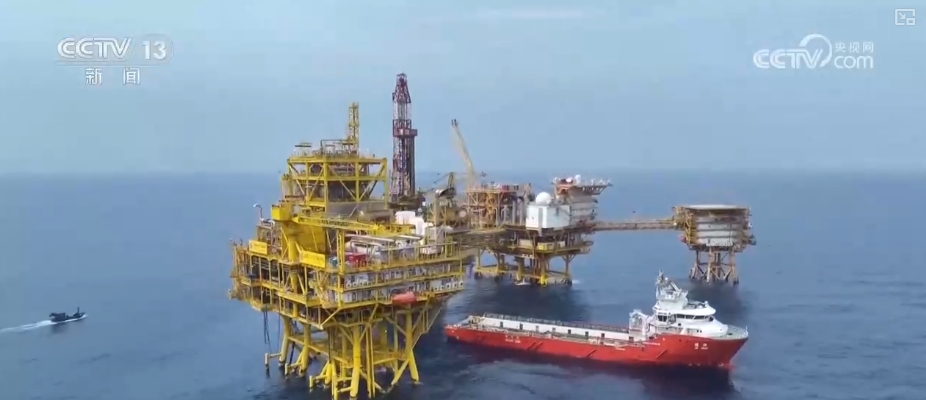
新华社丨“深海一号”大气田二期项目全面投产
国家能源局· 2025-06-25 04:55
Core Viewpoint - China National Offshore Oil Corporation (CNOOC) has fully launched the second phase of the "Deep Sea No. 1" gas field project in the South China Sea, marking the completion of the largest offshore gas field in China [1][2] Group 1: Project Overview - The "Deep Sea No. 1" gas field consists of two phases, with the first phase commencing production in June 2021 and proven natural gas geological reserves exceeding 150 billion cubic meters [1] - The project operates at a maximum water depth of over 1,500 meters and a maximum well depth exceeding 5,000 meters, making it the deepest and most challenging deep-water gas field developed independently in China [1] Group 2: Technical Challenges - The second phase of the project faces extreme geological conditions, with the highest formation temperature reaching 138 degrees Celsius and maximum pressure exceeding 69 MPa, which is 1,000 times the working pressure of a household pressure cooker [1] - The project manager highlighted the innovative development model combining underwater production systems, shallow water jacket platforms, and deep-water semi-submersible platforms with remote control systems [1] Group 3: Production Capacity and Impact - The "Deep Sea No. 1" gas field has reached its maximum design capacity, with an expected annual gas production exceeding 4.5 billion cubic meters [2] - The produced deep-water natural gas will flow to the Guangdong-Hong Kong-Macao Greater Bay Area and Hainan through various land terminals, integrating into the national natural gas pipeline network [2] - The facilities and technical systems established during the construction of the two phases are expected to facilitate the development of other complex deep-water oil and gas reserves in the Hainan sea area, enhancing the contribution of marine oil and gas to domestic energy supply [2]
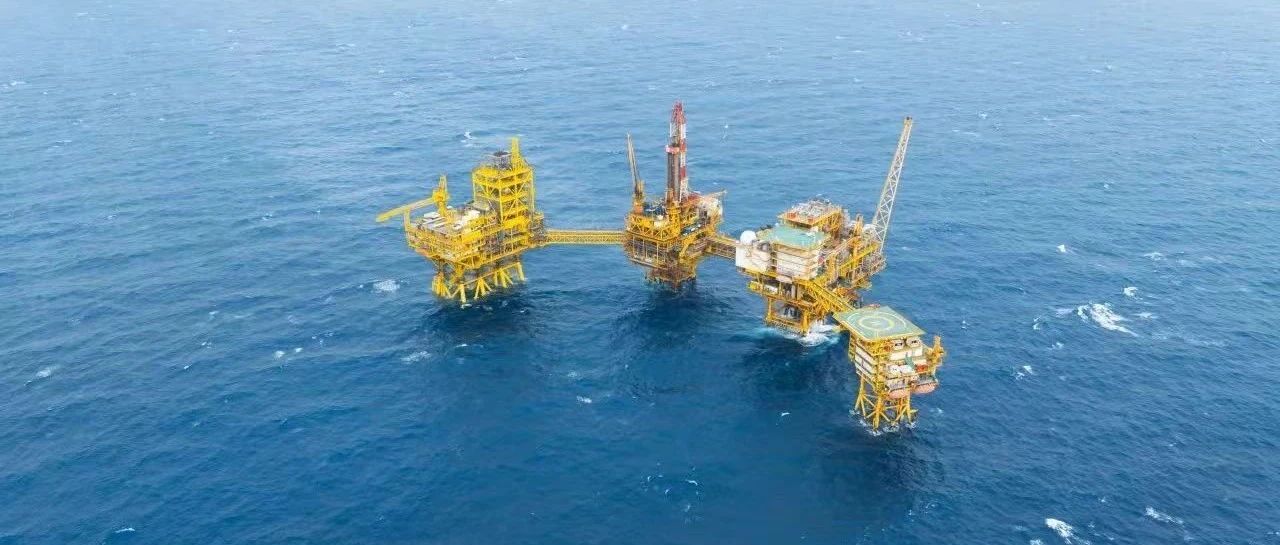
中国最大海上气田建成
Zhong Guo Xin Wen Wang· 2025-06-25 04:46
Core Viewpoint - China National Offshore Oil Corporation (CNOOC) announced the full production of the "Deep Sea No. 1" Phase II project, marking the completion of China's largest offshore gas field [1][3]. Group 1: Project Overview - The "Deep Sea No. 1" gas field has a total proven geological reserve of over 150 billion cubic meters, with the maximum operational water depth exceeding 1,500 meters and well depths over 5,000 meters [1][3]. - The Phase II project faced extreme geological conditions, with the highest formation temperature reaching 138 degrees Celsius and maximum pressure exceeding 69 MPa, which is equivalent to 1,000 times the working pressure of a household pressure cooker [3]. Group 2: Technological Innovations - The project introduced an innovative development model combining underwater production systems, shallow water jacket platforms, and deep-water semi-submersible platform remote control systems [3]. - A total of 12 underwater gas wells were deployed across three well areas (south, north, east), along with the construction of one jacket platform, one underwater production system, five subsea pipelines, and five deep-water umbilicals, creating a large-scale oil and gas production facility cluster spanning over 170 kilometers [3]. Group 3: Production Capacity and Impact - The "Deep Sea No. 1" gas field has reached its maximum design capacity, with an expected annual gas production of over 4.5 billion cubic meters [3]. - The produced deep-water natural gas will flow to the Guangdong-Hong Kong-Macao Greater Bay Area and Hainan through various land terminals, integrating into the national natural gas pipeline network [3][4].
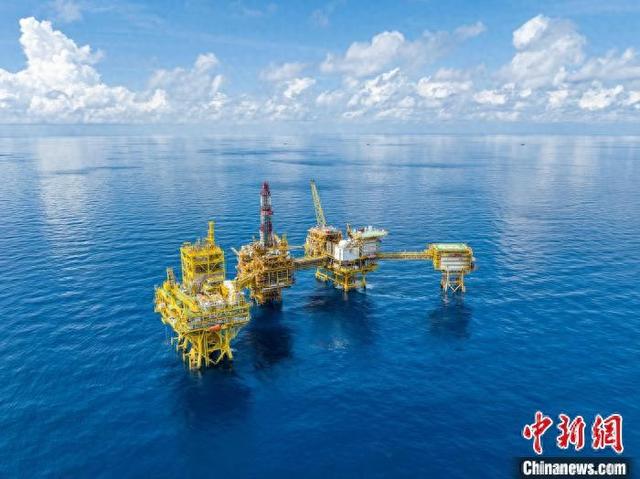
帮主郑重午评:创业板大涨1%!军工金融掀涨停潮,接下来该怎么操作?
Sou Hu Cai Jing· 2025-06-25 04:10
Market Overview - A-shares experienced a significant rally, with the ChiNext Index rising by 1.34%, driven by strong performances in the military and diversified financial sectors [1] - Northbound capital saw a substantial inflow of 8.1 billion yuan, indicating increased foreign interest in A-shares [1] External Market Influence - U.S. stock markets rose over 1%, with the Nasdaq China Golden Dragon Index increasing by 3.31%, positively impacting A-shares [3] - The easing of tensions in the Middle East and a 6% drop in international oil prices contributed to a more favorable market environment [3] Technical Analysis - The ChiNext Index broke through the critical resistance level of 2050 points, indicating a strong upward momentum [3] - The Shanghai Composite Index showed potential to challenge the 3450-point mark, contingent on volume support [3] Capital Flow - Northbound funds were actively purchasing, with over 4 billion yuan each in both the Shanghai and Shenzhen stock connects, reflecting foreign optimism towards A-shares [4] - Domestic capital showed a net outflow overall, but focused on military, financial, and solid-state battery sectors [4] Sector Performance - The military sector saw significant gains, with over ten stocks hitting the daily limit, supported by a 7.2% increase in defense budgets and geopolitical risk hedging [4] - The financial sector's surge was attributed to favorable policies announced at the Lujiazui Forum, including the establishment of a digital RMB international operation center in Shanghai [4] - The solid-state battery sector is gaining traction, with companies like Xiangtan Electrochemical achieving five consecutive trading limits, driven by advancements in technology and upcoming production milestones [5] Underperforming Sectors - The oil and gas extraction sector faced declines, with companies like Zhun Oil Co. hitting the daily limit down, linked to the drop in international oil prices [6] - The port shipping and film industry are also experiencing adjustments due to economic cycles and market capital flow [6] - The liquor sector remains sluggish, with prices for premium products like Moutai dropping significantly due to seasonal consumption declines and industry de-financialization [6] Investment Strategy - For long-term investors, the military and financial sectors present ongoing opportunities, particularly in military stocks supported by policy and earnings expectations [6] - Caution is advised in the solid-state battery sector due to high short-term volatility, emphasizing the need to identify companies with genuine technological breakthroughs [6] - The ChiNext Index's ability to maintain above 2100 points could lead to a challenge of 2200 points, with a focus on technology and new energy sectors [6]


A股午评:创业板指半日涨超1% 军工板块领涨大盘
news flash· 2025-06-25 03:38
Core Viewpoint - The A-share market showed a positive trend in the morning session, with the ChiNext index rising over 1%, driven by strong performances in the military industry sector [1] Market Performance - All three major A-share indices rose in the morning, with the Shanghai Composite Index increasing by 0.28%, the Shenzhen Component Index by 0.64%, and the ChiNext Index by 1.34% [1] - The total trading volume in the Shanghai and Shenzhen markets exceeded 920 billion [1] Sector Performance - The military industry sector led the market gains, indicating strong investor interest [1] - Financial sectors, including securities and banking, also performed well, contributing to market stability [1] - The stablecoin concept saw a pre-lunch surge, reflecting growing interest in digital currencies [1] - The oil and gas extraction sector experienced a continuous decline, with Huai Oil shares hitting the daily limit down [1] - The port and shipping sector showed weak performance, indicating potential challenges in that area [1]

“深海一号”建成国内最大海上气田 我国深水油气工程建设能力大幅提升
news flash· 2025-06-25 03:23
Core Insights - The "Deep Sea No. 1" gas field is China's most challenging deep-water gas field, characterized by the deepest operational water depth, highest formation temperature and pressure, and significant exploration and development difficulties [1] Industry Development - China's deep-water oil and gas engineering capabilities have significantly improved in recent years, achieving a transition from shallow to ultra-deep water operations [1] - The equipment technology has reached a world-class advanced level, indicating a strong competitive position in the global market [1] Project Specifications - The second phase of the "Deep Sea No. 1" project features a maximum operational water depth of nearly 1000 meters, with the highest formation temperature reaching 138 degrees Celsius and the highest pressure exceeding 69 MPa [1] - The total designed well depth exceeds 60,000 meters, and the main production facilities span a geographical distance of over 170 kilometers, making it the deepest and most extensive deep-water gas field developed independently by China [1] - The project faces extreme challenges due to the combination of "deep water, deep layers, high temperature, and high pressure" [1]
A股油气开采板块延续弱势,贝肯能源、淮油股份跌停,通源石油跌超7%,中曼石油、洲际油气等多股跟跌。
news flash· 2025-06-25 01:40
Group 1 - The A-share oil and gas extraction sector continues to show weakness, with companies like Beiken Energy and Huai Oil Co. hitting the daily limit down [1] - Tongyuan Petroleum experienced a decline of over 7%, while other stocks such as Zhongman Petroleum and Intercontinental Oil & Gas also followed the downward trend [1]

以伊冲突一夜反转!国际油价暴跌8%回吐地缘溢价,国内油气股遭重挫
Hua Xia Shi Bao· 2025-06-24 23:29
Core Viewpoint - International oil prices experienced a significant decline due to the de-escalation of geopolitical tensions, with prices dropping over 8% in a single day, effectively reversing gains made since June 13 [1][2][3] Oil Price Movement - On June 23, international oil prices fell sharply after initial increases due to heightened geopolitical risks, with WTI crude oil futures dropping by $6.61 to $67.23 per barrel (down 8.95%) and Brent crude oil futures falling by $6.36 to $70.65 per barrel (down 8.26%) [2] - Following the announcement of a ceasefire between Iran and Israel, oil prices continued to decline, nearly erasing all gains from the previous weeks [1][3] Impact on Oil and Shipping Stocks - The oil and shipping sectors in the A-share market faced significant losses on June 24, with companies like Shandong Molong and Tongyuan Petroleum hitting their daily limit down [1][4] - Prior to the decline, oil-related stocks had surged, with Shandong Molong experiencing a nearly 95.44% increase from June 13 to June 23 [4] Market Sentiment and Future Outlook - Analysts predict that the easing of geopolitical tensions will shift market focus back to fundamental and macroeconomic drivers, with expectations of oil prices stabilizing in the $60-$65 per barrel range for Q3, but facing potential downward pressure in Q4 [6] - The market is also influenced by OPEC's continued production increases and macroeconomic factors such as U.S. tariff policies and inflation risks [6]


我国首个深水高压气田“深海一号”二期项目全面投产
news flash· 2025-06-24 17:25
Core Viewpoint - The "Deep Sea No. 1" Phase II project, China's first deep-water high-pressure gas field, has been fully put into production, marking a significant achievement in the country's energy sector [1] Group 1: Project Overview - "Deep Sea No. 1" gas field is the deepest and most challenging deep-water gas field developed independently in China, with a maximum operating water depth exceeding 1500 meters and a maximum formation temperature of 138 degrees Celsius [1] - The proven geological reserves of natural gas in the field exceed 150 billion cubic meters [1] - The project is developed in two phases, with Phase I launched in June 2021 and Phase II deploying 12 underwater gas wells across three well areas: south, north, and east [1] Group 2: Infrastructure Development - Phase II includes the construction of one jacket platform, one underwater production system, five subsea pipelines, and four deep-water umbilicals, creating a large-scale oil and gas production facility cluster with a geographical span of over 170 kilometers and a water depth span exceeding 1500 meters [1]