超市零售

Search documents
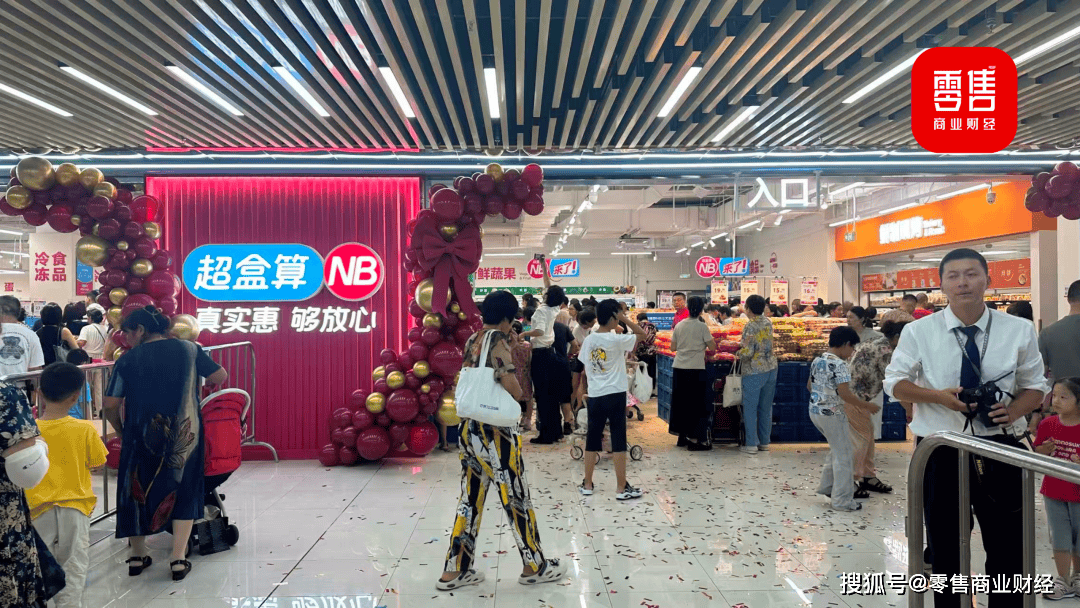
盒马“超盒算NB”打响硬折扣升级战
Sou Hu Cai Jing· 2025-08-30 11:01
Core Viewpoint - Hema's discount retail brand Hema NB has been upgraded to "Super Hema NB," indicating a strategic shift to accelerate independent development in a competitive discount retail market [2][4]. Group 1: Brand Upgrade and Market Position - The brand upgrade reflects Hema's confidence in establishing a mature and independent operational system after successfully navigating the incubation phase [4]. - Super Hema NB has nearly 300 stores, indicating a significant market presence in various cities across Jiangsu, Zhejiang, and Shanghai [4]. - The upgrade signifies a new development stage for discount retail, intensifying market competition [4]. Group 2: Market Context and Growth - The discount retail market in China is rapidly growing, with a market size of approximately 1.79 trillion yuan in 2023, accounting for 3.8% of total social retail sales [6]. - The rise in consumer focus on "value for money" is driving the growth of the discount retail sector [6]. - Super Hema NB combines "hard discount" with "community commerce," targeting practical family needs with a streamlined selection of around 1,500 products [6][11]. Group 3: Competitive Advantages - Super Hema NB leverages Hema's extensive online and offline experience, including an intelligent site selection system for rapid store openings [8]. - The brand has established an independent and efficient supply chain, ensuring product uniqueness and cost advantages [8]. - With nearly 60% of sales from private label products, Super Hema NB maintains high customer loyalty through quick product development and iteration [8]. Group 4: Future Industry Trends - The brand upgrade marks the beginning of a "refined cultivation phase" in the discount retail sector, shifting competition from price alone to building robust supply chain barriers [8]. - The focus will be on efficiently serving consumers and rapidly replicating successful store models for scalable growth [8]. - Ultimately, the core of competition in the discount retail sector will center on creating genuine value for consumers [8].

宿迁市民雨中撑伞排队 京东折扣超市打造现象级开业现场
Zhong Jin Zai Xian· 2025-08-30 10:19
Group 1 - The core point of the news is the successful opening of four JD discount supermarket stores in Suqian, which attracted significant consumer interest despite rainy weather [1][11] - The stores leverage JD's strong supply chain and direct sourcing capabilities, offering over 5,000 high-cost performance products across various categories, enhancing the shopping experience with spacious layouts [3][11] - Popular items such as "9.9 yuan for 30 fresh eggs" quickly sold out, demonstrating the appeal of low prices to consumers, who were willing to wait for restocks [5][11] Group 2 - Other affordable products like "14.99 yuan for 10 kg of flour" and "39.99 yuan for 5L of soybean oil" also gained strong attention, with fresh produce and meat sections seeing high foot traffic [7] - The integration of offline shopping with online instant delivery provides convenience, allowing customers to either shop in-store or order via the JD app for delivery within 30 minutes [9] - The successful launch and consumer turnout reflect a significant release of pent-up demand and inject new vitality into the regional commercial landscape [11]


关店200家的“胖东来学徒”,交了份反面教材
创业邦· 2025-08-30 10:08
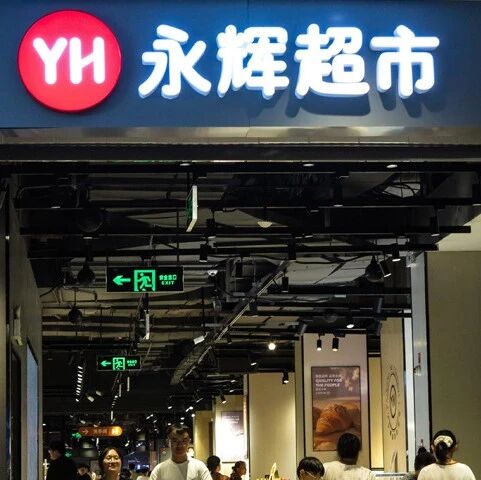
Core Viewpoint - Yonghui Supermarket has struggled to implement the "Fat Donglai model," resulting in significant financial losses despite initial optimism and rapid store renovations [5][7][22]. Group 1: Financial Performance - Yonghui Supermarket reported a revenue decline of 20.73% and a net loss of 241 million yuan, marking a continuation of four years of losses totaling over 9.5 billion yuan [7][11]. - The company has closed 220 stores in the first half of the year, reflecting ongoing operational challenges [7][11]. - The average investment for each renovated store is approximately 8 million yuan, which adds financial strain given the company's high debt ratio of 88.73% [31][33]. Group 2: Transformation Efforts - Yonghui has aggressively pursued the "Fat Donglai model," with 162 stores renovated and reopened by August 21, aiming for a total of 300 by early 2026 [11][33]. - The transformation includes significant changes in store layout, product offerings, and customer service features, such as free trial tastings and enhanced customer areas [15][17]. - Despite the rapid renovations, the expected customer traffic did not translate into sustained sales, leading to criticism that Yonghui's products lack unique appeal compared to competitors [19][27]. Group 3: Competitive Challenges - Other companies attempting to adopt the "Fat Donglai model," such as Zhongbai Group and Jiajia Yue, have also faced financial difficulties, indicating broader challenges in the retail sector [9][22]. - Yonghui's reliance on the "Fat Donglai" brand for customer attraction has proven insufficient, as initial customer interest waned quickly after the novelty wore off [27][29]. - The disparity in employee compensation between Yonghui and Fat Donglai poses a challenge, as Fat Donglai offers significantly higher wages, impacting talent retention and service quality [30][38]. Group 4: Cultural and Operational Insights - The success of Fat Donglai is attributed to its strong emphasis on employee welfare and a unique corporate culture, which Yonghui has yet to fully replicate [38][44]. - Yonghui's adjustments have led to a 20%-30% increase in employee salaries, but this is still not competitive enough to attract and retain top talent [48]. - The need for a deeper cultural shift within Yonghui is emphasized, suggesting that mere operational changes are insufficient for long-term success [48].

关店200家的「胖东来学徒」,交了份反面教材
36氪· 2025-08-30 09:07
Core Viewpoint - Yonghui Supermarket's ambitious transformation inspired by the "Fat Donglai" model has not yielded the expected results, leading to significant financial losses and operational challenges despite initial stock price surges [7][10][41]. Group 1: Financial Performance - Yonghui Supermarket reported a revenue decline of 20.73% and a net loss of 241 million yuan, marking a continuation of its financial struggles with total losses exceeding 9.5 billion yuan over four years [10][11]. - The company has closed 220 stores in the first half of the year, reflecting ongoing operational difficulties [11]. - Despite a rapid store transformation initiative, the financial outcomes have not improved, with the company facing a high debt ratio of 88.73% [56]. Group 2: Transformation Strategy - Yonghui's transformation, termed "Fat Reform," involved a rapid rollout of 162 remodeled stores across various cities, aiming to replicate the success of "Fat Donglai" [21][22]. - The transformation included significant changes in store layout, product offerings, and customer service, with a focus on enhancing customer experience [33][36]. - However, the reliance on the "Fat Donglai" brand for customer attraction has proven insufficient, as initial customer interest waned quickly after the novelty wore off [45][46]. Group 3: Operational Challenges - The transformation has led to increased operational costs, with an average investment of 8 million yuan per remodeled store, straining the company's financial resources [54]. - Yonghui's employee compensation remains significantly lower than that of "Fat Donglai," impacting staff morale and retention [51][52]. - The company's previous revenue model, which relied heavily on supplier fees, has diminished, leading to a loss of control over product quality and customer satisfaction [27][29]. Group 4: Market Position and Competition - The competitive landscape has intensified, with "Fat Donglai" maintaining a strong market presence and customer loyalty, while Yonghui struggles to establish its own unique value proposition [50][81]. - The lack of a compelling product lineup compared to competitors like Sam's Club and Hema has hindered Yonghui's ability to attract and retain customers [46][50]. - The ongoing challenges faced by Yonghui and its peers highlight the complexities of adapting to new retail models in a rapidly changing market environment [14][41].
京东大型折扣超市四店齐开上架“东哥同款”,刘强东现身
Nan Fang Du Shi Bao· 2025-08-30 08:35
Core Insights - JD's discount supermarket model has successfully launched in Suqian, with four stores opening simultaneously, leveraging its large store format and diverse SKU offerings to attract consumers [1][3][5] Group 1: Store Launch and Strategy - JD's discount supermarket opened its first store in Zhuozhou on August 16, achieving record sales on the first day [1] - The four new stores in Suqian each exceed 5,000 square meters, designed to accommodate higher customer traffic with wider aisles compared to the Zhuozhou store [3] - The stores offer over 5,000 SKUs across various categories, including daily necessities, fresh food, and beverages, catering to the one-stop shopping needs of families [3] Group 2: Location and Consumer Engagement - The new stores are strategically located in high-traffic commercial areas and community centers, enhancing accessibility for local consumers [3] - The stores provide both in-store shopping and online ordering through the JD app, with delivery available within 30 minutes, improving convenience for customers [5] Group 3: Supply Chain and Brand Impact - JD's strong supply chain allows for direct sourcing of unique products, such as 10 kg of flour for 14.99 yuan and 5L of soybean oil for 39.99 yuan, enhancing value for consumers [3] - The launch in Suqian is seen as a validation of JD's supply chain capabilities and a strategic move to expand its retail market presence and brand influence [5] Group 4: Community and Cultural Engagement - The opening event attracted significant attention, with local consumers sharing experiences on social media, including sightings of JD's founder, Liu Qiangdong, in the area [7]
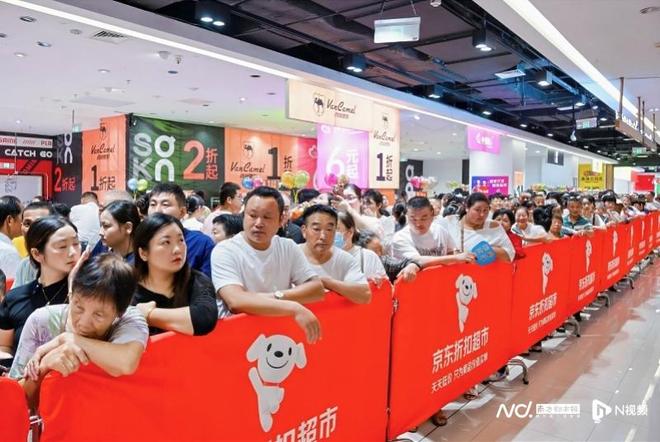
盒马NB升级“超盒算NB” 硬折扣超市阿里、美团“硬碰硬”
Zhong Guo Jing Ying Bao· 2025-08-30 06:06
Core Viewpoint - The rebranding of Hema NB to "Chao He Suan NB" signifies its maturity and readiness for independent growth, with a focus on community-based retailing and competitive pricing [2][8]. Group 1: Brand and Store Development - The first batch of upgraded stores will debut in ten cities including Shanghai, Hangzhou, and Nanjing [2]. - As of the end of August, the total number of Chao He Suan NB stores is nearing 300 [2]. - The new branding aims to differentiate itself from Hema Fresh and other competitors, with a focus on practical family needs [3][5]. Group 2: Product Offering and Pricing Strategy - Chao He Suan NB offers a wide range of products including fresh food, ready-to-eat meals, and household items, targeting practical family dining needs [3][4]. - The pricing strategy emphasizes high value, with examples such as 1.5L fresh milk at 14.9 yuan and a 450g blueberry pack at 38.9 yuan, which is cheaper than competitors [4][6]. - The store aims to provide larger quantities at lower prices compared to Hema Fresh, making it more suitable for family consumption [4][6]. Group 3: Supply Chain and Operational Efficiency - Chao He Suan NB follows a "wide category, narrow product" selection strategy, with 1,500 SKUs designed to meet diverse consumer needs while maintaining cost efficiency [6]. - The brand's operational model focuses on minimizing costs through simplified supply chains and standardized processes, achieving a low gross margin of around 15% [7][6]. - The brand's self-owned product sales account for 60% of its offerings, enhancing its bargaining power with suppliers [6][7]. Group 4: Competitive Landscape - The launch of Chao He Suan NB coincides with the opening of Meituan's "Happy Monkey" discount supermarket, intensifying competition in the hard discount sector [2][7]. - JD.com is also entering the discount supermarket space with a different operational model, focusing on larger stores and a broader SKU range [7]. - The competitive landscape is characterized by a focus on supply chain efficiency rather than just brand recognition, with all players vying for market share in community-based retail [6][7].


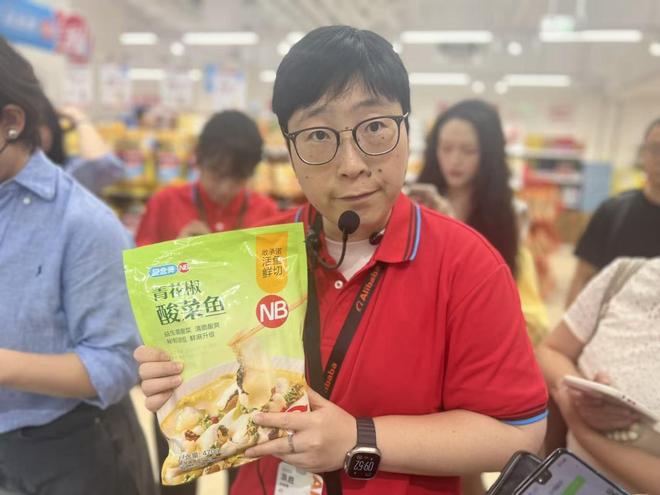
京东折扣超市第二站落地宿迁,8月30日四店齐开
Yang Zi Wan Bao Wang· 2025-08-30 05:54
Group 1 - JD Discount Supermarket, as the first large-scale discount supermarket format in the country, opened its first store in Zhuozhou, Hebei on August 16, and quickly gained popularity [2] - The second phase of expansion took place in Suqian, Jiangsu, with four stores opening simultaneously, significantly boosting local consumer enthusiasm [2] - Each of the four new stores exceeds 5,000 square meters in area, featuring wider aisles to accommodate more customers and enhance shopping comfort [2] Group 2 - The stores offer over 5,000 SKUs, covering daily necessities, fresh food, fast-moving consumer goods, and beverages [2] - The selection of store locations targets high-traffic areas and community commercial centers, focusing on daily high-frequency consumption [2] - The stores are strategically located in popular shopping centers and residential areas, enhancing convenience for local consumers [2] Group 3 - JD's strong supply chain allows for direct sourcing of unique products, minimizing price markups by eliminating intermediaries [4] - The Suqian stores feature several JD private label products, enhancing the product offering [4] - Consumers can enjoy both in-store shopping and online ordering with rapid delivery options through the JD app, with delivery times as fast as 30 minutes [4] Group 4 - The strategic layout in Suqian leverages JD's comprehensive logistics and smart supply chain systems, contributing to local economic revitalization [4]
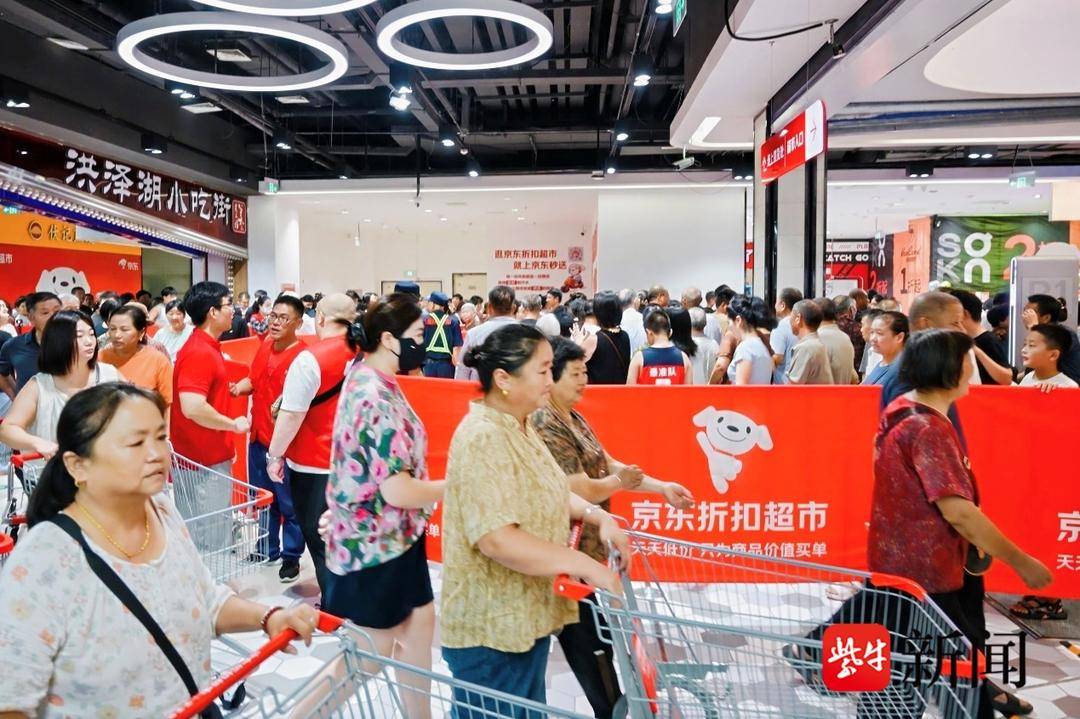
“胖东来模式”在西安开花结果 永辉超市西安调改步入精细化运营深水区
Zheng Quan Ri Bao Wang· 2025-08-30 04:14
Group 1 - Yonghui Supermarket officially opened its first self-reformed store in Xi'an, marking the 13th self-reformed store in the city [1] - The Xi'an Zhongmao Plaza store underwent a significant transformation, inspired by the successful model of Pang Donglai, focusing on product structure, quality, pricing, store layout, environment, service, and employee treatment [1] - On its first day of trial operation, the Zhongmao store achieved sales exceeding 1.6 million yuan, with an average daily performance of 1.58 million yuan over the first ten days, which is 7.9 times higher than before the reform, and daily foot traffic increased by 4.3 times [1] Group 2 - The successful transformation of the Zhongmao Plaza store is seen as a case study for Yonghui Supermarket, demonstrating that physical retail can thrive by returning to the essence of business: "good quality, good prices, and good reputation" [2] - The opening of the Xi'an Chang'an store represents the continuation and expansion of the vitality of the "Xi'an model" [2]
一天开四店、SKU达5000支 京东折扣超市落地宿迁
Bei Jing Shang Bao· 2025-08-30 03:29
Group 1 - Four new JD discount supermarkets opened in Suqian, Jiangsu, located in key commercial areas and community centers [1][3] - The stores utilize a "large store, multiple SKUs" model, each exceeding 5,000 square meters, designed to accommodate higher customer traffic [3] - The product range includes over 5,000 SKUs covering daily necessities, fresh food, fast-moving consumer goods, and beverages, catering to the one-stop shopping needs of families [3] Group 2 - The supermarkets leverage JD's supply chain to offer direct sourcing of specialty products, minimizing price markups by eliminating intermediaries [4] - JD's private label products, such as Seven Fresh, are available in the new stores, enhancing product variety [4] - Consumers can shop in-store or order online via the JD app, with delivery available in as fast as 30 minutes [4]
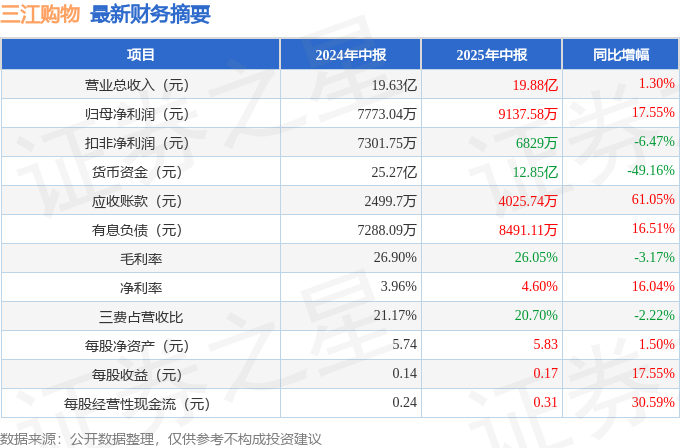
三江购物2025年中报简析:营收净利润同比双双增长
Zheng Quan Zhi Xing· 2025-08-29 22:41
Financial Performance - The company reported a total revenue of 1.988 billion yuan for the first half of 2025, representing a year-on-year increase of 1.3% [1] - The net profit attributable to shareholders reached 91.38 million yuan, up 17.55% year-on-year [1] - In Q2 2025, the total revenue was 915 million yuan, showing a 1.51% increase compared to the same quarter last year [1] - The net profit for Q2 2025 was 20.61 million yuan, which is a decrease of 18.97% year-on-year [1] Profitability Metrics - The gross margin was 26.05%, down 3.17% year-on-year [1] - The net profit margin improved to 4.6%, an increase of 16.04% year-on-year [1] - Total selling, administrative, and financial expenses amounted to 412 million yuan, accounting for 20.7% of revenue, a decrease of 2.22% year-on-year [1] Shareholder Value - Earnings per share (EPS) increased to 0.17 yuan, reflecting a year-on-year growth of 17.55% [1] - The net asset value per share rose to 5.83 yuan, up 1.5% year-on-year [1] - Operating cash flow per share improved to 0.31 yuan, a significant increase of 30.59% year-on-year [1] Investment Returns - The company's return on invested capital (ROIC) was 6.84%, indicating average capital returns [3] - The historical median ROIC over the past decade was 2.49%, suggesting weak investment returns [3] - The net profit margin for the previous year was 3.68%, indicating low added value for products or services [3] Fund Holdings - The largest fund holding shares in the company is Minsheng Jianyin Guozheng 2000 Index Enhanced A, which holds 40,800 shares and has recently entered the top ten holdings [4] - The fund's current scale is 0.69 billion yuan, with a net value of 1.6107 as of August 29, showing a decline of 0.28% from the previous trading day, but an increase of 85.5% over the past year [4]