
渔业

Search documents
海上“丰”景正盛,阳江“蓝色粮仓”是如何炼成的?
Nan Fang Nong Cun Bao· 2025-08-25 08:02
Core Viewpoint - The article highlights the development of Yangjiang's marine economy, focusing on the establishment of modern marine ranching and the integration of various industries to enhance economic growth and sustainability [1][2][3]. Group 1: Marine Ranching Development - Yangjiang has created three national-level marine ranch demonstration zones, including the largest in the country, with a planned seawater aquaculture area of 24,300 hectares and an output of 820,000 tons by 2024, accounting for 21.8% of the province's total [8][9]. - The city has seen a 4.46% increase in seawater aquaculture output in the first half of 2025, reaching 385,000 tons, marking the highest growth rate in five years [9]. - Yangjiang is advancing a project called "34715," which aims to develop a comprehensive marine ranching industry chain and promote the modernization of marine fisheries [25][26]. Group 2: Deep-Sea Aquaculture Initiatives - The city has established three deep-water net cage aquaculture bases, with a total of 955 deep-water cages, ranking second in the province for both quantity and output [33]. - The "Yangxi No. 1" deep-sea comprehensive aquaculture platform project, which includes a main breeding platform and 30 deep-water cages, has begun construction and is designed to withstand severe weather conditions [35][36]. - The "Hailing Island No. 1" ecological marine ranch innovation park project aims to enhance intelligent aquaculture, with an expected output of 1,700 tons and an annual value of nearly 50 million yuan [40]. Group 3: Seed Industry and Technological Advancements - Yangjiang is a significant base for marine seed production, with projections for 2024 to produce 4.5 billion oyster seeds, 8.8 billion shrimp seeds, and over 3.3 billion marine fish seeds, accounting for over 49% of the province's total [49][51]. - The city has established a "Guangdong Provincial Doctoral Workstation" to enhance fish seed quality and production, with an annual output of approximately 300 million fish seeds valued at 100 million yuan [46][48]. - Yangjiang has developed a comprehensive marine seed industry system, with over 1,000 marine seed hatchery enterprises, and aims to create a national model for marine seed industry development [60][64]. Group 4: Integration of Marine Economy and Tourism - The Yangjiang Hailing Island International Seafood Trading Market serves as a vital platform for connecting local seafood with external markets, enhancing the region's economic profile [74]. - The city is promoting the integration of marine ranching with tourism through events like the "Fishing Season" and "Oyster Food Week," aimed at increasing brand awareness and cultural promotion [76][77]. - Yangjiang is exploring new development paths by integrating marine ranching with offshore wind power, involving major state-owned enterprises to enhance the marine economy [79][80]. Group 5: Future Development Plans - By 2030, Yangjiang plans to establish a modern marine ranching area of approximately 131 square kilometers, with an annual output of 1.05 million tons of marine products and a processing rate of 40% [96][97]. - The city aims to transform its traditional "relying on the sea" approach into a strategic "marine economy" development model, contributing significantly to the "New Guangdong" initiative [100][104].


从水果到水产全都缺,美国食品行业团体竞相呼吁豁免关税……
Feng Huang Wang· 2025-08-25 03:08
Core Viewpoint - Multiple U.S. food industry groups are seeking exemptions from high tariffs imposed by President Trump, citing the vulnerability of the food sector to these tariffs due to reliance on imports for various agricultural products [1][2] Group 1: Tariff Impact on Food Industry - The U.S. food industry is particularly affected by Trump's tariffs, as many agricultural products are difficult to grow domestically at affordable costs [1] - Approximately 20% of food consumed in the U.S. is imported, with 85% of seafood consumption relying on imports [1] - The U.S. seafood trade deficit reached $24 billion in 2022, highlighting the significant reliance on foreign sources [1] Group 2: Specific Product Concerns - Shrimp imports account for about 90% of the U.S. supply, with India providing over one-third of this supply [2] - The annual import value of fresh fruits and vegetables in the U.S. is $36 billion, with Mexico being the largest supplier [2] Group 3: Exemption Process and Challenges - The process for obtaining tariff exemptions in the food sector may be complex due to the lack of a defined application procedure [3] - Some food products may be exempt from tariffs based on existing trade agreements, such as those with Indonesia and the EU [3] - The U.S. has proposed exemptions for certain natural resources not produced domestically, including coffee and tropical fruits [3] Group 4: Price Implications - Without additional tariff exemptions, food prices in the U.S. could rise significantly, particularly for seasonal fresh ingredients [4] - The National Restaurant Association has warned that tariffs on seasonal produce could lead to substantial menu price increases [4] Group 5: Domestic Production Challenges - The import share of cucumbers in the U.S. has increased from 35% in 1990 to nearly 90%, indicating a shift towards reliance on imports [5] - Growing 90% of cucumbers domestically would require extensive greenhouse cultivation, significantly raising costs [5] - The food industry is advocating for targeted approaches to tariffs to support domestic production and job retention [5]
数据“贷”来5000万!龙游渔业凭数据知产拿下融资大单
Sou Hu Cai Jing· 2025-08-24 10:08
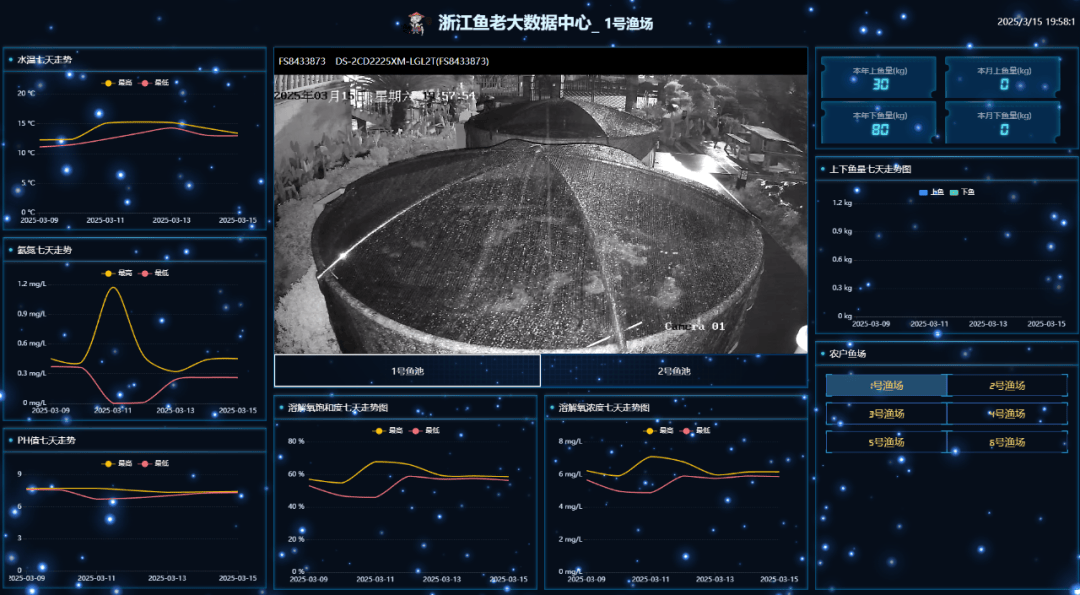
Group 1 - The core viewpoint is that data intellectual property can be transformed into financial assets, providing new financing avenues for modern agricultural enterprises [1][3][7] - Zhejiang Yuelaoda Agricultural Technology Co., Ltd. successfully obtained a pledge financing of 50 million yuan from Longyou Rural Commercial Bank, marking a breakthrough in data intellectual property pledge financing in the agricultural sector of Quzhou City [1][3] - The financing represents the highest amount recorded for similar pledges in the agricultural field within the city [1] Group 2 - Modern agricultural enterprises face challenges such as being asset-light and having difficulty in financing, but data intellectual property registration allows data to be treated like patents and trademarks, enabling market circulation and value realization [3] - Longyou County's market regulatory bureau, in collaboration with other departments, is focusing on the value extraction of data elements in agriculture, optimizing production processes through digital models, and integrating industry resources via digital platforms [3][6] - The county aims to deepen cooperation between government and financial institutions to innovate financial services related to intellectual property, transforming data intellectual property into assets and unlocking the potential of data elements for high-quality development [6]
摩洛哥出口凤尾鱼占非洲出口总量87%
Shang Wu Bu Wang Zhan· 2025-08-23 16:48
(原标题:摩洛哥出口凤尾鱼占非洲出口总量87%) 产量方面,2024年非洲产量为15.3万吨,下降0.1%。尼日利亚、埃塞俄比 亚和摩洛哥仍然是主要生产国,合计占非洲大陆产量的31%。 出口方面,2024年,非洲出口量约9000吨,同比下降9.9%。摩洛哥仍是非 洲最大的出口国,出口量7800吨,价值7200万美元,占出口总量87%;其次是 突尼斯,出口量1200吨,价值1200万美元。 研究表明,2024年非洲凤尾鱼消费量约14.4万吨,自2013年以来年均增长 率为2.7%,凤尾鱼制品市场规模达9.41亿美元。预计2024年至2035年间,非洲 凤尾鱼消费量每年将增长约1%,达16.2万吨;销售额预计每年增长2.4%,到 2035年将达到峰值,接近12亿美元。 凤尾鱼消费主要集中在尼日利亚(2.3万吨)、埃塞俄比亚(1.4万吨)和 刚果民主共和国(1万吨),占非洲大陆凤尾鱼消费量的32%。就价值而言, 尼日利亚占据市场主导地位(1.43亿美元),其次是埃塞俄比亚(8600万美 元)和埃及(8000万美元)。人均消费量最高的国家是阿尔及利亚(每千人 112公斤)、坦桑尼亚(110公斤)和埃塞俄比亚(107公 ...
处暑夜捕迎鱼汛 万亩莲藕喜丰收:“水上经济”活力足
Yang Shi Wang· 2025-08-23 08:25
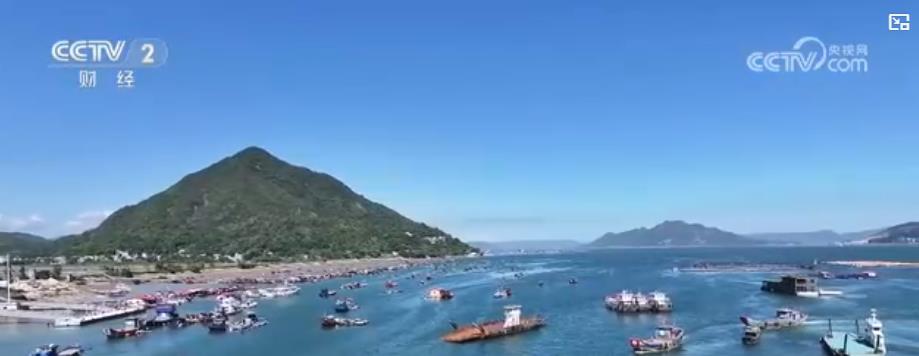
Group 1: Fisheries Industry - Ningde, Fujian is a core breeding area for large yellow croaker, with local fishermen practicing the traditional custom of night fishing during the end of summer [1][3] - The night fishing season begins in early autumn when the water temperature becomes suitable, leading to active fish schools and high-quality large yellow croaker [3] - The fishing operation involves using detection equipment to locate fish schools, and fishermen work together to haul in large quantities of fish, which are then quickly transported to seafood markets [5] Group 2: Agriculture Industry - In Ying Shang County, Anhui, the lotus root harvest season has begun, with farmers actively collecting mature lotus roots for sale across the country [7] - The daily output of lotus roots from the planting base is around 50,000 jin (approximately 25,000 kg) [7] - Ying Shang County has developed a strong agricultural sector focused on aquatic crops, with lotus root planting covering 40,000 mu (approximately 2,666.67 hectares) and generating an annual output value of 25 million yuan [9]
中水渔业中报降收增利背后:金枪鱼产品亏本卖
Zheng Quan Zhi Xing· 2025-08-23 07:32
Core Viewpoint - China National Fisheries (中水渔业) reported a decrease in revenue but an increase in net profit for the first half of 2025, primarily due to substantial government subsidies [3][4][6]. Financial Performance - The company achieved revenue of 1.747 billion yuan, a year-on-year decline of 10.66%, while net profit attributable to shareholders was 86.31 million yuan, an increase of 22.12% compared to the previous year [4]. - In Q1, revenue was 846.3 million yuan, down 15.28%, with a net loss of 16.06 million yuan. In Q2, revenue was 901.1 million yuan, down 5.84%, with a net profit of 102.4 million yuan, up 2.19% [5]. Government Subsidies Impact - The company received government subsidies totaling 269 million yuan in the first half of the year, which significantly boosted profits, accounting for 302% of net profit [6]. - The subsidies included 252 million yuan related to income and 16.9 million yuan related to assets, indicating a heavy reliance on government support for financial performance [6]. Profitability and Margin Analysis - The overall gross margin for the company was 5.23%, which, while an improvement, remains low compared to industry peers [7][8]. - The gross margin for the core product, tuna, fell sharply to -15.38%, a decline of 21.1% year-on-year, significantly impacting overall profitability [10]. Business Segment Performance - The fishing business was the only segment to show revenue growth, achieving 739 million yuan, up 14.25%, with a gross margin of 5.15% [10]. - The retail and processing trade segment saw a revenue decline of 43.24%, while the fishery service segment's revenue decreased by 2.94% [11]. Investment Projects and Future Outlook - The company has invested heavily in tuna-related projects, including a tuna research and processing center and the renovation of fishing vessels, with expected completion dates pushed to 2025 [12][13]. - The tuna research and processing center aims to enhance product value and market position, but the delayed project completion raises concerns about future profitability [12][13].

文化中国行·人间好时节|处暑:清风解暑意 新凉载秋实
Yang Shi Xin Wen Ke Hu Duan· 2025-08-23 06:17
Core Points - The article highlights the transition from summer to autumn, emphasizing the seasonal changes and cultural significance of the "Chushu" period, which is a time for harvest and learning [1] Group 1: Seasonal Changes - The "Chushu" period marks the end of summer heat and the arrival of cooler autumn weather, creating a pleasant climate [1] - This season is characterized by the maturation of fish, shrimp, and shellfish, making it an ideal time for fishing and harvesting [1] Group 2: Cultural Significance - Many coastal regions celebrate the opening of fishing season with festivals, sending fishermen out to sea [1] - The article reflects on the importance of education during this time, suggesting that it is a good season for studying [1] Group 3: Traditional Craft - The traditional craft of making Xuan paper involves 108 processes and has a history of over a thousand years, recognized as a representative work of human intangible cultural heritage [1] - Xuan paper is considered the best medium for showcasing the essence and charm of Chinese ink art [1]

镜头丨暑云散 秋意浓
Zhong Yang Ji Wei Guo Jia Jian Wei Wang Zhan· 2025-08-23 05:01
Group 1 - The arrival of the "Chushu" season signifies the transition from summer to autumn, bringing cooler weather and a change in the landscape [1] - During this period, agricultural activities are in full swing, with local farmers in Jiangxi Province actively harvesting crops like "Xicao" [6] - The pepper harvest in Yuqing County, Guizhou Province, is also notable, with locals taking advantage of favorable weather to dry the abundant red peppers [8] Group 2 - The fishing industry experiences a peak during the "Chushu" season, with fishermen in Xiamen celebrating the opening of the fishing season, hoping for good fortune and a bountiful catch [11] - Coastal fishermen in Hainan Province are also seeing significant catches, with boats returning to port filled with fresh seafood, enhancing the local economy [14] - The natural beauty of the season attracts tourists, as seen in the Danyang Mountain Forest Park in Guangxi, where the scenery is described as dreamlike [13]

儋州划定5个深远海片区,大力发展深海网箱养殖
Hai Nan Ri Bao· 2025-08-23 01:14
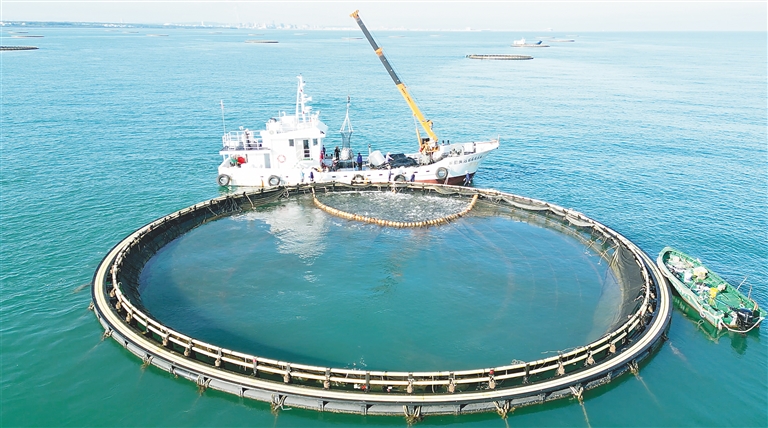
Core Viewpoint - The article highlights the development of deep-sea cage aquaculture in Danzhou, Hainan, focusing on the successful harvest of golden pomfret by Shennong Aquatic Products, a subsidiary of Shennong Seed Industry, and the strategic initiatives taken by the local government to promote marine fisheries [1][3][4]. Company Summary - Shennong Aquatic Products has successfully harvested its first batch of 120,000 pounds of golden pomfret, which were raised in deep-sea cages for nearly five months [3]. - The company has invested in a deep-sea cage aquaculture project in the Erman Bay, having released an initial batch of 4 million golden pomfret fry into the sea in April [3][4]. - The company employs an "order-based production" model, with plans to process the fish in Zhanjiang before distributing them to major supermarkets nationwide [4]. - Shennong Aquatic Products is enhancing the disease resistance and survival rates of golden pomfret through breeding programs in collaboration with institutions like the Chinese Academy of Sciences and Hainan University [5]. Industry Summary - The development of deep-sea cage aquaculture is a key direction for the transformation and structural adjustment of Hainan's fisheries [5]. - The local government has designated five deep-sea areas covering 40,800 hectares to promote deep-sea aquaculture, aiming to alleviate financial pressures on enterprises and support high-quality development of modern marine fisheries [5]. - The government is in discussions with Shennong Aquatic Products to expand the aquaculture scale to 10,000 acres, which is expected to enhance local fishermen's income [5].

*ST中基: 关于公司拟续聘会计师事务所的公告
Zheng Quan Zhi Xing· 2025-08-22 16:48
Group 1 - The company intends to reappoint Zhongxinghua Accounting Firm for the 2025 audit work [1] - Zhongxinghua Accounting Firm was established in 1993 and has undergone several name changes and mergers, currently having 199 partners and 1,052 registered accountants [1][2] - The firm reported a securities business income of 332.2005 million yuan and total audit fees of 222.0886 million yuan [1] Group 2 - In the past three years, Zhongxinghua has faced one civil lawsuit related to its professional conduct and has received four administrative penalties [2] - The project partner, Liu Bing, has been involved in auditing listed companies since 2009, while the signing accountant, Zhang Yadi, became a registered accountant in 2025 [2][3] - The audit fees for financial reporting are set at 900,000 yuan, with an increase of 170,000 yuan compared to the previous period [3] Group 3 - The audit committee believes that Zhongxinghua adheres to independent auditing standards and possesses professional competence [3] - The board of directors and the supervisory board approved the reappointment of Zhongxinghua for the 2025 audit, pending shareholder approval [4]
