茶饮

Search documents
秋冬大热门,古茗、茉莉奶白都在推,“咸酪”热度还在飙升
3 6 Ke· 2025-08-15 03:00
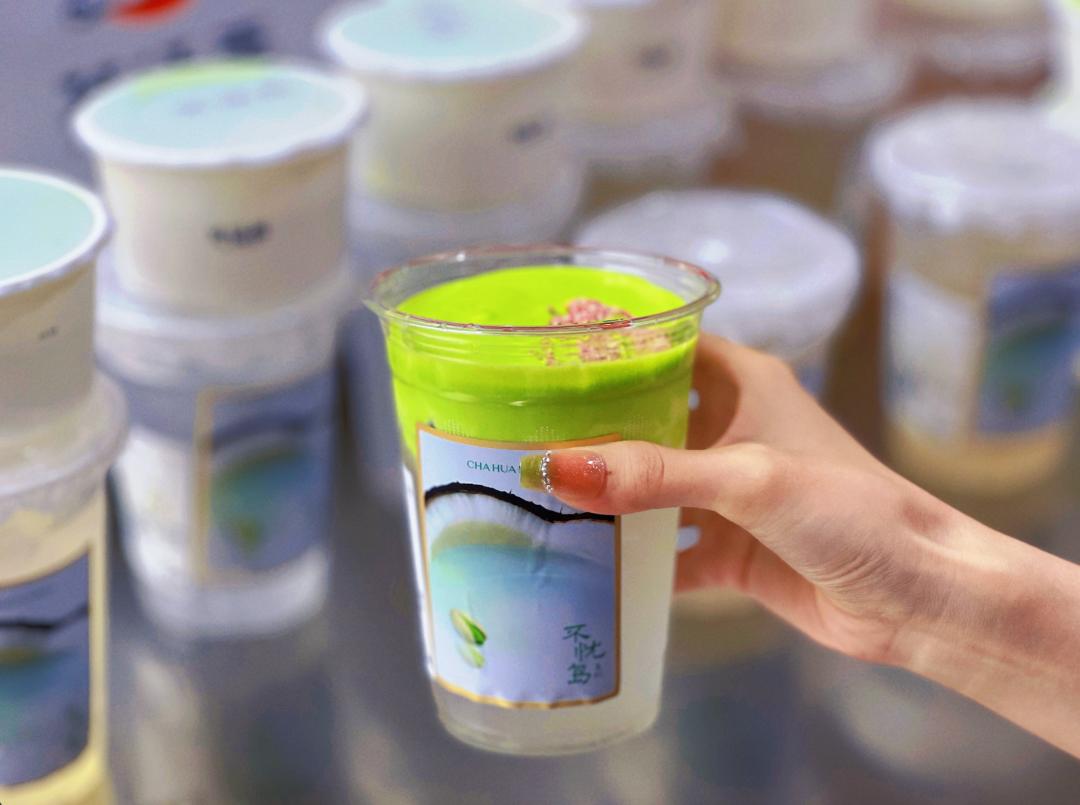
从春夏火到秋冬,今年以来,酪味饮品的含金量持续走高。 刚进入8月,古茗、7分甜、茉莉奶白、茶话弄、柠季、乐乐茶等品牌就扎堆上新,从"云朵盐水鸭"的咸香奶盖,到"咸法酪泰奶维也纳"的异域碰撞,再到 马斯卡彭系列的创意融合,一款接一款。 多位资深研发也看好这波"浓郁"风潮。品牌如何趁势上新? 喜茶、古茗、茉莉奶白,一线品牌集体推"酪味饮品" 进入8月,茶饮市场掀起了新一轮的酪味饮品热潮。 8月1日,古茗推出"云朵盐水鸭",选用潮州乌龙打底,融入茶卡湖盐糖浆,搭配现打咸芝士奶盖,咸甜交织的风味让不少网友"爱到上头"。 同日,乐乐茶上线"黑糖泰奶碎碎冰""咸法酪泰奶维也纳",泰式茶底与酪乳的巧妙碰撞,迅速吸引了消费者的关注。 紧接着,8月5日,茶话弄的椰子冰茶系列,以香水椰为基底,搭配开心果干酪奶盖,清甜与浓郁交织,带来全新口感体验。 而在立秋当天,各大品牌纷纷用酪味打响"秋一杯"。7分甜的"红苹果茉莉"、茉莉奶白的"针王葡萄咸酪乳"、柠季的"泰式咸法酪"、东方栀子的马斯卡彭 系列齐齐亮相,进一步推高酪味饮品热度。 其实,这股风潮从夏季就开始了: 5月19日,喜茶推出的"芝士咸酪藏茶"多地断货,紧接着不到一个月,又推 ...

同比少卖了7亿元,康师傅上半年饮料业务失速
Guan Cha Zhe Wang· 2025-08-14 11:39
Group 1: Company Performance - In the first half of 2025, Master Kong's revenue declined by 2.7% to approximately 400.92 billion yuan, marking a continuous decline in revenue for two consecutive years [1] - The net profit attributable to shareholders increased significantly by 20.5% to 22.71 billion yuan [1] - Beverage revenue, particularly from tea drinks, fell by 2.6% to 263.59 billion yuan, with tea beverage revenue specifically dropping by 6.3% to 106.7 billion yuan [1] Group 2: Market Dynamics - The decline in Master Kong's beverage sales is attributed to increased competition from low-priced hand-shaken tea drinks and the rising market share of unsweetened tea, which has impacted the sweetened tea segment [2] - The tea beverage market is experiencing a shift towards affordable options, with a clear competitive landscape favoring low-cost tea drinks [3][4] Group 3: Industry Trends - The tea beverage industry is witnessing a rapid chain development, with the affordable tea segment showing strong ecological advantages and a clear competitive structure [3] - The industrial model in the tea beverage sector is more advantageous, allowing for a "winner-takes-all" scenario, where early movers can achieve significant scale and cost advantages [4] Group 4: Coffee Market Insights - In the first half of 2025, the coffee market saw a net increase of 11,841 stores, representing a growth of 21.64% compared to the end of 2024 [8] - Luckin Coffee maintained its leading position with a net increase of 3,866 stores, achieving a growth rate of 17.31% [8] - Some international brands, such as Costa Coffee and Starbucks, faced store reductions due to intense competition from local brands [9]


茶咖日报|同比少卖了7亿元,康师傅上半年饮料业务失速
Guan Cha Zhe Wang· 2025-08-14 11:36
Group 1: Company Performance - In the first half of 2025, Master Kong's revenue declined by 2.7% year-on-year to approximately 400.92 billion yuan, marking the third consecutive year of revenue decline [1] - The beverage segment of Master Kong saw a 2.6% drop in revenue to 263.59 billion yuan, with tea beverage sales falling by 6.3% to 106.7 billion yuan [1] - The net profit attributable to shareholders increased significantly by 20.5% to 22.71 billion yuan [1] Group 2: Market Dynamics - The rise of low-priced hand-shaken tea drinks and the no-sugar tea market has negatively impacted Master Kong's market share in the sugary tea segment [2] - The tea beverage market is experiencing a shift towards more affordable options, with a clear competitive landscape favoring budget tea brands [3][4] Group 3: Industry Trends - The tea beverage industry is witnessing a rapid chain development, with budget tea brands benefiting from a large and stable customer base [3] - The industrial model in the tea beverage sector is more advantageous, allowing for a "winner-takes-all" scenario, which could lead to significant market consolidation [4] Group 4: Coffee Market Insights - In the first half of 2025, the coffee market saw a net increase of 11,841 stores, representing a growth rate of 21.64% compared to the end of 2024 [8] - Major coffee brands like Luckin Coffee and Kudi Coffee are expanding rapidly, while some international brands are facing store reductions due to competition from local brands [9]

美形象下滑,中国品牌凭“惊喜创新+ 全新审美”征服新加坡
Guan Cha Zhe Wang· 2025-08-14 07:52
Core Insights - Chinese brands have transformed from being perceived as "cheap" and "functional" to becoming highly sought after by the middle class in Singapore, showcasing innovation and quality improvements [1][2]. Group 1: Market Performance - BYD became the best-selling car brand in Singapore in the first half of 2025, selling nearly 4,670 vehicles, which accounted for 20% of total sales, surpassing Toyota's 3,460 vehicles [2]. - A total of 32 Chinese companies have opened 184 stores in Singapore as of June 2024, indicating a significant presence of Chinese brands in the region [2]. Group 2: Consumer Perception - The stigma associated with "Made in China" has significantly diminished among Singapore's younger generation, who now view Chinese brands as trendy and modern [5][6]. - Chinese food brands have gained popularity on social media, with consumers appreciating the creativity and rapid innovation of these brands compared to Japanese and Korean counterparts [4][5]. Group 3: Cultural Impact - The rise of Chinese brands in Singapore reflects a broader cultural shift, with many residents now considering these brands an integral part of their lives [9]. - The success of Chinese brands is not only attributed to product quality but also to their ability to resonate emotionally with local consumers, offering unique experiences rather than just products [5][6]. Group 4: Economic Context - Since 2013, China has been Singapore's largest trading partner, with bilateral trade reaching $170.2 billion last year [6]. - As Western companies reduce their presence in Singapore, Chinese enterprises have effectively filled the gaps, supporting the local real estate market and establishing a strong foothold [6][8].


好医生集团-好智汇大健康为“文明助世运”注入健康新内涵
Jing Ji Wang· 2025-08-14 07:22
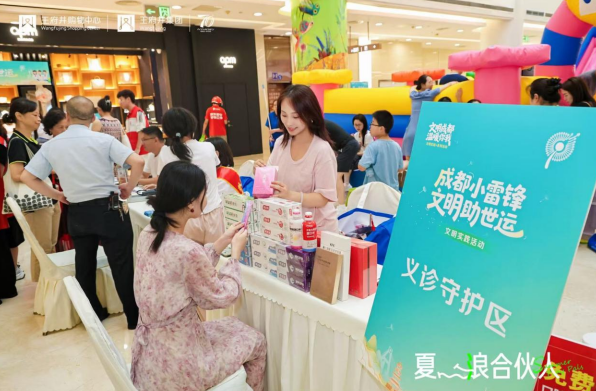
Core Viewpoint - The event organized by the Sichuan Cosmetics Promotion Association in collaboration with Good Doctor Group's subsidiary, Good Wisdom Health Technology Development Co., aims to promote health and wellness through various activities during the Chengdu Universiade, integrating professional health knowledge into community practices [1][2]. Group 1: Product Highlights - Good Wisdom showcased its flagship health products, including oral care, tea, and skincare series, at the event [1]. - In the oral care segment, the Good Doctor Classic Toothpaste and Rose Flower Toothpaste were highlighted for their unique formulations aimed at providing professional-level oral hygiene [1]. - The Good Doctor Red Buckwheat Tea, made from high-quality red buckwheat, was presented as a nutritious beverage with a rich flavor, attracting many families to experience it [2]. - The skincare line featured the Good Doctor Cockroach Beauty Mask and Pomegranate Mask, both designed to enhance skin health and hydration [4]. Group 2: Community Engagement - The event included interactive activities such as "Scan for Gifts" where participants could learn about skincare ingredients and assess their skin and oral health [4]. - Good Wisdom's approach to integrating health education into the "Welcome Universiade" initiative aimed to enhance public health literacy and encourage community participation in the event [4]. - The initiative not only fostered a friendly and professional atmosphere but also aimed to strengthen the health service support for the Chengdu Universiade [4].
长沙市望城区鑫淼茶饮店(个体工商户)成立 注册资本10万人民币
Sou Hu Cai Jing· 2025-08-14 05:15
Core Insights - A new tea beverage shop named Xinmiao has been established in Changsha's Wangcheng District, with a registered capital of 100,000 RMB [1] Business Scope - The business scope includes the sale of various products such as arts and crafts, daily necessities, household appliances, and food products [1] - The shop is also involved in the sale of single-purpose commercial prepaid cards, daily chemical products, and sports equipment [1] - Additionally, it offers services like food sales, catering, and alcohol sales, which require specific approvals [1]
日均上新1.4款,茶饮品牌们7月都在推什么?
3 6 Ke· 2025-08-14 02:44
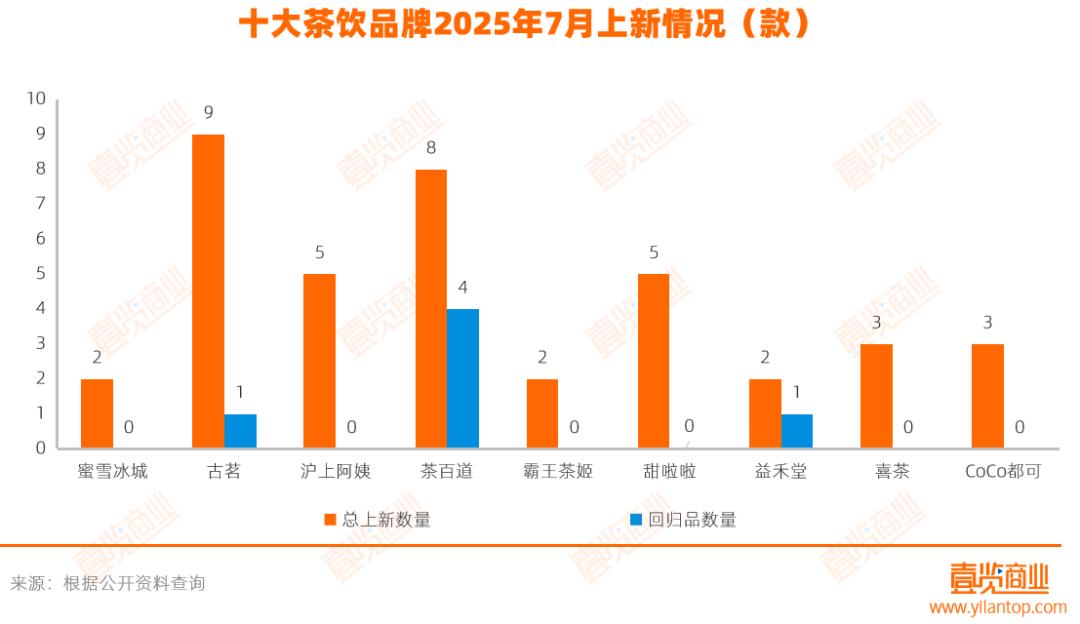
Core Insights - The tea beverage industry is entering its peak consumption season in summer 2025, with a focus on product innovation and seasonal adaptation to meet consumer demand [1][20]. Product Launches - In July 2025, the top ten tea brands launched a total of 43 new products, averaging 1.4 new products per day, with a slight decrease from June [2][19]. - The leading brand, Gu Ming, introduced 8 new products, while Cha Bai Dao followed with 4 new products and 4 returning items [2][19]. - The trend of returning products included 3 classic summer limited editions and 3 upgraded versions of existing products [5][11]. Seasonal Trends - The new product categories in July were driven by seasonal and market demands, with fruit tea, light milk tea, and fruit-vegetable tea making up 73.7% of the offerings [6][19]. - Fruit tea was the most launched category with 13 new products, while fruit-vegetable tea saw a significant increase from 1 to 8 new products, indicating a strong focus on health [9][19]. Ingredient Usage - Jasmine tea was the most commonly used tea base, appearing in 20 products, with 15 of those featuring jasmine specifically [15][12]. - Cow's milk remained the primary dairy base, used in 7 products, while coconut milk and other specialty bases were used in smaller quantities [16][12]. - A total of 30 different fruits were used in new products, with lemon being the most prevalent, appearing in 14 products [19][12]. Market Dynamics - The overall product launch frequency remained consistent, with brands strategically timing releases to maximize consumer engagement and sales [5][20]. - The focus on health and refreshing flavors aligns with consumer preferences during the hot summer months, driving innovation in product offerings [19][20].
“撑不过半年?”社保新规下,奶茶店老板直呼扛不住
3 6 Ke· 2025-08-14 01:16
Core Points - The new social security regulations are causing significant anxiety among beverage shop owners, with some facing the dilemma of either increasing monthly expenses by 20,000 or closing their businesses [1][2] - The regulations require all employers, including small businesses, to pay social security for all employees, which is particularly challenging for the high-turnover beverage industry [2][3] Summary by Sections Impact on Beverage Shops - Many beverage shop owners are calculating that the new regulations will increase their annual costs by over 200,000 yuan, necessitating the sale of an additional 13,000 cups of tea to cover the shortfall [2] - The industry is already facing challenges such as increased competition from top brands and reduced profits due to the online delivery battle, which has further strained financial margins [2][3] Compliance Challenges - The new regulations eliminate the option for employers to negotiate "non-payment agreements" for social security, increasing the penalties for non-compliance [3] - Many shop owners previously only paid social security for management staff, but the new rules require full compliance for all employees, creating additional financial burdens [5][9] Strategies for Adaptation - Some beverage shop owners are considering restructuring their workforce by employing more part-time workers to mitigate the impact of the new regulations [15][16] - There is a trend towards outsourcing non-core positions to reduce direct employment costs while remaining compliant with the new laws [15][16] Industry Response - Larger chain brands are beginning to lower supply costs by 5% to 10% to help franchisees manage the increased financial burden from social security payments [11] - The new regulations are seen as a catalyst for the industry to upgrade and improve operational efficiency, pushing businesses towards more sustainable practices [19] Employee Perspectives - Employees express mixed feelings about the new regulations, appreciating the security of social insurance but fearing potential job losses as employers seek to cut costs [13][19] - There is a growing interest in hiring older workers, which could change the traditional workforce demographics in the beverage industry [16][19] Digital Transformation - Many brands are exploring digital solutions to enhance efficiency, such as smart scheduling systems and automation to reduce labor costs [17]
累计卖3800万杯!轻养生趋势崛起
Sou Hu Cai Jing· 2025-08-13 17:34
Core Insights - The popularity of rice wine has surged recently, with various brands launching innovative products that quickly become bestsellers, indicating a strong market trend [2][9] - The article identifies four key opportunities for rice wine products in the current market [9][21] Brand Developments - Popular brands like BaWang Tea Ji and Ye Ye Bu Pao Cha have introduced new rice wine products, achieving significant sales milestones, such as Ye Ye Bu Pao Cha's 38 million cups sold [3][8] - Specialty stores focusing on rice wine, such as "Yi Gu San Niang" and "Wang Wai Wai," are also experiencing rapid growth, with some opening over 280 chain stores [2][8] Market Trends - The rise of health-conscious consumption has led to a growing interest in rice wine, which is perceived as a low-calorie and nourishing beverage, appealing particularly to younger consumers [10][21] - The unique texture of rice wine, providing a "chewing sensation," differentiates it from traditional beverages and enhances consumer experience [12][14] Product Innovation - Rice wine can be used in both hot and cold beverages, showcasing its versatility and aesthetic appeal, which is crucial for attracting consumers [16][17] - The introduction of products like the purple crystal brown rice wine not only adds visual appeal but also aligns with consumer expectations for natural ingredients [17][19] Cultural Significance - Rice wine serves as a medium to tell "Chinese stories," with various regional recipes contributing to its cultural richness, making it a compelling product in the beverage market [19][21] - Companies like Mi Po Po leverage traditional brewing techniques combined with modern technology to create innovative products that resonate with contemporary consumers [21]