
智能手机

Search documents
晚报 | 12月2日主题前瞻
Xuan Gu Bao· 2025-12-01 14:33
Group 1: TPU and AI Chips - Morgan Stanley's latest report indicates that the uncertainty surrounding Google's self-developed AI chip, TPU, is dissipating, with expectations for explosive growth in production over the next two years. The forecast for 2027 has been raised from approximately 3 million units to about 5 million units, an increase of around 67% [1] - Google's TPU is a custom AI accelerator, and with the launch of Gemini 3, it is gaining more visibility. Analysts suggest that while most large language models and AI workloads currently rely on NVIDIA's GPUs, Google's TPU may offer significant advantages in terms of price, performance, and energy efficiency [1] - The latest generation of TPU chips is set to be released in the coming weeks, boasting over four times the performance of its predecessor, making it the most powerful and energy-efficient custom AI chip to date. If Google begins external sales of TPU, it could open up a substantial new revenue stream [1] Group 2: AI Mobile Assistants - ByteDance's Doubao team has released a technical preview of the Doubao mobile assistant, which is an AI assistant software developed in collaboration with smartphone manufacturers at the operating system level. Currently, it can be experienced on the Nubia M153 prototype in partnership with ZTE [2] - The core breakthrough of the Doubao mobile assistant lies in its multimodal interaction capabilities and AI functionalities for operating mobile phones. Users can wake the assistant using voice commands or buttons and interact with screen content across various interfaces [2] - The AI mobile assistant integrates core functions such as voice and video calls and allows users to edit images through voice commands, reflecting a shift in the industry towards personalized and intelligent experiences rather than just hardware specifications [2] Group 3: Communication Infrastructure - The Ministry of Natural Resources aims to build a new type of infrastructure called "Sky, Earth, Sea, and Network" by the end of the 14th Five-Year Plan, promoting rapid development in various sectors such as geology, marine, forestry, and geographic information [3] - This infrastructure is part of China's strategy to create an integrated communication and perception network covering air, land, sea, and space, which is expected to address traditional communication network limitations and support applications like smart cities and autonomous driving [3] Group 4: Reusable Rockets - China's first offshore rocket recovery platform, named "Navigator," has been successfully delivered, marking a significant step in the development of reusable launch vehicle technology. This platform has received certification from the China Classification Society [4] - The platform is expected to enhance the efficiency and effectiveness of key technologies for recovering reusable rockets at sea, thereby strengthening China's competitive edge in rapid launches and low-cost access to space [4] - The commercial space market in China is projected to grow from 2.5-2.8 trillion yuan in 2025 to over 3.5 trillion yuan by 2030, with an average annual growth rate exceeding 16% [4] Group 5: Desalination Industry - The National Desalination Industry Alliance has been established in Tianjin, consisting of 25 research institutions and leading enterprises in the field, aimed at promoting resource sharing and collaboration within the industry [5] - The alliance focuses on integrating industry resources, enhancing cooperation along the supply chain, and driving technological innovation and high-quality development in seawater desalination [5] - This initiative marks a new phase of collaborative development in China's desalination industry, potentially strengthening the country's overall competitiveness in this sector [5] Group 6: Rare Earth Prices - Recent data indicates that prices for praseodymium-neodymium oxide, metallic praseodymium-neodymium, and neodymium-iron-boron have collectively increased by 3-6%, with a sustained upward trend in rare earth prices over the past week [6] - The supply side is generally tight, with some separation enterprises experiencing reduced operating rates due to maintenance or raw material issues, leading to a tight supply of oxides [6] - Demand from magnet manufacturers remains strong, with stable domestic orders and recovering overseas market demand, suggesting a positive outlook for rare earth prices and market conditions [6]


字节跳动否认自研手机,中兴通讯A股H股大涨
2 1 Shi Ji Jing Ji Bao Dao· 2025-12-01 13:24
Core Insights - ByteDance is redefining the concept of mobile phones by introducing the Doubao mobile assistant, which integrates AI capabilities at the operating system level rather than as a standalone application [2][4] - The Doubao mobile assistant is designed to be a system-level intelligent agent that can understand screen content and perform complex tasks autonomously, marking a significant shift in user interaction with mobile devices [4][9] Product Development - The Doubao mobile assistant is currently in a technical preview phase and is being integrated into various smartphone brands through partnerships, with ZTE's nubia M153 being the first model to feature it [2][4] - The assistant allows users to interact seamlessly through voice commands and dedicated AI keys, enhancing the user experience by embedding common functionalities like voice and video calls [4][5] Market Impact - Following the announcement of the Doubao mobile assistant, ZTE's stock price surged, indicating strong market confidence in the collaboration between AI models and hardware manufacturing [5][8] - The global smartphone market is experiencing a slowdown, with growth projected to drop to 1.5% by 2025, making AI functionality a critical differentiator for smartphone manufacturers [8][9] Strategic Direction - ByteDance aims to avoid the competitive landscape of hardware manufacturing by focusing on deep integration with operating systems, thereby defining the next generation of human-computer interaction [8][9] - The company's strategy is to leverage its existing AI capabilities and user understanding to transform mobile operating systems into proactive intelligent agents, rather than passive resource managers [9]


字节跳动否认自研手机,中兴通讯A股H股大涨
21世纪经济报道· 2025-12-01 13:18
Core Viewpoint - ByteDance is redefining the concept of mobile phones by introducing the Doubao mobile assistant, which integrates AI capabilities deeply into the operating system, moving beyond traditional standalone AI applications [2][4]. Group 1: Doubao Mobile Assistant Launch - The Doubao mobile assistant was released on December 1, 2023, as a technical preview, built on the Doubao app and developed in collaboration with mobile manufacturers [2]. - ByteDance has no plans to develop its own mobile phones but is negotiating with multiple manufacturers to integrate the Doubao assistant into various brand models [2][4]. - The first engineering sample, nubia M153, developed in partnership with ZTE, features the Doubao assistant and is priced at 3499 yuan [2]. Group 2: AI Integration and Capabilities - The Doubao assistant represents a significant shift from being a limited voice tool to a "system-level intelligent agent" that can understand screen content and perform complex tasks autonomously [4]. - Users can activate the assistant through voice commands or a dedicated AI key, allowing seamless interaction across different applications [4]. - The assistant's capabilities include multi-modal functions and integration with the system's native photo gallery, enabling users to issue voice commands for photo editing [4]. Group 3: Market Impact and Strategic Positioning - Following the announcement, ZTE's stock price surged, reflecting market optimism about the collaboration between AI models and hardware manufacturing [6]. - The introduction of AI capabilities is seen as a key differentiator for mobile manufacturers, with major players like Apple and Samsung developing their own AI strategies [9]. - ByteDance's approach contrasts with traditional manufacturers by focusing on embedding AI capabilities at the operating system level, aiming to redefine user interaction and ecosystem standards [9][10]. Group 4: Future Outlook and Industry Trends - The global smartphone market is expected to slow down, with growth projected at only 1.5% by 2025, increasing the importance of differentiated AI functionalities for manufacturers [8]. - Analysts suggest that ByteDance's strategy leverages its existing strengths in user engagement and data understanding to transition into the next generation of computing platforms [9]. - The ultimate goal is for AI to become the "soul" of the smartphone, transforming the operating system into an intelligent agent that actively manages hardware and services [10].

豆包AI手机开卖,做出苹果去年画的饼,但不建议普通人买
3 6 Ke· 2025-12-01 12:15
Core Insights - The article discusses the launch of the Doubao mobile assistant, which showcases advanced AI capabilities that surpass Apple's promised features for the iPhone 17 [2][15] - Doubao's assistant can perform complex tasks across multiple applications, making it a significant player in the mobile AI space [9][12] Group 1: Doubao Mobile Assistant Features - Doubao mobile assistant can automatically search for products across various e-commerce platforms and compare prices, providing users with the best deal [3][10] - The assistant integrates seamlessly with the operating system, allowing users to invoke it via voice commands or a dedicated AI button without needing to open an app [7][8] - It can remember user preferences and past interactions, enabling it to perform tasks based on long-term user behavior rather than just executing single commands [11][12] Group 2: Market Impact and Reception - The announcement of the Doubao mobile assistant led to a significant increase in ZTE's stock price, indicating strong market interest [6] - The assistant is currently available on a prototype Nubia M153 model, priced starting at 3499 yuan, targeting industry professionals rather than general consumers [4][6] - Doubao is not developing its own smartphones but is collaborating with various manufacturers to implement the assistant in their devices [6][23] Group 3: Competitive Landscape - The article compares Doubao's approach to that of Alibaba's Qianwen assistant, highlighting different strategies: Doubao focuses on a light-asset model while Alibaba invests heavily in hardware [22][23] - The success of Doubao could position it as a key player in the mobile AI operating system market, reducing its dependency on other platforms [23][24] - Concerns are raised about why major smartphone manufacturers would choose Doubao over developing their own solutions, suggesting that competition in AI capabilities is intensifying [23][24]
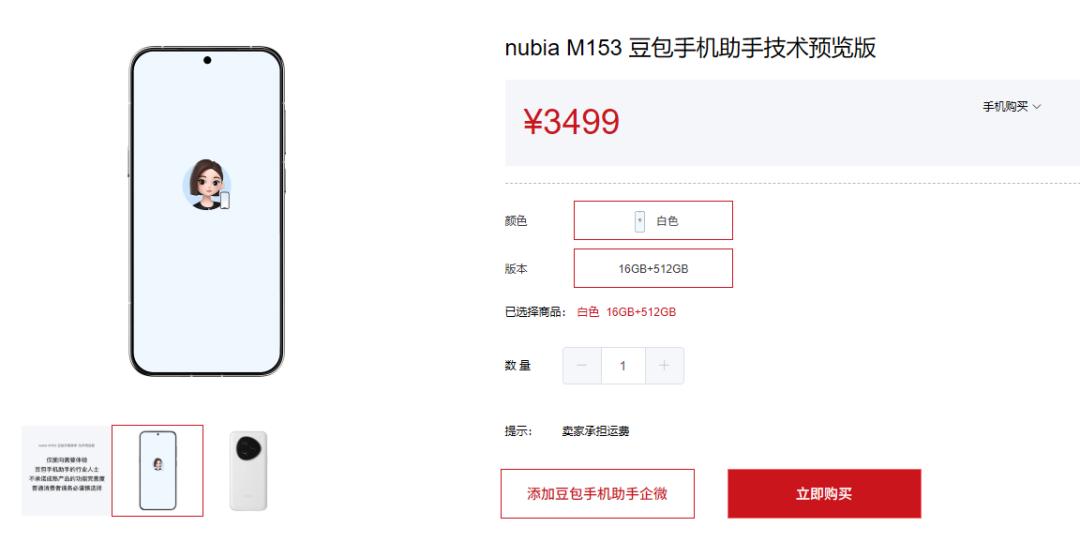
首款“豆包助手”手机3499元开售
第一财经· 2025-12-01 11:47
Core Viewpoint - The article discusses the rising trend of AI mobile phone concept stocks in the A-share market, highlighting the collaboration between ByteDance and various mobile manufacturers, particularly ZTE, in developing AI-integrated mobile devices without a self-developed phone plan [3][4][7]. Group 1: Market Performance - As of the closing on December 1, the AI mobile phone index rose by 2.71%, with notable increases in stocks such as Beilong Precision (up 20%), ZTE (up 10%), and Transsion Holdings (up 9.41%) [3]. - ZTE's A-share trading volume exceeded 14.6 billion yuan, and its H-share rose over 13% [7]. Group 2: Collaboration and Development - ByteDance confirmed ongoing discussions with multiple phone manufacturers, emphasizing that it does not have plans for self-developed phones [4]. - ZTE's Nubia has begun testing engineering samples of a phone equipped with the Doubao mobile assistant technology, which is set to be sold at a starting price of 3,499 yuan [5][10]. - The collaboration involves Doubao leading the AI assistant's product definition and experience, while Nubia focuses on hardware engineering and technical development [10]. Group 3: AI Assistant Integration - The Doubao mobile assistant is designed to operate across various applications, enabling tasks such as ticket booking and logistics tracking [7]. - Despite the collaboration, the core control of AI on mobile devices remains with the phone manufacturers, who have established their own voice assistant ecosystems [8][9]. Group 4: Data Privacy and Security - Concerns regarding data privacy and security are highlighted, particularly with the use of AI assistants that may access sensitive information [11][12]. - The Guangdong Standardization Association has issued standards addressing the risks associated with AI assistants, emphasizing the need for user authorization before executing tasks through third-party applications [11]. Group 5: Future Hardware Strategy - ByteDance is focusing on hardware development to enhance its AI capabilities, recognizing that hardware serves as both a data entry point and an amplifier for AI training [16]. - The company has made strategic acquisitions, such as the purchase of Oladance for AI-enabled headphones, and is exploring the VR space despite previous setbacks [17][18]. Group 6: Strategic Focus and Challenges - ByteDance's leadership is intensifying its focus on AI strategy, with key personnel changes aimed at improving cross-team collaboration [18]. - The company faces challenges in maintaining competitive technology and exploring sustainable revenue models while addressing its limitations in self-developed chips and infrastructure [18].
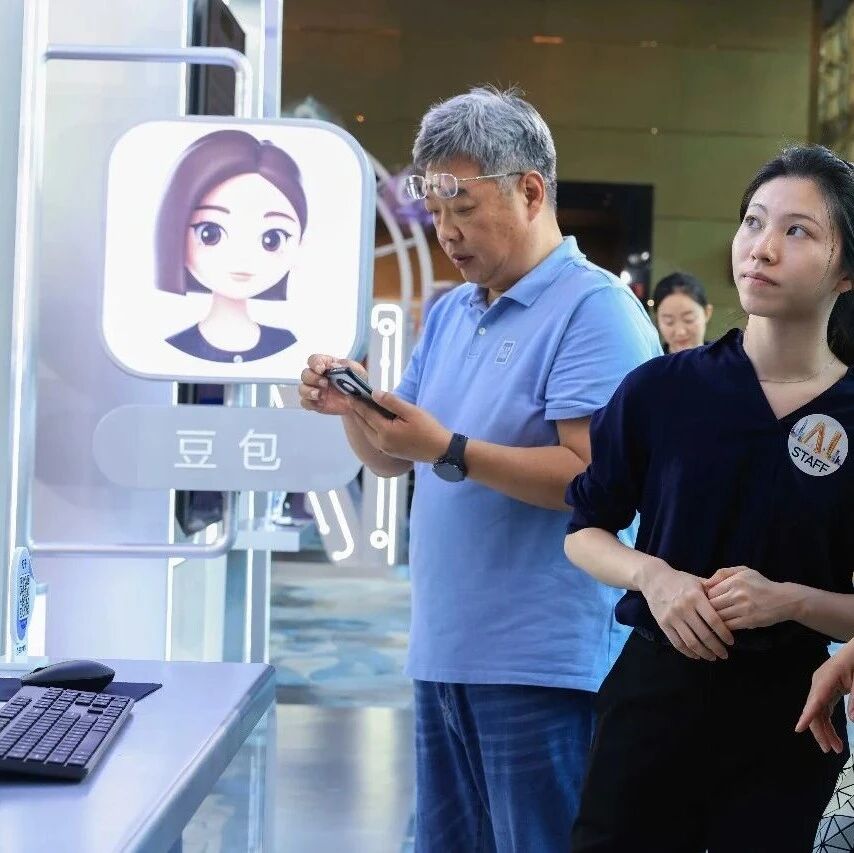
与中兴手机合作,字节最新回应→
Di Yi Cai Jing Zi Xun· 2025-12-01 11:33
Core Viewpoint - ByteDance has released a technical preview of the Doubao Phone Assistant, which is an AI assistant software developed in collaboration with mobile manufacturers at the operating system level based on the Doubao APP [1] Group 1: Company Developments - The Doubao team is currently negotiating assistant collaborations with multiple mobile manufacturers and does not have plans to develop its own phones [1] - The only officially disclosed mobile partner so far is ZTE [1] Group 2: Market Reaction - Following the announcement, ZTE's stock price increased by 6.84% [1]
字节跳动否认自研手机,合作方中兴通讯强势涨停
2 1 Shi Ji Jing Ji Bao Dao· 2025-12-01 10:41
Core Insights - ByteDance is redefining the concept of mobile phones by introducing the Doubao mobile assistant, which integrates AI capabilities at the operating system level rather than as a standalone application [1][2] - The Doubao mobile assistant represents a significant breakthrough in ByteDance's hardware ecosystem strategy, allowing for seamless interaction and deep integration with mobile devices [2][3] Group 1: Product Development - The Doubao mobile assistant is being developed in collaboration with multiple smartphone manufacturers, with no plans for ByteDance to produce its own hardware [1][3] - The first engineering sample, the nubia M153, has been released in partnership with ZTE, featuring the Doubao mobile assistant at a price of 3499 yuan [1][2] Group 2: Market Impact - Following the announcement of the Doubao mobile assistant, ZTE's stock price surged, hitting the upper limit in A-shares and increasing over 13% in H-shares, indicating strong market confidence in the collaboration [2][3] - The introduction of AI capabilities is seen as a key differentiator for smartphone manufacturers in a slowing global market, with predictions of a growth slowdown to 1.5% by 2025 [6][7] Group 3: Strategic Vision - ByteDance aims to penetrate the operating system layer to redefine human-computer interaction and establish a strategic advantage in the future AI ecosystem [6][7] - The company's strategy focuses on leveraging its existing AI capabilities and understanding of user intent to create a more integrated and intelligent mobile experience [7]
首款“豆包助手”手机3499元开售:AI终端数据隐私安全归谁管?
Di Yi Cai Jing· 2025-12-01 10:15
Core Insights - The integration of large models into mobile technology is complicating the existing issues surrounding data processing on cloud and edge devices [1] - The AI mobile concept stocks in the A-share market have shown significant gains, with the AI mobile index rising by 2.71% and specific companies like Beilong Precision and ZTE Communications seeing increases of 20% and 10% respectively [1] Group 1: Company Developments - ByteDance has confirmed ongoing discussions with multiple smartphone manufacturers while reiterating that it has no plans to develop its own mobile phone [2] - ZTE's Nubia brand has begun testing engineering samples of a phone featuring the Doubao mobile assistant, with a starting price of 3499 yuan [2] - The Doubao assistant is designed to integrate with various applications, allowing users to perform tasks such as ticket booking and file downloads seamlessly [3] Group 2: Market Dynamics - The smartphone market is crucial for large model manufacturers due to its vast user base and data interaction, making it a key area for competition [4] - Major smartphone brands have established their own voice assistants, which are integral to their service ecosystems, thus retaining control over user data and interactions [4] - Smaller manufacturers may provide a more favorable environment for Doubao to assert its AI capabilities, as larger brands are less likely to relinquish control [5] Group 3: Data Privacy and Security - Concerns regarding data privacy and security are heightened with the integration of AI assistants, particularly in sensitive areas like payment processing [5][6] - The Guangdong Standardization Association has issued standards emphasizing the need for user authorization before AI assistants can execute tasks through third-party applications [6] Group 4: Strategic Hardware Investments - ByteDance is actively pursuing hardware capabilities to enhance its AI offerings, recognizing that hardware serves as both a data entry point and a means to amplify AI training [9] - The company has made significant investments in various hardware sectors, including headphones and smart glasses, to create a comprehensive ecosystem for data flow and model training [10] - The leadership at ByteDance is focused on aligning AI strategies across teams to improve efficiency and support a complex software-hardware integration strategy [11]
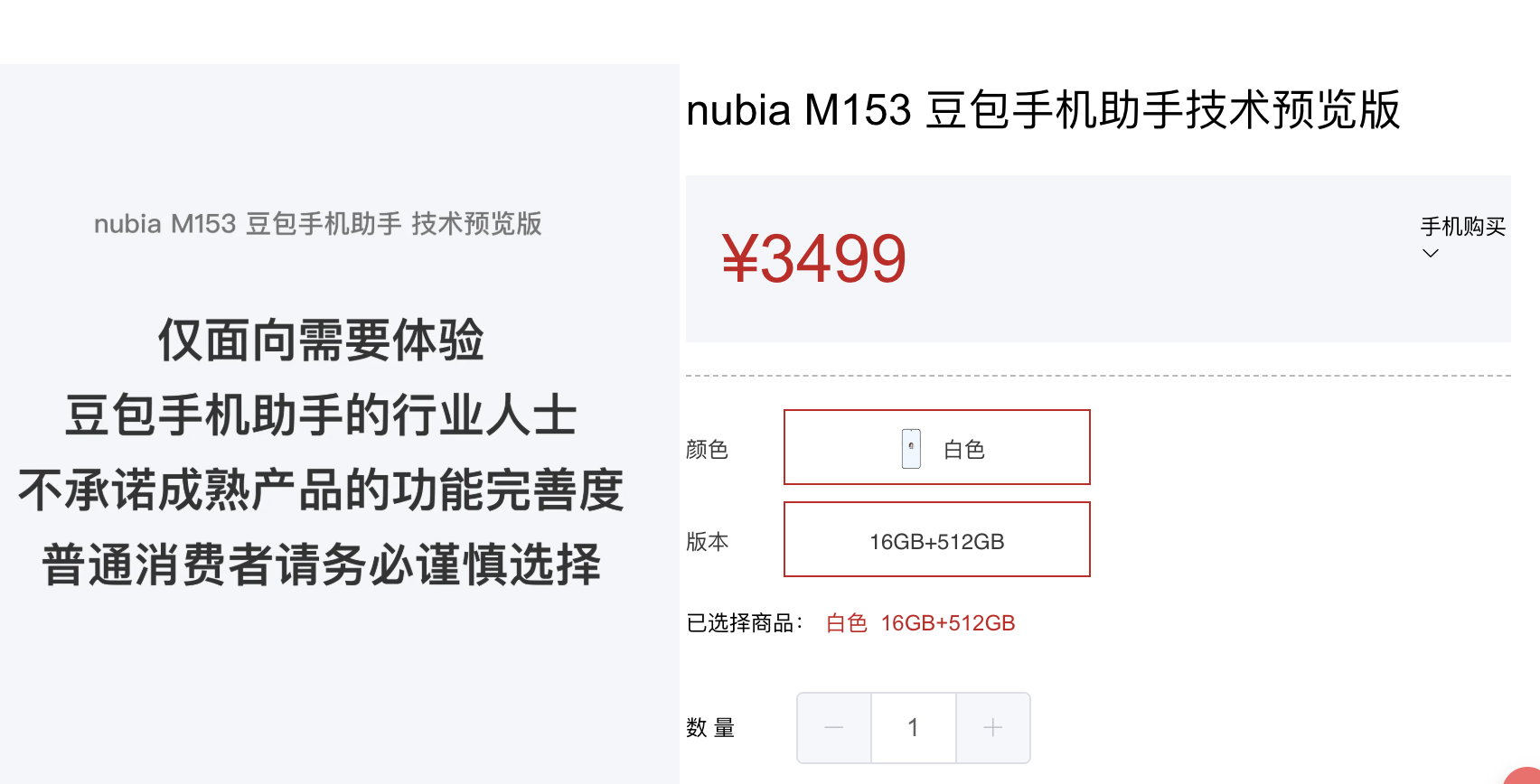
大摩:予小米集团-W(01810)“增持”评级 目标价62港元
智通财经网· 2025-12-01 09:11
Core Viewpoint - Morgan Stanley has issued a report giving Xiaomi Group-W (01810) an "Overweight" rating with a target price of HKD 62 [1] Summary by Relevant Categories Financial Performance - Despite market expectations of downward pressure on smartphone gross margins due to rising memory costs, historical data shows that Xiaomi's smartphone gross margins expanded during periods of increasing DRAM prices from 2016 to 2017, 2019 to 2021, and 2022 to 2023 [1] - The effective cost transfer mechanism of the company, along with significant cost increases leading to product price hikes, has contributed to this margin expansion [1] Strategic Initiatives - Xiaomi's product structure upgrade and ongoing high-end strategy are identified as long-term positive factors driving gross margin [1]

大摩:予小米集团-W“增持”评级 目标价62港元
Zhi Tong Cai Jing· 2025-12-01 09:09
Core Viewpoint - Morgan Stanley has issued a report giving Xiaomi Group-W (01810) an "Overweight" rating with a target price of HKD 62, indicating a positive outlook on the company's stock performance despite rising memory costs in the smartphone industry [1] Group 1: Financial Performance - Historically, during periods of rising DRAM prices (2016-2017, 2019-2021, and 2022-2023), Xiaomi's smartphone gross margin has actually expanded, contrary to market expectations of downward pressure [1] - The company's effective cost transfer mechanism and significant cost increases leading to product price hikes are believed to be key factors in maintaining or improving margins [1] Group 2: Strategic Initiatives - Xiaomi's ongoing product structure upgrades and its strategy to move towards higher-end products are seen as long-term positive drivers for gross margin improvement [1]