
可穿戴设备

Search documents
2025年第一季度,全球可穿戴腕带设备市场增长13%,小米跃居榜首
Canalys· 2025-05-23 05:04
Core Viewpoint - The global wearable wristband device market is experiencing significant growth, with a 13% year-on-year increase in Q1 2025, reaching a shipment volume of 46.6 million units, driven by demand recovery and a low base from the previous year [1][6]. Group 1: Market Dynamics - The three main product categories—basic bands, basic watches, and smartwatches—are all showing growth, contributing to market expansion [1]. - Xiaomi has regained the top position in the wearable wristband market for the first time since Q2 2021, with a 44% increase in shipments to 8.7 million units, largely due to the popularity of the Redmi Band 5 [3][6]. - Apple ranks second with a 5% increase in Apple Watch shipments, reaching 7.6 million units, while Huawei remains third with a 36% increase to 7.1 million units [3][6]. - Samsung's shipments surged by 74% to 4.9 million units, supported by a dual-track strategy targeting both emerging and developed markets [3][6]. - Garmin holds the fifth position with a 10% increase in shipments to 1.8 million units, leveraging a differentiated product mix and the new Connect+ platform [3][6]. Group 2: Ecosystem and Service Focus - The wearable wristband market is shifting from a hardware-driven model to an ecosystem-driven approach, with companies focusing on platform and service development to enhance user retention and drive sustainable revenue [2][5]. - Xiaomi is deepening device integration and user engagement through its extensive product lineup and HyperOS, while Huawei is building a closed-loop health ecosystem via the Huawei Health App [2]. - Global brands like Oura and Whoop prioritize services over hardware, utilizing subscription models to enhance user value [2]. Group 3: Consumer Preferences and Innovation - Companies must balance innovation and core functionalities to stimulate consumer demand, with price, battery life, and health monitoring being the top three factors influencing purchasing decisions [3]. - As market education progresses and device penetration increases, software capabilities and ecosystem integration are expected to unlock higher added value, making differentiation more pronounced [3].




Garmin推出Connect+战略转型或将撼动市场格局
Canalys· 2025-05-12 06:51
Core Insights - Garmin has launched Connect+, a subscription-based service aimed at enhancing its wearable device ecosystem, priced at $6.99 per month, with a free trial for existing users, marking a strategic shift from hardware-centric sales to exploring new revenue streams [1] - The introduction of Connect+ aligns Garmin with industry trends where companies seek closer connections with users and high-profit growth opportunities, similar to strategies adopted by tech giants like Apple and Xiaomi [1] - The success of Connect+ hinges on effective communication with Garmin's loyal user base regarding the differentiation between optional services and core experiences tied to hardware [2] Subscription Service Opportunities and Challenges - As the device market saturates and hardware profits decline, manufacturers are increasingly looking to software layers for sustainable growth, with subscription services becoming a core business model for some [2] - Garmin faces challenges in clearly communicating its future vision to users, particularly in defining the boundaries between free and paid features, which could lead to user dissatisfaction if expectations are not managed [2][3] - The balance between thoughtful product strategy and transparent communication is crucial for Garmin's transition to a "hardware + service" model [2] Key Communication Points for Service Launch - The differentiation of paid features must be clear and provide tangible value beyond free services; ambiguity could hinder user adoption of the subscription model [3] - Users prioritize functionality clarity over novelty, and if the new features do not enhance the user experience, it may lead to concerns about the potential locking of core functionalities behind a paywall [3] - Past experiences with other platforms have shown that locking essential features can damage brand trust and user loyalty, which Garmin must avoid [3] Community Engagement and User Sentiment - Garmin's competitive edge lies in its established user community, and introducing paywalls could disrupt engagement and diminish the brand's unique advantages [4] - Historical examples, such as Fitbit's community feature removal leading to user backlash, highlight the risks of alienating users during monetization efforts [4] - Finding a balance between revenue growth and community vitality is essential for the success of Garmin's service products [4] Market Positioning and Competitive Landscape - With the launch of Connect+, Garmin enters a competitive subscription service market dominated by platforms like Strava, necessitating a clear value proposition as a comprehensive sports service provider [5] - The competitive landscape includes brands like Apple, Samsung, and Xiaomi, which are vying for attention in the fitness and outdoor segments, making brand loyalty less of a given [5] - Garmin must enhance its brand differentiation and clearly communicate the unique value of its subscription services within its overall product offering to maintain market position [5] Future Considerations - Trust and confidence from users are built over time, and maintaining transparency about future features and community functionalities is vital for Garmin [7] - The adoption rate of Connect+ and its cross-selling performance will be closely monitored by investors and analysts as indicators of early success [7] - The subscription model presents significant potential for the industry, but companies must balance core strengths with consistent brand messaging and user value creation to achieve long-term growth [7]

飞来峰丨以“稳进之势”彰显应对底气
Sou Hu Cai Jing· 2025-05-12 01:23
Economic Performance - Zhejiang Province reported a GDP growth rate of 6.0% in the first quarter, exceeding expectations and demonstrating resilience amid uncertainties from the "tariff war" with the U.S. [1] - The province's import and export volume increased by 7.3% year-on-year, contributing 66.4% to the national growth, with exports rising by 11.1% [1][2] Domestic Demand - Domestic demand is recovering, serving as a necessary counterbalance to external risks and aligning with the goal of building a "dual circulation" development pattern [2] - Consumer spending has shown signs of recovery, with per capita tourism spending during the Spring Festival reaching 1455 yuan, the highest in recent years [2] - The film box office and ticket sales during the Spring Festival increased by 45.3% and 40.5% year-on-year, indicating a resurgence in social consumption [2] - Project investment grew by 11.5% in the first quarter, with nearly 70% of new projects from the 1364 major projects initiated [2] Innovation and Technology - The potential for innovation is a key factor in economic resilience, with high-tech manufacturing investment growing by 12.1% in the first quarter [3] - Investment in manufacturing technology upgrades and equipment purchases increased by 15.9% and 9.2%, respectively [3] External Environment - The external economic environment remains complex, with the IMF projecting global economic growth at 2.8% and trade growth at 1.7% for 2025, both down from previous forecasts [3] - The "tariff war" is expected to persist, necessitating strategic responses to mitigate risks and stabilize economic growth [3] Policy Recommendations - Emphasis on stabilizing enterprises and exports through personalized support policies and increased financial assistance for foreign trade companies [4] - Encouragement of domestic consumption and investment in public services and employment to stimulate economic activity [4] - Focus on promoting new consumption trends and enhancing logistics infrastructure to support retail [4] Long-term Strategy - The strategy includes advancing technological innovation and fostering a self-reliant economy through initiatives like the "Artificial Intelligence+" action plan [5] - High-level openness is prioritized, with plans to leverage free trade zones and pilot cities to align with international trade standards [5]
外骨骼助力爬山:热潮背后的商业逻辑
3 6 Ke· 2025-05-09 00:01
Core Insights - The exoskeleton technology is rapidly gaining popularity in mountain tourism, particularly during the May Day holiday, as it offers a "pain-free climbing" experience, attracting significant attention from tourists [1][2] - The exoskeleton market is transitioning from concept validation to commercialization, driven by unmet consumer demands and technological advancements [1][13] Market Potential - The global exoskeleton market is projected to grow from 107,000 units in 2025 to 301,000 units by 2028, with a compound annual growth rate (CAGR) exceeding 33% [4] - By 2030, the global exoskeleton market size is expected to reach $14.67 billion, with a CAGR of 42.2% [4] - The increasing demand for exoskeletons in various sectors indicates a market potential exceeding hundreds of billions, particularly with the aging population in China [4][6] Technological Innovations - The exoskeletons utilize advanced materials like carbon fiber and titanium alloys, significantly reducing weight while enhancing strength [7] - Multi-modal sensors, including electromyography (EMG) and pressure sensors, enable real-time monitoring of user movements, providing precise assistance [7] - Adaptive control algorithms allow for automatic adjustment of support strength based on user activity, enhancing the overall experience [7] Business Model - Exoskeletons lower the barriers to mountain climbing, making it accessible to a broader audience, including the elderly and those with limited physical capabilities [9] - The rental pricing of exoskeletons is competitive with cable cars, offering a superior experience and flexibility [9] - The introduction of exoskeletons in scenic areas enhances visitor satisfaction and can lead to increased revenue through extended visitor stays and additional spending [9][11] Industry Participation - Several listed companies are actively involved in the exoskeleton supply chain, contributing to its commercialization [11] - The demand for upstream materials and high-precision sensors is increasing, while collaborations between outdoor brands and technology firms are emerging [11] Future Outlook - Despite the promising market, challenges such as technological limitations and high costs remain [12] - The potential for exoskeletons to become commonplace in daily activities suggests a vast market for lifestyle enhancement products in the future [12][14]

阿尔特曼宣布OpenAI本周将发布大量新产品;苹果被曝准备推出新款Vision Pro | 全球科技早参
Mei Ri Jing Ji Xin Wen· 2025-04-14 00:08
NO.3 奈飞正在测试一款由OpenAI提供支持的搜索引擎 近日,据外媒报道,网络流媒体公司奈飞正在为订阅用户测试新的搜索引擎,该引擎利用AI技术帮助 用户找到电视节目和电影。奈飞表示,OpenAI支持的搜索引擎允许用户使用更具体的术语(例如订阅 者的心情)来搜索节目。然后,它会从目录中推荐选项。 每经记者 岳楚鹏 每经编辑 高涵 |2025年4月14日 星期一| NO.1 苹果被曝准备推出新款Vision Pro 当地时间4月13日,知名科技记者古尔曼报透露,苹果正在筹备两款新的Vision Pro头显,其中一款为更 轻更便宜的Vision Pro,因为苹果认为Vision Pro商业上失败的原因是太贵和太重了。而另外一款头显则 可以连接到Mac,让用户能够在Mac显示器上播放内容并使用企业应用程序。目前尚不知晓具体的推出 时间。 点评:苹果计划推出两款新Vision Pro头显,包括更轻更便宜的版本及可连接Mac的型号,旨在解决现 有产品价格和重量问题,并拓展企业应用场景。此消息或提振苹果股价及增强投资者信心,同时对可穿 戴设备板块产生积极影响,预示着行业竞争加剧和技术创新加速。 NO.2 Safe Su ...

华为组建第二十一军团,剑指医疗?
Hu Xiu· 2025-03-24 08:04
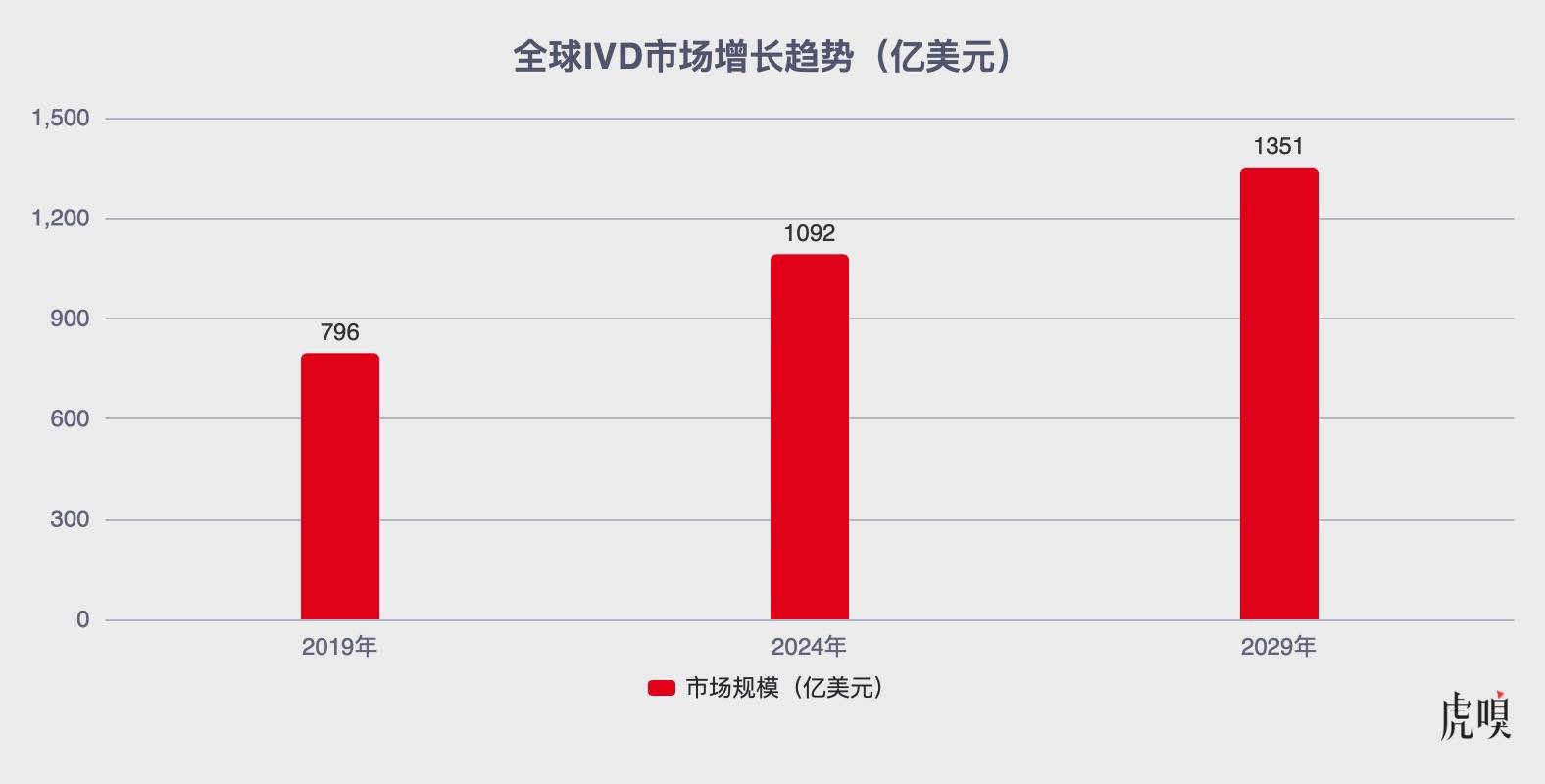
Core Viewpoint - Huawei has officially established its 21st Legion, focusing on the healthcare sector, particularly in the in-vitro diagnostics (IVD) market, aiming to leverage AI-assisted diagnostic solutions to transform traditional diagnostic practices [1][2][4]. Group 1: Market Dynamics - The global IVD market is projected to reach $109.2 billion in 2024 and exceed $130 billion by 2029, indicating significant growth potential [2]. - The IVD sector is the largest segment of the medical device market, with leading companies like Roche Diagnostics generating annual revenues exceeding 14 billion Swiss francs, which is over 110 billion yuan, nearly equal to the total Chinese IVD market [2]. - The entry of major players, including Huawei, into the AI+diagnostics space is intensifying competition, with various stakeholders, including large equipment manufacturers and IVD product suppliers, vying for market share [2][11]. Group 2: Technological Advancements - Huawei's healthcare legion aims to develop AI-assisted diagnostic solutions, with recent product launches including the RuiPath model and the "Acute Chest Pain Model," which focuses on multi-modal risk assessment [1][10]. - The DCS AI solution introduced by Huawei significantly reduces the computational costs associated with AI image training, enabling more IVD companies to participate in the market [18]. - The integration of AI into diagnostics is expected to drive a compound annual growth rate of 20% over the next six years, surpassing the growth of traditional diagnostic methods [2]. Group 3: Industry Challenges and Opportunities - The IVD industry has faced challenges, including a significant market contraction due to policy changes and increased competition, leading to a wave of mergers and acquisitions [11][13]. - AI is seen as both a solution and a burden for many IVD companies, with those lacking substantial capital facing difficulties in adapting to the new technological landscape [13]. - The healthcare sector is undergoing a transformation driven by rising medical costs and the need for early diagnosis and treatment, creating opportunities for companies that can provide precise diagnostic tools [4][6]. Group 4: Competitive Landscape - The establishment of Huawei's healthcare legion has raised concerns among existing players in the AI+medical field, as the entry of a tech giant like Huawei introduces uncertainty into the competitive landscape [17][21]. - Companies like Baichuan Intelligent and Wantai Biological are also entering the AI+IVD space, indicating a crowded market with many players striving for innovation and market presence [27]. - The complexity of the healthcare industry, including regulatory challenges and the need for collaboration among various stakeholders, will be critical for success in this evolving landscape [27][29].
2024年,可穿戴手环市场蓬勃发展,中国与新兴市场引领增长
Canalys· 2025-03-05 14:22
Core Viewpoint - The global wearable wristband device market is experiencing steady growth, with shipments reaching 193 million units in 2024, a 4% year-on-year increase, driven primarily by strong demand in China and emerging markets, compensating for declines in mature markets like the US and India [1][2]. Group 1: Market Performance - In 2024, China remains the largest market for wearable wristband devices, accounting for 30% of global shipments with a 20% year-on-year growth, significantly boosted by government subsidies and product upgrades [1][2]. - The Indian market, as the second-largest, faces challenges with a 22% decline in shipments due to local manufacturers struggling with upgrades in basic watch functionalities [1][2]. Group 2: Emerging Markets - Emerging markets play a crucial role in global growth, with the Middle East leading at a 55% increase, followed by Southeast Asia (45%), Latin America (21%), and Eastern Europe (20%) [2]. - Brands like Xiaomi and Huawei are enhancing brand recognition to drive growth in these regions, focusing on affordable basic devices to attract first-time buyers [2]. Group 3: Product Segmentation - Basic watches continue to be the main growth driver, with an 8% increase in 2024 following a 25% rise in 2023, while basic wristbands are seeing a revival with a 7% growth in Q3 and a significant 49% increase in Q4 [3]. - The demand for simple, lightweight, non-intrusive wearable devices is evident, particularly in health and fitness tracking, alongside a growing trend for smart rings [3]. Group 4: Competitive Landscape - Samsung re-entered the basic fitness wristband market with the Galaxy Fit 3, intensifying competition and prompting Xiaomi to adjust pricing and distribution strategies in various markets [4]. - Samsung's strategy aims to attract new users to its health ecosystem through entry-level devices, eventually guiding them towards smartwatches [4]. Group 5: Future Outlook - The ongoing expansion of the wearable wristband device market in 2024 highlights the increasing demand for affordable devices in emerging markets, while mature markets face challenges due to longer upgrade cycles and stagnation in innovation [5]. - Future growth will depend on balancing innovation with affordability, expanding global market share, and leveraging emerging trends like smart rings and advanced health tracking [5].
融资1.9亿!汗液传感可穿戴技术公司完成B轮
思宇MedTech· 2025-02-13 08:11
2025年2月11日,美国 数字健康公司 Epicore Biosystems 宣布完成 2600万美元(约1.9亿人民币) 的 B轮融资 ,以支持其生物可穿戴技术的发展。 此次 B轮融资 由 斯蒂尔希望基金会(Steele Foundation for Hope) 领投。 公司希望通过这笔资金,扩大其云分析平台的应用,并扩展到新的生物标志物 目标,包括肾脏健康、女性健康、营养不良和环境毒素暴露。 Epicore 的技术旨在通过非侵入性的汗液分析,提供关于个人的水分、压力水平、营养和整体健康的实时洞察,并可通过传感器提醒佩戴者热损伤、脱水或营 养不良的风险。 # 研发背景 随着人们对健康重视程度的不断提高,以及对慢性疾病管理需求的增加,健康监测设备的需求也在迅速增长。传统的健康监测方法(如血液检测)虽然准确,但属 于有创操作,难以实现连续监测。 而汗液监测作为一种非侵入式监测手段,能够提供实时、连续的健康数据,满足人们对日常健康监测的需求。 汗液中含有多种生物标志物(如电解质、乳酸盐、皮质醇等) ,这些成分的变化可以反映身体的多种生理状态,包括水分流失、电解质平衡、肌肉疲劳和压力水平 等。例如,囊性纤维化患者 ...