鞋类

Search documents
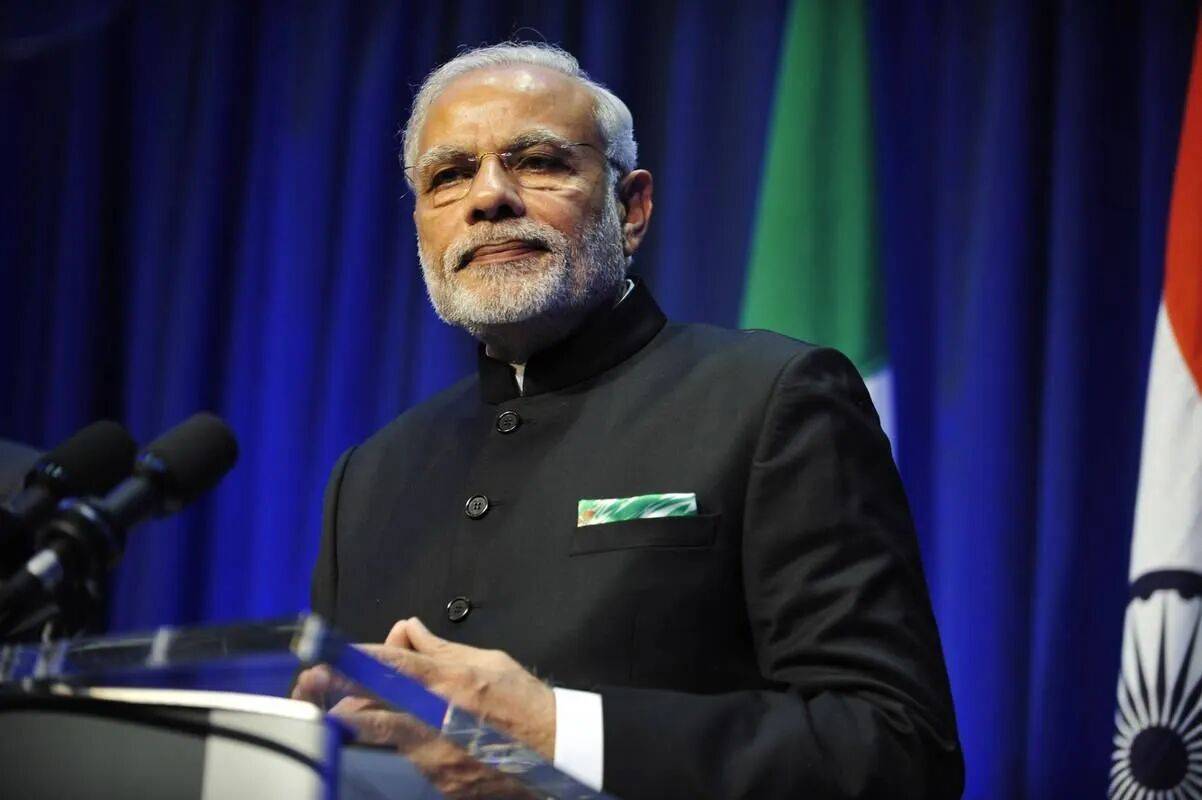
特朗普50%关税将至,关键时刻中国大使力挺印度,莫迪敢对美强硬吗?
Sou Hu Cai Jing· 2025-08-31 10:13
Group 1 - The core issue revolves around the potential increase of tariffs on Indian goods to 50% by the US, primarily due to India's purchase of Russian oil, which could significantly impact India's labor-intensive export sectors such as textiles, jewelry, and footwear [1][3] - The Indian government faces a dilemma: raising prices could lead to a loss of orders, while absorbing costs could strain cash flow and affect workers' wages [1][5] - China's support for India against US tariff actions is highlighted, with Chinese officials emphasizing the importance of adhering to WTO rules and maintaining cooperative relations [3][7] Group 2 - India is strategically positioned to leverage its relationship with China, as evidenced by recent high-level visits and increased trade, indicating a shift towards partnership rather than rivalry [3][5] - The Indian government is cautious in its response to the US, balancing a strong stance with the need for strategic autonomy, as seen in Modi's participation in the Shanghai Cooperation Organization summit [5][7] - The ongoing military cooperation between the US and India suggests that a complete decoupling is unlikely, with both sides likely to find a compromise to mitigate the impact of the tariff increase [7]

25款登山鞋测评:凯乐石、斯凯奇、FILA等样品不防水
Nan Fang Du Shi Bao· 2025-08-31 06:18
Core Insights - The recent comparative test of 25 hiking shoes conducted by the Guangdong-Macao-Guangzhou Consumer Council revealed that while the overall quality of the shoes is good, several products exhibited issues such as inaccurate application of standards and poor performance on key indicators [1][7][17] - Specific brands such as KAILAS, Skechers, and FILA were noted for having products that easily allowed water penetration, failing to meet waterproof standards [1][16] - The test highlighted that 20 samples lacked critical technical indicators like slip resistance and waterproof performance, with 13 samples showing inadequate waterproof capabilities [7][12] Summary by Categories Testing Standards and Methodology - The testing was based on various national standards including GB 25038-2024 and QB/T 4553-2013, focusing on both chemical safety and physical performance indicators [2] - Key performance indicators tested included formaldehyde content, abrasion resistance, slip resistance, waterproof performance, and vapor permeability [2] Product Performance Issues - Five samples were found to be highly permeable to water, indicating poor waterproof capabilities, while one sample from the brand "特步" failed to meet abrasion resistance standards [1][8] - The comparative test results showed that 7 samples had a peel strength below 70N, which is below the standard requirement of 90N/cm, affecting the durability of the shoes [10][11] - Ten samples exhibited poor vapor permeability, with some brands like 回力 and 探路者 scoring below the acceptable threshold [12][15] Recommendations for Manufacturers - The Consumer Council suggested that manufacturers should adhere to appropriate standards based on the characteristics and intended use of hiking shoes to ensure quality [17] - It was recommended that marketing claims should accurately reflect the product's actual quality to avoid misleading consumers [17] - Detailed labeling of key product information was advised to assist consumers in making informed purchasing decisions [17]


天创时尚: 天创时尚股份有限公司对外投资管理制度(2025年8月修订)
Zheng Quan Zhi Xing· 2025-08-29 12:17
Core Viewpoint - The document outlines the external investment management system of Tianchuang Fashion Co., Ltd., aiming to standardize investment behaviors, enhance decision-making responsibility, and maximize shareholder interests while ensuring asset preservation and appreciation [2][21]. Group 1: General Principles - The external investment refers to various forms of investment activities aimed at obtaining future returns, including long-term equity investments and short-term financial investments [3]. - Basic principles for external investments include alignment with the company's development strategy, rational resource allocation, and the creation of good economic benefits [3]. Group 2: Approval Authority - The company implements a professional management and hierarchical approval system for external investments, requiring adherence to relevant laws and regulations [6]. - The decision-making bodies for external investments include the shareholders' meeting, the board of directors, and the chairman, each with specific decision-making scopes [6][7]. Group 3: Shareholders' Meeting Approval - Certain thresholds require shareholders' meeting approval after board review, including transactions involving assets exceeding 50% of total audited assets or net assets, and profits exceeding 50% of the last audited net profit [4][5]. - Cumulative transactions exceeding 30% of total audited assets within twelve months must also be submitted for shareholder approval [5]. Group 4: Board of Directors Approval - The board must approve transactions involving assets exceeding 10% of total audited assets or net assets, with specific monetary thresholds for various types of transactions [5]. - The board's approval is also required for transactions that significantly impact the company's financials, such as profits or revenues exceeding 10% of the last audited figures [5]. Group 5: Chairman's Approval - The chairman can make decisions for transactions involving less than 10% of total audited assets or net assets, with specific conditions outlined for various types of transactions [6]. Group 6: Special Regulations for Securities Investment - Securities investments must follow principles of legality, prudence, safety, and effectiveness, with strict internal control systems established to manage investment risks [10]. - The company is prohibited from using raised funds for securities investments and must ensure that investment operations are conducted by multiple personnel to prevent conflicts of interest [10][11]. Group 7: Financial Management and Auditing - The financial center is responsible for comprehensive financial records of external investments, ensuring compliance with accounting standards [20]. - Regular audits and evaluations of investment projects are mandated to maintain oversight and protect the company's interests [20].

天创时尚: 关于召开2025年半年度业绩说明会的公告
Zheng Quan Zhi Xing· 2025-08-29 12:17
Group 1 - The company will hold an investor presentation on September 10, 2025, from 15:00 to 16:00 [2][3] - The presentation will take place at the Shanghai Stock Exchange Roadshow Center and will be conducted in an interactive online format [2][3] - Key personnel attending the presentation include the Chairman, General Manager, Independent Director, Financial Director, and Board Secretary [2] Group 2 - Investors can submit questions for the presentation from September 3, 2025, to September 9, 2025, before 16:00 [3] - Questions can be submitted through the Shanghai Stock Exchange Roadshow Center website or via the company's email [3] - After the presentation, investors can access the main content and details of the event on the Shanghai Stock Exchange Roadshow Center [3]
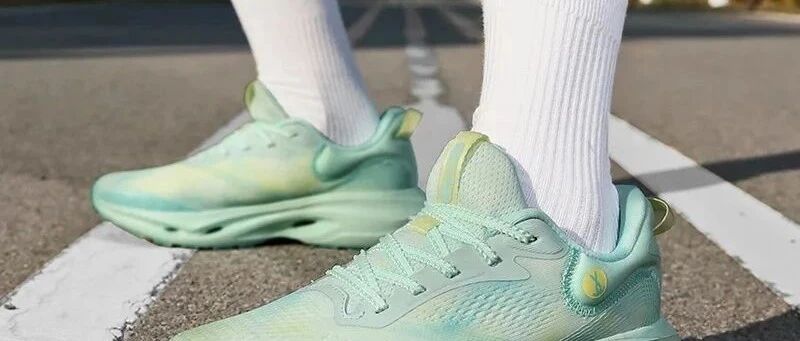
牛!中国制造已经强到如此可怕!百元造出某克某迪千元级跑鞋
凤凰网财经· 2025-08-28 14:00
Core Viewpoint - The article highlights a promotional offer for a professional running shoe featuring a full carbon plate, emphasizing its high performance and affordability compared to other high-end brands in the market. Group 1: Product Features - The running shoe is equipped with a full carbon plate, which is typically found in high-end running shoes, enhancing performance and energy return [8][15][47] - It incorporates advanced technologies such as supercritical MD midsole for cushioning and diamond large particle rubber outsole for durability and traction, making it suitable for various terrains [22][30][84] - The shoe is designed for breathability, ensuring comfort during use, especially in warmer conditions [35][91] Group 2: Pricing and Value Proposition - The original retail price of the shoe is 498 yuan, but it is being offered at a promotional price of 199 yuan, representing significant savings for consumers [4][99] - The shoe is positioned as a cost-effective option for runners who want the benefits of a carbon plate shoe without the high price tag associated with major brands [13][43] Group 3: Target Audience - The shoe is suitable for a variety of users, including beginners wanting to experience carbon plate technology, competitive runners needing efficient gear, and outdoor enthusiasts looking for versatile footwear [43][101] - It appeals to consumers seeking high performance at a reasonable price, making it attractive to value-conscious buyers [43][99]
美对印关税生效,大量订单取消!印度官员:鼓励开拓中国、拉美、中东市场
Sou Hu Cai Jing· 2025-08-27 09:52
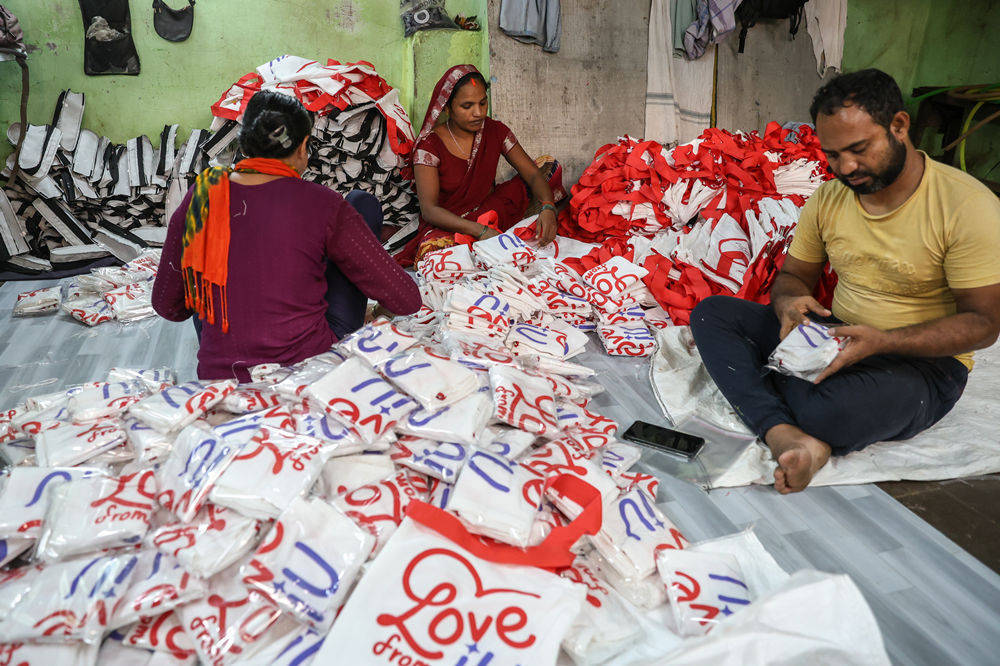
Core Viewpoint - The United States has raised tariffs on Indian goods to 50% due to India's continued purchase of Russian oil, significantly impacting India's exports and employment [1][2]. Group 1: Impact on Trade and Economy - The new tariffs, effective from August 27, make India one of the countries facing the highest tariffs from the U.S., threatening its export and employment [1]. - Economists predict that the tariffs could lead to a decline in India's GDP growth rate by 0.8% to 1% if they persist [7]. - The tariffs are expected to affect over half of India's exports to the U.S., including sectors like apparel, jewelry, footwear, furniture, and chemicals [3]. Group 2: Government Response and Support - The Indian government plans to provide financial support to affected exporters and encourages them to explore markets in China, Latin America, and the Middle East [3][9]. - Despite the government's strong stance to protect farmers and small businesses, there is a lack of hope for immediate tariff reductions from the U.S. [2][9]. Group 3: Competitive Landscape - The high tariffs threaten India's competitiveness in exports, making it difficult to compete with countries like China and Vietnam [5]. - There are concerns that the tariffs could lead to significant job losses in India's export sector and weaken its position in global value chains [5][6]. Group 4: Broader Economic Context - India's exports to the U.S. account for approximately 2% of its GDP, and strong domestic demand may help mitigate the impact of the tariffs [8]. - The bilateral trade volume between India and the U.S. is projected to be around $129 billion in 2024, with a trade deficit of $45.7 billion for India [3].
刚刚!50%关税 生效!
Zhong Guo Ji Jin Bao· 2025-08-27 09:35
Group 1 - The United States has officially implemented a 50% tariff on Indian goods, significantly impacting over 55% of India's exports to the U.S., with textiles and jewelry being the most affected sectors [1][2] - The new tariff doubles the previous rate of 25%, marking a deterioration in U.S.-India relations, particularly following U.S. criticism of India's purchase of Russian oil [1][2] - The high tariffs threaten India's export competitiveness compared to China and Vietnam, raising concerns about Prime Minister Modi's ambition to establish India as a global manufacturing hub [1][2] Group 2 - Indian exporters, particularly in the footwear and textile sectors, are facing significant challenges, with reports of orders being shifted to countries like Bangladesh and Vietnam due to the new tariffs [2] - The tariffs have shocked Indian officials, especially after recent trade negotiations with Washington, highlighting ongoing frustrations over high tariffs in agriculture and dairy sectors [2] - The potential impact on India's GDP growth is estimated to be a decline of 0.6% to 0.8%, although domestic consumption remains a key driver of the economy [3] Group 3 - The Modi government is planning to implement "next-generation reforms," including significant changes to the goods and services tax system, to stabilize the economy and support affected industries [3] - The Indian financial markets have already shown signs of distress, with significant foreign capital outflows and the rupee becoming the worst-performing currency in Asia this year [3] - The strategic shock from the tariffs could lead to large-scale unemployment in export-centric industries and diminish India's role in global value chains [3]
哈森股份: 第五届监事会第十四次会议决议公告
Zheng Quan Zhi Xing· 2025-08-26 10:25
Group 1 - The supervisory board of Harsen Commerce (China) Co., Ltd. held its 14th meeting of the 5th supervisory board on August 16, 2025, with 3 supervisors present and 1 participating via remote voting [1] - The supervisory board reviewed and approved the company's 2025 semi-annual report, confirming that the preparation and review procedures comply with relevant laws and regulations, and that the report accurately reflects the company's financial status and operating results [1][2] - The supervisory board also agreed on the provision for asset impairment, stating that it reflects the company's actual situation and complies with decision-making and approval procedures [2] Group 2 - The voting results for the supervisory board's decisions were unanimous, with 3 votes in favor, 0 against, and 0 abstentions [2] - The detailed content of the 2025 semi-annual report and the asset impairment provision announcement can be found on the Shanghai Stock Exchange website [2]

运动鞋该如何拥抱“痛风”
3 6 Ke· 2025-08-25 02:34
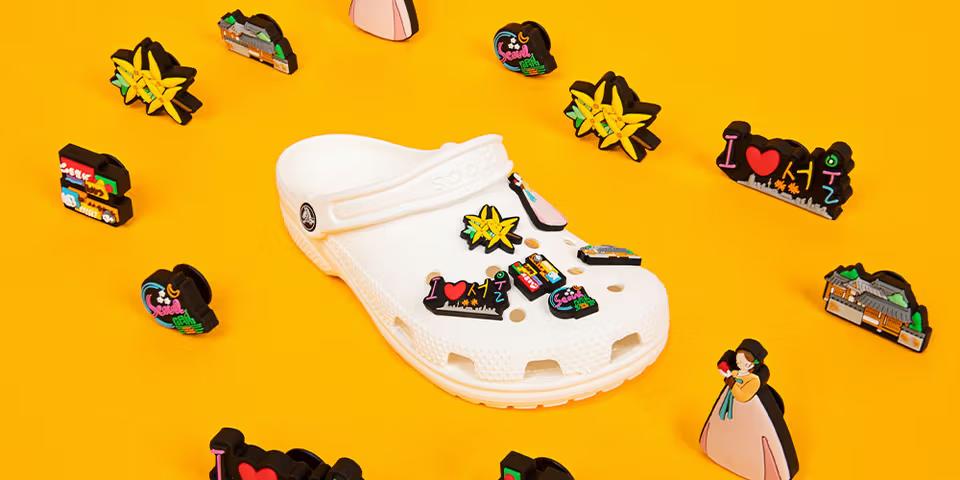
Core Insights - The "pain shoe" culture is unexpectedly reshaping the value-added system of footwear products in a diversifying consumer market [1] - Crocs, particularly known for its "hole shoes," has developed a DIY accessory system called Jibbitz, which has gained significant popularity in China [2][3] - Despite a decline in growth rates, Crocs still reported an 18.1% increase in international markets and over 30% growth in China, although this is a slowdown from previous years [3][4] Group 1: Definition and Cultural Context - "Pain shoes" derive from the Japanese term "痛い (itai)," which originally means "painful" but has evolved in subculture contexts to signify self-expression through personal interests [2] - The term has led to the creation of various "pain" products, with Crocs being the most prominent example in the footwear sector [2] Group 2: Market Performance and Trends - Crocs experienced a significant stock price drop of 29.2% following a disappointing earnings report, marking its largest single-day decline in nearly 14 years [3] - The brand's growth in China, while still impressive, has decreased from triple-digit growth rates in previous years to over 70% in the second quarter of 2024 [3] Group 3: Industry Response and Challenges - Traditional sports brands are cautious in adopting the DIY decoration trend seen with Crocs, reflecting differing product positioning and consumer expectations [5][7] - The evolution of shoe decoration is not new, as luxury brands have previously integrated accessories into their footwear, but mainstream brands struggle to create a cultural phenomenon similar to Crocs [5][7] Group 4: Consumer Behavior and Market Dynamics - The "pain shoe" phenomenon highlights a shift in consumer logic, where spending is redirected from necessities to emotionally satisfying purchases [8] - The footwear industry is transitioning from a functional to an emotional identity, requiring brands to build a flexible meaning network beyond just performance innovation [8]

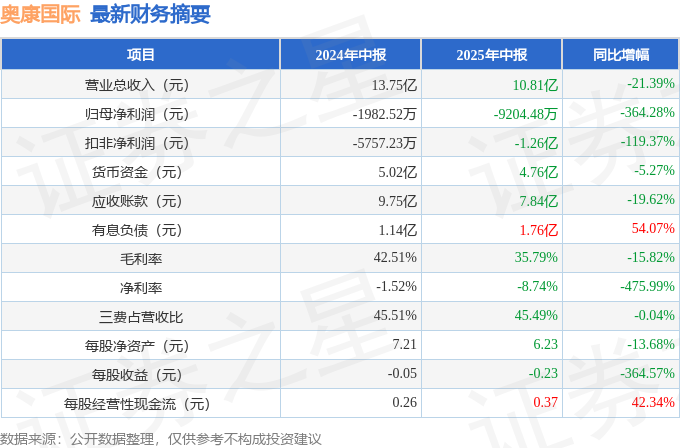
奥康国际2025年中报简析:净利润同比下降364.28%
Zheng Quan Zhi Xing· 2025-08-23 23:29
Core Viewpoint - Aokang International (603001) reported a significant decline in financial performance for the first half of 2025, with net profit dropping by 364.28% year-on-year and total revenue decreasing by 21.39% compared to the previous year [1] Financial Performance Summary - Total revenue for the first half of 2025 was 1.081 billion yuan, down 21.39% from 1.375 billion yuan in the same period of 2024 [1] - The net profit attributable to shareholders was -92.0448 million yuan, a decline of 364.28% from -19.8252 million yuan in 2024 [1] - Gross margin decreased to 35.79%, down 15.82% year-on-year, while net margin fell to -8.74%, a drop of 475.99% [1] - Total expenses (selling, administrative, and financial) amounted to 492 million yuan, accounting for 45.49% of revenue, a slight decrease of 0.04% year-on-year [1] - Earnings per share were -0.23 yuan, a decrease of 364.57% from -0.05 yuan in 2024 [1] Cash Flow and Expense Analysis - Net cash flow from operating activities increased by 42.34%, attributed to reduced advertising and employee compensation expenses [3] - Net cash flow from investing activities rose by 80.61%, due to decreased purchases of time deposits and financial products [3] - Net cash flow from financing activities increased by 32.27%, driven by increased mortgage borrowings and reduced lease-related expenses [4] Changes in Financial Items - Accounts receivable decreased by 19.62% to 784 million yuan, while cash and cash equivalents fell by 5.27% to 476 million yuan [1] - Short-term borrowings surged by 271.55%, reflecting increased mortgage borrowings [10] - Prepayments increased by 69.33%, indicating a rise in prepaid rent [10] Business Model and Historical Performance - The company's business model relies heavily on marketing, necessitating a thorough examination of the underlying drivers [12] - Historical data shows a median Return on Invested Capital (ROIC) of 0.67% over the past decade, with a particularly poor ROIC of -10.71% in 2022, indicating weak investment returns [11]