
保险业

Search documents
金融监管总局局长李云泽:着力引导资源向新质生产力集聚,高新技术企业贷款余额近19万亿元
Bei Jing Shang Bao· 2025-09-22 09:20
Core Viewpoint - The financial regulatory authority emphasizes the importance of optimizing financial resource allocation and enhancing service quality in key areas, summarized as "one increase, one optimization, and one supplementation" since the start of the 14th Five-Year Plan [1] Group 1: Increase Supply - The focus is on increasing supply to support economic and social development goals, with significant financing for 102 major projects, including infrastructure loans totaling 54.5 trillion yuan, a 62% increase from the end of the 13th Five-Year Plan [2] - Policy financial tools exceeding 7 trillion yuan have mobilized over 9 trillion yuan in investments [2] - Loans in the wholesale, retail, and accommodation sectors have increased by 80%, with vehicle insurance covering over 1.6 billion vehicles, a 40% increase from the 13th Five-Year Plan [2] - Export credit insurance has provided risk coverage of 4.4 trillion USD, a 52% increase from the previous plan [2] Group 2: Optimize Structure - The focus is on optimizing the structure by directing resources towards new productive forces, with loans to high-tech enterprises reaching nearly 19 trillion yuan, growing at an annual rate of over 20% [3] - Insurance funds invested in stocks and equity funds have exceeded 5.4 trillion yuan, an 85% increase from the end of the 13th Five-Year Plan [3] - Financial support for technology insurance has provided risk coverage exceeding 10 trillion yuan, supporting 3,600 innovative application projects [3] - New investments in the technology sector have surpassed 1 trillion yuan through various pilot programs [3] Group 3: Supplement Shortcomings - The authority aims to strengthen financial support for weak links, enhancing financing access for small and micro enterprises, with 17 trillion yuan in loans deferred during the pandemic, benefiting over 10 million entities [4] - A total of 22 trillion yuan in loans has been issued to support small and micro enterprises, with a focus on expanding the no-repayment renewal policy covering 9.4 trillion yuan [4] - Loans of 31.5 trillion yuan have been issued to poverty-stricken areas, with nearly 400 billion yuan in small loans for impoverished populations [4] - The average insurance coverage for major grain crops has increased by 72% during the 14th Five-Year Plan [4] - Health insurance services have covered 1.22 billion urban and rural residents, with commercial health insurance compensating 1.8 trillion yuan for patients over five years [4]
金融监管总局:消费服务行业贷款余额增长80% 新能源汽车在保超过4000万辆
Xin Hua Cai Jing· 2025-09-22 09:15
Core Viewpoint - The financial regulatory authority emphasizes the implementation of the new development concept, focusing on optimizing financial resource allocation and enhancing service quality in key areas and weak links, summarized as "one increase, one optimization, and one supplementation" [1] Group 1: Increase Supply - The focus is on increasing supply to support economic and social development goals, with significant financing for major projects such as the Yangtze River High-Speed Railway and the South-to-North Water Diversion Project, providing ample funding for 102 major projects during the 14th Five-Year Plan [2] - Infrastructure loan balance reached 54.5 trillion yuan, a 62% increase compared to the end of the 13th Five-Year Plan [2] - The use of over 700 billion yuan in policy-based development financial tools has leveraged over 9 trillion yuan in investments [2] - Loans to the wholesale, retail, accommodation, and catering sectors increased by 80% [2] - Export credit insurance has provided risk coverage of 4.4 trillion USD, a 52% increase from the 13th Five-Year Plan period [2] Group 2: Optimize Structure - The focus is on optimizing the structure by directing resources towards new productive forces, with loans to high-tech enterprises reaching nearly 19 trillion yuan, growing at an annual rate of over 20% [3] - Insurance funds invested in stocks and equity funds exceeded 5.4 trillion yuan, an 85% increase from the end of the 13th Five-Year Plan [3] - Cumulative risk coverage for technology insurance surpassed 10 trillion yuan, supporting 3,600 innovative application projects [3] - Financial regulatory authority has initiated four pilot projects in the technology sector, resulting in over 1 trillion yuan in new investments [3] Group 3: Supplement Weak Links - The authority aims to strengthen financial support for weak links, enhancing financing accessibility for small and micro enterprises, with 17 trillion yuan in loans deferred during the pandemic, benefiting over 10 million businesses [4] - A total of 22 trillion yuan in loans has been issued to support small and micro enterprises since last year [4] - Loans to poverty-stricken areas reached 31.5 trillion yuan, with nearly 400 billion yuan in small loans for impoverished populations [4] - The average annual growth rate of inclusive agricultural loans is 14.6% [4] - Insurance coverage for major grain costs and planting income has increased by 72% during the 14th Five-Year Plan [4] - Health insurance services have provided economic compensation of 1.8 trillion yuan for patients over the past five years [4]
潘功胜、李云泽、吴清、朱鹤新发声,信息量很大→
Zheng Quan Shi Bao· 2025-09-22 09:06
Core Viewpoint - The press conference highlighted the achievements of China's financial sector during the "14th Five-Year Plan" period, emphasizing the stability and growth of the financial system, the effectiveness of monetary policy, and the ongoing reforms in financial governance and regulation. Group 1: Financial System Stability and Growth - The overall financial system in China is stable, with financial institutions remaining healthy and the market operating smoothly [3] - The total assets of the banking and insurance sectors have exceeded 500 trillion yuan, with an average growth of nearly 9% over the past five years [10] - The banking and insurance sectors have provided an additional 170 trillion yuan in funding to the real economy over the past five years, with significant growth in loans for key sectors such as technology and infrastructure [11] Group 2: Monetary Policy and Support for the Economy - The People's Bank of China has established a modern monetary policy framework that effectively supports the real economy, with annual growth rates for loans to technology SMEs, inclusive microloans, and green loans exceeding 20% [2][4] - The current monetary policy stance is supportive, implementing moderately loose monetary policies to stabilize market expectations and boost confidence [7][8] Group 3: Financial Regulation and Risk Management - Comprehensive financial regulation has been strengthened, with a focus on preventing financial risks and combating corruption within the financial sector [6] - The number of high-risk institutions and the scale of high-risk assets have been significantly reduced, ensuring that financial risks are fully controllable [14] - The financial regulatory authority has issued 171 regulations over the past five years, enhancing the regulatory framework across various financial sectors [22] Group 4: International Financial Cooperation and Currency Use - China's participation, influence, and voice in international financial governance have significantly increased, reflecting the country's commitment to structural reforms in the financial supply side [4] - The renminbi has become the third-largest currency for trade financing and payments globally, with its weight in the IMF's Special Drawing Rights basket ranking third [9] Group 5: Capital Market Developments - The capital market has seen a total financing of 57.5 trillion yuan through stock and bond markets over the past five years, with a steady increase in the proportion of direct financing [27] - The number of companies that have been smoothly delisted during the "14th Five-Year Plan" period reached 207, indicating a more robust exit mechanism for underperforming firms [35] - The A-share market's resilience and risk resistance have improved, with the annualized volatility of the Shanghai Composite Index decreasing by 2.8 percentage points compared to the previous five years [26]
潘功胜、李云泽、吴清、朱鹤新同日发声 信号巨大
2 1 Shi Ji Jing Ji Bao Dao· 2025-09-22 08:54
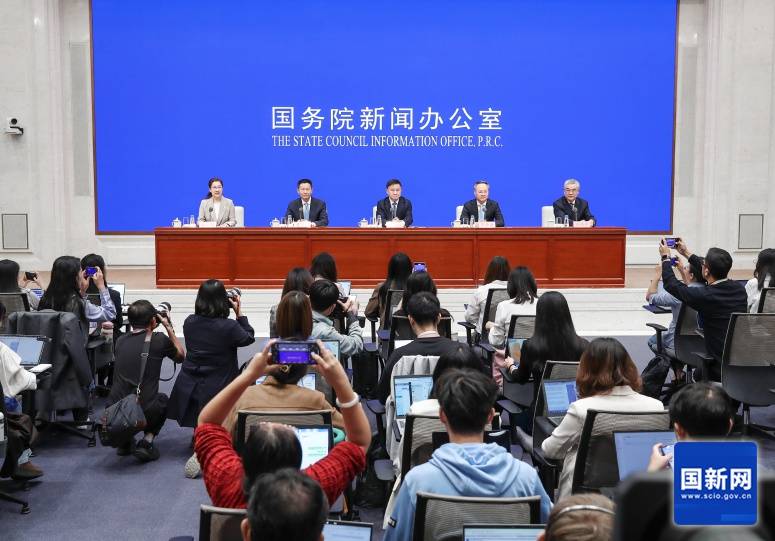
我国银行业总资产位居世界第一 潘功胜介绍,"十四五"期间,我国金融事业取得新的重大成就。 截至今年6月末,我国银行业总资产近470万亿元,位居世界第一;股票、债券市场规模位居世界第二; 外汇储备规模连续20年位居世界第一。同时,我国在绿色金融、普惠金融、数字金融等方面走在世界前 列,基本建成多渠道、广覆盖、安全高效的人民币跨境支付清算网络,移动支付处于国际领先水平。 "十四五"期间科技型中小企业贷款年均增速超20% 时隔近一年,金融管理部门"一把手"再次出席同场新闻发布会。 9月22日下午3时,国务院新闻办公室举行"高质量完成'十四五'规划"系列主题新闻发布会,中国人民银 行行长潘功胜,金融监管总局局长李云泽,中国证监会主席吴清,中国人民银行副行长、国家外汇局局 长朱鹤新介绍"十四五"时期金融业发展成就,并答记者问。 发布会上,金融管理部门"一把手"在答记者问中释放了不少重磅信息,发布会要点梳理如下。 央行行长潘功胜:今日发布会不涉及短期政策调整 潘功胜介绍,"十四五"期间,我国金融服务实体经济质效大幅提升,科技型中小企业贷款、普惠小微贷 款、绿色贷款年均增速均超过20%。 今日发布会主要介绍"十四五"时期金 ...

潘功胜、李云泽、吴清、朱鹤新同日发声,信号巨大
2 1 Shi Ji Jing Ji Bao Dao· 2025-09-22 08:53
Core Insights - The press conference highlighted significant achievements in China's financial sector during the "14th Five-Year Plan" period, emphasizing the growth and stability of the banking and insurance industries [3][8][9]. Group 1: Financial Sector Achievements - As of June 2023, China's banking sector total assets reached nearly 470 trillion yuan, ranking first globally, with stock and bond market sizes second in the world [3]. - The banking and insurance sectors provided an additional 17 trillion yuan in funding to the real economy over the past five years, with average annual growth rates for loans to technology SMEs, inclusive small loans, and green loans exceeding 20% [4][8]. - The total assets of the banking and insurance sectors surpassed 500 trillion yuan, with an average growth rate of nearly 9% over the past five years [9]. Group 2: Regulatory Developments - The China Securities Regulatory Commission (CSRC) issued 2,214 administrative penalties during the "14th Five-Year Plan," with fines totaling 41.4 billion yuan, reflecting a 58% increase in penalties compared to the previous five-year period [17]. - The CSRC has enhanced market transparency and ecological integrity through strict enforcement actions, including the transfer of over 700 cases to law enforcement agencies [18]. Group 3: Market Resilience and Investor Engagement - The A-share market has shown increased resilience and risk management capabilities, with the annualized volatility of the Shanghai Composite Index at 15.9%, a decrease of 2.8 percentage points from the previous five-year period [15]. - Over the past five years, listed companies in China distributed a total of 1.06 trillion yuan in dividends and share buybacks, an increase of over 80% compared to the previous five-year period [12]. - The proportion of technology companies in the A-share market has risen, with their market capitalization now accounting for over one-fourth of the total [13]. Group 4: Foreign Exchange and International Investment - China's foreign exchange reserves have remained stable above 3 trillion USD since the beginning of the "14th Five-Year Plan," with recent figures exceeding 3.2 trillion USD [20]. - As of July 2023, foreign institutions and individuals held over 10 trillion yuan in domestic stocks, bonds, and deposits, indicating a robust international investment landscape [21].

金融监管总局:银行业保险业总资产超过500万亿元,5年来年均增长9%
Sou Hu Cai Jing· 2025-09-22 08:52
Core Insights - The press conference highlighted the achievements of China's financial industry during the "14th Five-Year Plan" period, emphasizing the stability and growth of the banking and insurance sectors [1][3]. Financial Industry Overview - The total assets of the banking and insurance sectors in China have exceeded 500 trillion yuan, with an average annual growth of 9% over the past five years [3]. - China holds the position of the largest credit market and the second-largest insurance market globally, with 143 Chinese banks listed among the world's top 1,000 banks, including 6 in the top 10 [3]. - The financial system is described as generally stable, with key regulatory indicators such as non-performing loans, capital adequacy, and solvency remaining in a "healthy range" [3]. Funding and Support for the Real Economy - Over the past five years, the banking and insurance sectors have provided an additional 170 trillion yuan in funding to the real economy through various financial instruments [4]. - Specific areas of focus include a 27.2% annual growth in loans for scientific research, 21.7% for manufacturing, and 10.1% for infrastructure [4]. - The balance of inclusive loans for small and micro enterprises has reached 36 trillion yuan, which is 2.3 times that of the end of the "13th Five-Year Plan," with interest rates decreasing by 2 percentage points [4]. Insurance Sector Developments - The insurance industry has paid out a total of 9 trillion yuan in claims, representing a 61.7% increase compared to the "13th Five-Year Plan" period [4]. - Agricultural insurance has provided risk protection for 800 million farming households, while commercial pension and health insurance have accumulated reserves of 11 trillion yuan [4]. Regulatory Enhancements - The regulatory framework has been strengthened with the establishment of a comprehensive legal and regulatory system, enhancing digital and intelligent oversight [4]. - A total of 20,000 institutions and 36,000 individuals have been penalized, with fines totaling 21 billion yuan [4]. - Coordination between central and local authorities, as well as inter-departmental collaboration, has improved, fostering a cooperative environment for addressing financial challenges [4].
事关十四五时期金融业发展情况,潘功胜、李云泽、吴清、朱鹤新最新发声
Zhong Jin Zai Xian· 2025-09-22 08:40
Core Viewpoint - The press conference highlighted the significant achievements of China's financial sector during the "14th Five-Year Plan" period, emphasizing long-term development rather than short-term policy adjustments [2][4]. Financial Sector Achievements - As of June 2023, China's banking sector total assets reached nearly 470 trillion yuan, ranking first globally, while the stock and bond markets ranked second [2]. - The average annual growth rate of loans to technology-based small and medium-sized enterprises exceeded 20% during the "14th Five-Year Plan" [3]. - The financial system remains generally stable, with healthy financial institutions and smooth market operations [5]. Monetary Policy and Financial Stability - A modern monetary policy framework with Chinese characteristics is gradually taking shape, enhancing policy transmission effectiveness [4]. - The dual objectives of currency stability and financial stability were achieved during the "14th Five-Year Plan" [8]. - The People's Bank of China aims to further explore and expand its macro-prudential and financial stability functions [12]. International Financial Cooperation - China's participation, influence, and voice in international financial governance have significantly increased [6]. - The issuance of Panda bonds by foreign institutions exceeded 1 trillion yuan, indicating growing international engagement [14]. Regulatory Developments - The total assets of the banking and insurance sectors surpassed 500 trillion yuan, with an average growth of over 9% in the past five years [16][17]. - The financial regulatory authority has issued 171 regulations over the past five years, enhancing the regulatory framework [26]. - The number of high-risk small and medium-sized institutions has significantly decreased, with many provinces achieving dynamic clearance of such institutions [19]. Capital Market Developments - The A-share market's annualized volatility decreased by 2.8 percentage points compared to the "13th Five-Year Plan" period, indicating improved market resilience [28]. - The total financing through stock and bond markets reached 57.5 trillion yuan over the past five years, with a steady increase in direct financing's share [32]. - The market capitalization of the technology sector in A-shares now accounts for over one-fourth of the total market [30]. Investor Protection and Market Confidence - The regulatory authority has implemented measures to enhance investor protection, including a comprehensive compensation system for investors [45]. - The confidence of investors and market expectations have significantly improved due to coordinated efforts to stabilize the market [41].
太平人寿常州中支被罚 给予投保人保险合同约定外利益
Zhong Guo Jing Ji Wang· 2025-09-22 08:36
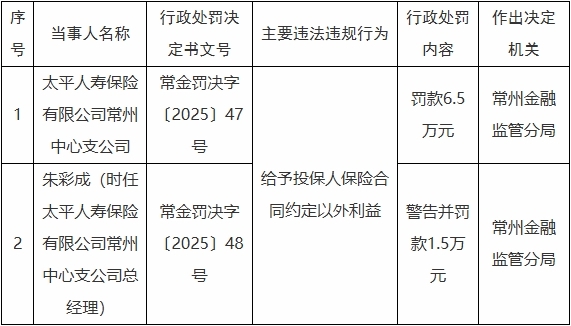
中国经济网北京9月22日讯 国家金融监督管理总局网站近日公布的常州监管分局行政处罚信息公开表 (常金罚决字〔2025〕47号、48号)显示,太平人寿保险有限公司常州中心支公司给予投保人保险合同 约定以外利益,时任太平人寿保险有限公司常州中心支公司总经理朱彩成对此负有责任。 以下为原文: | 序 | 当事人名称 | 行政处罚决 | 主要违法违规行为 | 行政处罚 | 作出决定 | | --- | --- | --- | --- | --- | --- | | 름 | | 定书文号 | | 内容 | 机关 | | | 太平人寿保险 | 常金罚决字 | | 罚款6.5 | 常州金融 | | 1 | 有限公司常州 | (2025) 47 | | | | | | 中心支公司 | 를 | | 万元 | 监管分局 | | | 朱彩成(时任 | | 给予投保人保险合 | | | | | 太平人寿保险 | 常金罚决字 | 同约定以外利益 | 警告并罚 | | | 2 | 有限公司常州 | (2025) 48 | | 款1.5万 | 常州会融 | | | | | | | 监管分局 | | | 中心支公司总 | 글 | | 元 | ...
刚刚!潘功胜、李云泽、吴清、朱鹤新重磅发声,信息量巨大
Sou Hu Cai Jing· 2025-09-22 08:29
潘功胜:中国特色现代货币政策框架逐步形成 潘功胜表示,中国特色的现代货币政策框架已初步形成,并不断完善,有效促进了金融总量的合理增长,融资成本的稳步下降,信贷结构的不 断优化,维护了币值稳定。 潘功胜:目前我国金融体系总体稳健 潘功胜表示,目前我国金融体系总体稳健,金融机构总体健康,金融市场运行平稳。 潘功胜:"十四五"时期科技型中小企业贷款、普惠小微贷款、绿色贷款年均增速超过20% 潘功胜表示,"十四五"时期,科技型中小企业贷款、普惠小微、绿色贷款年均增速超过20%。特别是2024年9月中央政治局会议以来,人民银行 按照中央部署,出台了一系列货币金融政策举措,有效稳定市场预期、提振信心,推动经济持续回升向好和高质量发展。 潘功胜:今日发布会主要介绍十四五时期金融业发展情况, 不涉及短期政策调整 潘功胜表示,今天的新闻发布会的主题是介绍十四五时期金融业的发展情况,主要是从中长期的视角回顾和总结"十四五",不涉及短期政策的 调整,关于"十五五"以及下一步金融改革的内容,将在中央统一部署后给做进一步沟通。 9月22日,国务院新闻办公室在北京举行"高质量完成'十四五'规划"系列主题新闻发布会,中国人民银行行长潘功胜 ...
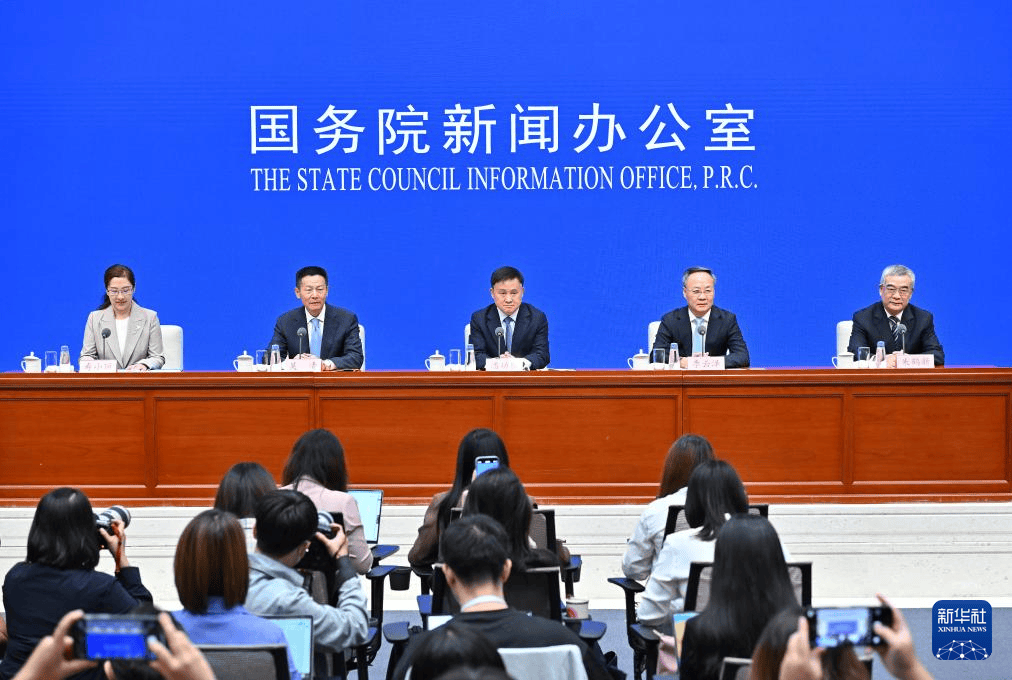
一行一局一会,最新发声
Zheng Quan Shi Bao Wang· 2025-09-22 07:47
潘功胜表示,今天的新闻发布会的主题是介绍十四五时期金融业的发展情况,主要是从中长期的视角回 顾和总结"十四五",不涉及短期政策的调整,关于"十五五"以及下一步金融改革的内容,将在中央统一 部署后给做进一步沟通。 潘功胜:目前我国金融体系总体稳健 潘功胜表示,目前我国金融体系总体稳健,金融机构总体健康,金融市场运行平稳。 潘功胜:"十四五"时期科技型中小企业贷款、普惠小微贷款、绿色贷款年均增速超过20% 潘功胜表示,"十四五"时期,科技型中小企业贷款、普惠小微、绿色贷款年均增速超过20%。特别是 2024年9月中央政治局会议以来,人民银行按照中央部署,出台了一系列货币金融政策举措,有效稳定 市场预期、提振信心,推动经济持续回升向好和高质量发展。 国务院新闻办公室于2025年9月22日(星期一)下午3时举行"高质量完成'十四五'规划"系列主题新闻发布 会,中国人民银行行长潘功胜,金融监管总局局长李云泽,中国证监会主席吴清,中国人民银行副行 长、国家外汇局局长朱鹤新介绍"十四五"时期金融业发展成就,并答记者问。 潘功胜:今日发布会主要介绍十四五时期金融业发展情况,不涉及短期政策调整 潘功胜:中国特色现代货币政策框架 ...