
生物科技

Search documents
湖北省绿沃生物科技有限公司成立 注册资本135万人民币
Sou Hu Cai Jing· 2025-09-11 05:17
Group 1 - Hubei Green沃生物科技有限公司 has been established with a registered capital of 1.35 million RMB [1] - The company is engaged in various activities including research and development of bio-organic fertilizers, sales of fertilizers, and technology services related to agricultural waste resource utilization [1] - The company also focuses on soil pollution remediation services, environmental protection consulting, and the sale of specialized environmental protection equipment [1] Group 2 - The company is involved in the production, sales, processing, transportation, and storage of agricultural products, including fresh vegetables and fruits [1] - The company operates under both general and licensed projects, with fertilizer production requiring specific approvals from relevant authorities [1]
香港创科发展:两年80间企业落户,投资超65亿美元
Sou Hu Cai Jing· 2025-09-11 05:11
Core Insights - The biotechnology sector presents immense opportunities, with China emerging as the world's second-largest biopharmaceutical market and a leader in biotechnology [1] - Hong Kong is positioned as a gateway to the mainland market and a platform for mainland innovations to reach the global stage [1] Group 1: Hong Kong's Advantages - Hong Kong has multiple advantages that make it a reliable and trustworthy partner for technology development and investment collaboration [1] - The city is home to 4,700 startups and nearly 20 unicorn companies, many of which have been nurtured and supported by Science Park and Cyberport [1] Group 2: Recent Developments - Over the past two years, more than 80 technology companies have established operations in Hong Kong, with investments exceeding $6.5 billion and creating approximately 20,000 quality jobs [1]
36家台企亮相服贸会 共享大陆发展机遇
Zhong Guo Xin Wen Wang· 2025-09-11 03:27
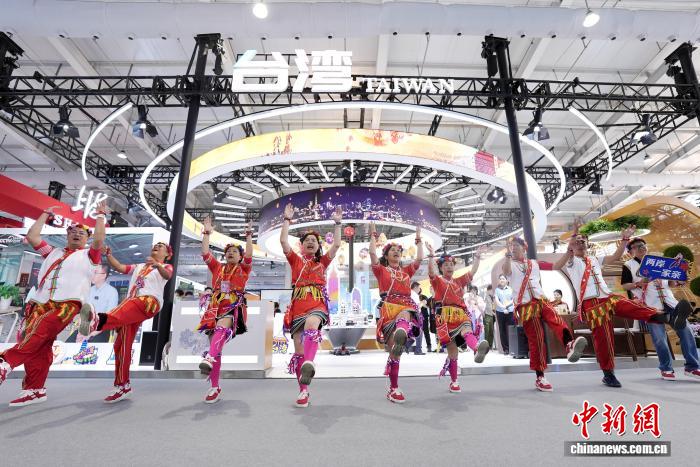
Core Insights - The 2025 China International Service Trade Fair features 36 Taiwanese enterprises showcasing over 200 products, emphasizing the theme of "Service Integration Development, Sharing National Future" [1][3] Group 1: Taiwanese Enterprises Participation - The Taiwanese exhibition at the fair includes companies from technology services, health services, financial services, and supply chain and business services [1] - The design of the exhibition area is inspired by an open scroll, incorporating elements from Minnan red brick patterns and Taiwanese ethnic minorities, symbolizing the close ties between the two sides [1] Group 2: Company Highlights - Wu Yizhen, representing Meiya Biotechnology Group, transitioned from finance to biotechnology, establishing her company in Beijing after gaining experience in Shanghai [3] - Meiya Biotechnology Group has seen an upward trend in performance this year, reflecting confidence in the mainland market despite global economic fluctuations [3] - In contrast, Inventec Corporation has been deeply rooted in the mainland market for years, adapting to the rapid development of the internet and AI sectors, which has led to significant growth in revenue expected for 2024 [4] Group 3: Industry Trends and Opportunities - Taiwanese companies are increasingly collaborating with mainland enterprises rather than solely operating independently, particularly in precision instruments, agricultural product processing, and cultural creativity [4] - The establishment of cross-strait technology innovation centers aims to facilitate cooperation between Taiwanese and mainland tech companies, showcasing products like AR glasses and AI robots [4][5] - The center has successfully connected Taiwanese companies with major global players in the semiconductor display industry, enhancing business operations in the mainland [5]

百普赛斯股价跌5.15%,中国路博迈基金旗下1只基金重仓,持有1.57万股浮亏损失4.91万元
Xin Lang Cai Jing· 2025-09-11 02:22
Group 1 - The stock price of Beijing Baipusi Biotechnology Co., Ltd. dropped by 5.15% to 57.67 CNY per share, with a total market capitalization of 9.68 billion CNY as of the report date [1] - The company was established on July 22, 2010, and went public on October 18, 2021, focusing on providing key biological reagent products and technical services, with main revenue sources being recombinant proteins (82.27%), antibodies and other reagents (12.88%), technical services (3.04%), and others (1.80%) [1] Group 2 - The fund "Lubo Mai China Medical Health Stock Initiation A" holds 15,700 shares of Baipusi, accounting for 3.84% of the fund's net value, making it the ninth largest holding [2] - The fund was established on December 26, 2023, with a current scale of 14.52 million CNY, achieving a year-to-date return of 44.16% and a one-year return of 58.26% [2] Group 3 - The fund manager of "Lubo Mai China Medical Health Stock Initiation A" is Li Tao, who has been in the position for 1 year and 261 days, with total assets under management of 29.25 million CNY [3] - During Li Tao's tenure, the best fund return was 17%, while the worst was 15.79% [3]
无锡诺泰生物科技有限公司成立 注册资本75万人民币
Sou Hu Cai Jing· 2025-09-11 01:51
Group 1 - A new company, Wuxi Nuotai Biotechnology Co., Ltd., has been established with a registered capital of 750,000 RMB [1] - The legal representative of the company is Yu Yuxing [1] - The company's business scope includes sales of magnetic materials, research and development of new materials, manufacturing and sales of bio-based materials, and various sales of chemical products [1] Group 2 - The company is involved in the sales of medical devices, both Class I and Class II [1] - It also engages in import and export activities, including technology services, development, consulting, and promotion [1] - The company focuses on industrial enzyme preparations and bio-based material polymer technology research and development [1]

证券代码:688575 证券简称:亚辉龙 公告编号:2025-051
Zhong Guo Zheng Quan Bao - Zhong Zheng Wang· 2025-09-11 01:08
Group 1 - The core point of the announcement is that the controlling shareholder, actual controller, and chairman of Shenzhen Yahui Long Biotechnology Co., Ltd., Mr. Hu Kunhui, has reduced his shareholding through block trading, decreasing his and his concerted parties' total shareholding from 49.06% to 47.06% [2][3] - The reduction involved a total of 11,408,536 shares, which triggered a change in equity that touched the 1% threshold [2] - This equity change is part of a previously disclosed share reduction plan and does not affect the company's control structure or governance [3] Group 2 - The announcement confirms that the information disclosed is consistent with the obligations of the information discloser and its concerted parties [2] - The reduction plan is still ongoing, and the company will comply with legal and regulatory requirements for further disclosures [3]

凯普生物:9月10日召开董事会会议
Mei Ri Jing Ji Xin Wen· 2025-09-10 12:55
Group 1 - The company, Capbio (SZ 300639), held its sixth first temporary board meeting on September 10, 2025, in Chaozhou, Guangdong Province, to discuss the appointment of the head of the internal audit department among other documents [1] - For the first half of 2025, Capbio's revenue composition was as follows: molecular diagnostic products accounted for 67.65%, medical testing services for 29.07%, and medical service income for 3.27% [1] - As of the report date, Capbio's market capitalization was 3.8 billion yuan [1]
港股医药板块延续调整,恒生创新药ETF(159316)逆势获超1亿份净申购
Mei Ri Jing Ji Xin Wen· 2025-09-10 11:22
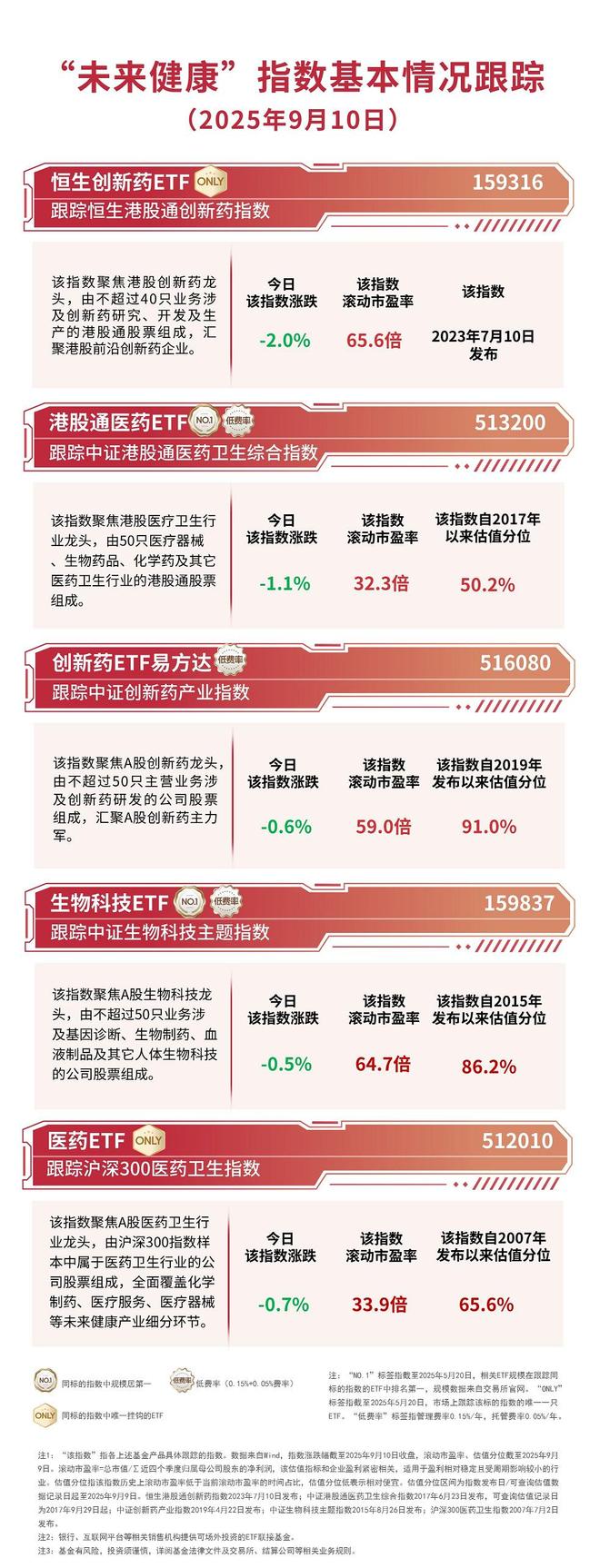
Core Viewpoint - The Chinese innovative pharmaceutical sector is experiencing growth in revenue and a significant reduction in losses, driven by technological breakthroughs, accelerated internationalization, and policy support [1]. Group 1: Market Performance - The Hang Seng Innovative Drug Index fell by 2.0%, while the CSI Hong Kong Stock Connect Pharmaceutical and Health Comprehensive Index decreased by 1.1% [1]. - The CSI Innovative Drug Industry Index and the CSI Biotechnology Theme Index saw declines of 0.6% and 0.5%, respectively [1]. - The Hang Seng Innovative Drug ETF (159316) recorded over 100 million net subscriptions throughout the day, marking four consecutive days of net inflow, with the latest scale reaching 2.5 billion yuan, a historical high [1]. Group 2: Industry Outlook - CITIC Construction Investment Securities forecasts that by the first half of 2025, revenue for Chinese innovative pharmaceutical companies will continue to grow, with losses significantly narrowing [1]. - The valuation of the innovative drug industry is expected to rise substantially, reflecting an enhancement in global competitiveness [1]. - The sector's accelerated development is attributed to three driving forces: technological breakthroughs, internationalization, and supportive policies [1].
华大基因:公司始终高度重视产品合规化建设
Zheng Quan Ri Bao Wang· 2025-09-10 10:18
证券日报网讯华大基因(300676)9月10日在互动平台回答投资者提问时表示,公司始终高度重视产品 合规化建设,在感染防控领域,基于宏基因组方法学的病原体检测试剂盒资质申报工作在加速推进中。 肿瘤防控领域,用于肠癌防控的DNA甲基化检测和用于宫颈癌防控的HPV分型基因检测已成为惠民检 测项目,大人群民生项目模式已经初见成效。 ...
费娅阿卡联(武安)生物科技有限公司成立 注册资本100万人民币
Sou Hu Cai Jing· 2025-09-10 06:36
Group 1 - The company Feiya Akarian (Wuan) Biotechnology Co., Ltd. has been established with a registered capital of 1 million RMB [1] - The legal representative of the company is Hu Zhaoqing [1] - The business scope includes research and development of biological organic fertilizers, compound microbial fertilizers, and bio-based materials [1] Group 2 - The company is also involved in the sales of fertilizers, chemical fertilizers, and bio-based materials [1] - Additional services include technology services, development, consulting, and transfer related to its business [1] - The company is permitted to engage in import and export activities, as well as landscaping engineering construction [1]