军工

Search documents
差距这么大?美国前8个月出口额13148亿美元,中国出口额让人意外
Sou Hu Cai Jing· 2025-10-25 02:49
Core Insights - The export performance of the United States has significantly declined, with a total export value of $1.314868 trillion in the first eight months of 2025, showing a drop from a positive growth of 6.4% in Q1 to a negative growth of -7.7% in Q2, and further declining to an average of -14.1% in July and August [1][3][5] - In contrast, China's export value reached $2.31 trillion in the same period, maintaining a stable growth rate of 4.6%, showcasing resilience against global demand contraction [5][8] US Export Performance - In the first quarter, the US exports totaled $238.936 billion, with a year-on-year growth of 6.4%, driven by a high growth rate of 12.4% in January [3] - The second quarter saw a total export of $531.532 billion, with a negative growth of -7.7%, marking the first instance of negative growth [3] - The decline continued into July and August, with an average export growth rate of -14.1%, indicating a consistent downward trend over five months [5][8] Factors Affecting US Exports - The introduction of new tariff policies in April 2025 has significantly impacted US exports, particularly in agricultural products, which saw a 51.8% decrease in exports to China [10][12] - Energy products, while still showing a 3.2% growth, have seen a substantial decline from the previous year's growth of 10.2% [13] - The reliance on traditional export categories such as agriculture and energy has exposed the US to vulnerabilities in international market fluctuations and trade policies [30] China Export Performance - China's exports are bolstered by machinery and electronics, which accounted for 60.2% of total exports, with a growth rate of 9.2% in the first eight months [23] - Notable growth was observed in specific categories such as integrated circuits (23.3% growth) and automobiles (11.9% growth), contributing to the overall increase in machinery and electronics exports [23] - The home appliance sector has also shown strong performance, with a 14.7% increase in exports, supported by global demand for appliance upgrades and increased brand recognition [25] Emerging Trends in China - New categories related to advanced manufacturing have demonstrated impressive growth, with industrial robots and wind power equipment exports increasing by 54.9% and 23.9%, respectively [27] - Labor-intensive products have shown signs of recovery, with reduced export declines in textiles, plastics, and furniture, indicating a stabilization in these sectors [27] Comparative Analysis - The structural differences in exports between the US and China highlight the US's reliance on traditional sectors, while China is successfully transitioning towards high-tech and high-value-added products [30][32] - China's diversified export markets, including ASEAN, Africa, and Latin America, provide a buffer against fluctuations in demand from traditional markets, unlike the US, which is heavily dependent on a few key markets [34] Conclusion - The stark contrast in export performance between the US and China in the first eight months of 2025 is attributed to various factors, including export structure, trade partner diversification, and responses to external pressures [36][38] - The ongoing trade dynamics between the two nations underscore the importance of stable bilateral trade relations for mutual benefit in the global market [40]


机构风向标 | 雷电微力(301050)2025年三季度已披露前十大机构持股比例合计下跌2.36个百分点
Xin Lang Cai Jing· 2025-10-25 02:08
Group 1 - The core viewpoint of the news is that 雷电微力 (301050.SZ) has seen a decrease in institutional holdings in its A-shares, with a total of 6 institutional investors holding 15.96 million shares, representing 6.52% of the total share capital, which is a decline of 2.36 percentage points compared to the previous quarter [1] - Among public funds, two funds reduced their holdings compared to the previous quarter, with a total reduction of 0.15% [1] - A total of 84 public funds did not disclose their holdings this quarter, including several notable funds such as 国防ETF and 华夏中证1000ETF [1] Group 2 - From the perspective of foreign investment, one new foreign institution disclosed its holdings this quarter, namely 香港中央结算有限公司 [2]
长城军工(601606.SH)发布前三季度业绩,归母净亏损1777万元
智通财经网· 2025-10-24 17:28
Group 1 - The company reported a revenue of 1.077 billion yuan for the first three quarters of 2025, representing a year-on-year growth of 10.79% [1] - The net profit attributable to shareholders was a loss of 17.77 million yuan [1] - The net profit excluding non-recurring items was a loss of 31.70 million yuan [1] - The basic earnings per share were -0.02 yuan [1]

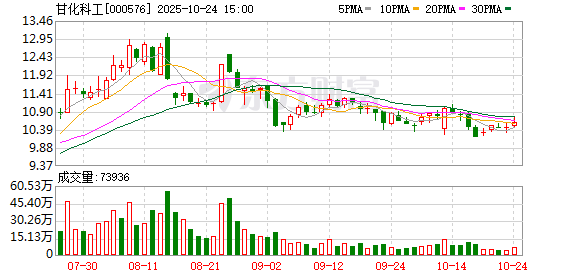
甘化科工:2025年第三季度归属于上市公司股东的净利润同比增长791.63%
Zheng Quan Ri Bao· 2025-10-24 15:12
Group 1 - The core point of the article is that GanHua Science and Technology reported significant growth in its Q3 2025 financial results, with a revenue of 124,930,312.08 yuan, representing a year-on-year increase of 57.57% [2] - The net profit attributable to shareholders of the listed company reached 43,733,805.48 yuan, showing a remarkable year-on-year growth of 791.63% [2]

长城军工(601606.SH):前三季度净亏损1776.7万元
Ge Long Hui A P P· 2025-10-24 13:01
Core Viewpoint - The company reported a revenue of 1.077 billion yuan for the first three quarters of 2025, reflecting a year-on-year growth of 10.79% while experiencing a net loss attributable to shareholders of 17.767 million yuan and a basic earnings per share of -0.02 yuan [1] Financial Performance - Revenue for the first three quarters reached 1.077 billion yuan, marking a 10.79% increase compared to the previous year [1] - The net profit attributable to shareholders was -17.767 million yuan, indicating a loss [1] - Basic earnings per share stood at -0.02 yuan [1]
长城军工:前三季度净亏损1776.7万元 同比减亏
Zheng Quan Shi Bao Wang· 2025-10-24 12:46
Core Viewpoint - Longcheng Military Industry (601606) reported a decline in Q3 revenue but an overall increase in revenue for the first three quarters of 2025, indicating a mixed performance with improvements in product delivery and gross margin [1] Group 1: Q3 Performance - The company's Q3 operating revenue was 378 million yuan, a year-on-year decrease of 12.62% [1] - The net profit for Q3 was 9.63 million yuan [1] Group 2: Year-to-Date Performance - For the first three quarters, the operating revenue reached 1.077 billion yuan, reflecting a year-on-year growth of 10.79% [1] - The company reported a net loss of 17.77 million yuan for the first three quarters, which represents a reduction in losses compared to the previous year [1] Group 3: Product Delivery and Profitability - The company increased product deliveries in the first three quarters, contributing to the year-on-year revenue growth [1] - There was a change in the sales product structure, which led to an improvement in the overall gross margin [1]
江苏发现500千吨大型锶矿有啥用?为啥媒体都炸了?
Sou Hu Cai Jing· 2025-10-24 12:37
Core Insights - The discovery of a large strontium mine in Lishui District, Nanjing, Jiangsu, with an estimated resource of 545.55 thousand tons and an average grade of 48.65%, has significant implications for various high-tech industries [1][18]. Industry Significance - Strontium, while not a rare earth element, plays a crucial role in high-tech sectors such as electric vehicles, semiconductors, military applications, and medical treatments [2][4]. - The United Nations has classified strontium as a "green rare metal," highlighting its importance in advanced manufacturing and technology [4][22]. Resource Distribution - Global strontium resources are concentrated in three main countries: Mexico (20 million tons), China (approximately 15 million tons), and Spain [6]. - Despite China's substantial reserves, challenges exist due to lower ore grades and higher extraction costs compared to countries like Iran, which has high-grade strontium ores [8]. Economic Impact - The new discovery in Jiangsu enhances China's self-sufficiency in strontium, reducing reliance on imports, which totaled 12,000 tons of high-purity strontium carbonate in 2024 at a price of 27,500 yuan per ton [8][12]. - The mining operation's efficiency is expected to improve by 30% due to the simultaneous extraction of multiple metals, including copper and zinc, using a new multi-metal exploration approach [10][12]. Strategic Advantages - The discovery strengthens China's bargaining power in the strontium market, allowing for greater control over supply chains in critical industries [12][20]. - The development of smart mining technologies and sustainable practices is underway, aiming to reduce waste and improve the overall efficiency of strontium extraction [16]. Future Outlook - The strategic importance of strontium is recognized as a key factor in enhancing China's position in the global high-tech supply chain [18][20]. - The recent find is seen as a stepping stone for China's manufacturing sector, positioning the country as a significant player in the global resource competition [20].
长城军工:第三季度净利润963.39万元
Xin Lang Cai Jing· 2025-10-24 10:13
Core Viewpoint - The company reported a decline in revenue for the third quarter, while showing growth in revenue for the first three quarters of the year, but incurred a net loss during the same period [1] Financial Performance - Third quarter revenue was 378 million yuan, a year-on-year decrease of 12.62% [1] - Net profit for the third quarter was 9.63 million yuan [1] - Revenue for the first three quarters was 1.077 billion yuan, representing a year-on-year increase of 10.79% [1] - The net loss for the first three quarters was 17.77 million yuan [1]
长城军工:前三季度净亏损1776.7万元
Ge Long Hui A P P· 2025-10-24 10:13
格隆汇10月24日|长城军工公告,第三季度营收为3.78亿元,同比下降12.62%;净利润为963.39万元。 前三季度营收为10.77亿元,同比增长10.79%;净利润亏损1776.7万元。 ...
中加基金固收周报︱贸易战烈度增加,市场在缩量中趋向防守
Xin Lang Ji Jin· 2025-10-24 07:52
Market Overview - The A-share market experienced a decline across major indices last week, with trading volume continuing to decrease amid divergent market performance [1] - Among the 31 Shenwan first-level industries, banking, coal, and food and beverage sectors performed relatively well [1] Macro Data Analysis - In September, the new social financing scale was 35,338 billion yuan, with new RMB loans amounting to 12,900 billion yuan; the year-on-year growth rate of social financing stock was 8.7%, slightly down from 8.8% [5] - M1 new caliber stock year-on-year growth rate was 7.2%, up from 6.0% last month; M2 stock year-on-year growth rate was 8.4%, down from 8.8% [5] - The main contributors to new social financing were short-term loans to enterprises (increased by 0.25 trillion yuan year-on-year), corporate bonds (increased by 0.20 trillion yuan), and off-balance-sheet notes (increased by 0.19 trillion yuan) [5] - The consumer price index (CPI) in September was -0.3%, a slight improvement from -0.4% the previous month; the producer price index (PPI) decreased by 2.3% year-on-year, with a narrowing decline [6] Stock Market Strategy Outlook - The market experienced wide fluctuations last week, with trading volume and margin financing continuing to decline, dropping below 2 trillion yuan [8] - The upcoming period until early November is expected to be filled with macro events, leading to a prevailing cautious sentiment in the market [8] - The technology sector's long-term logic remains intact, and its high valuations have seen some digestion during recent adjustments [8] - Defensive dividend sectors may see an increase in allocation in the short term, while attention should be paid to stocks with catalysts in the dividend sector [8] - The long-term outlook indicates that the ongoing U.S.-China struggle has set a baseline, with international capital markets beginning to question U.S. governance and institutional credibility [8] - The current liquidity environment remains supportive, with a potential influx of funds into the equity market as the wealth effect increases among residents [8]