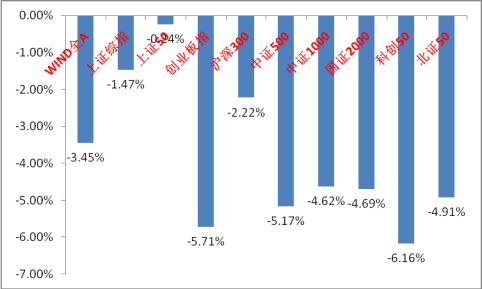
红利避险

Search documents
中加基金固收周报|市场面临降温
Xin Lang Cai Jing· 2026-01-22 08:23
Market Overview - A-shares showed mixed performance last week with major indices fluctuating and trading volume declining from high levels [1][8] Macro Data Analysis - China's exports in December increased by 6.6% year-on-year in USD terms, exceeding market expectations and also showing month-on-month growth [4][13] - For the entire year of 2025, exports are projected to grow by 5.5%, making it the largest contributor to economic growth among the three driving forces [4][13] - The strong export performance in December is attributed to sustained external demand during the global manufacturing cycle and a rush to export due to reduced domestic tax rebates [4][13] - The new export orders index for China's manufacturing PMI rose by 1.4 percentage points to 49.0% in December, while JPMorgan's global manufacturing PMI recorded 50.4%, indicating robust external demand [4][16] - Key export items included computers, integrated circuits, and automobiles, with the latter showing the strongest growth, potentially influenced by the EU's proposed minimum import price policy for Chinese cars [4][16] - ASEAN remains China's largest export destination [4][16] Short-term Market Strategy - The market is experiencing a cooling phase after a period of heightened enthusiasm, with a rapid decline in trading volume and financing levels [8][18] - Factors supporting the market include favorable liquidity conditions, a weak dollar cycle, and a gradual appreciation of the RMB [8][18] - The spring rally is driven by hotspots in commercial aerospace and AI applications, enhancing market risk appetite [8][18] - Regulatory measures have been implemented to cool down the market due to the rapid accumulation of risks from strong momentum [8][18] - The market's trading heat is quickly diminishing, and short-term thematic trends may enter a consolidation phase [8][18] Mid-term Market Outlook - Technology growth remains a favored direction, with expectations of improving economic fundamentals gradually accumulating [9][19] - The current economic fundamentals and technology narratives have not fundamentally changed, and the technology sector remains a priority for allocation [9][19] - Defensive dividend sectors may enter an observation period, with potential for fund allocation if aggressive sectors continue to face pressure [22] Long-term Market Perspective - The long-term dynamics of the US-China struggle are becoming clearer, with increasing skepticism about the US government's governance and institutional credibility [10][20] - Despite uncertainties in the US economic outlook and the Fed's interest rate cuts, the credit of the dollar remains intact [10][20] - The trend of long-term capital inflow into the Chinese equity market is expected to strengthen due to regulatory policies promoting passive investment products [10][20] - The increase in equity market profitability is likely to encourage residents to allocate more of their excess deposits into the stock market [10][20] Industry Insights - For defensive dividend sectors, a short-term observation period is recommended, with attention to potential fund allocation in response to worsening market sentiment [22] - In aggressive sectors, technology remains a key focus, particularly in AI and commercial aerospace, which are expected to continue driving performance [22] - The market should monitor the stabilization of AI applications and aerospace sectors for potential investment opportunities [22]

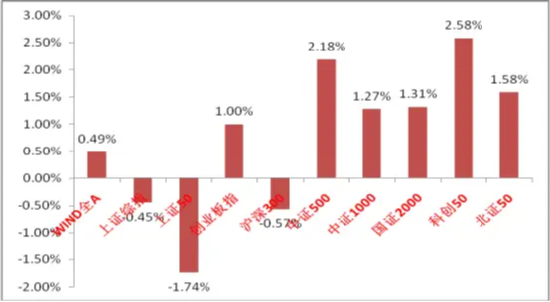
中加基金固收周报|市场情绪偏低,聚焦科技
Xin Lang Cai Jing· 2025-12-12 07:56
Market Overview - A-shares showed mixed performance last week with declining trading volume [1][7] - The market experienced a rebound amidst low liquidity and weak technical indicators, although financing data showed improvement [16] Macroeconomic Analysis - The Bank of Japan's Governor hinted at a possible interest rate hike later this month, signaling a hawkish stance [5][14] - Japan's economy shows signs of recovery with rising wages, while a weak yen has led to imported inflation pressures [5][14] - International markets have begun pricing in potential liquidity tightening following the Bank of Japan's statements, although the impact remains limited [5][14] Short-term Outlook - As year-end approaches, institutional fund activity is low, leading to reduced market liquidity and increased pricing power for quantitative funds [8][17] - The technology growth sector is particularly sensitive to marginal catalysts, with expectations for significant policy outcomes from upcoming meetings [8][17] - A potential influx of capital estimated in the hundreds of billions is anticipated to support a spring market rally [8][17] Mid-term Perspective - The technology growth sector remains a favored direction, with no fundamental changes in the economic backdrop or technology narrative [8][18] - Defensive dividend sectors are recommended for continued allocation, with increased insurance capital and stable economic expectations providing support [10][19] Long-term View - The long-term dynamics of the U.S.-China rivalry are becoming clearer, with increasing skepticism about U.S. governance and institutional credibility [9][18] - The Chinese equity market may benefit from sustained foreign capital inflows, supported by a favorable exchange rate for the yuan against the dollar [9][18] - The trend towards long-term capital from public offerings and insurance funds is expected to strengthen, with significant stock holdings by major insurance companies [9][18] Industry Insights - For defensive dividend sectors, maintaining allocation ratios is advised, with a focus on catalysts in certain industries and stable attributes in Hong Kong stocks [10][19] - In aggressive sectors, technology remains a key focus, particularly in AI and related fields, with attention to short-term catalysts in domestic computing and commercial aerospace [10][19] - The market may see opportunities in undervalued domestic demand sectors and high-growth areas, contingent on strong catalysts [10][19]
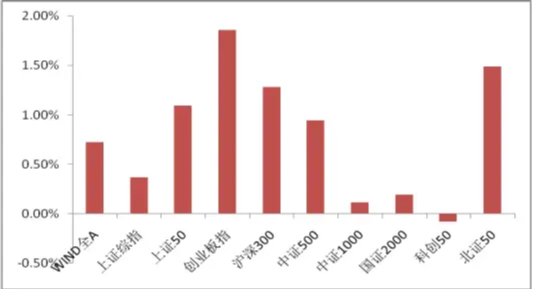
中加基金固收周报︱国际市场压力加剧,市场继续走弱
Xin Lang Ji Jin· 2025-11-27 08:07
Market Overview - A-shares experienced a decline last week, with major indices showing reduced trading volume during the adjustment phase [2] - Among the 31 Shenwan first-level industries, banking, media, and food and beverage sectors performed relatively well [2] Macroeconomic Data Analysis - In September, the U.S. added 119,000 non-farm jobs, exceeding expectations of 51,000, although August's data was revised down from 22,000 to -4,000 [3] - The unemployment rate rose to 4.4%, slightly above expectations and previous values [3] - The strong non-farm data had already been factored into the market, leading to a slight increase in the probability of a rate cut in December to around 40% [3] - Future inflation data, such as PCE prices, will be critical for the Federal Reserve's December decision [3] Stock Market Strategy Outlook - The market showed wide fluctuations last week, with low trading volume and weak technical indicators [4] - The market's downward trend was anticipated, with several short-term negative macro factors, including geopolitical risks and concerns over AI giants' profitability [4] - Defensive dividend and cyclical sectors performed better in the short term, while the overall market is expected to remain volatile [4] - The long-term market structure is unlikely to change significantly, as the economic fundamentals and technology narratives remain stable [5] Long-term Perspective - The ongoing U.S.-China competition has established a clear baseline, with increasing skepticism about the U.S. government's governance and institutional credibility [6] - The RMB has appreciated against the USD amid uncertainties in the U.S. economic outlook and Fed rate cuts, potentially supporting China's equity market [6] - The trend towards long-term capital from public funds and insurance companies is expected to strengthen, with significant excess deposits in the market [6] - A focus on defensive dividend sectors is recommended, with attention to catalysts in certain industries [6]
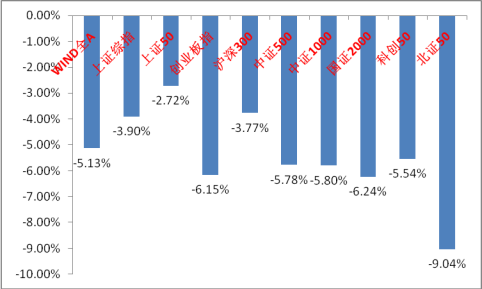
中加基金固收周报︱贸易战烈度增加,市场在缩量中趋向防守
Xin Lang Ji Jin· 2025-10-24 07:52
Market Overview - The A-share market experienced a decline across major indices last week, with trading volume continuing to decrease amid divergent market performance [1] - Among the 31 Shenwan first-level industries, banking, coal, and food and beverage sectors performed relatively well [1] Macro Data Analysis - In September, the new social financing scale was 35,338 billion yuan, with new RMB loans amounting to 12,900 billion yuan; the year-on-year growth rate of social financing stock was 8.7%, slightly down from 8.8% [5] - M1 new caliber stock year-on-year growth rate was 7.2%, up from 6.0% last month; M2 stock year-on-year growth rate was 8.4%, down from 8.8% [5] - The main contributors to new social financing were short-term loans to enterprises (increased by 0.25 trillion yuan year-on-year), corporate bonds (increased by 0.20 trillion yuan), and off-balance-sheet notes (increased by 0.19 trillion yuan) [5] - The consumer price index (CPI) in September was -0.3%, a slight improvement from -0.4% the previous month; the producer price index (PPI) decreased by 2.3% year-on-year, with a narrowing decline [6] Stock Market Strategy Outlook - The market experienced wide fluctuations last week, with trading volume and margin financing continuing to decline, dropping below 2 trillion yuan [8] - The upcoming period until early November is expected to be filled with macro events, leading to a prevailing cautious sentiment in the market [8] - The technology sector's long-term logic remains intact, and its high valuations have seen some digestion during recent adjustments [8] - Defensive dividend sectors may see an increase in allocation in the short term, while attention should be paid to stocks with catalysts in the dividend sector [8] - The long-term outlook indicates that the ongoing U.S.-China struggle has set a baseline, with international capital markets beginning to question U.S. governance and institutional credibility [8] - The current liquidity environment remains supportive, with a potential influx of funds into the equity market as the wealth effect increases among residents [8]