
港口航运

Search documents
重点集装箱港口及关键枢纽监测20250604
Dong Zheng Qi Huo· 2025-06-04 07:15
Report Title - Focus Container Port and Key Hub Monitoring 20250604 [1] Data Review Asia Ports - Yangshan Port: The weekly average waiting time/berthing time of ocean - going container ships is 24.1 hours/23.8 hours, with 28/29 ships at anchor/berthed; congestion has worsened compared to the previous period [2]. - Ningbo Port: The weekly average waiting time/berthing time of ocean - going container ships is 12.6 hours/26.0 hours, with 14/33 ships at anchor/berthed; domestic main ports' congestion has worsened, and the average ship stay in port has increased [2]. - Singapore Port: The weekly average waiting time/berthing time of ocean - going container ships is 4.0 hours/29.2 hours, with 6/46 ships at anchor/berthed [2]. - Port Klang: The weekly average waiting time/berthing time of ocean - going container ships is 34.4 hours/27.9 hours, with 14/25 ships at anchor/berthed; it continues to operate under overload, and congestion has worsened, with the average ship stay in port extended to 3 days [2]. Europe Ports - Rotterdam, Antwerp, Hamburg, Bremen: The weekly average waiting time/berthing time of ocean - going container ships are 12.4 hours/42.2 hours, 25.3 hours/45.1 hours, 10.9 hours/38.7 hours, 6.2 hours/37.0 hours respectively; intermittent strikes, cargo backlogs, and labor shortages cause congestion and common schedule delays [2]. - Valencia: The weekly average waiting time/berthing time of ocean - going container ships is 0.6 hours/37.6 hours, with 2/10 ships at anchor/berthed [2]. North America Ports - Long Beach, Los Angeles, Tacoma: The weekly average waiting time/berthing time of ocean - going container ships are 0 hours/77.2 hours, 1.2 hours/84.6 hours, 0 hours/113.4 hours respectively; operations are in good condition, but attention should be paid to potential congestion when more goods arrive [2]. - New York, Savannah, Norfolk: The weekly average waiting time/berthing time of ocean - going container ships are 0 hours/38.9 hours, 18.5 hours/35.3 hours, 2.2 hours/22.5 hours respectively [2]. - Houston Port: The weekly average waiting time/berthing time of ocean - going container ships is 5.0 hours/49.6 hours [2]. Port Stay Duration Summary - Yangshan: The latest stay is 48.3 hours, with a monthly increase of 5.8 hours and a yearly increase of 15.4 hours [6]. - Ningbo: The latest stay is 38.8 hours, with a monthly decrease of 3.2 hours and a yearly increase of 4.2 hours [6]. - Singapore: The latest stay is 33.2 hours, with a monthly increase of 2.0 hours and a yearly decrease of 8.6 hours [6]. - Port Klang: The latest stay is 61.6 hours, with a monthly increase of 11.6 hours and a yearly increase of 5.0 hours [6]. - Busan: The latest stay is 35.1 hours, with a monthly increase of 1.2 hours and a yearly increase of 5.7 hours [6]. - Rotterdam: The latest stay is 51.4 hours, with a monthly decrease of 6.9 hours and a yearly decrease of 7.0 hours [6]. - Hamburg: The latest stay is 51.7 hours, with a monthly decrease of 24.5 hours and a yearly decrease of 20.5 hours [6]. - Felixstowe: The latest stay is 88.0 hours, with a monthly increase of 19.2 hours and a yearly increase of 31.6 hours [6]. - Valencia: The latest stay is 34.5 hours, with a monthly decrease of 8.7 hours and a yearly decrease of 1.1 hours [6]. - Piraeus: The latest stay is 60.9 hours, with a monthly decrease of 0.6 hours and a yearly increase of 39.2 hours [6]. - Long Beach: The latest stay is 87.2 hours, with a monthly decrease of 7.9 hours and a yearly decrease of 19.5 hours [6]. - Los Angeles: The latest stay is 88.2 hours, with a monthly decrease of 14.8 hours and a yearly decrease of 14.9 hours [6]. - New York: The latest stay is 38.9 hours, with a monthly decrease of 7.8 hours and a yearly decrease of 9.5 hours [6]. - Savannah: The latest stay is 53.1 hours, with a monthly decrease of 2.9 hours and a yearly decrease of 21.3 hours [6]. - Santos: The latest stay is 52.8 hours, with a monthly increase of 13.6 hours and a yearly decrease of 3.1 hours [6]. Key Insights - Asian ports, especially some in China and Southeast Asia, are facing increasing congestion, and with the release of pre - export orders and the arrival of the shipping peak season, port pressure will continue to rise [2]. - European ports, affected by issues such as strikes and labor shortages, still have congestion problems and widespread schedule delays [2]. - North American ports are currently operating well, but there is a need to watch out for potential congestion when more goods arrive [2].
下沙港绿色运输模式创新实践入选全国典型案例
Hang Zhou Ri Bao· 2025-06-03 02:56
Core Viewpoint - The 2025 China Green Freight Development Conference emphasized the theme of "Efficiency Leading Green Freight Digital Development," gathering over 350 representatives from various sectors to promote high-quality development in green freight [1] Group 1: Achievements and Recognition - Hangzhou Port Group was awarded the "First Batch of National Green Freight Development Typical Practice Cases" for its innovative practices in green energy, multimodal transport, and digital green transportation at the Xia Sha Port [1] - This recognition highlights Hangzhou Port Group's contributions to building smart inland ports and modern logistics systems [1] Group 2: Initiatives and Future Plans - Hangzhou Port Group aims to implement the national "dual carbon" goals by exploring the layout of the sea-river transport system and advancing projects such as photovoltaic power generation and electric charging stations for heavy-duty electric trucks [2] - The company is committed to becoming a benchmark in the inland port industry of Zhejiang Province and contributing to the construction of a "waste-free city" in Hangzhou and an optimal business environment in Zhejiang [2]
广西持续扩大高水平对外开放(奋勇争先,决战决胜“十四五”)
Ren Min Ri Bao· 2025-06-02 21:43
Group 1: Logistics and Trade Development - The first cold chain logistics route between Malaysia's Kuantan Port and China's Beibu Gulf Port has been successfully launched, enhancing cross-border trade and benefiting both countries [1] - Guangxi has opened 9 cold chain routes aimed at ASEAN, with Beibu Gulf Port achieving a container throughput of 2.1739 million TEUs in Q1, a year-on-year increase of 12.06% [1] - The Nanning-Pingxiang high-speed railway, connecting to ASEAN, is expected to reduce travel time from over 4 hours to just over 1 hour upon its completion [2] Group 2: Infrastructure and Connectivity - Guangxi has established 61 land routes for outbound transportation and 38 maritime container routes to ASEAN, enhancing connectivity [2] - The region has also developed 12 international land optical cables to provide quality cross-border network services [2] - The Guangxi Development and Reform Commission aims to create the most efficient and cost-effective land-sea new passage connecting China and ASEAN [2] Group 3: Trade and Economic Growth - Guangxi's foreign trade import and export volume reached 187.33 billion yuan in Q1, with a year-on-year growth of 16.8%, and trade with ASEAN surpassing 100 billion yuan for the first time in the same period [3] - The implementation of a "smart airport" at Nanning Wuxu International Airport has significantly reduced the time for customs clearance and logistics operations [3] Group 4: Education and Talent Development - Guangxi has established 10 China-ASEAN Technology Innovation Colleges and has trained over 1,000 skilled talents for ASEAN countries through collaborative education [4] - The region has seen a significant increase in cross-border personnel exchanges, with 3.631 million people entering and exiting through its ports in Q1, a 10.1% increase year-on-year [4]
上交所:本周对166起证券异常交易行为采取书面警示等监管措施
news flash· 2025-05-30 10:16
Group 1 - The Shanghai Stock Exchange announced that it has taken written warnings and other regulatory measures against 166 cases of abnormal trading behaviors, including price manipulation and false declarations [1] - The exchange is closely monitoring stocks with delisting risk warnings, such as *ST Jinguang [1] - There are 15 cases of major corporate events that are undergoing special investigations, and two cases of suspected illegal activities have been reported to the China Securities Regulatory Commission [1]
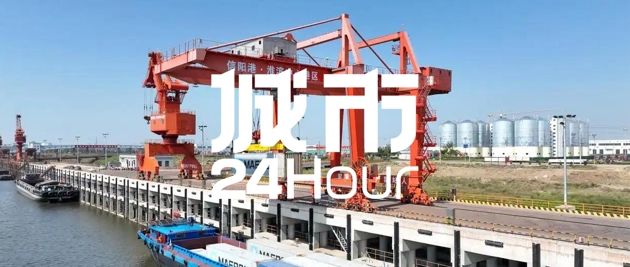
城市24小时 | 内陆大省“出海”,选中三个“核心”
Mei Ri Jing Ji Xin Wen· 2025-05-30 02:01
Core Insights - The Henan Provincial Government has issued the "Henan Province Port Industry Development Plan (2025-2035)", aiming to establish a modern port industry system by 2030 and enhance the quality and scale of the port industry by 2035 [1][3] Industry Development Goals - By 2030, the port industry scale is expected to reach 1 trillion yuan, with over 9 large-scale port industry clusters and 3 trillion-level industrial chains [2] - By 2035, the port industry scale is projected to double to 2 trillion yuan, with over 15 large-scale clusters and 4 trillion-level industrial chains [2] Key Tasks and Strategies - The plan emphasizes a development framework of "three cores leading, five belts coordinating, and multiple points supporting" [2] - Key cities identified for development include Zhoukou, Xinyang, and Zhengzhou, with specific industrial focuses for each [6][7] Historical Context and Rationale - Historically, Henan was a major water transport province, and the plan aims to revitalize this sector to complement existing transportation modes and enhance connectivity with the Yangtze River Delta [3] Performance Metrics - Zhoukou is highlighted as the largest port in Henan, with a projected cargo throughput share exceeding 87% by 2024 [6] - Xinyang's port throughput is expected to reach 5.52 million tons in 2024, marking a 42.4% year-on-year increase [6]

突发!600190停牌预退市!央国企市值管理放大招,这16只潜力股要火?
Zheng Quan Shi Bao Wang· 2025-05-29 23:53
Group 1 - *ST Jinguang (600190) will be subject to mandatory delisting due to major violations, with trading suspension starting from May 30, 2025 [2] - The company was found to have inflated profits through false trade activities and misreporting, with inflated profits of 36.10 million yuan in 2022, 68.09 million yuan in 2023, and 15.38 million yuan in Q1 2024 [2] - The stock will enter a delisting transition period for 15 trading days after the delisting decision, followed by a five-day period before being officially delisted [2] Group 2 - Central state-owned enterprises (SOEs) are accelerating market value management, with several companies releasing market value management systems [4] - Local and enterprise-level efforts are expected to enhance the pace of market value management, particularly for low-priced and low-market-cap companies, by the second half of 2025 [4] - 16 potential stocks have been identified based on criteria of stock price below 8 yuan and market capitalization below 8 billion yuan [5] Group 3 - Jishi Media, a local state-owned enterprise, is focusing on strategic emerging industries and digital transformation to enhance its asset scale and profitability [5][6] - The company reported a revenue of 499 million yuan in Q1, a year-on-year increase of 23.14%, marking the highest growth rate since its listing [7] - The company is actively collaborating on digital infrastructure projects to boost its capabilities in various sectors [6] Group 4 - Two potential stocks, Liyuan New Energy and ST Chenming, have seen continuous institutional buying over the past two years, with significant net purchases recorded [8] - Liyuan New Energy focuses on wind and solar power generation, with a notable increase in social security fund holdings [8]

合计罚款3680万元 *ST锦港连续多年财务造假,监管对公司及11人开出罚单
Mei Ri Jing Ji Xin Wen· 2025-05-29 15:55
Core Viewpoint - *ST Jinguang (SH600190) has received an administrative penalty from the Liaoning Securities Regulatory Bureau, totaling 38.6 million yuan due to multiple violations, including failure to disclose financial reports on time and false reporting of financial data [1][4][5]. Group 1: Violations Identified - The company failed to disclose its 2024 semi-annual report on time, with key executives held responsible [2]. - There were instances of false records in periodic reports from 2022 to 2024, where profits were inflated through fictitious trade activities and improper revenue recognition [2][3]. - The company did not timely disclose related party transactions, leading to significant omissions in periodic reports [3]. Group 2: Penalties Imposed - The Liaoning Securities Regulatory Bureau has mandated corrections, issued warnings, and imposed fines totaling 38.6 million yuan, with specific fines of 20 million yuan for the company and varying amounts for individual executives [4][5]. - Li Ting, the former vice president and CFO, received a 10-year ban from the securities market due to severe violations affecting market order and investor interests [5]. - Liu Hui, another key executive, is subject to separate legal proceedings for alleged violations related to the disclosure of important information [6]. Group 3: Regulatory Actions - The company has been notified by the Shanghai Stock Exchange regarding potential delisting due to long-term false reporting, which falls under the major illegal delisting criteria [6]. - The exchange has emphasized the importance of responsible conduct from all board members and executives in managing the delisting process and fulfilling disclosure obligations [6].
【财经分析】港航业“绿色变革”迫在眉睫 业界呼吁强化全球合作加速脱碳进程
Xin Hua Cai Jing· 2025-05-29 14:00
Core Viewpoint - The global shipping industry is undergoing a significant green transformation, with a focus on achieving net-zero emissions by 2050, driven by the need for sustainable practices and regulatory pressures [2][4]. Group 1: Industry Challenges and Goals - The shipping sector accounts for over 80% of international trade transport and is a major source of carbon emissions, necessitating urgent green transformation [1][2]. - Without effective emission reduction measures, carbon emissions from the shipping industry could increase by 50% to 250% by 2050 compared to 2008 levels [2]. - The European Union's carbon border adjustment mechanism has included shipping, indicating that future access to international shipping will require a green passport [2]. Group 2: Role of Ports in Green Transition - Ports are seen as active promoters of green shipping, not just passive gateways, by investing in infrastructure and adopting smart technologies [2][3]. - Ningbo-Zhoushan Port has become a pioneer in the green transition, implementing LNG refueling, shore power coverage, and exploring zero-carbon fuel applications [3][7]. - Major international shipping centers like Shanghai and Hong Kong are also taking significant steps towards green transformation, with specific targets for LNG and green fuel capabilities [2]. Group 3: Collaborative Efforts and Innovations - Industry experts emphasize the need for collaboration across the sector, including policy guidance, technological breakthroughs, and capital mobilization [4][5]. - The establishment of a green technology innovation community is recommended to address challenges in hydrogen, ammonia fuels, and carbon capture technologies [5]. - The signing of agreements for green shipping corridors between Ningbo-Zhoushan Port and major European ports aims to enhance low-carbon cooperation and promote zero-emission shipping [6][7]. Group 4: Technological Advancements and Infrastructure - The development of a digital ecosystem and big data hubs is crucial for optimizing shipping operations and achieving resource efficiency [5][6]. - Ningbo-Zhoushan Port has achieved full shore power coverage for its berths and has implemented various green technologies, including the first LNG-diesel dual-fuel tugboat in China [7]. - The green shipping corridor model focuses on reducing emissions through collaboration among global ports, shipping companies, and governments [7].
*ST锦港:收到上交所拟终止公司股票上市的事先告知书
news flash· 2025-05-29 13:22
智通财经5月29日电,*ST锦港(600190.SH)公告称,收到上海证券交易所下发的《关于拟终止公司股票 上市的事先告知书》,因公司2020年至2023年年度报告连续4年存在虚假记载,触及重大违法强制退市 情形,将被实施重大违法强制退市。上交所将根据相关规定,对公司股票作出终止上市的决定。 *ST锦港:收到上交所拟终止公司股票上市的事先告知书 ...
珠海港(000507):珠海港 24年业绩有韧性 25年Q1季度利润同比增 38%
Xin Lang Cai Jing· 2025-05-29 00:29
Core Insights - Zhuhai Port reported a total operating revenue of 5.125 billion RMB for 2024, a year-on-year decrease of 6.07%, while net profit attributable to shareholders increased by 5.37% to 292 million RMB [1] - The company plans to distribute a cash dividend of approximately 58.9 million RMB for 2024, representing about 20.2% of the annual net profit, with a dividend yield of approximately 1.2% based on the closing stock price on the report date [1] Segment Analysis - **Port and Shipping Logistics**: Revenue was 2.06 billion RMB, down 19.4% year-on-year, accounting for 40.2% of total revenue. Gross profit decreased by 2.3% to 520 million RMB, representing 38.9% of gross profit. The decline was primarily due to a 22.5% drop in container volume resulting from reduced demand for imported pulp [2] - **New Energy**: Revenue reached 2.43 billion RMB, an increase of 3.3% year-on-year, making up 47.5% of total revenue. However, gross profit fell by 4.6% to 650 million RMB, which is 48.3% of gross profit. The decline was attributed to extreme weather conditions and a decrease in comprehensive electricity prices following the extension of the Dali Wind Farm's operational life, leading to a 46.95% drop in operating profit [2] - **Investment and Others**: Revenue was 630 million RMB, up 15.9% year-on-year, contributing 12.3% to total revenue. Gross profit increased by 47.4% to 170 million RMB, accounting for 12.8% of gross profit. The significant growth was due to a decrease in the cost of capital for investment projects and increased returns [2] Investment Outlook - The company is optimistic about its four strategic directions and the continued incubation of its two subsidiaries, which are expected to enhance future performance. The substantial year-on-year increase in net profit for Q1 2025 is attributed to improvements in the core port and shipping business and optimized product sales from subsidiaries [3]
