
软件服务

Search documents
SaaS解决方案供应商小鹅通递表港交所 引入腾讯等公司投资入股
Zhi Tong Cai Jing· 2025-08-23 07:52
Core Viewpoint - Xiaoe Inc. (小鹅通) has submitted its listing application to the Hong Kong Stock Exchange, with CICC as its sole sponsor, and has attracted investments from notable institutions including Tencent [1] Company Overview - Xiaoe Inc. is a leading product-driven SaaS solution provider in the private domain operation sector, enabling enterprises to build, operate, and expand their decentralized e-commerce infrastructure [4] - The company's cloud-based one-stop solution integrates e-commerce, digital marketing, and CRM into a unified system, streamlining the entire lifecycle from traffic conversion to customer relationship management and transaction facilitation [4] Market Position - According to a report by Zhaoshang Consulting, Xiaoe Inc. ranks first among interactive private domain operation solution providers in China based on revenue for 2024, and is among the top three private domain operation solution providers [5] - The company is noted as the fastest-growing among the top five private domain operation solution providers during the reporting period [5] Technology and Infrastructure - Xiaoe Inc.'s intelligent resource scheduling system is built on public cloud infrastructure, capable of supporting peak traffic of up to 270,000 requests per second, ensuring high availability through a distributed architecture [5] - The platform has obtained ISO27001 and Level 3 certification for information security in China, and has integrated AI into its products to enhance operational efficiency, reduce costs, and improve user experience [5] Market Growth - The market size for private domain operation solutions in China is projected to grow from RMB 11.9 billion in 2024 to RMB 25.8 billion by 2029, with a compound annual growth rate (CAGR) of 16.7% [5] - Specifically, the interactive private domain operation solution market is expected to expand from RMB 5.2 billion in 2024 to RMB 13.8 billion by 2029, with an accelerated CAGR of 21.6% [5] Financial Performance - For the fiscal years ending June 30, the company's revenues were approximately RMB 299 million, RMB 415 million, RMB 521 million, and RMB 306 million for 2022, 2023, 2024, and the first half of 2025, respectively [6][8] - The company reported losses of approximately RMB 33.99 million, RMB 37.05 million, RMB 15.08 million, and RMB 5.82 million for the same periods [6][8]

000001,拟分红45.8亿元
Zhong Guo Zheng Quan Bao· 2025-08-23 00:53
Group 1: Government Policies and Industry Developments - The State Council held a meeting to discuss measures to unleash the potential of sports consumption and promote high-quality development in the sports industry [1] - The China Photovoltaic Industry Association issued an initiative to strengthen industry self-discipline and maintain fair competition in the photovoltaic market [2] - The Ministry of Industry and Information Technology announced a temporary regulation on the total quantity control of rare earth mining and separation [3] Group 2: Company Performance and Financial Updates - Jiugui Liquor reported a 43.54% decline in revenue to 561 million yuan and a 92.6% drop in net profit to 8.955 million yuan for the first half of the year [4] - Tonghuashun achieved a 28.07% increase in revenue to 1.779 billion yuan and a 38.29% rise in net profit to 502 million yuan, proposing a cash dividend of 1 yuan per 10 shares [4] - Vanke A reported a 26.23% decrease in revenue to 105.323 billion yuan and a net loss of 11.947 billion yuan for the first half of the year [5] - Ganfeng Lithium's revenue fell by 12.65% to 8.376 billion yuan, with a net loss of 531 million yuan [5] - Longi Green Energy's revenue decreased by 14.83% to 32.813 billion yuan, with a net loss of 2.569 billion yuan [5] - Ping An Bank's revenue declined by 10% to 69.385 billion yuan, with a net profit decrease of 3.9% to 24.870 billion yuan, and announced a profit distribution plan for 2025 [5] Group 3: Corporate Actions and Investments - China Three Gorges Group plans to increase its stake in Yangtze Power through the secondary market, with an investment between 4 billion yuan and 8 billion yuan [6] - Jiangsu Guotai announced plans to use up to 12 billion yuan of idle funds for entrusted wealth management in low-risk financial products [7] - Dongfeng Group's subsidiary, Lantu Motors, will go public in Hong Kong through an introduction listing, while the parent company will complete privatization [7]


腾讯控股(00700):2Q2025业绩点评:基本面维持强劲,AI应用潜力深厚
Tianfeng Securities· 2025-08-22 14:41
Investment Rating - The report maintains a "Buy" rating for Tencent Holdings with a target price not specified [7]. Core Insights - Tencent's overall performance in Q2 2025 shows strong revenue and profit growth, with AI capabilities contributing significantly [1]. - Revenue increased by 15% year-on-year, while gross profit rose by 22%. Non-IFRS operating profit grew by 18%, and Non-IFRS net profit increased by 10%, all exceeding Bloomberg consensus expectations [1]. - The company emphasizes the substantial contributions of AI to advertising effectiveness and long-standing games, with various AI features launched within WeChat [2]. - The gaming segment saw a 22% increase in revenue, driven by both domestic and international markets, with notable titles contributing to this growth [3]. - Marketing services revenue grew by 20%, with significant increases in video account and search advertising, supported by AI enhancements [4]. - Financial technology and enterprise services also showed a 10% growth in revenue, with improved gross margins [5]. Summary by Sections Overall Performance - Q2 2025 revenue and profit growth were strong, with revenue exceeding Bloomberg expectations primarily from gaming and advertising [1]. AI Contributions - AI applications have been integrated into various services, enhancing advertising performance and user engagement [2]. Gaming Revenue - Network gaming revenue increased by 22%, with both domestic and international markets performing well [3]. Marketing Services - Marketing services revenue exceeded expectations, driven by AI improvements in advertising effectiveness [4]. Financial Technology and Enterprise Services - Financial technology and enterprise services revenue grew by 10%, with enhanced profitability [5].

恒生电子: 恒生电子股份有限公司工会委员会决议公告
Zheng Quan Zhi Xing· 2025-08-22 14:18
Core Viewpoint - The company has proposed a 2025 employee stock ownership plan, which has been approved by the labor union committee, aiming to enhance employee motivation and align interests among shareholders, the company, and employees [1]. Group 1: Employee Stock Ownership Plan - The labor union committee meeting was held on August 21, 2025, to discuss the proposed employee stock ownership plan [1]. - The committee unanimously agreed that the plan does not harm the interests of the company or its shareholders and does not involve coercive participation from employees [1]. - The plan is expected to promote the establishment of an incentive mechanism that effectively aligns the interests of shareholders, the company, and individual employees, contributing to the company's long-term development [1].

迈富时:上半年经调整净利同比增77.7%,AI驱动业绩飙升
Ge Long Hui· 2025-08-22 14:17
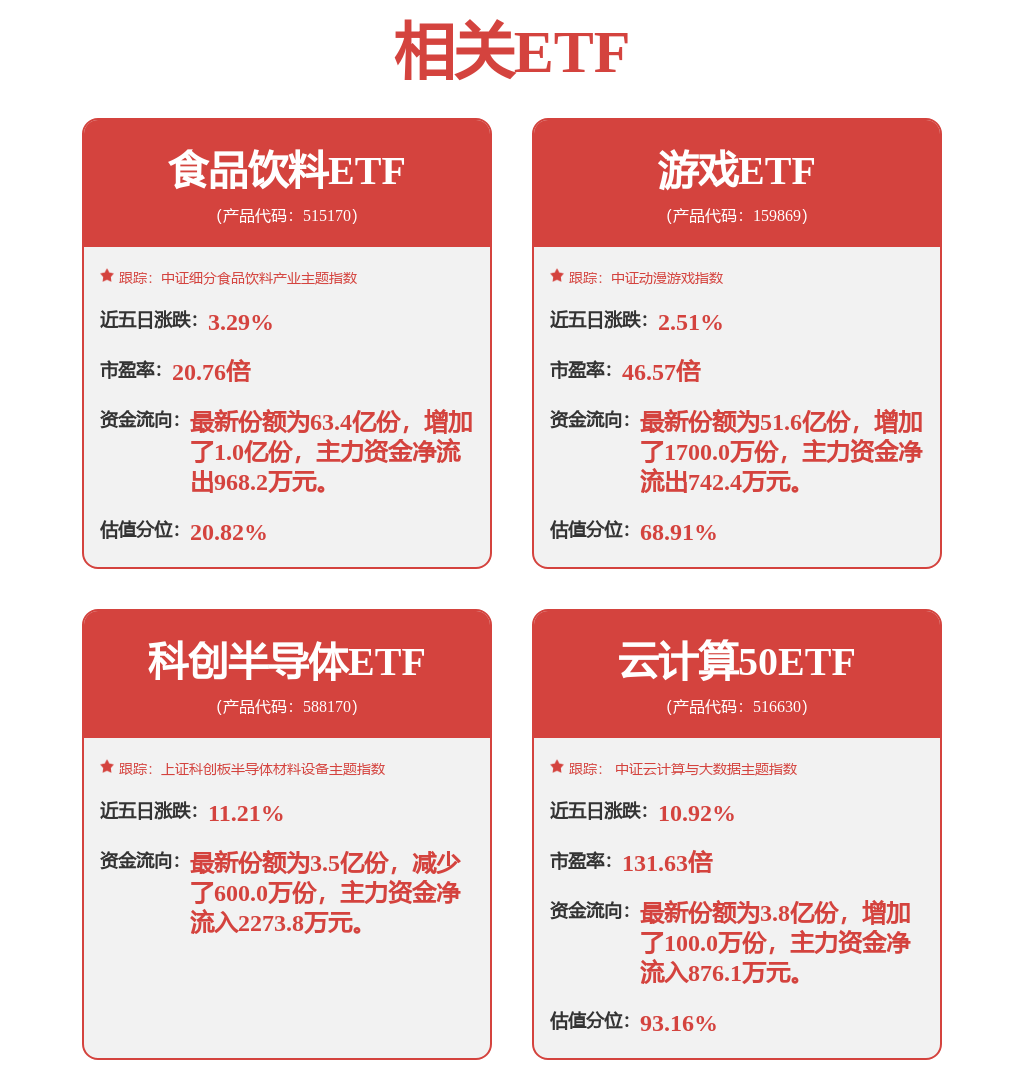
Core Insights - The company reported a revenue of 930 million yuan for the first half of 2025, representing a year-on-year growth of 25.5% [1] - Adjusted net profit reached 84.721 million yuan, showing a significant increase of 77.7% compared to the previous year [1] Customer Metrics - The total number of AI+SaaS customers has reached 21,700, with 814 large key accounts (KA) contributing to 50.3% of revenue [1] - Recurring revenue from existing customers accounts for 83.7%, indicating enhanced customer stickiness [1] - Average revenue per customer for small and medium-sized businesses (SMB) and key accounts (KA) increased by 21.7% and 20.7% respectively, reflecting continuous improvement in customer value [1] Growth Drivers - The company highlighted that deep engagement with top clients and broad coverage of small and medium enterprises are creating dual growth momentum [1] - This structural optimization is expected to provide solid support for performance in the second half of the year [1]
云学堂上涨2.35%,报0.87美元/股,总市值5193.17万美元
Jin Rong Jie· 2025-08-22 14:06
Core Insights - Yunxuetang (YXT) experienced a 2.35% increase in stock price, reaching $0.87 per share with a total market capitalization of $51.93 million as of August 22 [1] - For the fiscal year ending June 30, 2025, Yunxuetang reported total revenue of 153 million RMB, a year-on-year decrease of 7.76%, and a net profit attributable to shareholders of -73.88 million RMB, reflecting a significant decline of 441.1% [1][2] Financial Performance - The company reported a net profit attributable to shareholders of -73.88 million RMB for the fiscal year 2025, marking a 441.1% decline compared to the previous year [2] - Basic earnings per share were reported at -0.41 RMB [2] - Total revenue for the same period was 153 million RMB, down 7.76% year-on-year [1][2] Company Background - Yunxuetang Group Holdings Limited was established in January 2017 under Cayman Islands law and was previously known as Unicent Century Group Holding Limited [2] - The company rebranded to Yunxuetang Group Holdings Limited in June 2021 [2] - The group operates through subsidiaries and variable interest entities (VIEs), focusing on a SaaS model that integrates software and content to assist clients in digital transformation for corporate learning [2]
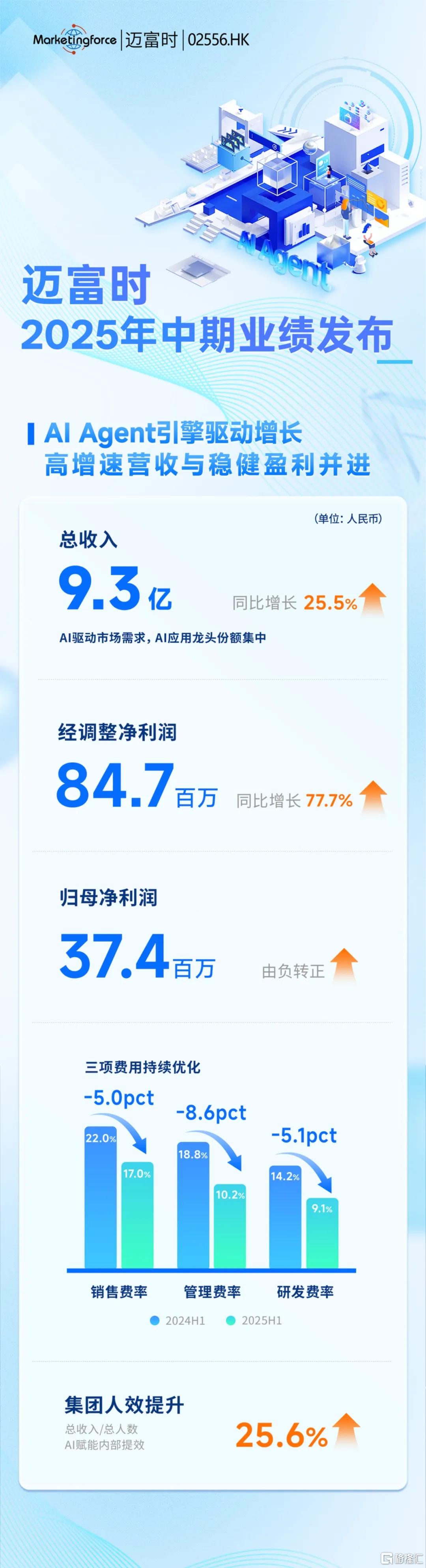
一图看懂迈富时(02556.HK)2025年中期业绩
Ge Long Hui· 2025-08-22 13:49
Core Insights - The company has achieved significant growth driven by AI applications, with adjusted net profit reaching RMB 84.7 million, a year-on-year increase of 77.7% [2] - The company has optimized its cost structure, leading to improved profitability metrics across various expense categories [2][3] - The AI and SaaS business segments are leading the growth trajectory, with AI+SaaS revenue showing a substantial increase [5][4] Financial Performance - The company reported a gross margin of 80.4% [4] - AI+SaaS revenue reached RMB 1.1 billion, with a year-on-year growth rate of 26.0% [5][4] - The recurring revenue from existing customers accounted for 84.5% of total revenue, indicating strong customer retention [27] Business Growth and Market Position - The company served 5,518 clients, with a notable increase in average revenue per user (ARPU) for both SMB and KA customers, up by 21.7% and 20.7% respectively [27][30] - The company has been recognized as a leading player in the AI SaaS market, ranking first in the 2025 AI SaaS impact enterprises in China [18][19] - The company has expanded its product offerings, with 356 AI Agent modules, adding 45 new modules [5] Technological Advancements - The company has made significant advancements in AI technology, including the upgrade of its AI Agent platform to version 2.0, enhancing its capabilities for enterprise applications [9][10] - The introduction of new AI-driven products, such as Agent-Data and Agent-Decision, reflects the company's commitment to innovation [39] International Expansion - The company is focusing on international markets, leveraging its AI foreign trade digital employee system to cover over 95% of global language regions [40] - The strategic shift from serving Chinese enterprises abroad to expanding into new overseas markets indicates a proactive growth strategy [40] Operational Efficiency - The company has improved its operational efficiency, maintaining a high gross margin while optimizing its cost structure [43] - Direct sales revenue increased by 25.2%, contributing to 87.1% of AI+SaaS revenue [34][32]
伊登软件发布中期业绩,净利润1091.9万元,同比增长40.8%
Zhi Tong Cai Jing· 2025-08-22 13:44
Core Viewpoint - Eden Software (01147) reported a revenue of 456 million RMB for the six months ending June 30, 2025, representing a year-on-year decline of 9.5% [1] - The net profit was 10.919 million RMB, showing a year-on-year increase of 40.8% [1] - The decrease in overall revenue is primarily attributed to a reduction in the cloud and AI services segment compared to the same period last year [1] Financial Performance - Revenue for the period was 456 million RMB, down 9.5% year-on-year [1] - Net profit reached 10.919 million RMB, an increase of 40.8% year-on-year [1] - Basic earnings per share were 0.53 cents [1] Segment Analysis - The decline in overall revenue is mainly due to a decrease in the cloud and AI services division compared to the previous year [1]
恒生电子发布2025年半年度报告摘要
Xin Lang Cai Jing· 2025-08-22 13:38
恒生电子发布2025年半年度报告摘要。报告未经审计,也无本报告期利润分配预案或公积金转增股本预 案。财务数据显示,本报告期末总资产138.58亿元,较上年度末降5.91%;归属于上市公司股东的净资 产87.36亿元,升0.80%。本报告期营业收入24.26亿元,降14.44%;利润总额2.80亿元,增1472.72%;归 属于上市公司股东的净利润2.61亿元,增771.57%。前10名股东中,杭州恒生电子集团有限公司持股 20.81%居首。 ...
远光软件(002063.SZ):上半年净利润7543.35万元 同比增长33.61%
Ge Long Hui A P P· 2025-08-22 12:08
格隆汇8月22日丨远光软件(002063.SZ)公布2025年半年度报告,上半年公司实现营业收入10.55亿元,同 比增长0.98%;归属于上市公司股东的净利润7543.35万元,同比增长33.61%;归属于上市公司股东的扣 除非经常性损益的净利润7392.47万元,同比增长35.58%;基本每股收益0.0396元。 ...
