
旅游服务

Search documents
钱再多有什么用?71岁王健林瘦成皮包骨,王思聪本性难改沉迷女色
Sou Hu Cai Jing· 2025-08-25 09:54
Core Insights - Wang Jianlin, once the richest man in the Eastern country and founder of Wanda Group, is facing significant challenges in both health and business as he ages [1][18] - The real estate market in the Eastern country has been volatile, impacting Wanda Group's operations and investment returns [9][11] - Wang Jianlin's son, Wang Sicong, shows no interest in taking over the family business, opting instead for a lifestyle focused on personal enjoyment and entrepreneurship [13][20][23] Health Concerns - Wang Jianlin has maintained a healthy lifestyle but is experiencing health issues, including weight loss and fatigue, raising concerns about his well-being [3][5] - Reports indicate that he has been struggling with insomnia and relies on medication to sleep, further affecting his health [5][9] Business Challenges - Wanda Group is experiencing slow project progress and unsatisfactory investment returns, contributing to its overall operational difficulties [9][11] - Wang Jianlin is actively seeking potential investment opportunities to revitalize the company's growth [11][18] Succession Issues - The lack of interest from Wang Sicong in inheriting the family business poses a significant challenge for Wanda Group's future leadership [23][29] - The contrasting life choices of Wang Jianlin and Wang Sicong highlight the complexities of wealth inheritance and the responsibilities that come with it [25][32]


带娃去四川6天5晚怎么玩,成都玩六天人均费用多少
Sou Hu Cai Jing· 2025-08-25 09:48
Core Points - The article highlights Sichuan as an ideal travel destination during the summer, emphasizing its stunning natural scenery, rich cultural heritage, and delicious cuisine [1] - A six-day travel itinerary is provided, showcasing various attractions and activities in Sichuan [5][6][7] Travel Itinerary - Day 1: Arrival in Chengdu, check-in at the hotel, visit Jinli Ancient Street for local snacks and cultural experiences, and explore Wuhou Shrine [5] - Day 2: Visit the UNESCO World Heritage site of Dujiangyan for its historical significance and irrigation system, followed by a trip to Qingcheng Mountain for its natural beauty [5] - Day 3: Travel to Emei Mountain, take a cable car to the Golden Summit, and visit Leshan Giant Buddha, followed by a visit to Suqian Ancient Town for local delicacies [6] - Day 4: Explore Jiuzhaigou, known for its colorful lakes and waterfalls, including the Five-Color Pool and Nuorilang Waterfall [6] - Day 5: Free activities in Chengdu, including shopping and tasting local snacks at Chunxi Road [7] Recommendations - The article recommends contacting a local guide, Linlin, for a well-organized travel experience at a cost of 1000 - 1500 yuan per person [3] - It emphasizes the importance of checking weather conditions and planning transportation in advance due to potential traffic issues during peak tourist seasons [9] Local Cuisine - Sichuan cuisine is highlighted, with recommendations for local dishes such as hot pot, skewers, dragon dumplings, and Zhong Shui Jiao [12][13]

2025江苏国际服贸展吉隆坡圆满收官
Jiang Nan Shi Bao· 2025-08-25 07:52
Core Insights - The 2025 Jiangsu International Service Trade Expo was held in Kuala Lumpur, Malaysia, from August 22 to 24, focusing on the theme of "Service Sharing, Trade Win-Win" with an exhibition area of approximately 2,500 square meters and participation from over 70 key enterprises and institutions in various sectors [1][2] Group 1: Event Overview - The expo featured six key project signings covering areas such as cross-border e-commerce, cultural services, tourism services, intangible cultural heritage, and intellectual property, aimed at enhancing cooperation between China and Malaysia [1][2] - The event included various promotional activities such as digital animation exhibitions, intangible cultural heritage performances, and interviews, attracting numerous professional buyers and local visitors [3] Group 2: Economic and Strategic Context - Jiangsu's Deputy Director of Commerce highlighted the significance of the expo in the context of the 15th anniversary of the China-ASEAN Free Trade Area and recent high-level visits between China and Malaysia, emphasizing the importance of practical cooperation [2] - The expo is seen as a practical measure to implement the joint statement between China and Malaysia, contributing to the growth potential in service trade and investment cooperation [2] Group 3: Company Participation and Opportunities - Jiangsu Zhuoyi Cultural Development Co., Ltd. showcased over a hundred exquisite Yixing Zisha artworks and highlighted its digital copyright innovation platform, indicating strong interest from Southeast Asian clients during the expo [3] - The event provided a favorable environment for companies to explore integrated models of e-commerce, copyright, auction, and trading, leveraging Malaysia's position as a cultural hub and technology investment hotspot in ASEAN [3]
从“支线小机场”到“区域航空枢纽”——上饶三清山机场航旅融合促发展
Zhong Guo Min Hang Wang· 2025-08-25 05:46
中国民航网 通讯员徐文高 报道:8月,暑期游正酣。清晨的阳光洒满上饶三清山机场,一架从西安飞来 的客机平稳降落,搭载的游客中,不少人手持"全景上饶"旅游手册,脸上洋溢着对三清山、望仙谷的向 往。这是上饶三清山机场与旅游产业双向奔赴的生动剪影。 近年来,在上饶市委、市政府的大力支持和上饶市口岸发展中心、上饶市国发集团的通力协助下,上饶 三清山机场与上饶市农文旅集团通力合作,深化"航空+旅游"融合发展,机场月吞吐量同比增长率连续 十余个月保持全省第一,在华东47个机场中名列前茅且多次位居第一,实现了从"支线小机场"到"区域 航空枢纽"的蝶变,为上饶打造"现代化区域中心城市""世界级旅游目的地"注入了强劲动能。 机制破壁激发市场活力 2025年上半年,上饶三清山机场累计起降3270架次,同比增长44.6%;旅客吞吐量39.4万人次,同比增 长63.1%,均创历史新高。 "以前上饶人坐飞机,要去南昌,现在不仅本地人方便了,衢州、南平的游客也来咱这坐飞机!"上饶三 清山机场党委书记黄鑫感慨。 自2017年正式通航,上饶三清山机场也曾遭遇发展瓶颈。2023年11月,上饶市政府第44次常务会议作出 重大决策:将机场航线开辟 ...
金融活水,润泽“格桑花”!
券商中国· 2025-08-25 01:32
Core Viewpoint - Tibet is leading the nation in economic growth, with GDP growth rates of 9.5% and 6.3% projected for 2023 and 2024 respectively, and a 7.2% growth rate in the first half of 2023, surpassing the national average by 1.9 percentage points [2][3]. Economic Growth - Tibet's GDP growth rates for 2023 and 2024 are 9.5% and 6.3%, respectively, maintaining the highest growth in the country [3]. - In the first half of 2023, Tibet's GDP growth of 7.2% exceeded the national average by 1.9 percentage points, continuing its position as the fastest-growing region [3]. Financial Sector Performance - The financial sector in Tibet achieved an added value of 118.85 billion yuan in the first half of 2023, with a year-on-year growth of 26.7%, the highest in the nation, contributing 2.9 percentage points to the region's GDP growth [4][22]. - In 2024, 22 listed companies in Tibet contributed 24.83 billion yuan in taxes, accounting for 14% of the region's total tax revenue, with new investments of 5.82 billion yuan [6][19]. Capital Market Development - The "Galsang Flower Action" plan has identified 115 companies as potential candidates for listing, including 23 mature, 46 growth-stage, and 46 startup companies [5][19]. - Tibet is implementing a "six batches" strategy to promote capital market development, focusing on nurturing, restructuring, guiding, applying for listing, and strengthening companies [7][19]. Policy Support and Economic Transformation - Central government policies are fostering economic vitality in Tibet, with a focus on financial and tax incentives that support local enterprises [16][20]. - The average loan interest rate in Tibet is the lowest in the country at 1.46%, with small and micro enterprises benefiting from an even lower rate of 1.15% [20]. Resource Utilization - Tibet's unique ecological resources are becoming a magnet for industrial investment, with clean energy and mineral resources being key areas of focus [25][30]. - The development of the Yarlung Tsangpo River hydropower project, with a total investment of approximately 1.2 trillion yuan, aims to significantly enhance China's energy structure [25]. Tourism and Cultural Integration - Tibet's tourism sector is leveraging its unique ecological environment, with initiatives to promote new tourism products and experiences that integrate health and wellness [28]. - The establishment of the Himalayan R&D center by a major beauty brand in Tibet exemplifies the transformation of local resources into high-value products [28].
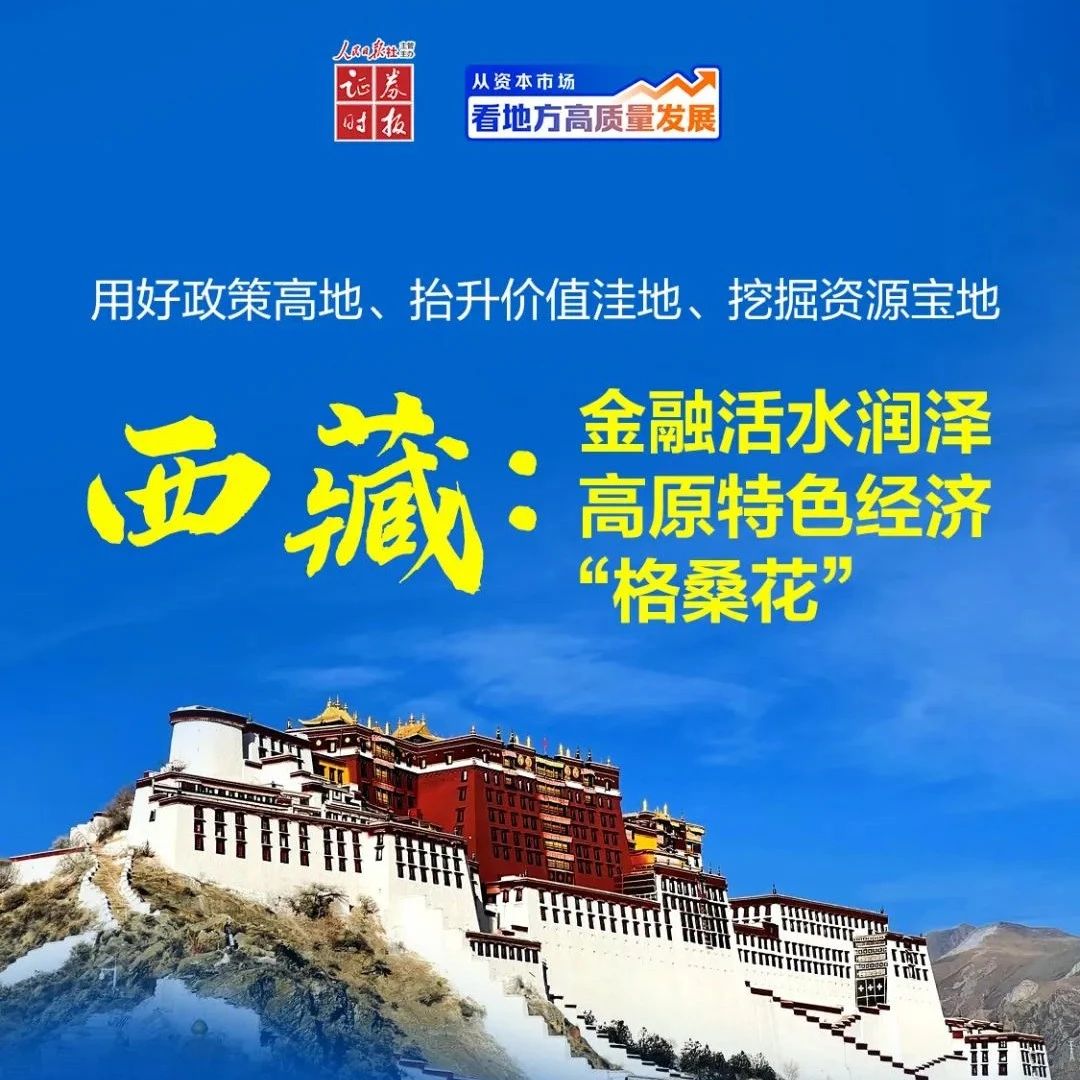
用好政策高地、抬升价值洼地、挖掘资源宝地——金融活水润泽西藏特色经济“格桑花”
Zheng Quan Shi Bao Wang· 2025-08-25 01:25
Economic Growth - Tibet's GDP growth rates for 2023 and 2024 are projected at 9.5% and 6.3%, respectively, leading the nation [2][11] - In the first half of 2023, Tibet's GDP growth rate of 7.2% exceeded the national average by 1.9 percentage points, maintaining the top position in the country [11] Financial Sector Performance - The financial sector's added value in Tibet reached 11.885 billion yuan in the first half of 2023, with a year-on-year growth of 26.7%, the highest in the nation [3][17] - The financial sector contributed 2.9 percentage points to Tibet's GDP growth [3] Policy Initiatives - The "Galsang Flower Action" plan has identified 115 potential listed companies in Tibet, including 23 mature, 46 growth-stage, and 46 startup enterprises [4][14] - In 2024, 22 listed companies in Tibet contributed 2.483 billion yuan in taxes, accounting for 14% of the region's tax revenue, and attracted 582 million yuan in new investments [6][13] Capital Market Development - Tibet is implementing a "six batches" model to promote capital market development, focusing on nurturing, restructuring, and strengthening companies [7][14] - The China Securities Regulatory Commission has provided favorable IPO policies for Tibetan enterprises since 2016, facilitating their market entry [13] Resource Utilization - Tibet's unique ecological resources, including clean energy and mineral resources, are being leveraged for industrial investment [19][22] - The total investment of approximately 1.2 trillion yuan in the Yarlung Tsangpo River hydropower project aims to enhance China's energy structure [19] Tourism and Cultural Integration - Tibet's tourism sector is capitalizing on its unique ecological environment, promoting new tourism products and experiences [20][21] - The region's tourism strategy includes integrating health, sports, and cultural experiences to cater to diverse consumer needs [20] Industry Examples - Ganlu Tibetan Medicine Co. is actively pursuing international markets and aims to establish a comprehensive ecosystem for Tibetan medicine [16][21] - Tibet Mining Co. is focusing on high-value resource development, particularly in lithium carbonate projects [22]

择“高”处立 向“特”处行——西藏推进高质量发展的启示
Zheng Quan Shi Bao Wang· 2025-08-24 23:19
Core Insights - Tibet's unique geographical and ecological characteristics necessitate a departure from traditional Eastern development models, focusing instead on leveraging its high-altitude resources and distinctive advantages for sustainable development [1][4] Group 1: Economic Development Strategies - The government of Tibet has implemented a series of measures to optimize the business environment, including the introduction of the "Tibet Autonomous Region Business Environment Optimization Regulations" to ensure government integrity and protect enterprise rights [2] - Initiatives such as the "List of Minor Violations Not Subject to Administrative Penalties" aim to reduce compliance pressure on small and micro enterprises by replacing penalties with educational measures [2] - The establishment of 98 invited supervisors for the business environment indicates a commitment to reducing governmental interference in normal business operations, thereby enhancing the vitality of business entities [2] Group 2: Industry Innovations - Companies like Linzhi Himalaya Third Pole Biotechnology Co., Ltd. are innovating by transforming tea waste into high-value products, such as freeze-dried tea powder for cosmetic applications [2] - The tourism sector in Tibet is integrating local cultural elements, such as Tibetan medicine and performing arts, to create differentiated tourism experiences [2] - The mining industry is exploring sustainable development models that combine lithium and potassium extraction with zero-carbon photovoltaic solutions, balancing industrial growth with ecological protection [2] Group 3: Talent Acquisition and Development - The influx of talent from other regions, including government officials and graduates, is addressing the talent shortage in Tibet, contributing to industrial development [3] - Local companies are focusing on hiring and training local Tibetan graduates, fostering a sustainable workforce for the region [3] Group 4: Long-term Vision and Commitment - Major projects like the Dubu Hydropower Station reflect a long-term investment strategy that prioritizes not only economic returns but also political and ecological considerations [4] - Companies are adopting a holistic approach to development, emphasizing the importance of nurturing local talent and technology to build sustainable capabilities in Tibet [4] - The overall development strategy in Tibet serves as a model for other underdeveloped regions, highlighting the importance of aligning development efforts with local strengths and long-term goals [4]
择“高”处立 向“特”处行 ——西藏推进高质量发展的启示
Zheng Quan Shi Bao· 2025-08-24 22:55
Core Perspective - The unique geographical environment and ecological fragility of Tibet necessitate a departure from the Eastern development model, focusing instead on sustainable development that leverages local advantages and resources [1] Group 1: Economic Development Strategies - Tibet is implementing a series of measures to optimize the business environment, including the introduction of regulations that ensure government integrity, protect enterprise property rights, and reduce compliance pressure on small businesses [2] - The region is focusing on high-altitude advantages to carve out a unique economic development path, with companies like Linzhi Himalaya Third Pole Biotechnology Co., Ltd. transforming tea waste into high-value products [3] - The tourism sector is integrating local cultural elements to create differentiated experiences, while Tibet Mining is exploring complementary development models that balance industry growth with ecological protection [3] Group 2: Talent Acquisition and Development - The influx of talent from various regions, including government officials and graduates, is addressing the talent shortage in Tibet, contributing to industrial development [3] - Local companies are prioritizing the recruitment of local graduates, fostering a new generation of skilled workers to support sustainable growth [3] Group 3: Long-term Vision and Commitment - Major projects like the Dubu Hydropower Station are characterized by significant short-term investments with a focus on long-term benefits, emphasizing the importance of political and ecological considerations alongside economic returns [4] - Companies are adopting a long-term perspective, aiming to build local capabilities and ensure sustainable development rather than seeking immediate profits [4] - The development practices in Tibet serve as a model for other underdeveloped regions, highlighting that there is no standard answer to development; success lies in leveraging local strengths and maintaining a long-term vision [4]


择“高”处立 向“特”处行 ——西藏推进高质量发展的启示 证券时报记者 张淑贤
Zheng Quan Shi Bao· 2025-08-24 22:33
Core Viewpoint - The unique geographical environment and ecological fragility of Tibet necessitate a departure from the Eastern development model, focusing instead on sustainable development that leverages its high-altitude resources and distinctive advantages [1] Group 1: Economic Development Strategies - Tibet is implementing a series of measures to optimize the business environment, including the introduction of regulations that ensure government integrity, protect enterprise property rights, and reduce compliance pressure on small businesses [2] - The region is focusing on high-value development paths, such as transforming tea waste into high-value products and integrating local cultural elements into tourism offerings [3] Group 2: Talent and Resource Utilization - The influx of talent from various regions is crucial for filling the talent gap in Tibet, with local companies actively recruiting and training local graduates to build a sustainable workforce [3] - Companies like the National Energy Group are committed to long-term investments in local projects, emphasizing the importance of political and ecological considerations alongside economic benefits [4] Group 3: Long-term Vision and Commitment - The development practices in Tibet highlight that there is no one-size-fits-all solution for growth; instead, a focus on local endowments and long-term strategies can lead to high-quality development [4] - Tibet is emerging as a new growth highlight in China's economy, with ongoing actions and strategies aimed at sustainable development [4]
用好政策高地、抬升价值洼地、挖掘资源宝地—— 金融活水润泽西藏特色经济“格桑花”
Zheng Quan Shi Bao· 2025-08-24 21:20
Economic Growth and Development - Tibet is projected to lead the national GDP growth with rates of 9.5% in 2023 and 6.3% in 2024, with a 7.2% growth in the first half of 2023, surpassing the national average by 1.9 percentage points [1] - The region aims for a GDP growth of over 7% by 2025, striving to reach 8% [1] - The economic transformation is supported by favorable policies from the central government, including financial and tax incentives [2][4] Capital Market Initiatives - The "Galsang Flower Action" plan was introduced to promote corporate listings in Tibet, marking a significant step in the region's capital market development [2] - Since 2016, the China Securities Regulatory Commission has implemented preferential IPO policies for Tibetan enterprises, facilitating their access to capital markets [3] - In 2024, 22 listed companies in Tibet are expected to contribute 24.83 million yuan in taxes, accounting for 14% of the region's tax revenue [3] Financial Sector Growth - Tibet has the lowest average loan interest rate in the country at 1.46%, with small and micro enterprises benefiting from an even lower rate of 1.15% [4] - The financial sector is projected to achieve a value-added of 266.82 billion yuan in 2024, with a year-on-year growth of 15.9% [7] Resource Development - Tibet's unique ecological resources, including clean energy and mineral resources, are becoming attractive for industrial investment [10] - The Yarlung Tsangpo River hydropower project, with an investment of approximately 1.2 trillion yuan, aims to generate 60 million kilowatts of installed capacity [10] - The development of the Zabuye Salt Lake project emphasizes the importance of high-value resource development while maintaining ecological protection [13] Tourism and Cultural Integration - Tibet's tourism sector is leveraging its unique ecological environment, with new tourism products being developed to attract diverse consumer groups [11] - The region's tourism strategy includes integrating health, sports, and cultural experiences to enhance visitor engagement [11] Industry Examples - Ganlu Tibetan Medicine Co., a leading Tibetan medicine enterprise, is actively pursuing international markets and aims to establish a comprehensive ecosystem for Tibetan medicine [7] - The establishment of the Himalayan Research Center by a major beauty brand in Tibet exemplifies the successful utilization of local resources for product development [12]