
债券市场

Search documents
精彩回顾 | 澳门银行业研讨会:外汇、债市与跨境资产管理新机遇
彭博Bloomberg· 2025-09-30 02:07
Core Insights - The recent Bloomberg Macau Banking Seminar highlighted Macau's strategic importance in the national development and the Guangdong-Hong Kong-Macau Greater Bay Area, emphasizing its role in the internationalization of the Renminbi [1] Group 1: Offshore RMB Bonds and Market Dynamics - The issuance of offshore RMB bonds in Macau has been increasing, attracting more international investors and promoting further integration with global financial markets [3] - The recent 25 basis point interest rate cut by the Federal Reserve indicates a shift towards a more accommodative monetary policy, with "de-dollarization" becoming a focal point of market discussions [4] - Trump's trade policies are exacerbating the trend of "de-dollarization" by imposing high tariffs, which reduces the liquidity of the dollar in global trade [6] Group 2: Global Bond Market Outlook - The annual interest expenditure of the U.S. federal government is approximately $1.13 trillion and is on an upward trend, presenting a dilemma for the Federal Reserve between maintaining high rates or cutting rates to combat inflation [11] - As the dollar weakens, emerging market assets are expected to receive strong support, with central banks in these markets having ample room for rate cuts [13] Group 3: Cross-Border Investment and Infrastructure Upgrades - The direct connection between the Macau Central Securities Depository (MCSD) and the Hong Kong Monetary Authority's Central Moneymarkets Unit (CMU) is set to enhance the bond market in both regions by 2025 [14] - The integration of the Macau bond market with Hong Kong has led to increased issuance and subscription scales, improved investor structure, and clearer sustainable development paths for the market [16] Group 4: Bloomberg's Solutions and Market Support - Bloomberg's FXGO platform supports various trading activities, including spot, forward, swap, and precious metals trading, facilitating the entire trading process [8] - Bloomberg's sell-side solutions cater to banks at different development stages, focusing on real-time trading data, risk analysis, and asset-liability management [24] - The automation and digitization of processes are essential for banks to reduce costs and enhance competitiveness, with Bloomberg's data products offering extensive coverage and high-quality customer service [30]


Record investment grade issuance
Youtube· 2025-09-29 19:56
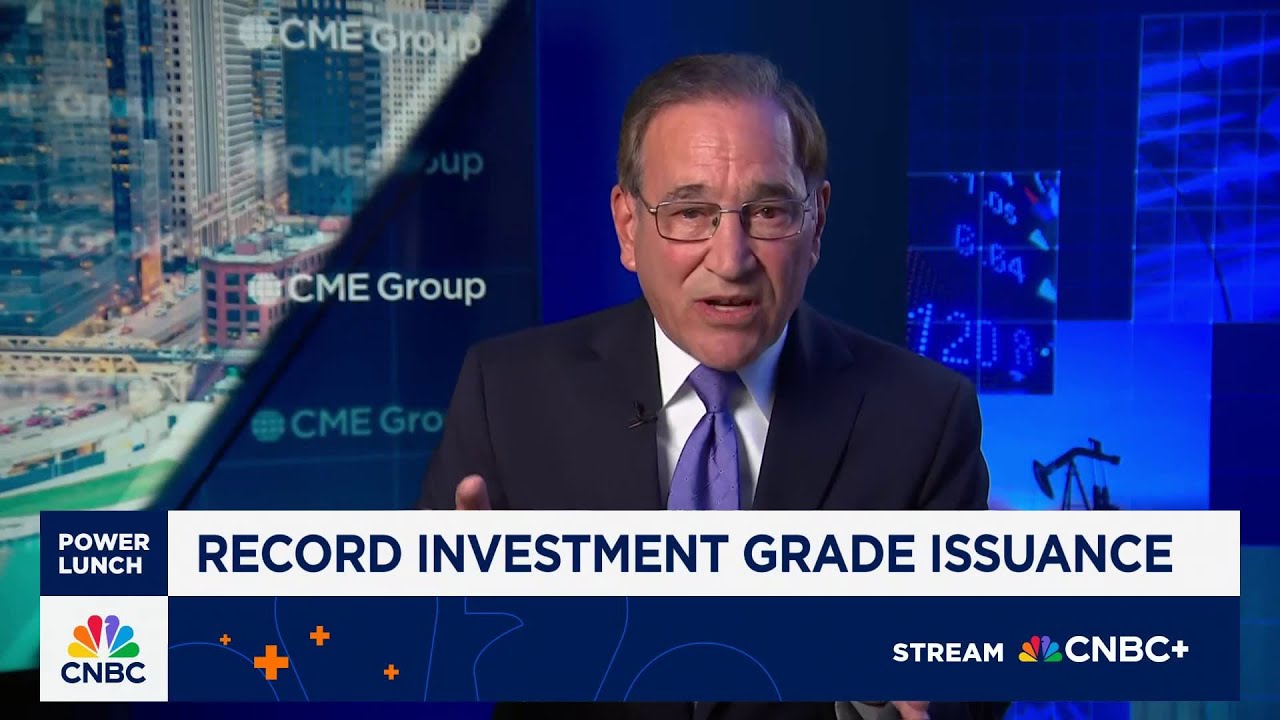
Corporate Borrowing - Corporate borrowing has seen a significant increase, with $230 billion in debt deals tracked just this month, marking the heaviest volume for any month ever [1] - The competition for debt sales may impact the government bond market, raising questions about the dynamics between corporate issuers and bond buyers [1] Bond Market Dynamics - The current environment shows a record issuance of investment-grade corporate bonds, but the focus is on the buyers who anticipate a Federal Reserve easing strategy [2] - The Federal Reserve has already eased rates by 25 basis points, leading many investors to expect further declines in rates [3] Yield Analysis - The yield on Barclays' investment-grade bonds is around 4.90%, with a current 10-year Treasury yield of approximately 4.14%, resulting in a spread of about 76 basis points [4] - This spread indicates that the additional yield for taking on corporate credit risk compared to risk-free Treasury securities is the smallest since 1998, suggesting a cautious market sentiment [5] Investor Behavior - Investors are motivated to purchase corporate bonds before yields fall further, reflecting concerns about equity market valuations and the perceived risk in the current environment [6] - The relatively low additional yield of less than 5% raises questions about the credit risk associated with corporate bonds, which may be underestimated by the market [6]
保理日报(2025-09-28)
Sou Hu Cai Jing· 2025-09-29 13:12
Economic Data - In the first eight months of 2025, profits of large-scale industrial enterprises in China reached 46,929.7 billion yuan, reflecting a year-on-year growth of 0.9% [1] - As of the end of August, accounts receivable for large-scale industrial enterprises amounted to 272.4 trillion yuan, an increase of 6.6% year-on-year, while finished goods inventory was 67.3 trillion yuan, up 2.3% [1] - The operating income per 100 yuan of assets for large-scale industrial enterprises was 74.0 yuan, a decrease of 2.0 yuan year-on-year, and the average accounts receivable collection period extended to 70.1 days, an increase of 3.7 days year-on-year [1] Regulatory Developments - The People's Bank of China, the China Securities Regulatory Commission, and the State Administration of Foreign Exchange jointly announced support for foreign institutional investors to engage in bond repurchase transactions in the Chinese bond market [1] - As of the end of August 2025, 1,170 foreign institutions from 80 countries and regions had entered the Chinese bond market, holding a total of approximately 4 trillion yuan in bonds [1] Corporate Activities - De Yi Shi International Factoring was invited to participate in the China International Fair for Trade in Services, showcasing export factoring services and sharing practical experiences in international trade financing and risk management [2] - The "Mining Construction Financial Chain" supply chain finance platform was officially launched by Lian Yi Rong, marking a significant breakthrough in the digital financial transformation of China Coal Mining Construction Group [2] - Yibin Development Holding Group's Sichuan Sanjiang Huihai Commercial Factoring Company received recognition for its innovative case in corporate party building, which will be included in the case library of the Red Flag Publishing House [2]
信用利差周报:央行四举措促离岸人民币债市发展,信用利差全面走阔-20250929
Zhong Cheng Xin Guo Ji· 2025-09-29 11:11
1. Report Industry Investment Rating No relevant content provided. 2. Core Viewpoints of the Report - The central bank's four measures will promote the internationalization of the offshore RMB bond market, enhance the willingness of overseas funds to allocate and market liquidity, and inject lasting impetus into the internationalization of the bond market [2][9][10] - In August, the profits of large - scale industrial enterprises above the national level increased significantly year - on - year, driving the cumulative profit growth rate from January to August to turn positive, indicating a gradual recovery of micro - entity vitality [3][11][12] - In the money market, due to the approaching National Day holiday and end - of - quarter disturbances, most capital prices rose, and the central bank conducted net capital injections through open - market operations [4][14] - In the primary market of credit bonds, the issuance scale increased significantly last week, with different performance among industries and fluctuations in issuance costs [5][17] - In the secondary market of credit bonds, trading activity increased, bond yields mostly rose, credit spreads widened across the board, and rating spreads changed slightly [6][30] 3. Summary According to Relevant Catalogs Market Hotspots - On September 25th, the central bank announced four measures to accelerate the development of the offshore RMB market, including supporting overseas institutional investors' participation in the repurchase business of the domestic bond market, expanding the "Swap Connect" quotation dealer team and increasing the daily north - bound trading quota, increasing the supply of RMB assets such as treasury bonds in the Hong Kong market, and accelerating the listing of RMB treasury bond futures in Hong Kong. These measures will form a complete closed - loop of "asset supply - trading convenience - risk hedging" [2][9] Macroeconomic Data - In August, the profits of large - scale industrial enterprises above the national level increased by 20.4% year - on - year, driving the cumulative profit growth rate from January to August to turn from - 1.7% in January - July to 0.9%. Low base in the same period of 2024, "anti - involution" policies, and effective cost control contributed to this improvement. In terms of industries, the equipment manufacturing and raw material manufacturing industries performed well. At the enterprise level, private, medium - sized, and small enterprises showed good profit growth [3][11][12] Money Market - Last week, the central bank conducted a net capital injection of 1122.3 billion yuan through open - market operations. Affected by the approaching National Day holiday and end - of - quarter disturbances, most capital prices rose. Except for the 1 - day pledged repurchase rate, which decreased by 15bp, other term pledged repurchase rates increased by 2 - 18bp. The 3 - month and 1 - year Shibor slightly increased, and the spread between them narrowed [4][14] Primary Market of Credit Bonds - The issuance scale of credit bonds increased significantly last week, reaching 447.423 billion yuan, with an average daily issuance scale of 89.485 billion yuan. The cancellation scale of issuance also increased. In terms of bond types, the issuance scale of ultra - short - term financing bills and medium - term notes increased significantly. In terms of industries, the infrastructure investment and financing industry and the power production and supply industry in the industrial bond sector had large increases in issuance scale. The infrastructure investment and financing industry had a net capital outflow, while the power production and transportation industries in the industrial bond sector had large net inflows, and the light manufacturing industry had a large net outflow. The average issuance cost of credit bonds fluctuated, with changes ranging from 1bp to 59bp [5][17][26] Secondary Market of Credit Bonds - The trading volume of cash bonds in the secondary market last week was 9387.09 billion yuan, with an average daily trading volume increase of 2.5216 billion yuan. Trading activity continued to rise. Bond yields mostly rose. For interest - rate bonds, the yields of treasury bonds and policy - bank bonds mostly increased, with a maximum increase of 5bp, and the 10 - year treasury bond yield remained stable at 1.88%. For credit bonds, yields increased by 3 - 12bp. Credit spreads widened by 5 - 12bp across the board, and rating spreads changed within 3bp [6][30] Appendix - The report lists bond market credit risk events, including bond defaults, extensions, etc. of several companies [42] - It also summarizes regulatory and market innovation dynamics, such as policies to support digital consumption, sports industry, and debt financing of mature - layer enterprises, as well as measures to optimize market mechanisms and simplify procedures [43][44] - The monthly net financing amounts of major credit bond types from January 2024 to August 2025 are presented [45]
中国债市高水平开放再迎重要里程碑
Jin Rong Shi Bao· 2025-09-29 01:07
Core Viewpoint - The announcement by the People's Bank of China, the China Securities Regulatory Commission, and the State Administration of Foreign Exchange aims to support foreign institutional investors in conducting bond repurchase transactions in the Chinese bond market, marking a significant milestone in the high-level opening of the market [1][2]. Group 1: Market Development - The announcement is designed to meet the liquidity management needs of foreign institutional investors and promote connectivity between onshore and offshore financial markets, thereby enhancing the openness of the Chinese bond market [2][3]. - As of August 2025, the balance of the Chinese bond market reached 192 trillion RMB, ranking second globally, with bond issuance exceeding 59 trillion RMB from January to August 2025, reflecting a year-on-year growth of 14% [2][3]. - The international influence and attractiveness of the Chinese bond market have significantly increased, with Chinese bonds included in major international bond indices, indicating strong global investor confidence in RMB-denominated assets [2][3]. Group 2: Foreign Investor Participation - By August 2025, 1,170 foreign institutions from 80 countries held approximately 4 trillion RMB in Chinese bonds, with a trading volume of about 11.8 trillion RMB in the bond market from January to August 2025 [3]. - The announcement facilitates all foreign institutional investors, including those entering through the "Bond Connect" channel, to engage in bond repurchase transactions, thereby enhancing the connectivity between onshore and offshore markets [3][4]. Group 3: Operational Enhancements - The People's Bank of China has responded to market demands by allowing various foreign institutional investors to conduct bond repurchase transactions, providing flexible and efficient liquidity management channels [4][5]. - The new mechanism aligns with international practices by implementing a model that allows for the transfer of collateralized bonds, which is expected to enhance the attractiveness of the Chinese bond market to foreign investors [4][5]. - A transition period of 12 months is provided for foreign institutions already engaged in bond repurchase transactions to adapt to the new operational model [6].
中国债券市场支持境外回购业务
Chang Jiang Shang Bao· 2025-09-28 22:59
Group 1 - The announcement aims to promote the interconnection of onshore and offshore financial markets and enhance the high-level opening of China's bond market [1] - As of August 2025, 1,170 foreign institutions from 80 countries and regions have entered the Chinese bond market, holding approximately 4 trillion RMB in bonds [1] - The new regulation allows all types of foreign institutional investors to participate in bond repurchase transactions in the interbank bond market, including central banks, sovereign wealth funds, commercial banks, insurance companies, and various asset management institutions [1] Group 2 - The announcement introduces a shift to international practices for bond repurchase transactions, allowing for the transfer of pledged bonds between parties, which enhances market liquidity [2] - A 12-month transition period is provided for existing foreign institutions to continue using the original model before fully adopting the new practices [2] - Regulatory measures will ensure a balance between openness and security, implementing closed-loop management for transactions, custody, settlement, and foreign exchange [2]
境外投资机构积极“试水”债券回购 资产流动性管理“再添利器”
Jing Ji Guan Cha Wang· 2025-09-28 06:25
Core Viewpoint - The recent announcement by the People's Bank of China, the China Securities Regulatory Commission, and the State Administration of Foreign Exchange to support foreign institutional investors in bond repurchase operations is expected to enhance the liquidity management of RMB-denominated bonds and promote the internationalization of the RMB [2][3]. Group 1: Impact on Foreign Institutional Investors - The opening of bond repurchase operations to foreign institutional investors will better meet their liquidity management needs and enhance the attractiveness of RMB bonds internationally [2][3]. - Foreign investors, such as multi-strategy funds, have expressed a strong demand for liquidity management in RMB bonds, which will be facilitated by the new repurchase operations [3]. - The new policy addresses three major pain points previously faced by foreign investors when raising funds through bond sales: instability in investment strategies, increased transaction costs, and heightened investment risks [4][5]. Group 2: Operational Details and Concerns - Foreign institutional investors are particularly interested in the operational details of bond repurchase, including the transferability of underlying bonds and compliance with international practices [6]. - The bond repurchase business will initially allow for buyout-style repurchases, with plans to introduce pledge-style repurchases in the future, addressing differences in operational practices between China and international markets [6][7]. - Concerns regarding the delivery versus payment (DVP) settlement mechanism and the adequacy of repurchase limits to meet liquidity management needs have been raised by foreign investors [7]. Group 3: Regulatory Framework and Future Prospects - The repurchase limit for sovereign institutions and RMB clearing banks is set at 100% of their bond holdings, while other foreign investors will have an initial limit of 80%, with potential adjustments in the future [7]. - The central bank is also promoting the acceptance of domestic bonds as eligible collateral in Hong Kong and global markets, further enhancing the operational space for RMB bonds as liquidity management tools [8].
2025混沌时刻
Sou Hu Cai Jing· 2025-09-28 03:27
Group 1 - The core viewpoint of the report is that the domestic bond market is experiencing a "chaotic moment" characterized by intense competition between bullish and bearish forces, particularly around the pricing of 10-year government bonds, with key interest rate levels at 1.80% and 1.75% acting as critical points for market dynamics [1][23]. - The market is primarily focused on two main uncertainties: whether the central bank will restart bond-buying operations and whether the redemption fee rules for public bond funds will be optimized [1][24]. - Recent actions by major banks indicate a shift towards buying long-term bonds, with net purchases of 93 billion yuan in 7-10 year government bonds and 843 billion yuan in 3-5 year bonds since September, suggesting a potential change in market sentiment [1][23]. Group 2 - The optimization of redemption fees for public bond funds is under scrutiny, with expectations for clearer guidelines as the end of September approaches. As of mid-2025, the total scale of bond funds was approximately 11.15 trillion yuan, with institutional investors holding 81% of this amount [2][24]. - The external environment, including recent positive developments in US-China relations, is contributing to a complex interplay of bullish and bearish sentiments in the bond market, potentially affecting market risk appetite [2][24]. - The liquidity situation is slightly tight, with the central bank's recent announcement of a 14-day reverse repurchase reform aimed at stabilizing liquidity across quarters and holidays, which may reduce the likelihood of extreme interest rate increases [3][25]. Group 3 - The bond market has shown signs of differentiation, with the yield on the 10-year government bond rising by 1.1 basis points to 1.80%, while the yield on the 1-year bond fell by 1.0 basis points to 1.39% during the period from September 15 to 19 [4][14]. - The overall sentiment in the bond market remains cautious, with bearish forces slightly prevailing, although the yield levels have reached a point where some investors see potential for profit [3][25]. - The government bond issuance pace has slowed, with planned issuance for the week of September 22-26 at 413.1 billion yuan, down from 516 billion yuan the previous week, indicating a potential easing of supply pressure [6][25].
自贸区离岸债券市场发展探析
Xin Lang Cai Jing· 2025-09-28 01:26
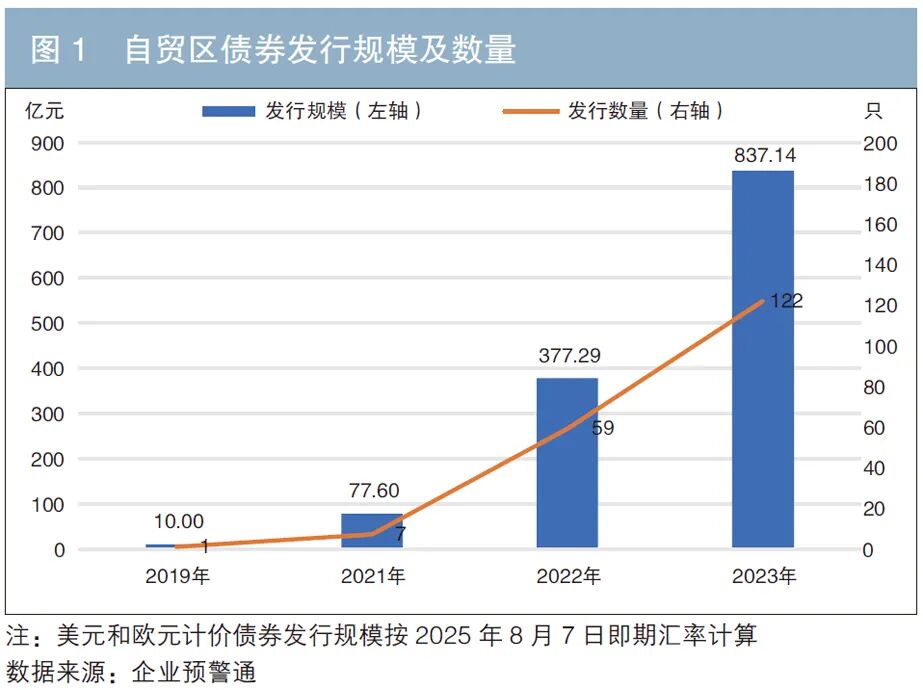
Core Viewpoint - The development of Free Trade Zone (FTZ) bonds in China has evolved since the establishment of the Shanghai Free Trade Zone in 2013, highlighting the need for diversified issuers and a robust credit rating system to promote high-quality growth in the FTZ bond market [1][2][3] Development Stages - The FTZ bond market can be categorized into several stages: 1. **Incubation Period (Sep 2013 - Apr 2016)**: Establishment of the Shanghai FTZ and initial policy support for cross-border financing [4] 2. **Exploration Period (May 2016 - Oct 2019)**: Implementation of guidelines for bond registration and issuance, leading to the first FTZ bond issuance [4] 3. **Development Period (Nov 2019 - Jun 2023)**: Rapid growth in bond issuance, particularly by local state-owned enterprises, reaching a peak in 2022 [5] 4. **Adjustment Period (Jul 2023 - Present)**: Regulatory tightening and a slowdown in bond issuance, with only one bond issued in 2023 [5][6] Market Characteristics - **Increasing Market Size**: The issuance scale of FTZ bonds grew from 1 billion RMB in 2019 to 83.714 billion RMB in 2023, driven by favorable financing conditions compared to offshore dollar bonds [7] - **High Concentration of Issuers**: The majority of FTZ bonds (180 out of 189) were issued by domestic entities, with local government financing vehicles being the primary issuers [9] - **Investor Composition**: The market is predominantly supported by domestic banks, with the RMB being the most active currency for transactions [12] - **Interest Rates**: FTZ bonds typically have slightly higher interest rates than domestic bonds, influenced by investor structure and issuance methods [13] Recommendations for Market Development - **Diversification of Issuers**: Encourage a wider range of issuers beyond state-owned enterprises and support sectors like technology and green development [17] - **Enhancement of Credit Rating Systems**: Improve the credit rating framework to boost investor confidence and attract international capital [18] - **Development of Secondary Market**: Establish a dedicated electronic trading platform for FTZ bonds to enhance liquidity and market efficiency [19] - **Regulatory Framework Improvement**: Strengthen legal and regulatory frameworks to clarify rights and obligations, ensuring market integrity and investor protection [20][21]
事关中国债券市场!三部门发文力挺
2 1 Shi Ji Jing Ji Bao Dao· 2025-09-27 03:35
Core Viewpoint - The People's Bank of China, the China Securities Regulatory Commission, and the State Administration of Foreign Exchange jointly announced support for foreign institutional investors to engage in bond repurchase transactions in the Chinese bond market, enhancing liquidity management and promoting high-level opening of the market [1] Group 1: Announcement Details - The announcement allows all foreign institutional investors in the interbank bond market to participate in bond repurchase transactions, including those entering through direct market access and the "Bond Connect" channel [1] - Bond repurchase is a widely used liquidity management tool internationally, facilitating short-term financing among financial institutions using bonds as collateral [1] Group 2: Market Implications - Supporting foreign institutional investors in bond repurchase activities is expected to meet market demand and enhance the attractiveness of RMB-denominated bond assets [1] - This initiative is also seen as beneficial for consolidating and enhancing Hong Kong's status as an international financial center, aiding the coordinated development of onshore and offshore RMB markets [1]