
渔业

Search documents
“四农普”来了,将对农业新质生产力等进行调查
第一财经· 2025-06-06 06:06
Core Viewpoint - The State Council of China has announced the initiation of the Fourth National Agricultural Census in 2026, which aims to comprehensively assess the current state of agriculture, rural development, and farmers' lives in the context of modern agricultural policies and rural revitalization efforts [1][2]. Group 1: Overview of the Census - The Fourth National Agricultural Census will provide an objective reflection of new developments in agriculture, rural construction, changes in farmers' lives, and the effectiveness of rural reforms [1]. - The census will cover various subjects, including rural households, urban agricultural operators, agricultural production units, village committees, and township governments, focusing on sectors such as crop cultivation, forestry, animal husbandry, fishery, and related services [1]. Group 2: Methodology and Innovation - This census will employ a combination of comprehensive surveys and sampling, as well as long and short forms, to enhance efficiency and reduce the burden on grassroots workers [2]. - Modern technologies such as satellite remote sensing, drones, and artificial intelligence will be utilized to improve the digitalization of the census process [2]. - The census aims to create a unified agricultural data map to facilitate the application and sharing of census results [2]. Group 3: Timeline and Phases - The standard reference point for the census is set for December 31, 2026, with data collection covering the entire year of 2026 [2]. - The census will be conducted in four phases: preparation (2025-2026), on-site registration (January-May 2027), data processing and publication (June-December 2027), and data application development (2028-2029) [2]. Group 4: Importance and Confidentiality - The Fourth National Agricultural Census is a significant national survey that requires the cooperation of a wide range of participants due to its extensive scope and high technical demands [3]. - It is emphasized that all collected data must be reported truthfully, and any identifiable information must be kept confidential and not used for purposes outside of statistical analysis [3].


“四农普”来了,将对农业新质生产力等进行调查
Di Yi Cai Jing· 2025-06-06 03:18
Core Viewpoint - The fourth national agricultural census in China, scheduled for 2026, aims to comprehensively assess the current state of agriculture, rural development, and farmer livelihoods, which is crucial for formulating effective agricultural policies and promoting rural revitalization [2][4]. Group 1: Census Overview - The census will cover various subjects, including rural households, urban agricultural producers, agricultural production units, and local government bodies [2]. - It will encompass multiple sectors such as crop cultivation, forestry, animal husbandry, fishery, and related services [2]. Group 2: Methodology and Innovation - The census will employ a combination of comprehensive surveys and sampling, as well as long and short questionnaires, to enhance efficiency and reduce the burden on local workers [3]. - Modern technologies like satellite remote sensing, drones, and artificial intelligence will be utilized to improve the data collection process [3]. - The census aims to create a unified agricultural data platform to facilitate the application and sharing of census results [3]. Group 3: Timeline and Phases - The standard reference point for the census is set for December 31, 2026, with data collection covering the entire year of 2026 [3]. - The census will be conducted in four phases: preparation (2025-2026), field registration (January-May 2027), data processing and publication (June-December 2027), and data application development (2028-2029) [3]. Group 4: Importance and Confidentiality - The census is a significant national survey that requires cooperation from a wide range of participants, emphasizing the need for accurate data reporting [4]. - Strict confidentiality measures will be enforced to protect sensitive information collected during the census [4].
盛来运:第四次全国农业普查有对农业新质生产力的调查
Zheng Quan Shi Bao Wang· 2025-06-05 23:39
Core Viewpoint - The State Council has announced the fourth national agricultural census to be conducted in 2026, aiming to assess the modernization of agriculture and rural areas in China [1][2]. Group 1: Census Overview - The census will take place on December 31, 2026, with data collected for the entire year [1]. - It is a significant national survey aimed at understanding the agricultural landscape and rural conditions in the context of China's modernization efforts [1][2]. - The census will include various subjects such as rural households, agricultural production units, and local government bodies [1]. Group 2: Key Areas of Investigation - The census will investigate five main areas: 1. Agricultural production conditions, including workforce, land use, and social services [2]. 2. Food production status, covering grains, economic crops, and livestock products [2]. 3. New agricultural productivity, focusing on modern agricultural entities and technologies [2]. 4. Rural development basics, including industry growth and governance [2]. 5. Rural residents' living conditions, assessing family situations and quality of life [2]. Group 3: Methodology and Technology - The census will utilize a combination of comprehensive surveys and sampling methods to enhance efficiency and reduce the burden on local authorities [2]. - Modern technologies such as satellite remote sensing, drones, and artificial intelligence will be employed to improve data collection and analysis [2]. - The initiative aims to create a unified agricultural census data platform to facilitate the sharing and application of results [2].
獐子岛:和岛一号基金拟减持不超1%公司股份
news flash· 2025-06-05 13:44
獐子岛(002069)公告,股东北京吉融元通资产管理有限公司-和岛一号证券投资基金计划于公告披露 之日起15个交易日后的3个月内,以集中竞价交易方式减持不超过711.1万股,占公司总股本比例不超过 1%。截至公告披露日,和岛一号基金持有公司5716.27万股,占公司总股本比例为8.04%。减持原因为 基金份额持有人个人资金需求及和岛一号基金合同与清算相关规定。减持价格将按照市场价格确定。和 岛一号基金不属于公司控股股东、实际控制人,本次减持计划的实施不会导致公司控制权发生变更。 ...

全面摸清“三农”家底 服务农业强国建设
Xin Hua She· 2025-06-05 13:32
Core Insights - The fourth national agricultural census will be conducted in 2026, marking a significant step in understanding the agricultural landscape in China and supporting the construction of a strong agricultural nation [1][2] Group 1: Importance of the Census - The census aims to comprehensively assess the current state of agriculture, rural development, and farmers' living conditions, which is crucial for formulating effective agricultural policies and promoting rural revitalization [2] - It reflects the historical achievements and transformations in agricultural development since the last census in 2016 [2] Group 2: Census Subjects and Scope - The census will target various subjects, including rural households, urban agricultural operators, agricultural production units, village committees, and township governments [3] - The industry scope includes crop cultivation, forestry, animal husbandry, fishery, and related services [4] Group 3: Main Content of the Census - The census will investigate five key areas: agricultural production conditions, food production status, new agricultural productivity, rural development basics, and rural residents' living conditions [5] Group 4: Innovations and Changes - The census will incorporate updated content reflecting new agricultural practices and rural modernization, utilizing a combination of comprehensive and sampling surveys to enhance efficiency [6] - Modern technologies such as satellite remote sensing, drones, and artificial intelligence will be employed to improve data collection and analysis [6] Group 5: Timeline and Phases - The census will be conducted in four phases: preparation (2025-2026), on-site registration (January-May 2027), data processing and publication (June-December 2027), and data application (2028-2029) [8] Group 6: Implementation and Support - A leadership group has been established to oversee the census, ensuring collaboration among various government departments and local authorities [9] - Participation from census subjects is essential, requiring accurate and timely reporting of data [10]
“中国鲍鱼第一县”:电力推动下的渔业现代化转型
Zhong Guo Neng Yuan Wang· 2025-06-04 08:57
Core Insights - The article highlights the development of the marine economy in Lianjiang County, Fujian Province, emphasizing its significant contributions to China's aquaculture industry, particularly in abalone and seaweed production [1][7]. Group 1: Economic Contributions - In 2024, Lianjiang's fishery production value is projected to exceed 30.206 billion yuan, with total aquatic product output ranking second among county-level regions in China [1]. - Lianjiang is responsible for half of the national seaweed seedlings and ranks first in abalone farming output among county-level regions [1][9]. - The production of dried seaweed is expected to reach 360,000 tons, while abalone farming output is projected at 59,300 tons, generating a value of over 4.864 billion yuan [7]. Group 2: Infrastructure and Power Supply - Reliable electricity supply is crucial for the development of the aquatic product industry in Lianjiang, with the local power company providing comprehensive support for electricity needs [2][4]. - The largest pollution-free seaweed seedling base in the country is located in Lianjiang, producing 300,000 seedlings annually, which significantly enhances the efficiency of the seedling cultivation process [2]. - An 800 kVA power capacity increase was successfully implemented to meet the growing electricity demands of the seedling base, transforming seasonal production into a year-round operation [4]. Group 3: Industry Transformation - Lianjiang has integrated 81 enterprises across the breeding, farming, processing, and sales sectors to create a deep processing industry alliance for aquatic products [7]. - The collaboration between the power supply company and local businesses has facilitated the establishment of a complete industrial chain from seedling cultivation to sales, enhancing the overall value of the abalone industry [9][12]. - The processing of abalone has seen a significant increase in value, with the output value per ton rising from approximately 1 million yuan to 3 million yuan, and the processing utilization rate improving from below 40% to over 80% [9]. Group 4: Resilience and Risk Management - The local power company has improved the resilience of the electricity grid by upgrading 16 lines and reinforcing 780 poles, which is essential for maintaining stable production in the face of natural disasters [8]. - The integration of stable electricity supply has fortified the industry's ability to withstand market fluctuations, providing a robust foundation for the complete industrial chain [9][12].
高唐锦鲤产业指数全球首发 中际智库助力打造数字发展“导航仪”
Zhong Guo Chan Ye Jing Ji Xin Xi Wang· 2025-06-03 10:45
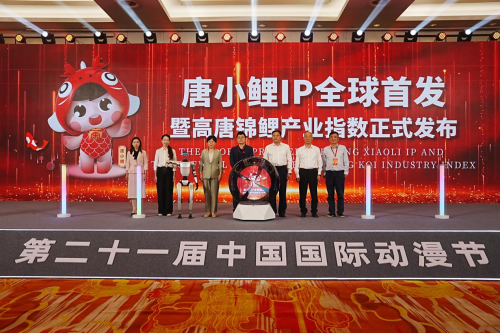
Core Insights - The "China. Gaotang Koi Industry Index" was officially launched on June 1, 2025, at the China International Animation Festival in Hangzhou, marking a new phase for the koi industry in Gaotang County, Shandong Province, driven by data for refined operations and high-quality development [1][4] - This initiative aligns with the national strategy for ecological protection and high-quality development in the Yellow River Basin, promoting the deep integration of traditional industries with the digital economy [1][3] Industry Overview - Gaotang County has established a leading koi industry cluster, with over 8,000 acres of breeding bases, an annual production of 300 million fry, and 10 million high-quality koi, generating an annual output value exceeding 1 billion yuan [3] - The key challenge for the industry is to accurately grasp market trends, enhance operational efficiency, and amplify brand value in the context of rural revitalization and digital economic development [3] Digital Tools Development - The "China. Gaotang Koi Industry Index" was developed by Gaotang Caixin Investment Group in collaboration with Zhongji Think Tank and other relevant units, creating a scientific, systematic, and dynamic industry monitoring system [4] - The index system includes four key dimensions: price index, brand influence index, industry development index, and circulation index, providing authoritative pricing references and comprehensive assessments of market recognition and competitiveness [4][6] - This index leverages big data collection and analysis technologies to achieve digital, visual, and dynamic monitoring of the entire koi industry chain, supporting government decision-making, precise business operations, and market investment analysis [4] Future Prospects - The index aims to facilitate precise control, value enhancement, and digital transformation of the agricultural and cultural tourism industries in Gaotang, offering significant "Gaotang wisdom" and "koi solutions" [6] - The digital IP image "Tang Xiaoli," representing the Yellow River civilization, was also launched, with plans to deepen the integration of the koi industry in ecological breeding, cultural creativity, leisure tourism, and digital derivatives [7]
3万亿美元“蓝色经济”新机遇!第三届联合国海洋大会将在法国举行
Di Yi Cai Jing· 2025-06-02 09:20
Group 1 - The third United Nations Ocean Conference (UNOC3) will be held from June 9 to 13, 2025, in Nice, France, focusing on "Accelerating Action, Mobilizing All Efforts to Protect and Sustainably Use the Ocean" [1] - The conference aims to promote urgent actions for ocean resource and ecosystem protection and explore innovative pathways to support Sustainable Development Goal 14 (SDG 14) [1][6] - French President Macron emphasized the importance of ocean protection for carbon sinks, biodiversity, and the livelihoods of those dependent on the ocean, highlighting the need to reshape the blue economy [1] Group 2 - The "We Are Ocean" series includes key events such as the Ocean Science Conference and the Blue Economy and Finance Forum, which will address sustainable management and economic opportunities related to the ocean [3][4] - According to the OECD, the economic value of the ocean is projected to exceed $3 trillion by 2030, making it comparable to the world's fifth-largest economy, with over 150 million jobs relying on sustainable ocean-related activities [3][4] - International cooperation is essential to prevent resource depletion, mitigate ocean acidification, protect ecosystems, and reduce overfishing and pollution [3] Group 3 - The Blue Economy and Finance Forum will serve as a platform for dialogue among think tanks, policymakers, and industry leaders to promote sustainable investment practices and marine technology innovation [4][5] - A Business Ocean Alliance will be established to encourage voluntary commitments from companies to protect the ocean, alongside a philanthropic and investor alliance to provide funding for ocean conservation [5] Group 4 - UNOC3 will prioritize discussions on the effectiveness of the BBNJ agreement under the United Nations Convention on the Law of the Sea, mobilizing funding for SDG 14, and enhancing marine scientific knowledge dissemination [6][7] - The conference agenda includes ten plenary sessions and discussions on reducing marine pollution, promoting sustainable fisheries management, and restoring marine and coastal ecosystems [7] - The expected outcome is the "Nice Ocean Action Plan," a politically endorsed declaration that will guide future ocean governance and investment [7]

科技赋能生态,共筑蓝色粮仓!红树林牡蛎耦合养殖技术培训成功举行
Nan Fang Nong Cun Bao· 2025-06-02 02:03
Core Viewpoint - The training on "Mangrove-Oyster Coupling Aquaculture" aims to promote sustainable aquaculture practices and align with national strategies for rural revitalization and marine economy development [3][4][5]. Group 1: Training Objectives and Participants - The training was conducted by a team from South China Agricultural University in collaboration with local technology teams, focusing on the integration of mangrove ecosystems and oyster farming [2][8]. - The event gathered local aquaculture farmers, agricultural leaders, and experts to address industry challenges and explore sustainable development pathways [8][9]. Group 2: Technical Insights and Challenges - The expert, Professor Yu Xiangyong, provided guidance on mangrove ecosystem maintenance, efficient oyster farming techniques, and sustainable development models, highlighting the challenges faced in nearshore aquaculture [11][12]. - Key issues identified include water eutrophication, pollution threats, and the impact of cross-regional seedling practices leading to mixed genetic quality, which affects both yield and quality [12][21]. Group 3: Environmental and Economic Benefits - The role of mangroves as ecological barriers was emphasized, including their ability to filter pollutants, regulate water quality, and provide habitats, aligning with carbon neutrality strategies [14][16]. - The training also covered the importance of adhering to environmental regulations and enhancing the market visibility and value of mangrove oysters through brand development [17][25]. Group 4: Educational Materials and Outcomes - Participants received educational materials, including the "Taishan Oyster Farming Technical Manual" and "Disease Prevention Manual," to improve their understanding of sustainable practices [22][23]. - The training enhanced local farmers' knowledge of oyster farming techniques and the national policy direction towards ecological prioritization and green development [25][28].

河北秦皇岛—— 创新海上耕作建设蓝色粮仓
Jing Ji Ri Bao· 2025-06-01 22:28
Group 1 - The core viewpoint highlights the thriving scallop farming industry in Qinhuangdao's Beidaihe New District, emphasizing the importance of this period for seedling cultivation and the expected revenue growth for local fishermen [1] - The Beidaihe New District has over 82 kilometers of coastline and more than 200,000 acres of usable sea area, primarily dedicated to raft-style scallop farming, with a focus on high-quality fishery development through ecological restoration and industrial restructuring [1][2] - Four units in the Beidaihe New District have been approved as national-level marine ranch demonstration zones, with a total sea area of 28,900 acres and an investment of 140 million yuan, contributing to the release of over 50 million various seedlings [1][2] Group 2 - The marine ranch in Beidaihe New District serves as both a "blue granary" for fishery development and an important platform for ecological restoration, significantly enhancing biodiversity in previously depleted sea areas [2] - The construction of artificial reefs and the introduction of diverse marine seedlings have led to a 30% coverage of algae and a recovery of fishery resources to 3.2 times the levels of 2015, with the reappearance of species like Chinese shrimp and flatfish [2] - The marine ranch has created stable biological habitats, benefiting economic shellfish species such as scallops, sea cucumbers, and abalone, resulting in a win-win situation for ecological benefits and industrial development [2] Group 3 - The next steps for Qinhuangdao involve prioritizing ecology and upgrading industries, promoting the integration of "marine + tourism" and "fishing + leisure" to transform traditional fishery farming areas into modern marine ranches that combine ecological restoration, resource enhancement, and industrial integration [3]