
种业

Search documents
上海建设优质稻米全产业链:聚焦种源创新和科技支撑
Xin Hua Cai Jing· 2025-06-27 06:11
新华财经上海6月27日电(记者李荣)水稻是上海最重要的粮食作物,也是最重要的生态湿地,在郊区 的种植面积常年保持在135万亩左右。培育并产业化开发具有优良食味的粳稻品种已成为上海地产优质 稻米产业最重要目标。上海市农业科学院27日发布消息,上海正加快建设优质稻米全产业链,聚焦种源 创新和科技支撑,服务乡村振兴。 据介绍,上海市农科院立足郊区产业的提质增效,重点支持早、中熟品种创新,为新时期耕作制度改 革,提高郊区早中熟品种种植比例奠定了种源基础。目前形成了早、中、晚熟品种合理搭配的茬口布 局,也拉长了上海地产新大米的上市周期。 为促进育成的优良食味粳稻新品种的产业化应用,通过与上海、江苏与浙江6家相关种业企业开展科企 合作,对相关品种的生产经营权进行转让,共实现成果转让735万元(不含销售提成),品种转化率达 80%,同时在上海市郊、江苏、浙江和安徽等地积极开展示范推广和产业化应用。2025年最新育成 的"崇尚217",即将在上海农交所崇明分中心挂牌交易,成为崇明大米专用新品种,实现品种和品牌的 融合。 上海市农科院相关人士分析认为,上海建设优质稻米全产业链,值得关注的做法包括: ——可复制可推广技术模式创新 ...
正风反腐在身边·变化看得见 | 万千“金种”成新绿
Zhong Yang Ji Wei Guo Jia Jian Wei Wang Zhan· 2025-06-26 23:35
Core Insights - The article emphasizes the importance of the corn seed industry in Gansu Province, particularly in Zhangye City, highlighting efforts to improve the quality and management of corn seed production to ensure food security [3][9]. Group 1: Industry Development - Zhangye City is recognized as the largest municipal-scale corn seed production base in China, with a focus on high-quality development and addressing systemic issues within the industry [3][4]. - The corn seed industry in Zhangye has seen significant growth, with the total industrial chain output value reaching 11.02 billion yuan, benefiting 240,000 farmers [9][12]. Group 2: Regulatory Oversight - The Zhangye City Discipline Inspection and Supervision Commission has been actively addressing issues such as mismanagement of seed production service fees, illegal charges, and corruption among local officials [4][5]. - A total of 19 prominent issues related to the corn seed industry have been identified, leading to a structured approach for supervision and rectification [5][6]. Group 3: Financial Management - The management of seed production service fees has been a critical focus, with efforts to prevent misappropriation and ensure timely payments to farmers [4][10]. - In 2024, 88 seed enterprises in Zhangye are expected to manage 1.207 million acres of corn seed production, generating a production volume of 532 million kilograms [12]. Group 4: Community Impact - The improvements in the corn seed industry have led to increased farmer confidence, with timely payments for seed production enhancing community trust in local governance [8][9]. - The article highlights the positive changes in local governance and community relations as a result of the crackdown on corruption and improved management practices [7][10].

杭州用“三新”活水浇灌希望田野
Hang Zhou Ri Bao· 2025-06-26 03:18
Core Insights - The event held on June 25 in Fuyang District showcased the promotion of new agricultural varieties, technologies, and models to enhance agricultural efficiency and farmers' income [1][2] - A total of 60 drought-resistant grain varieties were displayed, covering an area of 260 acres, with selected high-quality varieties to be promoted citywide [1] - The event highlighted the importance of quality seed selection, with varieties like "Meiyu 27" and "Xuetian 7401" being recognized for their high yield and market appeal [2] Group 1 - The "Three New" initiative aims to promote new varieties, technologies, and models in agriculture to drive income growth for farmers [1][2] - The event featured 60 drought-resistant grain varieties, including 20 sweet corn, 24 glutinous corn, and 16 fresh spring soybean varieties [1] - The selected high-quality varieties will be promoted across the city to enhance agricultural productivity [1] Group 2 - The Hangzhou Agricultural and Rural Bureau has planned a series of activities to promote high-quality agricultural products, including selections for corn, tomatoes, and premium tea [2] - The event announced the results of the "Top Ten Quality Corn Varieties" and "Top Ten Premium Tomatoes" for 2025, with notable varieties included [2] - The goal is to establish over 100 integrated demonstration bases for new varieties, technologies, and models to support high-standard production and brand development in the agricultural sector [2]
杂交小麦育种新突破:盐碱地亩产达到700公斤
Xin Jing Bao· 2025-06-25 10:36
Core Viewpoint - The development of hybrid wheat breeding in China has reached a milestone with the successful cultivation of the hybrid wheat variety Jingmai 189, which has shown exceptional yield performance in various challenging conditions, indicating significant advancements in agricultural technology and potential for increased production in low-yield areas [1][2]. Group 1: Hybrid Wheat Performance - The hybrid wheat variety Jingmai 189 has achieved impressive yields, with recorded production exceeding 600 kilograms per mu in saline-alkali and reclaimed land, significantly surpassing local conventional levels [1][2]. - In specific tests, Jingmai 189 yielded 673.52 kilograms per mu in Changping, 663.42 kilograms in Daxing, and 703 kilograms in Kashgar, showcasing its adaptability and high productivity in adverse conditions [2][3]. Group 2: Agricultural Challenges and Opportunities - China, as a major wheat producer and consumer, faces challenges such as drought and the need for improved crop varieties, particularly in the context of climate change and the utilization of saline-alkali land [2][3]. - Approximately 5.5 million acres of saline-alkali land are available for development, which is crucial for expanding and enhancing agricultural productivity in the future [2]. Group 3: Technological Innovations - The "two-line method" for hybrid wheat breeding, a unique Chinese innovation, has been pivotal in developing high-yielding and resilient wheat varieties, with 24 hybrid wheat varieties already approved [3][4]. - The global commercialization rate of hybrid wheat is currently below 0.01%, indicating significant room for growth and the importance of advancing breeding technologies [4]. Group 4: Commercialization and Global Reach - The production of hybrid wheat seeds has reached 350 kilograms per mu, with some areas achieving up to 521 kilograms, which will help reduce production costs and enhance commercial viability [5]. - Hybrid wheat varieties are being promoted internationally, with successful trials in Uzbekistan and Pakistan, demonstrating their adaptability to local conditions and gaining acceptance among farmers [5].
最高补助500万元!黑龙江推新政助力农作物品种研发应用
Zhong Guo Chan Ye Jing Ji Xin Xi Wang· 2025-06-24 22:06
Core Points - The Heilongjiang Provincial Department of Agriculture and Rural Affairs has released the "2025 Heilongjiang Province Major Crop Variety Research and Promotion Integration Project Implementation Plan" to promote the planting of superior crop varieties [1] - The plan adopts a "first promotion, then subsidy" approach, with a maximum subsidy of 5 million yuan for a single variety [1] Summary by Sections Application Conditions - Applicants must hold a seed production and operation license and have no record of violations in the past three years [1] - R&D investment for 2024 must exceed 500,000 yuan, with priority given to national seed industry enterprises and integrated breeding enterprises [1] Eligible Varieties - Varieties must be approved after January 1, 2017, and must be legally promoted in Heilongjiang, including domestically bred soybean, rice, and corn varieties [1] - The target for 2024 is to achieve a planting area of at least 100,000 mu for soybean and rice, and 200,000 mu for corn, with a minimum increase of 100,000 mu in 2025 compared to 2024 [1] Subsidy Standards - Subsidies are categorized into three types based on the approval date and planting area requirements, with maximum subsidies of 3 million to 5 million yuan depending on the area planted [2] - Additional subsidies of 500,000 yuan are available for varieties meeting specific quality criteria [2] Implementation Procedure - The process includes enterprise application, provincial review, and fund disbursement, requiring third-party audits of sales and planting areas [3] - The provincial department will select eligible varieties and subsidy recipients, with public disclosure and final approval from the Ministry of Agriculture and Rural Affairs [3]
新书上海首发 用故事揭秘节水抗旱稻的研发历程
Huan Qiu Wang Zi Xun· 2025-06-24 10:15
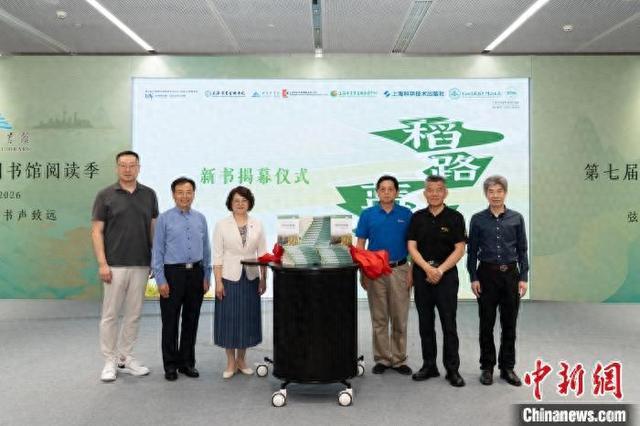
Core Viewpoint - The launch of the book "The Story of Water-Saving and Drought-Resistant Rice" highlights the significant agricultural technological advancements in China, particularly focusing on the development and impact of water-saving and drought-resistant rice [1][3][4]. Group 1: Technological Achievements - Water-saving and drought-resistant rice is a major original agricultural technology achievement in China, capable of saving 50% water and reducing methane emissions by over 90% [1][3]. - The "1522" development goal aims to increase rice planting area by 10 million acres, produce an additional 50 billion kilograms of rice, reduce water usage by 20 billion tons, and cut greenhouse gas emissions by 20 billion kilograms of CO2 equivalent [3][4]. Group 2: Environmental Impact - The cultivation of water-saving and drought-resistant rice can significantly reduce greenhouse gas emissions, achieving over 90% reduction in methane and 97% reduction in other emissions [5]. - The new cultivation method, which includes dry direct seeding, is designed to be simple and low-cost, minimizing surface pollution and contributing to a low-carbon agricultural transformation [4][5]. Group 3: Economic Benefits - The first carbon trading transaction for planting water-saving and drought-resistant rice has been completed, estimating an additional carbon reduction revenue of 460 yuan per hectare, leading to a total annual revenue of 184 million yuan based on a promotion area of 400,000 hectares [5]. - The book serves as a bridge connecting technology and the public, showcasing the importance of water-saving and drought-resistant rice in ensuring national food security and promoting green agricultural development [6]. Group 4: Future Directions - The Shanghai Academy of Agricultural Sciences plans to deepen collaboration with seed companies, universities, and research institutions to enhance the integration of production, learning, and research, thereby accelerating the innovation across the entire industry chain [3][4]. - The publishing group aims to continue documenting and disseminating high-quality scientific works to showcase China's technological advancements in agriculture [6].
金融牵线搭桥 护航中非贸易向深向实
Jin Rong Shi Bao· 2025-06-24 01:43
Core Insights - The fourth China-Africa Economic and Trade Expo successfully held in Changsha, showcasing significant achievements in China-Africa cooperation with 176 projects signed, amounting to $11.39 billion [1] - Financial institutions play a crucial role in facilitating China-Africa economic cooperation, providing essential cross-border financial services to support trade and investment [1][4] Group 1: Economic Cooperation - The expo attracted representatives from 53 African countries and over 4,700 enterprises, highlighting the growing importance of this biannual event for fostering trade relationships [1][2] - The event serves as a platform for businesses to secure new trade agreements, with commercial banks acting as key facilitators in connecting enterprises [2][3] Group 2: Financial Services - Chinese banks, including the Export-Import Bank of China and major commercial banks, showcased their financial products aimed at enhancing cross-border trade and investment [1][4][11] - The introduction of efficient cross-border payment systems has significantly improved transaction speed and reliability for businesses engaged in trade with Africa [4][5] Group 3: Trade Opportunities - Various African products, such as Kenyan coffee and Tanzanian avocados, are increasingly finding markets in China, reflecting the growing trade dynamics between the two regions [6][7] - The expo also highlighted the potential for Chinese enterprises to expand into African markets, supported by tailored financial solutions from banks [7][8] Group 4: Infrastructure and Industry Development - Chinese banks are actively investing in infrastructure and industrial projects across Africa, with significant financing provided for over 130 projects in 27 African countries [11] - The focus is shifting towards high-value, technology-intensive sectors, indicating a transformation in the trade model between China and Africa [10][11] Group 5: Future Prospects - The ongoing collaboration aims to enhance the quality of economic ties, with banks developing targeted financial services to support the "Ten Major Cooperation Actions" between China and Africa [11][12] - The commitment to continuous cooperation is expected to drive further economic integration and development opportunities in both regions [12]





15分钟“炼”出金种子
Si Chuan Ri Bao· 2025-06-23 23:12
"以前的半自动化生产和人工筛选难免有'漏网之鱼',现在有瑕疵的种子逃不过智能分选机。"车 间负责人涂丹指着显示屏上的实时数据介绍,新技术将种子加工损失率控制在2%以内,包装破损 率低于0.5%,成品净度达99%以上。"仅此一项技术革新,就相当于每年多'抢回'几百吨优质种 子。" 三台县是农业大县和国家级油菜制种大县,其2.6万亩油菜制种基地已吸引16家优势企业入驻,产 品远销湖北、湖南、海南等地。然而,长期以来,种子加工相对薄弱、加工点分散、普遍依赖传 统设备等,已成为当地提升种业质量的瓶颈。为推动现代农业转型升级,三台县于2023年底启动 万吨种子智能加工中心项目,总投资1亿元。 项目承建方台沃科技集团股份有限公司董事长孙松国介绍,万吨种子智能加工中心占地35亩,集 成原料库、低温库、综合服务设施等配套设施,目前投产近一半。项目全面投产后,年加工能力 超万吨,仓储容量达7000吨,可满足水稻、玉米、油菜、小麦等种子的全流程加工需求,预计年 产值突破2亿元,直接创造就业岗位100个。"相较过去的加工方式,智能加工中心投产,可解决人 工成本过高等问题,实现高品质智能化制种。"孙松国说,两条全自动生产线可实现全流 ...
种子遨游太空 未来绽放田间
Ren Min Ri Bao Hai Wai Ban· 2025-06-23 23:02
Core Points - The article discusses the advancements in space breeding technology in China, highlighting various crops and their benefits derived from space exposure [6][8][17] - It emphasizes the potential of space-bred varieties to improve agricultural productivity and sustainability, showcasing specific examples of crops like wheat, rice, and vegetables [9][10][14] Group 1: Space Breeding Technology - Space breeding combines space-induced mutations with traditional breeding techniques to create high-yield, disease-resistant crop varieties [8][17] - The unique space environment accelerates genetic evolution, allowing for the rapid development of superior traits in crops [17] Group 2: Crop Examples and Benefits - "Huangmai 802," a wheat variety, shows exceptional performance in saline-alkali soil, with yields reaching over 470 kg per mu, attracting interest from local farmers [6][9] - "Huahang Xiangyin Zhen," a rice variety, has an average yield exceeding 720 kg per mu and is recognized as a super rice variety, balancing taste and productivity [8][10] - Space-bred vegetables, such as "space cucumbers" and "space watermelons," exhibit enhanced flavor and market potential, with reports of high customer satisfaction [14][15] Group 3: Research and Development - Research teams are rigorously selecting and monitoring seeds that have undergone space travel to ensure the best traits are cultivated [7][12] - The integration of space breeding into traditional agricultural practices is seen as a pathway to modernize agriculture and enhance food security [9][17] Group 4: Economic Impact - The introduction of space-bred crops is expected to generate significant economic benefits for farmers, with improved yields and product quality leading to higher market demand [14][15] - The article highlights the potential for creating unique agricultural brands, such as "space tea," to promote local heritage and boost rural economies [13][14]

成都市深入实施“立园满园”行动 加快把农业打造成为现代化大产业
Ren Min Ri Bao· 2025-06-23 21:48
Core Viewpoint - Chengdu is actively promoting modern agriculture through the establishment and optimization of industrial parks, aiming for high-quality development and significant economic contributions from these parks in 2024. Group 1: Industrial Park Development - Chengdu has created 3 national modern agricultural industrial parks, with 9 key parks projected to achieve a total output value of 405 billion and operating revenue exceeding 442 billion in 2024, contributing to an increase in the primary industry value added to 540.1 billion [1] - The city is focusing on optimizing and enhancing the agricultural sector by integrating various agricultural industries into the parks, including high-quality grain, green vegetables, specialty fruits, and livestock [2] Group 2: Economic Growth and Industry Focus - Chengdu's agricultural output is expected to reach 234.56 million tons of grain and a total agricultural, forestry, animal husbandry, and fishery output value of 970 billion in 2024 [2] - The city is enhancing its competitive edge by developing specialized agricultural products and creating demonstration parks for integrated development, with a focus on organic geographical indication products [2] Group 3: Enterprise Concentration and Support - Chengdu is implementing a comprehensive project management mechanism to attract significant investments, with 26 major projects planned and 37 key projects targeted for chain enhancement [3] - The city is fostering a supportive environment for enterprises by establishing a "one enterprise, one policy" support system and increasing the number of key enterprises in the agricultural sector [3] Group 4: Technological Innovation and Smart Agriculture - Chengdu is leveraging its agricultural technology innovation center to enhance collaboration between research institutions and industrial parks, achieving over 98% coverage of quality seeds in major crops and 88% mechanization in farming [4] - The city is developing a digital service system for agriculture, including smart farming technologies and a digital platform for agricultural services [5]