
消费电子

Search documents
小米玄戒O1:3nm自研芯破局,跻身全球芯片设计第一梯队
Jing Ji Guan Cha Wang· 2026-01-13 07:45
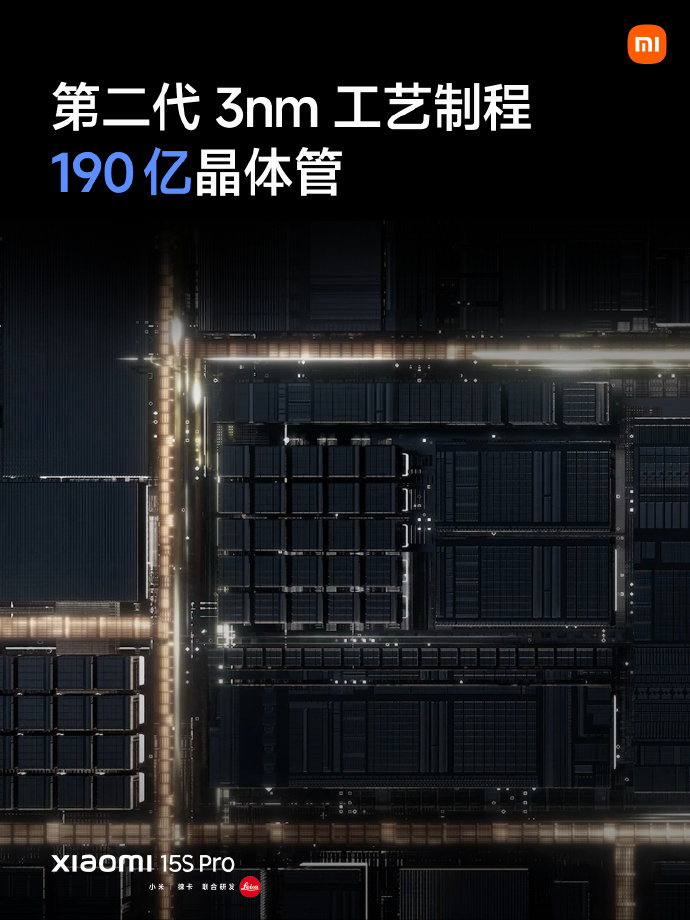
Core Insights - Xiaomi has established itself as a leading global technology company since its inception in 2010, evolving from consumer electronics to a comprehensive ecosystem covering smartphones, smart hardware, IoT platforms, and electric vehicles [1] - The company has been recognized in the Fortune Global 500 for seven consecutive years and ranks among the top three in global smartphone shipments for 21 consecutive quarters, with over 1 billion devices connected to its AIoT platform [1] - Xiaomi has invested significantly in chip research and development, with a "Ten Years 50 Billion" investment plan, forming a core R&D team of over 2,500 people and accumulating over 13.5 billion yuan in R&D investments [1] Chip Development - In response to challenges in the high-end chip sector, Xiaomi has initiated the development of the Xuanjie O13nm flagship processor, aiming for breakthroughs through independent innovation and architectural optimization [2] - The Xuanjie O1 processor features three major innovations: a 3nm advanced process with 19 billion transistors integrated in a 109mm chip area, a unique 10-core 4-cluster CPU architecture, and the integration of a self-developed ISP imaging chip and a 6-core low-power NPU [2] Industry Impact - The successful development and mass production of the Xuanjie O1 marks a significant milestone for Xiaomi's chip business and sets multiple records in the domestic semiconductor industry, making Xiaomi the fourth global company and the first in mainland China capable of 3nm SoC R&D [3] - The Xuanjie O1's mass production disrupts the monopoly of international giants in the high-end chip market and provides a replicable technology path and commercial model for the domestic semiconductor industry [3] - The core technologies accumulated during the R&D process will empower domestic chip design, manufacturing, and testing enterprises, promoting the entire industry chain [3] Future Outlook - Xiaomi plans to continue enhancing its chip technology innovation, leveraging its "human-vehicle-home ecosystem" to empower more product scenarios and inject lasting momentum into the high-quality development of China's semiconductor industry [4]


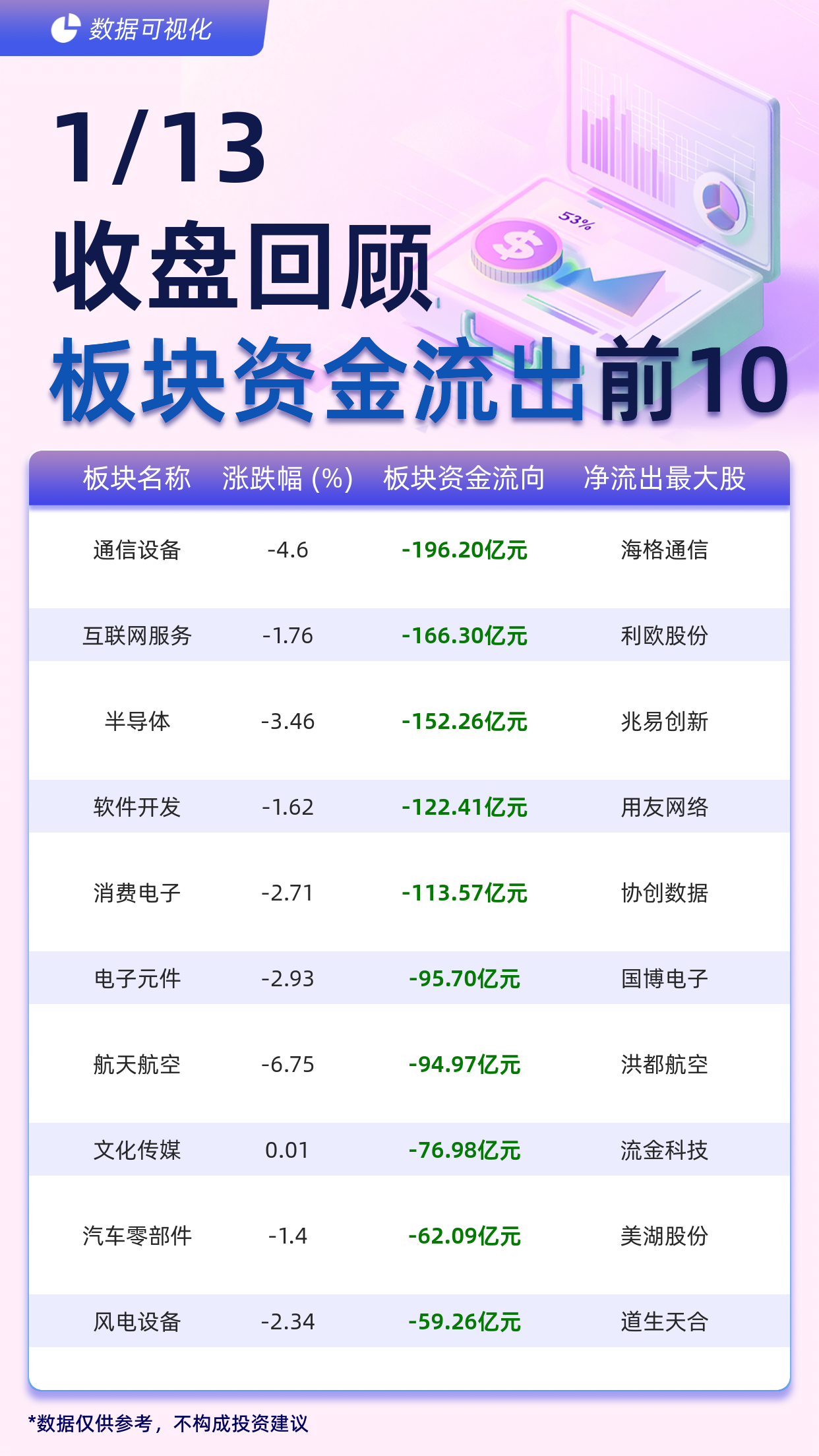
主力板块资金流出前10:通信设备流出196.20亿元、互联网服务流出166.30亿元
Jin Rong Jie· 2026-01-13 07:45
据交易所数据显示,截至1月13日收盘,大盘主力资金净流出1805.56亿元。主力资金流出前十大板块分别为: 通信设备(-196.20亿元)、互联网服务 (-166.30亿元)、 半导体(-152.26亿元)、 软件开发(-122.41亿元)、 消费电子(-113.57亿元)、电子元件(-95.70亿元)、航天航空(-94.97亿元)、 文化 传媒(-76.98亿元)、 汽车零部件(-62.09亿元)、 风电设备(-59.26亿元)。 | 航天航空 | -6.75 | -94.97亿元 | 洪都航空 | | --- | --- | --- | --- | | 文化传媒 | 0.01 | -76.98亿元 | 流金科技 | | 汽车零部件 | -1.4 | -62.09亿元 | 美湖股份 | | 风电设备 | -2.34 | -59.26亿元 | 道生天合 | | *数据仅供参考,不构成投资建议 | | | | | 板块名称 | | 涨跌幅(%) 板块资金流向 | 净流出最大 | | --- | --- | --- | --- | | 通信设备 | -4.6 | -196.20亿元 | 海格通信 | | 互联网服 ...
安克创新股价连续6天下跌累计跌幅9.48%,国泰海通资管旗下1只基金持3.95万股,浮亏损失42.93万元
Xin Lang Cai Jing· 2026-01-13 07:42
Group 1 - Anker Innovations' stock price has declined for six consecutive days, with a total drop of 9.48%, currently trading at 103.91 CNY per share and a market capitalization of 55.712 billion CNY [1] - The company specializes in the research, design, and sales of consumer electronics, including mobile device accessories and smart hardware products, with revenue composition as follows: charging and storage products 52.97%, smart innovation products 25.27%, and smart audio-visual products 21.75% [1] Group 2 - Guotai Haitong Asset Management holds a significant position in Anker Innovations through its fund, Guotai Haitong Quality Life Mixed Fund A, which has 39,500 shares, accounting for 4.26% of the fund's net value, ranking as the eighth largest holding [2] - The fund has experienced a floating loss of approximately 42.93 million CNY during the six-day decline, with a current estimated loss of about 83,300 CNY [2] - The fund was established on July 19, 2022, with a total size of 47.985 million CNY, and has reported a year-to-date return of 2.08% and a one-year return of 11.52% [2]

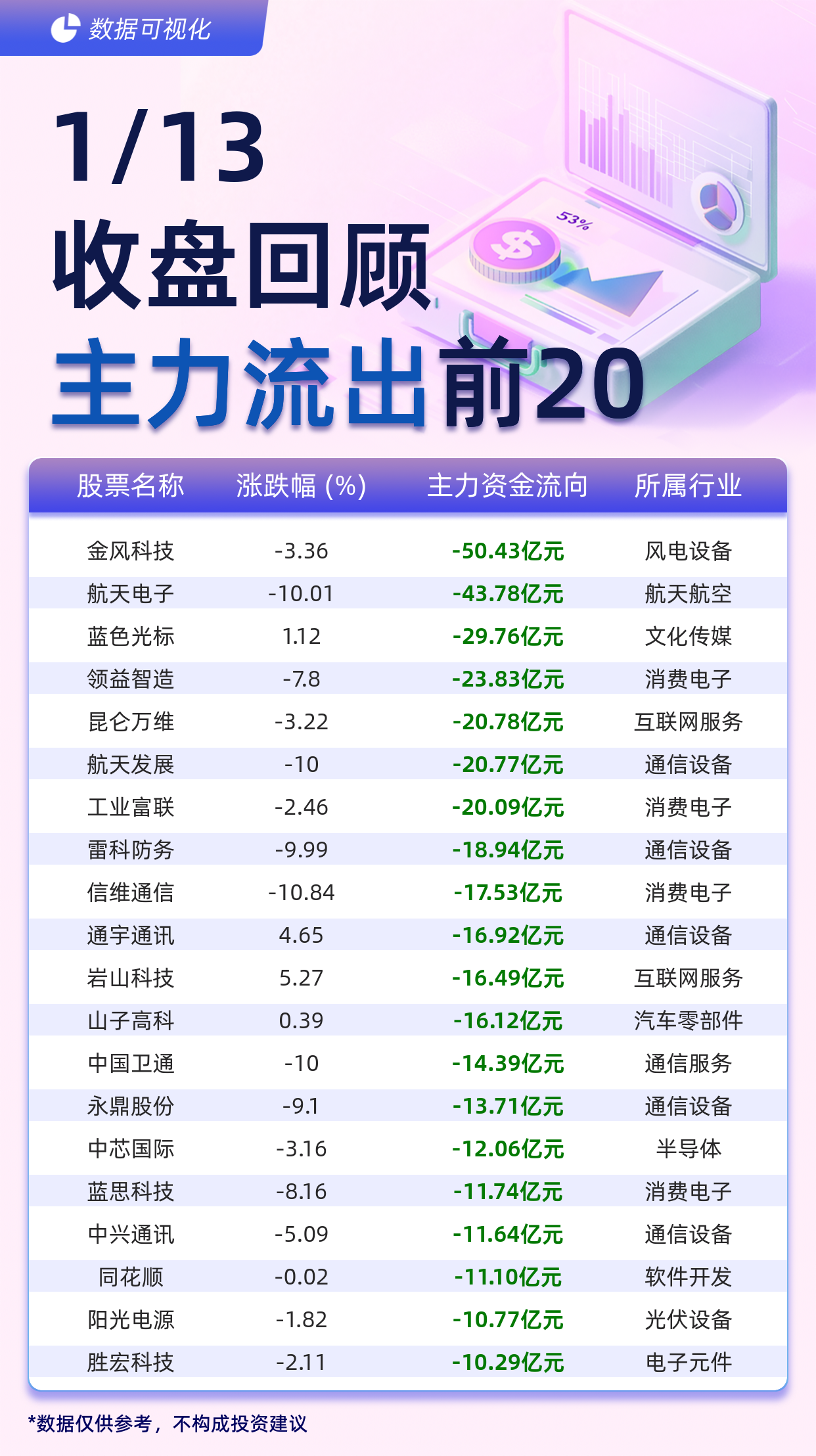
主力个股资金流出前20:金风科技流出50.43亿元、航天电子流出43.78亿元
Jin Rong Jie· 2026-01-13 07:33
Core Viewpoint - The data indicates significant outflows of capital from various stocks, with notable declines in share prices across multiple sectors, particularly in aerospace, communication, and consumer electronics. Group 1: Major Stock Outflows - The stock with the highest capital outflow is Goldwind Technology, with an outflow of 5.043 billion yuan and a price drop of 3.36% [1][2] - Aerospace Electronics experienced a capital outflow of 4.378 billion yuan, with a significant price decline of 10.01% [1][2] - BlueFocus Media saw an outflow of 2.976 billion yuan, but its share price increased by 1.12% [1][2] Group 2: Sector Performance - The wind power equipment sector, represented by Goldwind Technology, is facing challenges with a notable capital outflow [2] - The aerospace sector, particularly Aerospace Electronics and Aerospace Development, is experiencing substantial capital withdrawals, indicating potential investor concerns [1][2] - The consumer electronics sector, including Industrial Fulian and Xunwei Communication, is also seeing significant outflows, reflecting broader market trends [1][3] Group 3: Additional Notable Stocks - Other companies with significant capital outflows include Kunlun Wanwei (2.078 billion yuan), Raytheon Defense (1.894 billion yuan), and China Satcom (1.439 billion yuan), all of which are in the communication and internet service sectors [1][3] - Semiconductor company SMIC reported an outflow of 1.206 billion yuan, indicating investor caution in the semiconductor industry [1][3] - The photovoltaic equipment sector, represented by Sunshine Power, also faced an outflow of 1.077 billion yuan, highlighting challenges in renewable energy investments [1][3]





安克创新股价连续6天下跌累计跌幅9.48%,易方达基金旗下1只基金持460.66万股,浮亏损失5011.93万元
Xin Lang Cai Jing· 2026-01-13 07:23
Group 1 - Anker Innovations' stock price has declined by 1.99% to 103.91 CNY per share, with a total market capitalization of 55.712 billion CNY, and a cumulative drop of 9.48% over the past six days [1] - The company specializes in the research, design, and sales of consumer electronics, including mobile device accessories and smart hardware, with revenue composition as follows: 52.97% from charging and energy storage, 25.27% from smart innovation, and 21.75% from smart audio-visual products [1] Group 2 - E Fund's Chuangye ETF (159915) is among the top ten circulating shareholders of Anker Innovations, having reduced its holdings by 682,600 shares, resulting in a floating loss of approximately 9.7198 million CNY today and a total floating loss of 50.1193 million CNY during the six-day decline [2] - The E Fund Chuangye ETF has a total scale of 110.2 billion CNY, with a year-to-date return of 5.82% and a one-year return of 74.19%, ranking 2511 out of 5517 and 524 out of 4203 respectively [2] - The fund managers, Cheng Xi and Liu Shurong, have been managing the fund for 9 years and 8 years respectively, with significant returns during their tenure [2]
全新Apple iPad 11英寸256GB
Xin Lang Cai Jing· 2026-01-13 07:20
0 o 秒 > 新浪财经APP Sina Finance Mobile Version 24小时全球 星星资讯 下载APP > rg 0 o ...

新华视点|“护娃神器”儿童电话手表真能放心护娃吗?
Xin Hua She· 2026-01-13 06:32
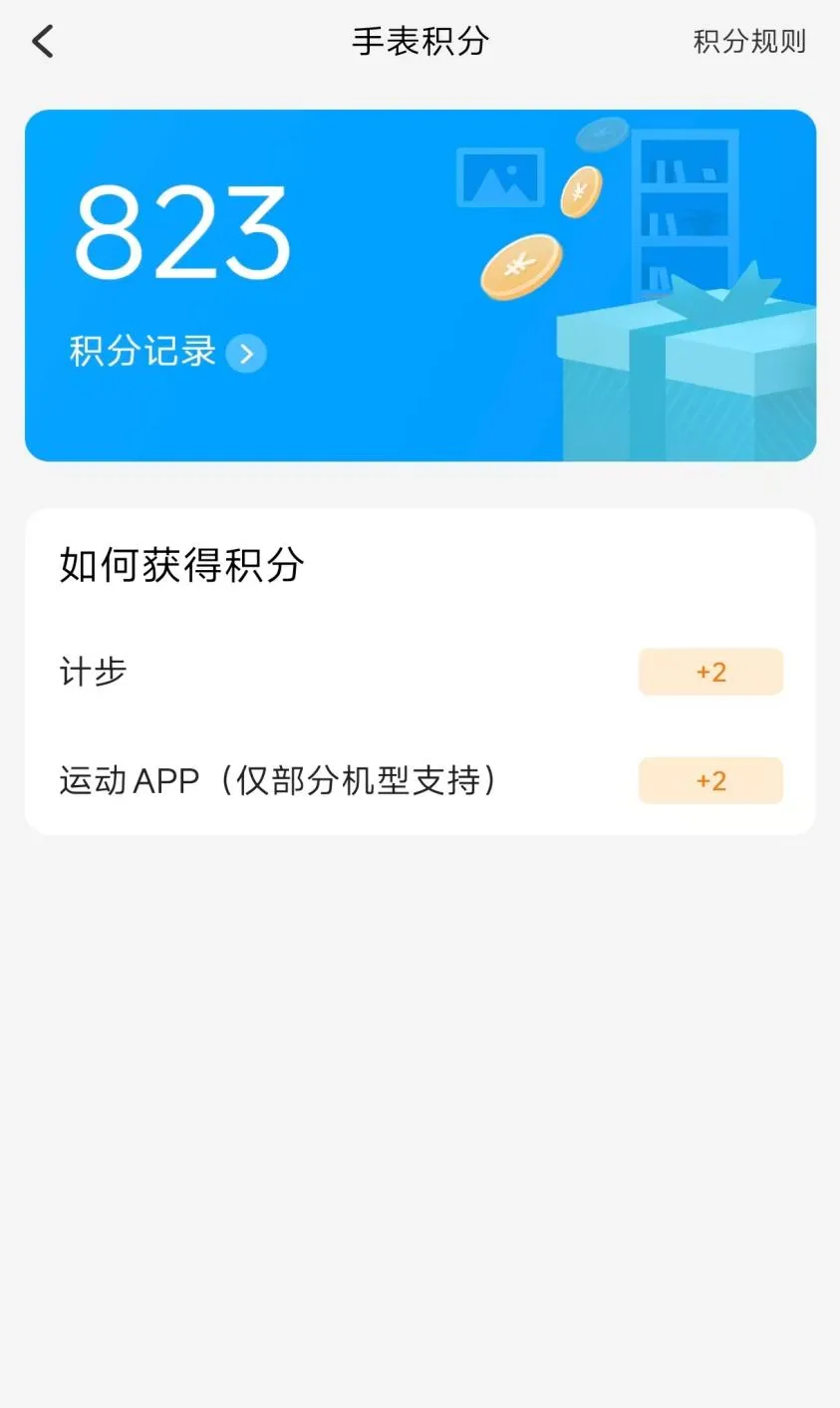
Core Viewpoint - The increasing functionality of children's smartwatches, originally designed for safety, has led to concerns about children's addiction to social features and inappropriate content, raising questions about the balance between safety and convenience [1][8]. Group 1: Social Dynamics and Behavioral Issues - Children are engaging in social comparisons through features like "likes" on their smartwatch profiles, which are seen as symbols of social status among peers [3][6]. - The design of these smartwatches encourages children to spend excessive time on them to earn points and rewards, leading to potential addiction and negative impacts on their social skills and emotional development [6][8]. - Parents report that their children are spending significant amounts of time, sometimes exceeding 10 hours a day, on these devices, focusing on accumulating points and social interactions [6]. Group 2: Safety and Security Concerns - The evolution of children's smartwatches has introduced risks related to information security, as some devices lack adequate safety features, making them vulnerable to data breaches [10]. - There are reports of children being exposed to inappropriate content through these devices, including explicit images and messages from unverified contacts [11]. - The presence of subscription services and in-app purchases has raised concerns about the potential for inducing children to spend money without parental consent [9]. Group 3: Regulatory and Parental Guidance - Experts emphasize the need for stricter regulations on children's electronic products, highlighting that companies should bear greater responsibility for the content provided to minors [19][20]. - Recent initiatives by regulatory bodies aim to address the issues surrounding children's use of smart devices, focusing on content safety and the prevention of addiction [19]. - Collaborative management between parents and schools is recommended to guide children in healthy social interactions and to establish effective rules for device usage [20].
爱建证券:蓝思科技发布前沿应用进展,维持“买入”评级
Xin Lang Cai Jing· 2026-01-13 06:28
Group 1 - The core theme of the report is "defining the physical boundaries of AI," showcasing Lens Technology's comprehensive AI hardware ecosystem at CES 2026 [1] - The company continues to innovate in traditional consumer electronics while increasing capacity in emerging fields such as robotics and server liquid cooling [1] - Lens Technology has established a leading technological position in the cutting-edge commercial aerospace sector [1] Group 2 - The company is expected to leverage its long-standing expertise in material processing and precision manufacturing to advance its business in consumer electronics, robotics, server components, and commercial aerospace [1] - Profit forecasts for the years 2025-2027 are projected at 5.42 billion, 6.71 billion, and 7.93 billion yuan, with corresponding price-to-earnings ratios of 31.1, 25.2, and 21.3 times [1] - The report maintains a "buy" rating and profit forecast for the company [1]

研报掘金丨爱建证券:蓝思科技发布前沿应用进展,维持“买入”评级
Ge Long Hui A P P· 2026-01-13 06:28
爱建证券研报指出,CES2026,蓝思科技以"定义AI的物理边界"为主题,首次系统呈现覆盖全栈式AI硬 件生态布局。认为公司首先在消费电子传统业务领域持续工艺创新,其次在机器人和服务器液冷等新兴 领域加大产能投放,同时公司在前沿的商业航天领域也有了领先的技术布局。持续看好公司立足于自身 在材料加工和精密制造领域的多年沉淀,向消费电子,机器人,服务器零部件和商业航天领域的业务推 进。预计公司25-27年,净利润54.2/67.1/79.3亿元,对应市盈率31.1/25.2/21.3倍。维持"买入"评级和盈利 预测。 ...
开源证券:AI终端开启2026年新周期 聚焦苹果华为及光学PCB等环节
Xin Lang Cai Jing· 2026-01-13 06:28
Core Viewpoint - The report from Kaiyuan Securities highlights that the AI terminal market is set to enter a new cycle in 2026, with a focus on key players like Apple and Huawei, as well as advancements in optical PCB technology [1][5]. Group 1: Industry Performance - The consumer electronics and components industry is expected to see significant performance improvements in 2025, with the PCB sector leading in growth [1][5]. - The overall electronic sector is projected to perform strongly, driven by rapid iterations and bulk shipments of AI products, alongside new product launches and government subsidies boosting demand in the consumer electronics sector [1][5]. - Traditional categories such as smartphones, PCs, and tablets are maintaining stable growth, while AI glasses and AI servers are experiencing rapid growth trends [1][5]. Group 2: AI Terminal Focus - Key investment lines for 2026 include Apple's ecosystem, Huawei's HarmonyOS, AI glasses, and OpenAI's hardware [2][6]. - Apple is positioned as a leader in the global consumer electronics supply chain, with plans to launch new products including the iPhone 17E, foldable iPhone, and AI glasses in 2026, entering a three-year innovation cycle [2][6]. - Huawei is expected to continue releasing new foldable devices in 2025, with its HarmonyOS 6 significantly enhancing user experience through AI capabilities, and increasing domestic component sourcing likely to boost sales [2][6]. - The AI glasses market is anticipated to grow significantly, with companies like Meta driving sales, positioning AI glasses as potential high-volume products [2][6]. - OpenAI's entry into terminal hardware is expected to create popular native AI hardware products from the perspective of AI model manufacturers [2][6]. Group 3: Component Upgrades - Focus areas for component upgrades include optical systems, batteries and fast charging, thermal management, and structural components [3][7]. - Enhanced optical hardware modules are crucial for AI terminals, with ongoing upgrades in mobile optical performance from both Apple and Android manufacturers [3][7]. - The demand for battery life is increasing due to enhanced AI terminal performance, leading to the adoption of new battery technologies such as steel shell batteries and solid-state batteries [3][7]. - Thermal management challenges are intensifying, with Apple expected to implement VC heat spreaders in more models, while Android manufacturers are exploring liquid cooling and micro-fan solutions [3][7]. - Upgrades in display technology are focusing on durability and lightweight designs, with advanced manufacturing techniques like 3D printing and liquid metal processes expected to penetrate more consumer electronics components [3][7]. Group 4: Resonance of AI Computing and Components - The synergy between AI computing and AI terminals is expected to drive an upward cycle for PCBs and passive components [4][8]. - As SoC performance improves and internal integration in smartphones increases, PCBs are evolving towards higher density and precision, with a greater use of flexible printed circuits in foldable devices [4][8]. - The iteration of AI chips is continuously raising the specifications and demand for PCBs, with corresponding upgrades in upstream materials [4][8]. - The increase in power consumption of AI servers is prompting a shift in data center power supply architectures towards high voltage direct current (HVDC) and solid-state transformer (SST) systems, leading to a rise in the use and specifications of various passive components [4][8].